To adjust your spark plug gap, first use a feeler gauge to measure the distance between the center and ground electrodes.
Compare this measurement to your vehicle’s specifications to ensure accuracy.
If the gap is too narrow or wide, gently use a spark plug gap tool to bend the ground electrode.
Adjust it until you achieve a snug fit with slight resistance.
Confirm uniformity across all plugs, then test your engine for smooth idling and power.
Following this process properly helps prevent misfires and boosts performance—there’s more on fine-tuning your engine ahead.
Key Takeaways
- Use a feeler gauge to measure the current spark plug gap according to manufacturer specifications.
- Insert the gauge between the center and ground electrodes to check for a snug fit with slight resistance.
- Use a spark plug gap tool to gently bend the ground electrode to increase or decrease the gap as needed.
- Re-measure the gap after adjustment to ensure it matches the recommended specification precisely and uniformly.
- Install the spark plug and test the engine for smooth idling, no misfires, and proper acceleration response.
Why Spark Plug Gap Matters
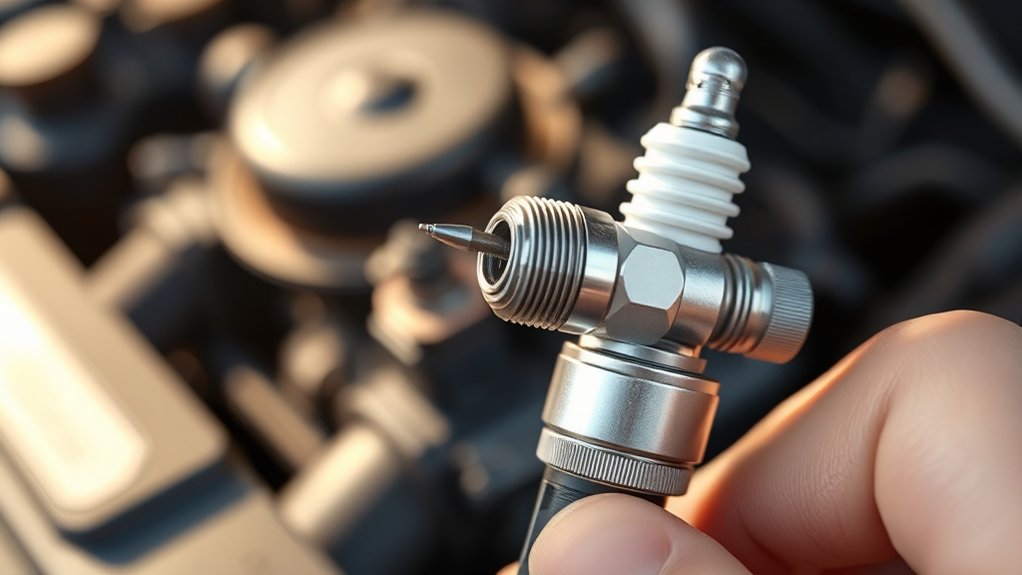
Although it may seem minor, the spark plug gap critically affects your engine’s performance. This gap, the distance between the center and ground electrode, directly influences spark plug performance by determining the size and strength of the spark generated.
If the gap is too narrow, the spark may be weak, reducing ignition efficiency and causing incomplete combustion. Conversely, a gap too wide demands higher voltage, risking misfires or ignition failure.
Maintaining the correct gap guarantees ideal spark energy and consistent ignition timing, which improves fuel efficiency, power output, and emissions control. By precisely calibrating this gap, you maximize ignition efficiency, thereby enhancing overall engine reliability and performance.
Correct spark plug gaps ensure optimal energy, consistent ignition, and improved fuel efficiency and engine performance.
Understanding why spark plug gap matters helps you maintain your engine in peak condition.
How to Tell If Your Spark Plug Gap Needs Adjusting
You’ll notice performance issues like misfires or rough idling if your spark plug gap is off. To confirm, use a feeler gauge to measure the gap accurately against manufacturer specifications.
If the measurement falls outside the recommended range, adjustment is necessary.
Signs of Incorrect Gap
When your engine misfires, idles roughly, or shows decreased fuel efficiency, these symptoms often indicate an incorrect spark plug gap. Spark plug wear can cause the gap to widen or narrow, disrupting the ideal spark needed for combustion.
You’ll notice reduced engine performance as incomplete combustion leads to power loss and increased emissions. Additionally, hard starting and hesitation during acceleration may signal that the gap is off.
Excessive gap causes weak sparks, while a gap too narrow results in insufficient spark energy. Both conditions impair ignition timing and fuel burn efficiency.
Measuring Spark Plug Gap
Accurately measuring your spark plug gap is essential for guaranteeing ideal engine performance. Different spark plug types demand specific gap specifications, so you’ll need to verify the gap before installation.
Follow these steps to measure the gap:
- Select the correct feeler gauge based on the manufacturer’s gap specifications for your spark plug type.
- Insert the gauge between the center and ground electrodes, sliding it gently to assess clearance.
- If the gauge fits snugly with slight resistance, the gap is correct; if not, adjustment is needed.
Using this method, you’ll determine if the gap aligns with your engine’s requirements. Accurate measurement prevents misfires, poor fuel economy, and guarantees consistent ignition, maintaining your engine’s efficiency.
How to Find the Right Spark Plug Gap for Your Vehicle
How do you determine the correct spark plug gap for your vehicle? Start by consulting your vehicle’s owner manual or manufacturer’s website for the exact spark plug specifications.
The right gap is essential as it directly affects engine performance, fuel efficiency, and ignition reliability. Using an improper gap can cause misfires or poor combustion.
Below is a reference table with typical spark plug gap ranges for different engine types:
| Engine Type | Gap Range (inches) | Gap Range (mm) |
|---|---|---|
| Small 4-Cylinder | 0.028 – 0.032 | 0.7 – 0.8 |
| V6 Engines | 0.030 – 0.035 | 0.76 – 0.89 |
| V8 Engines | 0.035 – 0.040 | 0.89 – 1.02 |
| Turbocharged | 0.020 – 0.025 | 0.5 – 0.64 |
Always adhere to your vehicle’s specified gap for peak engine performance.
Tools You’ll Need to Check and Adjust Spark Plug Gaps
Three essential tools will help you check and adjust spark plug gaps with accuracy and efficiency. First, a feeler gauge is critical for measuring the gap between electrodes precisely, guaranteeing you meet the specified gap specifications for various spark plug types.
A feeler gauge ensures precise measurement of spark plug gaps for optimal engine performance.
Second, a spark plug gap tool, often a wire or bar type, allows you to adjust the gap by bending the ground electrode carefully without damaging the plug.
Third, a gap gauge with a tapered thickness scale helps you cross-verify the measurement, particularly for fine adjustments. Using these tools methodically guarantees that your spark plug gap matches the manufacturer’s specifications, which is crucial for peak engine performance.
Having the right tools tailored to your specific spark plug types streamlines this process considerably.
How to Measure Spark Plug Gaps Correctly
Before adjusting the gap, you need to measure it precisely to confirm peak engine performance. Start by identifying the correct gap specification for your spark plug type, as different spark plug types require varying gaps to optimize ignition performance.
Use a feeler gauge or a gap tool designed for precision. Insert the appropriate thickness blade between the center and ground electrodes without forcing it. The blade should slide with slight resistance, indicating an accurate gap.
If the blade doesn’t fit or is loose, note the deviation. Repeat this measurement for each spark plug to confirm uniformity. Accurate measurement prevents misfires and confirms efficient combustion, directly impacting engine reliability.
Always refer to manufacturer guidelines since incorrect gaps can impair ignition performance and engine longevity.
How to Adjust Spark Plug Gaps Without Damage
Carefully adjusting the spark plug gap requires the right tools and a steady hand to avoid damaging the electrodes. Different spark plug types, such as copper, platinum, or iridium, demand tailored care during adjustment. Use specialized gap tools designed for precision and minimal contact stress.
Precision and the right tools are essential when adjusting spark plug gaps to protect delicate electrodes.
- Select the correct gap tool compatible with your spark plug type to prevent bending or breaking the delicate electrodes.
- Gently insert the tool into the gap, applying slight pressure to bend the side electrode only; avoid touching the center electrode.
- Measure the gap frequently to guarantee you don’t over-adjust, maintaining the manufacturer’s specified distance.
How to Test Your Engine After Spark Plug Gap Adjustment
After adjusting the spark plug gap with the proper tools and technique, you need to confirm that the engine runs smoothly and efficiently. Testing methods focus on evaluating engine performance, including idle quality, acceleration response, and fuel consumption.
Begin by starting the engine and observing for misfires or rough idling. Next, perform a road test to detect hesitation or power loss. Finally, use diagnostic tools to monitor engine parameters.
| Test Type | Purpose | Expected Outcome |
|---|---|---|
| Idle Check | Evaluate smooth running | Stable RPM, no misfires |
| Acceleration | Evaluate power delivery | Immediate throttle response |
| Diagnostic Scan | Confirm sensor data | Normal ignition timing |
These steps confirm your spark plug gap adjustment optimizes engine performance.
Frequently Asked Questions
Can Incorrect Spark Plug Gaps Affect Fuel Efficiency?
Yes, incorrect spark plug gaps disrupt fuel combustion, reducing efficiency. If your gap measurement is off, combustion becomes incomplete, causing wasted fuel.
Ensuring precise gap measurement optimizes fuel combustion and maximizes your fuel efficiency consistently.
How Often Should Spark Plug Gaps Be Checked?
You don’t need to check spark plug gaps daily unless you enjoy constant spark plug maintenance. Realistically, measure the gap every 30,000 miles or during routine tune-ups to guarantee peak engine performance and efficient gap measurement practices.
Are There Specific Brands Better for Adjustable Spark Plugs?
You’ll find brands like NGK and Denso excel in adjustable spark plugs due to precise manufacturing. Their spark plug types offer consistent gap measurement, helping you maintain peak engine performance through accurate and reliable gap adjustments.
Can Spark Plug Gap Issues Cause Engine Misfires?
Yes, spark plug gap issues can cause engine misfires by disrupting ignition timing and combustion efficiency. You’ll notice reduced engine performance and irregular firing, so maintaining proper gap is essential for ideal engine operation and reliability.
Is Professional Help Recommended for Gap Adjustment?
You don’t always need professional help, but using proper spark plug tools guarantees accurate gap measurement.
If you lack experience or equipment, consulting a professional prevents damage and guarantees peak engine performance.
Conclusion
Now that you’ve fine-tuned your spark plug gap, imagine the precise arc of electricity jumping perfectly between electrodes, igniting your engine’s power. With careful measurement and gentle adjustment, you’ve optimized performance and efficiency.
Trust your tools, follow each step methodically, and avoid over-gapping or damage. Once tested, your engine will hum smoothly, a demonstration of your meticulous work.
This small but critical detail keeps your vehicle running at its best. Properly adjusting the spark plug gap is essential for maintaining peak engine performance and reliability.