You can tell if your spark plug is fouled by removing it and inspecting the tip for black, oily, or wet deposits that indicate ignition issues.
A healthy plug shows a light tan or grayish color, while fouled ones look coated in carbon or oil.
Check for damaged electrodes and use a multimeter to test resistance if you can.
Noticing rough idling or misfires also points to fouling.
Keep going to understand causes, tests, and prevention.
Key Takeaways
- Remove the spark plug and visually inspect the tip for black, oily, or wet deposits indicating fouling.
- Check for damaged or melted electrodes, which suggest spark plug fouling or failure.
- Healthy spark plugs have a light tan or grayish color, while fouled plugs appear dark and dirty.
- Look for symptoms like engine misfires, rough idling, or difficulty starting as signs of fouled plugs.
- Use a multimeter to test resistance and a feeler gauge to verify the spark plug gap for proper function.
How to Spot a Fouled Spark Plug
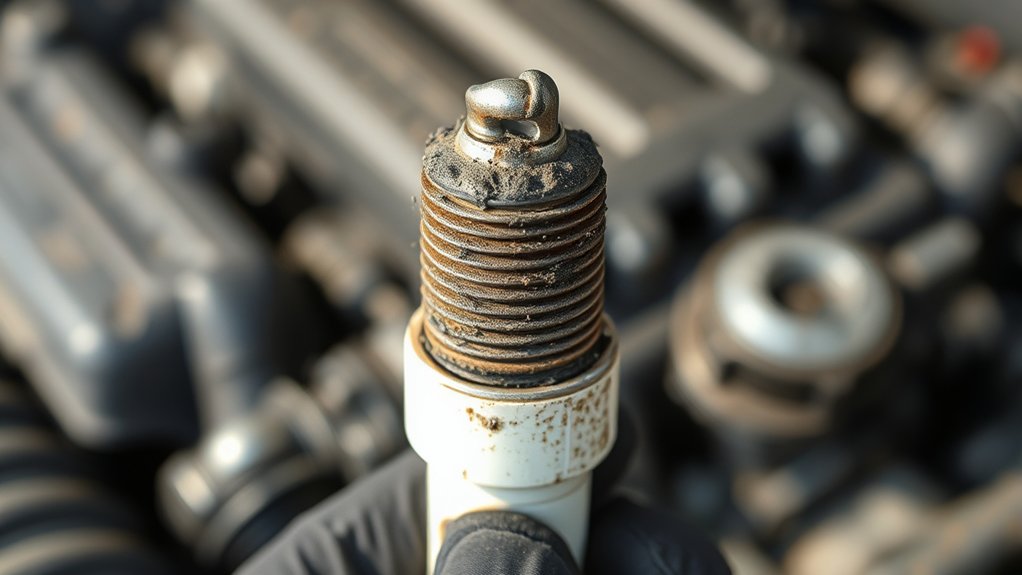
How can you quickly identify a fouled spark plug? Start with a thorough spark plug inspection by removing the plug and examining its tip. Look for deposits like carbon buildup, oil, or soot, which indicate fouling.
A healthy spark plug usually has a light tan or grayish color on the insulator and electrode. Fouled plugs often appear black, oily, or wet. Also, check for damaged electrodes or melted areas that can disrupt proper ignition.
These signs directly impact engine performance by causing misfires or incomplete combustion. During inspection, verify the spark plug gap remains within manufacturer specifications, as fouling can alter it.
Regular spark plug inspection helps maintain engine efficiency and prevents performance loss due to fouled plugs.
Signs Your Spark Plug Is Causing Engine Problems
Recognizing the impact of a fouled spark plug on engine performance is key to diagnosing underlying issues. When a spark plug is fouled, it hampers efficient combustion, directly affecting spark plug longevity and overall engine health.
You may notice:
- Misfires and Rough Idling: Inconsistent ignition causes the engine to run unevenly, leading to vibrations and reduced power output.
- Decreased Fuel Efficiency: A fouled spark plug fails to ignite the air-fuel mixture properly, increasing fuel consumption.
- Difficulty Starting the Engine: Excessive fouling impedes spark generation, making ignition sluggish or unsuccessful.
Monitoring these symptoms helps you address spark plug issues promptly, maintaining peak engine performance and extending the spark plug’s usable life.
Common Causes of Fouled Spark Plugs
You’ll often find spark plugs fouled due to oil contamination, which coats the electrodes and disrupts ignition. Incorrect fuel mixtures can also cause fouling by leaving excess residue that interferes with spark generation.
Additionally, carbon buildup from incomplete combustion creates deposits that impair spark plug performance.
Oil Contamination
Although oil contamination in spark plugs doesn’t happen as frequently as carbon fouling, it can seriously impair engine performance when it does. Oil fouling occurs when engine oil seeps into the combustion chamber and coats the spark plug, preventing proper ignition.
This contamination often results from:
- Excessive engine wear causing worn piston rings or valve seals, which allows oil to enter the combustion chamber.
- Using oil with improper viscosity, which can increase leakage past seals and rings.
- Faulty PCV (Positive Crankcase Ventilation) systems, which can push oil vapor into the combustion chamber.
If your spark plugs show oily deposits, you should inspect these areas promptly to prevent misfires and maintain engine efficiency.
Fuel Mixture Issues
Oil contamination can severely affect spark plug performance, but issues with the fuel mixture are an even more common cause of fouling. When the air-to-fuel ratio deviates from the ideal range, incomplete combustion occurs, leading to deposits on the spark plug electrodes.
A rich mixture, with excess fuel, lowers fuel efficiency and disrupts combustion balance, causing fuel to leave carbon residues that foul the plug. Conversely, a lean mixture, with insufficient fuel, increases combustion temperature and can cause overheating, damaging the spark plug.
You should regularly check the fuel injection system and air filters to maintain proper mixture ratios. Ensuring correct fuel mixture not only prevents fouling but also enhances fuel efficiency and maintains stable combustion balance, ultimately extending spark plug life and improving engine performance.
Carbon Buildup
When carbon buildup accumulates on spark plug electrodes, it directly impairs ignition efficiency and can cause misfires. These carbon deposits form from incomplete combustion, leading to fouled plugs that reduce engine performance.
To prevent this, you need to understand the common causes of carbon buildup:
- Rich Fuel Mixture Excess fuel leaves unburned carbon that adheres to the electrodes.
- Frequent Short Trips Insufficient engine temperature prevents complete combustion, promoting deposit formation.
- Poor Spark Plug Maintenance Neglecting regular inspection and cleaning allows carbon deposits to accumulate unchecked.
Addressing these factors with proper spark plug maintenance and fuel system tuning guarantees peak ignition and extends spark plug life. Monitoring and correcting carbon buildup early prevents costly engine issues.
How to Test for Fouled Spark Plugs at Home
How can you accurately determine if a spark plug is fouled without specialized tools? Begin with a visual inspection: remove the spark plug using a socket wrench and examine the electrode and insulator tip. Look for signs like black carbon deposits, oily residue, or a worn electrode.
Next, perform a resistance test using a multimeter set to the ohms scale; a healthy spark plug typically shows a resistance between 4,000 to 8,000 ohms. If the reading is outside this range, it indicates potential fouling.
Additionally, check the spark plug gap with a feeler gauge to verify it matches manufacturer specifications, as improper gaps affect performance. These spark plug testing steps provide effective home diagnostics, enabling you to identify fouling without advanced equipment.
Should You Clean or Replace a Fouled Spark Plug?
After identifying a fouled spark plug through visual and electrical testing, deciding whether to clean or replace it depends on the severity and type of fouling. Minor carbon or oil deposits can often be removed using effective cleaning techniques such as wire brushing, chemical soaking, or ultrasonic cleaning.
However, if fouling is severe, causing electrode erosion or insulator damage, replacement options become necessary to guarantee peak engine performance. Consider these factors:
- Surface condition: Light deposits – clean; damaged electrodes – replace.
- Spark plug age: Older plugs with repeated fouling typically require replacement.
- Engine performance impact: Persistent misfires despite cleaning indicate replacement.
Simple Tips to Prevent Spark Plug Fouling
Although spark plug fouling can occur due to various engine conditions, you can considerably reduce its likelihood by following targeted maintenance practices. Start with regular preventive maintenance, such as timely oil changes and air filter replacements, to guarantee your engine runs cleanly and efficiently.
Monitor fuel quality and avoid using low-grade gasoline that can cause deposits. Perform consistent engine tuning to maintain ideal ignition timing and fuel-air mixture, which minimizes incomplete combustion that leads to fouling.
Inspect spark plugs periodically for wear and contamination, replacing them as recommended by your vehicle’s manufacturer. Additionally, keep an eye on engine operating temperature; running too cold can encourage carbon buildup on the plugs.
Frequently Asked Questions
What Type of Spark Plug Is Best for My Car Model?
You’ll want iridium plugs for better durability and performance, especially in modern engines. Copper plugs offer excellent conductivity but wear faster.
Check your car’s manual to match the recommended spark plug type precisely.
How Often Should Spark Plugs Be Replaced Under Normal Conditions?
You should replace spark plugs every 30,000 to 100,000 miles, depending on the spark plug lifespan.
Regular replacement is essential for ideal engine maintenance, ensuring efficient combustion and preventing misfires or engine performance issues.
Can Using the Wrong Fuel Cause Spark Plug Fouling?
Yes, using fuel with poor quality or incorrect octane rating can cause spark plug fouling. Low-quality fuel leaves deposits, while wrong octane causes incomplete combustion, both leading to carbon buildup and reduced spark plug performance.
Are There Specific Brands Known for Longer-Lasting Spark Plugs?
Sure, you could trust the “magic” brand everyone swears lasts forever, but a rigorous performance comparison shows brands like NGK and Bosch excel.
Follow maintenance tips to maximize spark plug lifespan and engine efficiency consistently.
How Does Spark Plug Gap Affect Engine Performance?
You’ll notice that an incorrect spark plug gap reduces engine efficiency by causing weak sparks or misfires. Proper spark plug maintenance guarantees the gap matches specifications, optimizing combustion and maximizing your engine’s overall performance and fuel economy.
Conclusion
If you ignore a fouled spark plug, your engine might as well be a ticking time bomb ready to explode into chaos. Spotting and addressing fouled plugs isn’t just a suggestion—it’s essential to keep your engine running smoothly.
By regularly inspecting, testing, and replacing spark plugs as needed, you prevent performance nightmares and costly repairs. Remember, a clean spark plug is your engine’s best friend, so don’t let fouling turn your ride into a mechanical disaster.
Knowing how to tell if spark plug is fouled can save you from unexpected breakdowns and extend the life of your engine.