A spark plug gapper is a specialized tool you use to measure and adjust the gap between the spark plug’s electrodes. Getting this gap right is critical for efficient combustion, reliable ignition, and peak engine performance.
You’ll find different types, from manual wire gauges to digital devices, each designed for accurate measurements.
Proper handling and precise adjustments help prevent misfires and maintain fuel efficiency.
Keep exploring to understand the techniques and common pitfalls in spark plug gapping.
Key Takeaways
- A spark plug gapper is a tool used to measure and adjust the gap between spark plug electrodes.
- It ensures the spark plug gap matches manufacturer specifications for optimal engine performance.
- Proper gapping improves ignition reliability, fuel efficiency, and combustion efficiency.
- Spark plug gappers come in manual, digital, and adjustable types for precise gap settings.
- Correct use prevents misfires and maintains smooth engine operation by ensuring accurate electrode spacing.
What Is a Spark Plug Gapper?
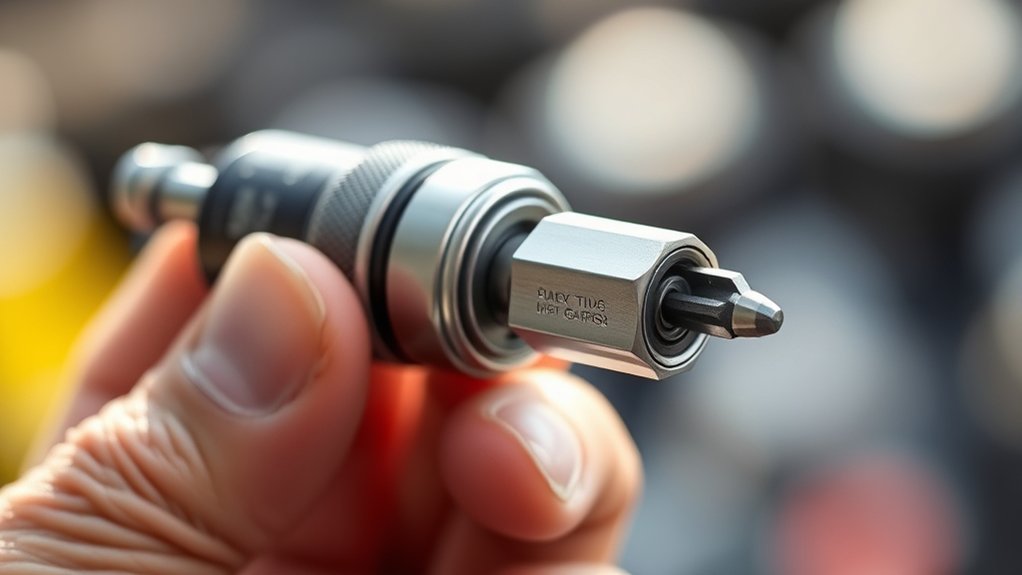
A spark plug gapper is a specialized tool designed to measure and adjust the gap between the electrodes of a spark plug. You’ll find it essential because different spark plug types require specific gap settings to function effectively.
Whether using copper, platinum, or iridium spark plugs, the correct gap guarantees efficient sparking and combustion. By accurately setting this gap, you directly influence engine performance, improving ignition reliability and fuel efficiency.
The tool typically features tapered feeler gauges or wire gauges that allow you to check and modify the gap precisely. Using a spark plug gapper helps maintain consistent electrode spacing, which is critical for the spark to jump correctly, avoiding misfires.
Proper gap adjustment tailored to your spark plug type supports peak engine function.
Why Spark Plug Gappers Matter for Your Engine
Because engine performance hinges on precise ignition timing, you need to guarantee your spark plug gaps are set accurately. A spark plug gapper assures the gap between the center and ground electrodes is ideal, directly influencing spark plug performance.
If the gap is too wide or too narrow, ignition efficiency drops, leading to incomplete combustion, reduced power output, and increased emissions. Using a spark plug gapper helps maintain consistent spark intensity, promoting reliable engine starts and smooth operation.
How to Measure and Adjust Spark Plug Gaps
To accurately measure and adjust spark plug gaps, you’ll need a reliable gap tool designed for precision. Begin by cleaning the spark plug to guarantee accurate gap measurement.
Use the tool to check the distance between the center and ground electrodes. If the gap doesn’t meet manufacturer specifications, carefully bend the ground electrode to adjust. Avoid excessive force to prevent damage.
| Step | Action |
|---|---|
| 1 | Clean spark plug |
| 2 | Measure gap with gap tool |
| 3 | Compare to manufacturer specs |
| 4 | Adjust gap by bending electrode |
| 5 | Re-measure to confirm accuracy |
Regular spark plug maintenance, including precise gap measurement, guarantees ideal engine performance and fuel efficiency.
Different Types of Spark Plug Gappers
You’ll encounter several types of spark plug gappers designed to suit different needs. Manual gappers use simple wire or feeler gauges to measure gaps, while digital gappers provide precise electronic readings.
Adjustable gap tools allow you to fine-tune the gap by bending the electrode accurately.
Manual Spark Plug Gappers
Several types of manual spark plug gappers offer precise control over the electrode gap, which is critical for peak engine performance. You’ll commonly find wire-type feeler gauges, coin-style gap tools, and round wire gappers designed specifically for various spark plug designs.
Feeler gauges measure the gap by sliding between the electrodes, allowing you to adjust until you achieve the exact clearance recommended by the manufacturer. Coin-style tools bend the ground electrode gently to the desired gap, ideal for tight spaces or fragile spark plugs.
Round wire gappers match specific gap sizes and are inserted between electrodes to verify or set the clearance. Mastering these gapping techniques guarantees the spark plug fires efficiently, improving combustion efficiency and prolonging engine life.
Manual gappers remain essential for hands-on tuning and maintenance.
Digital Spark Plug Gappers
Although manual spark plug gappers provide reliable control, digital spark plug gappers offer enhanced accuracy and ease of use by utilizing electronic measurement technology. When you use a digital spark plug gapper, you benefit from digital precision that minimizes human error and guarantees consistent spark plug gaps.
These devices leverage advanced spark technology sensors to measure the gap electronically and display the exact distance on a digital screen. This precision is vital for optimizing engine performance.
Key features of digital spark plug gappers include:
- High-resolution digital display for precise gap readings
- Electronic sensor technology for accurate measurements
- User-friendly interface with easy calibration
- Compatibility with various spark plug types
- Durable construction for workshop environments
Using a digital gapper streamlines your maintenance routine with reliable, repeatable results.
Adjustable Gap Tools
Adjustable gap tools come in a variety of designs, each allowing you to set and fine-tune the spark plug gap with precision. Using these tools, you maintain gap consistency, which is essential for peak engine performance.
You’ll find that adjustable gap tools vary in method, material, and ease of use, letting you select one that fits your needs.
| Tool Type | Precision Level | User Experience |
|---|---|---|
| Feeler Gauge | High | Requires skill |
| Wire-Type Gapper | Medium | Quick adjustments |
| Coin-Style Gapper | Low | Simple, basic use |
| Cone Gapper | Medium | Versatile, straightforward |
| Digital Gapper | Very High | Accurate, user-friendly |
Each tool’s adjustable gap feature addresses specific needs, maintaining consistent spark plug performance.
When and Why to Adjust Your Spark Plug Gap
You need to adjust your spark plug gap to match the ideal specification for your engine, ensuring peak combustion. If the gap is too wide or too narrow, it can cause misfires, reduced fuel efficiency, and engine performance issues.
Understanding when and why to make these adjustments helps maintain your engine’s reliability and power.
Ideal Spark Plug Gap
Since the spark plug gap directly influences the ignition system’s performance, knowing the ideal gap is essential for peak engine function. The best gap varies based on your engine design, spark plug materials, and manufacturer gap specifications. Adjusting the gap guarantees efficient combustion and prevents misfires.
Consider these factors when setting your spark plug gap:
- Follow the vehicle or spark plug manufacturer’s gap specifications precisely.
- Account for spark plug materials (e.g., iridium vs. copper) as they affect spark intensity.
- Adjust the gap if you upgrade to performance spark plugs or modify engine components.
- Use a reliable spark plug gapper tool for accurate measurement.
- Recheck the gap after installation to compensate for handling or heat expansion.
Proper gap adjustment maximizes ignition efficiency and engine reliability.
Effects of Incorrect Gap
When the spark plug gap deviates from the ideal range, it can cause misfires, poor fuel economy, and reduced engine power. You need to maintain precise gap consistency to guarantee peak spark performance.
If the gap is too wide, the spark may weaken or fail to jump across, causing incomplete combustion. Conversely, a gap that’s too narrow reduces spark intensity, leading to inefficient ignition. Both scenarios disrupt engine timing and increase emissions.
Adjust your spark plug gap when installing new plugs or if you notice engine hesitation, rough idling, or decreased acceleration. Using a spark plug gapper helps you measure and set the gap accurately, preserving consistent spark performance and supporting efficient engine operation.
Regular checks prevent costly repairs and maintain vehicle reliability.
Common Mistakes to Avoid When Gapping Spark Plugs
Although gapping spark plugs might seem straightforward, several common mistakes can compromise engine performance and component longevity. Avoid gapping errors by using precise measurement techniques and understanding the specific gap specifications for your engine.
Don’t fall for common misconceptions, such as assuming factory gaps are always correct or that bigger gaps improve performance. When making gap adjustments, handle the electrodes carefully to prevent damage or misalignment.
Key mistakes to avoid include:
- Using improper or worn gap tools that yield inaccurate readings
- Bending the ground electrode excessively, causing structural weakness
- Neglecting to verify the gap after adjustment
- Relying solely on visual estimation instead of precise measurement
- Overlooking manufacturer-recommended gap settings, leading to suboptimal combustion
Frequently Asked Questions
Can Spark Plug Gappers Damage the Spark Plug if Used Incorrectly?
Yes, if you’re careless with spark plug gappers, you can damage the electrode or insulator. Proper spark plug maintenance requires precise gap measurement and gentle handling to avoid bending or cracking components, ensuring peak performance.
Are Spark Plug Gappers Universal for All Vehicle Types?
Imagine tuning your Ducati’s spark plugs. You can’t use the same gap tool for every spark plug type. Spark plug gappers aren’t universal; you need precise gap measurement tools tailored to specific vehicle requirements for accuracy and performance.
How Often Should I Replace My Spark Plug Gapper Tool?
You should replace your spark plug gapper tool when it shows signs of wear or damage to guarantee accurate gap adjustment.
Regular spark plug maintenance demands precision, so check your gapper periodically for reliable performance.
Can Weather Conditions Affect the Optimal Spark Plug Gap?
You’ll find that over 40% of engine inefficiencies relate to improper spark plug performance, often influenced by weather. Humidity and temperature shifts can alter the ideal gap, so you must adjust it for consistent combustion and efficiency.
Do Spark Plug Gappers Work on Motorcycle Spark Plugs?
Yes, you can use spark plug gappers on motorcycle spark plugs during motorcycle maintenance to precisely adjust the gap. This ensures peak spark plug performance and efficient combustion for your engine’s reliable operation and fuel economy.
Conclusion
Understanding and properly using a spark plug gapper can greatly enhance your engine’s performance. For example, a driver noticed rough idling and poor fuel efficiency, which resolved immediately after adjusting the spark plug gap to the manufacturer’s specs using a gapper tool.
By regularly checking and setting the correct gap, you avoid misfires and guarantee ideal combustion. Don’t overlook this simple yet critical maintenance step—it directly impacts your engine’s reliability and efficiency.
In conclusion, maintaining the correct spark plug gap with a spark plug gapper is essential for optimal engine operation and fuel economy.