You can drive with a bad spark plug for short distances, but a bad spark plug disrupts your engine’s combustion, causing misfires and rough idling.
This lowers power output, reduces fuel efficiency, and increases emissions. Prolonged use risks engine damage and costly repairs.
Additionally, sudden stalling can create safety hazards.
To avoid further problems and understand when and how to replace a faulty spark plug, exploring the key symptoms and replacement steps is essential.
Key Takeaways
- Driving short distances with a bad spark plug is possible but not recommended due to performance and safety risks.
- A bad spark plug causes engine misfires, rough idling, and decreased fuel efficiency.
- Rough idling from a faulty spark plug can lead to unpredictable vehicle handling and sudden stalling.
- Ignoring a bad spark plug increases fuel consumption and potential engine damage.
- Timely replacement is essential to maintain engine performance and avoid costly repairs.
What Happens When Your Spark Plug Fails
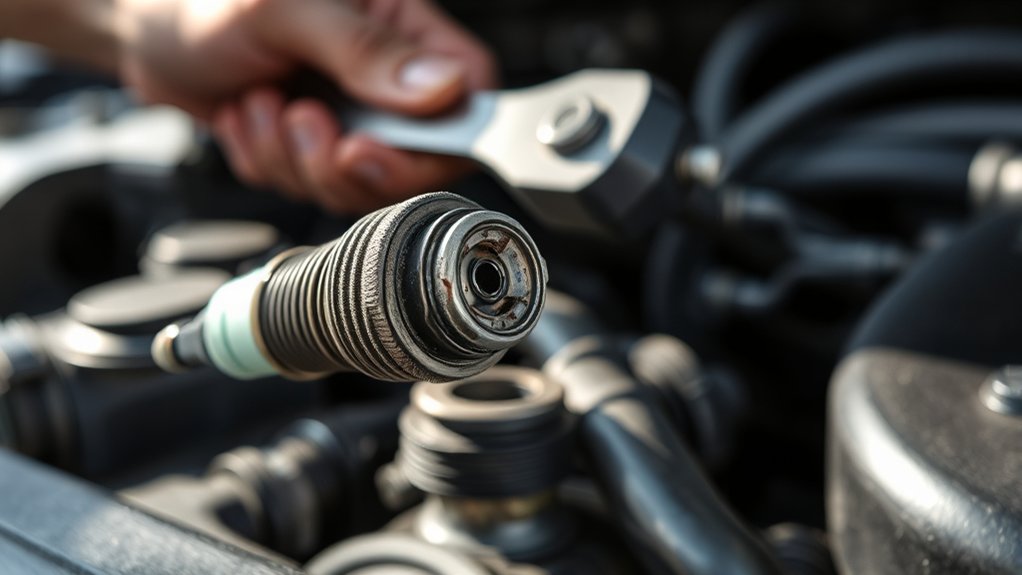
When your spark plug fails, your engine’s combustion process is disrupted, leading to misfires and reduced performance. You’ll notice that the spark plug failure causes incomplete combustion, which means fuel isn’t igniting properly in the cylinder.
This directly impacts engine performance by decreasing power output and increasing fuel consumption. Additionally, unburned fuel can lead to higher emissions and potential damage to the catalytic converter.
The engine may run rough, hesitate during acceleration, or stall unexpectedly. Spark plug failure also increases the workload on other ignition components, risking further engine issues.
Is It Safe to Drive With a Bad Spark Plug?
Recognizing the impact a faulty spark plug has on engine performance raises an important question: is it safe to continue driving with one? While you might be able to drive short distances, doing so risks degrading engine efficiency and could shorten the overall spark plug lifespan.
Driving with a faulty spark plug may be possible briefly but harms engine efficiency and lifespan.
A bad spark plug causes misfires, reduces fuel economy, and stresses ignition components.
You should consider the dangers carefully:
- Increased fuel consumption draining your wallet
- Rough idling leading to unpredictable handling
- Potential damage to catalytic converters
- Sudden engine stalling creating safety hazards
Signs Your Spark Plug Needs Immediate Replacement
How can you tell if your spark plug demands immediate replacement? First, consider the spark plug lifespan, typically between 30,000 to 100,000 miles, depending on type and usage. If you’re experiencing common symptoms like engine misfires, rough idling, or difficulty starting, these are clear indicators.
You might also notice reduced fuel efficiency or a loss of power during acceleration. Visually inspect the spark plug for signs such as heavy carbon deposits, worn electrodes, or cracks in the ceramic insulator. These conditions disrupt the spark’s quality, causing combustion issues.
Ignoring these symptoms can lead to engine damage or further mechanical failures. When you observe any of these signs, it’s essential to replace the spark plug promptly to maintain peak engine performance and avoid costly repairs.
How to Replace a Bad Spark Plug Step-by-Step
Replacing a faulty spark plug yourself can save time and money while restoring your engine’s efficiency. First, gather the necessary spark plug tools: a ratchet, spark plug socket, and gap gauge.
Begin by disconnecting the ignition coil or spark plug wire to avoid electrical shock. Next, carefully remove the old spark plug using the spark plug socket and ratchet.
Check the gap on the new spark plug with a gap gauge and adjust if needed. Finally, install the new plug by hand to prevent cross-threading, then tighten it with the ratchet.
Reconnect the ignition components and test engine performance.
Feel empowered by mastering a key maintenance skill
Save money by avoiding costly mechanic visits
Enhance your vehicle’s reliability immediately
Protect your engine from damage caused by misfires
Frequently Asked Questions
How Often Should Spark Plugs Be Inspected?
You should inspect your spark plugs every 30,000 to 50,000 miles, considering the spark plug lifespan varies by type. Regular inspection frequency guarantees peak engine performance and prevents misfires or reduced fuel efficiency.
Can Bad Spark Plugs Affect Fuel Efficiency?
Yes, bad spark plugs increase fuel consumption by causing incomplete combustion, which reduces engine performance. You’ll notice decreased power and efficiency.
Replacing faulty plugs promptly helps maintain ideal fuel economy and smooth engine operation.
What Causes Spark Plugs to Wear Out Prematurely?
You cause spark plugs to wear out prematurely by neglecting spark plug maintenance, using low-quality fuel, or having a faulty ignition system that creates inconsistent sparks. This increases electrode erosion and reduces overall ignition efficiency.
Are There Different Types of Spark Plugs for Various Engines?
You’ll find over 20 spark plug types designed for engine compatibility, including copper, platinum, and iridium variants. Each type suits specific engines, optimizing performance and longevity by matching heat range and electrode design precisely.
Can Bad Spark Plugs Damage the Catalytic Converter?
Yes, bad spark plug symptoms like misfires can cause unburned fuel to enter the exhaust, which damages your catalytic converter. This catalytic converter impact reduces efficiency, leading to costly repairs if you don’t address the spark plug issues promptly.
Conclusion
Driving with a bad spark plug is like trying to run a marathon with a twisted ankle—it’s possible but risky. You’ll experience reduced engine performance, increased fuel consumption, and potential damage to your vehicle’s ignition system.
For your safety and to avoid costly repairs, replace faulty spark plugs promptly. Follow the step-by-step replacement guide to restore peak engine function and keep your car running smoothly and efficiently.
Don’t wait until small issues become big problems. Remember, you should not drive with a bad spark plug for extended periods.