You’ll find Jeep Wranglers equipped with a range of engines, making the engine in Jeep Wrangler a key feature to consider. These options include the classic inline-4 and inline-6, as well as modern powertrains like the V6 Pentastar and turbocharged 2.0L inline-4 or 3.0L EcoDiesel V6.
These engines balance torque, horsepower, fuel efficiency, and emissions compliance. They are tailored for both urban driving and rugged off-road demands.
Gas engines deliver quick responsiveness, while diesels offer superior low-end torque. Exploring these specs helps you match engine performance to your specific driving needs and terrain challenges.
Key Takeaways
- Jeep Wrangler engines range from inline-4 and inline-6 to V6 and turbocharged options for diverse power needs.
- The V6 Pentastar engine offers 285 horsepower and 260 lb-ft of torque with reliable, straightforward maintenance.
- Turbocharged engines like the 2.0L Inline-4 and 3.0L EcoDiesel V6 provide enhanced torque and off-road capability.
- Engine choices balance power, fuel efficiency, and emissions, including fuel injection and variable valve timing technologies.
- Future Wrangler models will feature hybrid and fully electric powertrains for improved efficiency and environmental compliance.
What Engines Have Powered the Jeep Wrangler Over the Years
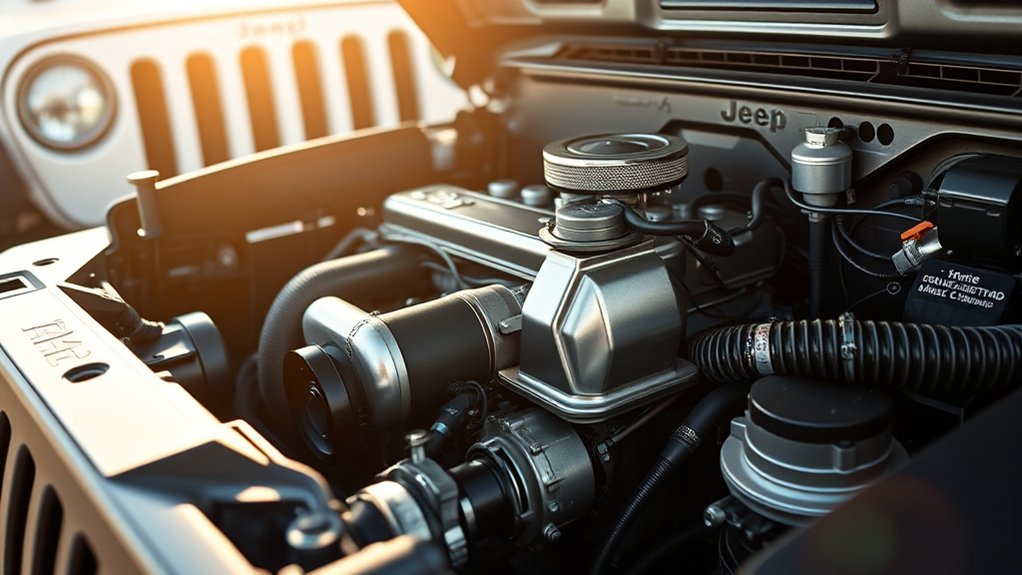
The Jeep Wrangler has been powered by a diverse range of engines since its inception, reflecting advancements in automotive technology and shifting market demands. When you study Jeep engine history, you see a clear Wrangler engine evolution from basic inline-4 and inline-6 engines in early models to more sophisticated V6 and turbocharged options today.
This progression aligns with increasing demands for power, fuel efficiency, and emissions compliance. You’ll notice that Jeep consistently adapted its powertrains, moving from carbureted to fuel-injected systems and incorporating variable valve timing and turbocharging.
Understanding this evolution helps you appreciate how Jeep balanced rugged off-road capability with modern performance requirements, documenting a technical trajectory that’s both innovative and practical for varied driving conditions across decades.
Jeep Wrangler Engine Specs and Performance
When you evaluate Jeep Wrangler engine specs and performance, you’ll find a variety of powertrains designed to optimize both on-road efficiency and off-road capability. The lineup includes turbocharged four-cylinder and V6 engines, each calibrated for torque delivery critical in rugged terrain.
You’ll notice the V6 Pentastar engine offers a balance of 285 horsepower and 260 lb-ft torque, providing responsive acceleration and reliable towing capacity. Engine maintenance remains straightforward, thanks to robust design and accessible components, minimizing downtime.
If you seek enhanced performance, power upgrades such as cold air intakes, performance chips, or exhaust modifications can increase output without compromising durability. Understanding these technical parameters helps you choose an engine that aligns with your driving demands while ensuring longevity and consistent performance across varied conditions.
Comparing Gas vs. Diesel Engines in the Jeep Wrangler
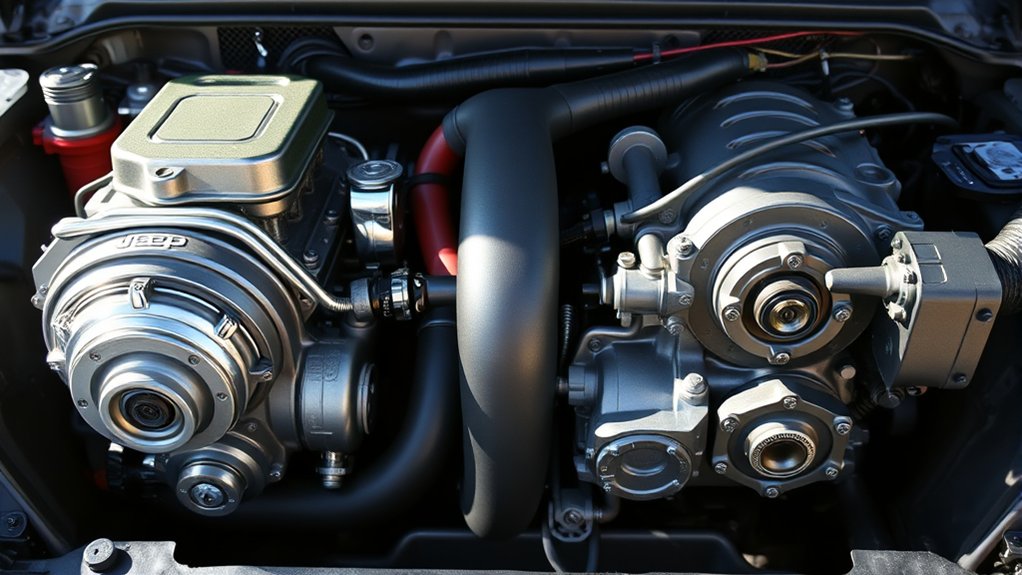
Although both gas and diesel engines power the Jeep Wrangler effectively, their distinct characteristics affect performance, fuel efficiency, and maintenance requirements. Gas engines offer benefits such as lower upfront cost, smoother operation, and generally reduced noise levels.
They also provide higher RPM ranges, contributing to quicker acceleration and responsiveness ideal for on-road driving. Conversely, diesel advantages include greater torque output at low RPMs, enhancing off-road capability and towing capacity.
Diesel engines typically deliver superior fuel efficiency and longer engine longevity due to their robust construction. However, they require more costly maintenance and emission control systems.
When choosing between gas and diesel, you should weigh the gas benefits of lower initial expense and noise against diesel advantages in torque and efficiency, depending on your driving priorities and usage patterns.
Turbocharged Engines in Modern Jeep Wranglers
You’ll find that modern Jeep Wranglers offer turbocharged engine options designed to enhance power output and torque delivery. These turbocharged engines improve performance metrics like acceleration and towing capacity while influencing fuel efficiency depending on driving conditions.
Understanding these trade-offs helps you evaluate if a turbocharged Wrangler matches your driving needs.
Turbocharged Engine Options
Since turbocharged engines offer enhanced power and efficiency, modern Jeep Wranglers incorporate several advanced turbocharged options to meet diverse performance demands. You’ll find these turbocharged advantages carefully integrated through precise engine tuning to optimize both responsiveness and fuel economy.
Here are the primary turbocharged engine options available:
- 2.0L Turbocharged Inline-4 Delivers balanced power and torque, ideal for daily driving with efficient engine tuning that maximizes output while controlling emissions.
- 3.0L EcoDiesel V6 Turbo Offers robust low-end torque, leveraging turbocharging to improve towing capacity and fuel efficiency, perfect for off-road and heavy-duty use.
- 2.2L Turbocharged Diesel (in select markets) Emphasizes torque-rich performance with advanced turbocharger calibration, enhancing drivability and durability under demanding conditions.
Each option reflects a strategic application of turbocharged technology tailored to Wrangler’s rugged versatility.
Performance Benefits Explained
Turbocharged engines in modern Jeep Wranglers deliver significant performance benefits by increasing air intake pressure, which enhances combustion efficiency and power output. This forced induction allows your engine to burn fuel more completely, resulting in higher torque and horsepower across a broader RPM range.
With precise engine tuning, you can optimize boost levels and fuel delivery to maximize responsiveness and power without compromising reliability. Additionally, aftermarket upgrades such as enhanced intercoolers, high-flow air filters, and performance exhaust systems further improve airflow and thermal management, pushing your Wrangler’s performance envelope.
Fuel Efficiency Impact
Although adding forced induction boosts power, it also influences fuel efficiency in modern Jeep Wranglers in complex ways. When you evaluate turbocharged engines, consider these key impacts on fuel economy and emissions standards compliance:
- Improved Efficiency at Low Load: Turbochargers increase air intake, allowing smaller engines to produce more power without consuming extra fuel. This enhances fuel economy during normal driving.
- Variable Fuel Consumption: Under heavy acceleration, turbocharged engines consume more fuel due to increased boost pressure. This can reduce overall fuel efficiency.
- Emissions Control: Turbocharging helps engines meet stringent emissions standards by optimizing combustion, reducing pollutants despite higher power output.
How Jeep Wrangler Engines Tackle Off-Road Challenges
You rely on the Jeep Wrangler’s engine for both high power and torque to navigate steep inclines and uneven surfaces. Its durability guarantees consistent performance despite exposure to harsh conditions and rough terrain.
Understanding these engine characteristics reveals how the Wrangler maintains capability off-road.
Engine Power and Torque
When traversing rugged terrain, the Jeep Wrangler’s engine power and torque play a critical role in maintaining traction and control. You’ll find that precise engine tuning maximizes low-end torque, essential for crawling over obstacles without stalling. Power upgrades are often sought to enhance responsiveness and overall performance.
Key factors include:
1. Torque Delivery
Wrangler engines produce high torque at low RPMs, enabling steady power application on steep inclines and uneven surfaces.
2. Power-to-Weight Ratio
Efficient power output relative to vehicle weight guarantees better acceleration and maneuverability in off-road conditions.
3. Engine Calibration
Optimized ECU mapping adjusts fuel and air intake for consistent power under varying loads and altitudes.
Understanding these elements helps you leverage the Wrangler’s engine capabilities for challenging off-road scenarios.
Durability in Rough Terrain
Building on the Wrangler’s optimized power and torque characteristics, its engine durability guarantees reliable performance under extreme off-road conditions. You’ll find that the engine’s robust construction, including reinforced components and advanced cooling systems, minimizes wear during prolonged exposure to rugged terrain.
This durability complements suspension upgrades, allowing the vehicle to absorb shocks while maintaining engine integrity. The Wrangler’s terrain adaptability stems from this synergy, enabling consistent power delivery even when maneuvering uneven surfaces or steep inclines.
You can rely on the engine’s resilience to withstand debris, water fording, and temperature fluctuations common in off-road environments. This engineered toughness guarantees the Wrangler’s powertrain remains responsive and dependable, letting you confidently tackle rough trails without compromising performance.
Choosing the Best Jeep Wrangler Engine for Your Driving Style
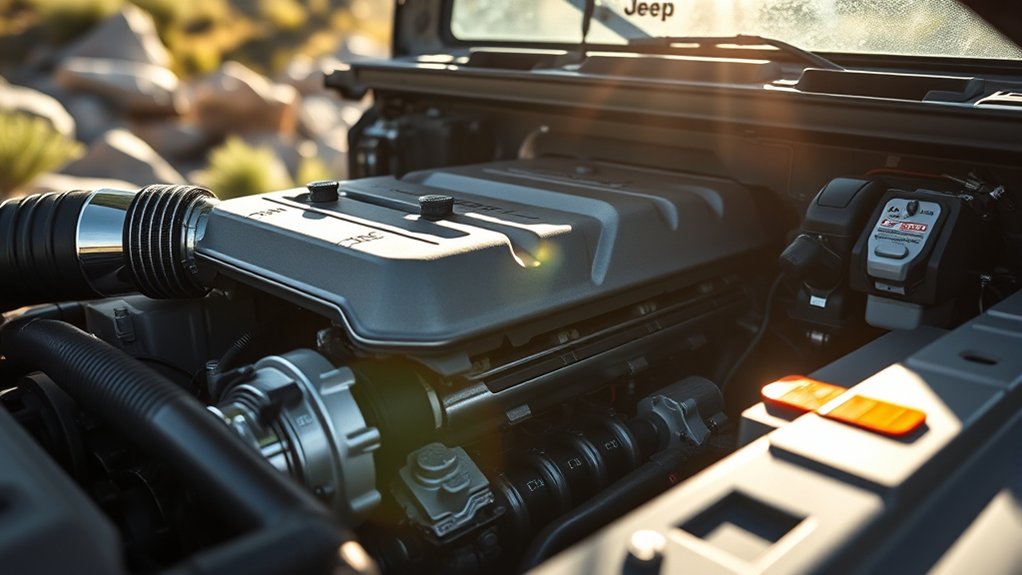
Although Jeep Wrangler engines vary widely in performance characteristics, selecting the ideal powertrain depends heavily on your specific driving demands and terrain preferences. To optimize engine reliability and enhance your driving experience, consider these factors:
- Terrain Type: If you frequently tackle rocky or uneven trails, prioritize engines with high torque output for better control and durability.
- Daily Use vs. Off-Roading: For urban or highway driving, fuel-efficient engines provide smooth performance and reduced wear, enhancing long-term reliability.
- Power vs. Efficiency Balance: Choose an engine that matches your need for acceleration and payload capacity without compromising fuel economy or maintenance costs.
Analyzing these variables guarantees you select a Jeep Wrangler engine that aligns precisely with your driving style and reliability expectations.
Future Engine Options and Innovations for the Jeep Wrangler
Understanding your current engine needs sets the stage for exploring how Jeep is advancing powertrain technology to meet evolving demands. Jeep is actively integrating hybrid technology into the Wrangler lineup, combining internal combustion engines with electric motors to enhance fuel efficiency and torque delivery without sacrificing off-road capability.
You’ll find plug-in hybrid variants offering electric power for short commutes, reducing emissions while maintaining rugged performance. Looking ahead, Jeep plans to expand fully electric powertrain options, emphasizing battery efficiency and durability to guarantee the Wrangler’s signature versatility persists.
These innovations aim to balance environmental responsibility with the Wrangler’s demanding operational profile, providing you with powertrain choices that adapt to stricter regulations and shifting consumer preferences while preserving the vehicle’s core strengths.
Frequently Asked Questions
How Often Should I Change the Oil in a Jeep Wrangler Engine?
You should change your oil every 5,000 to 7,500 miles to optimize oil change frequency. Regular oil changes are essential engine maintenance tips, ensuring lubrication, preventing wear, and maintaining your Jeep Wrangler’s performance and longevity effectively.
What Type of Fuel Is Best for Jeep Wrangler Engines?
You should use premium unleaded gasoline to optimize fuel efficiency and engine performance in your Jeep Wrangler. This fuel reduces knocking, guarantees cleaner combustion, and maintains power output, especially under demanding driving conditions or with turbocharged engines.
Are Jeep Wrangler Engines Compatible With Aftermarket Performance Parts?
You want reliability, performance, and power; you crave precision, durability, and control. Jeep Wrangler engines are compatible with many aftermarket modifications and engine upgrades.
However, you must verify parts match specifications to maintain peak function and avoid damage.
How Reliable Are Jeep Wrangler Engines in Extreme Weather Conditions?
You’ll find Jeep Wrangler engine performance reliable in extreme weather conditions due to robust weather resistance features. Its cooling systems and sealed components maintain peak function, ensuring consistent power delivery despite temperature extremes and harsh environments.
What Is the Average Lifespan of a Jeep Wrangler Engine?
You can expect a Jeep Wrangler engine to last 200,000 to 300,000 miles, provided you perform regular engine maintenance.
Lifespan factors include driving habits, climate, and oil change frequency, all essential for maximizing durability and performance.
Conclusion
When you choose a Jeep Wrangler engine, you’re not just picking power—you’re selecting a tool engineered for adventure and precision. Whether it’s the raw torque of a diesel or the quick response of a turbocharged gas engine, each option meets specific driving demands.
Think of your engine as the heart of your Wrangler, pulsing with capability and innovation.
So, which heartbeat will drive your next journey in your Jeep Wrangler engine?