You cause carbon build-up on your spark plugs mainly by running a rich fuel mixture that leaves unburned fuel residues.
Driving short trips that prevent the engine from reaching its ideal temperature also contributes to carbon deposits. Using poor-quality fuel can further worsen the problem.
Neglecting regular maintenance, such as air filter changes, allows contaminants to accumulate.
Additionally, oil leaking into the combustion chamber from worn seals promotes carbon build-up.
These factors lead to incomplete combustion and soot deposits, which reduce ignition efficiency.
To understand how these issues interact and how to prevent them, keep exploring the details.
Key Takeaways
- A rich fuel mixture causes incomplete combustion, leading to excess carbon deposits on spark plugs.
- Poor fuel quality introduces impurities that increase soot and carbon buildup on spark plugs.
- Short trips prevent the engine from reaching optimal temperature, promoting carbon accumulation.
- Oil leaks into the combustion chamber from worn seals or gaskets cause significant carbon deposits.
- Ignition issues, like weak sparks or incorrect spark plugs, reduce combustion efficiency and increase carbon buildup.
What Is Carbon Build-Up on Spark Plugs?
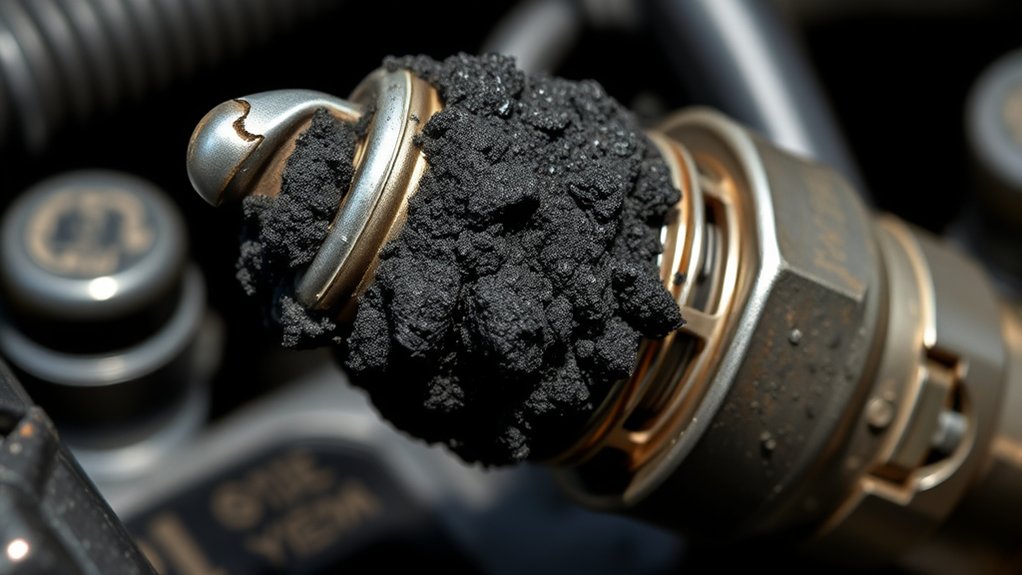
Although spark plugs are designed to handle extreme conditions, carbon build-up occurs when incomplete combustion leaves behind soot deposits on their electrodes and insulator tips. You need to understand that this carbon layer disrupts the spark’s efficiency, causing misfires, poor fuel economy, and rough idling.
Effective spark plug maintenance involves regular inspection and cleaning to detect and remove carbon deposits early. Carbon detection is critical; you’ll notice black, dry, and sooty residues on the spark plug surface, which signals combustion issues.
Using proper diagnostic tools and visual inspection, you can identify carbon build-up before it impairs engine performance. Maintaining clean spark plugs guarantees reliable ignition, peak fuel combustion, and extended engine life, making carbon detection an essential aspect of your routine spark plug maintenance.
Why Carbon Build-Up Happens: Common Causes
When your engine runs rich or experiences incomplete combustion, carbon build-up on spark plugs becomes inevitable. This condition often stems from poor fuel quality, which leaves unburned hydrocarbons that deposit carbon residues.
Neglecting regular engine maintenance, such as failing to replace air filters or address faulty fuel injectors, exacerbates incomplete combustion. Additionally, certain driving habits, like frequent short trips or excessive idling, don’t allow the engine to reach ideal temperature, promoting carbon accumulation.
The spark plug type also plays an essential role; using plugs with incorrect heat ranges or worn electrodes can reduce combustion efficiency, increasing carbon deposits. Understanding these factors helps you prevent carbon build-up, ensuring your engine runs efficiently and spark plugs maintain proper function.
How a Rich Fuel Mixture Leads to Carbon Deposits
When your engine runs with a rich fuel mixture, it injects more fuel than necessary for complete combustion. This excess fuel doesn’t burn fully, leaving behind unburned hydrocarbons that accumulate as carbon deposits on the spark plugs.
These deposits interfere with spark efficiency, leading to misfires and further incomplete combustion.
Excess Fuel Effects
Because a rich fuel mixture contains more fuel than the engine can effectively burn, it promotes incomplete combustion that results in carbon residue. When you run excess fuel, the combustion efficiency decreases, and unburnt hydrocarbons accumulate on the spark plug surface.
This carbon buildup stems from the fuel quality and how well the air-fuel ratio is managed. Poor fuel quality exacerbates the problem by introducing impurities that don’t vaporize or combust fully, leaving deposits.
Additionally, excess fuel cools the combustion chamber, reducing the spark plug’s self-cleaning temperature range. This cooler environment favors carbon accumulation rather than oxidation.
To maintain peak combustion efficiency and prevent carbon buildup, you need to make sure the air-fuel mixture is balanced and fuel quality meets manufacturer specifications.
Incomplete Combustion Causes
Excess fuel not only affects combustion efficiency but also directly contributes to incomplete combustion processes that cause carbon deposits on spark plugs. When the air-fuel mixture is too rich, meaning there’s more fuel than ideal oxygen, the combustion chamber cannot fully oxidize the hydrocarbons.
This incomplete combustion results in unburned fuel particles, which settle as carbon deposits on the spark plug’s electrodes and insulator. Poor fuel quality exacerbates this issue by containing impurities and heavier hydrocarbons that resist complete combustion.
As carbon accumulates, it impedes the spark plug’s ability to generate a strong spark, further degrading combustion efficiency and creating a feedback loop. To minimize carbon buildup, you need to guarantee proper air-fuel ratios and maintain high fuel quality, enhancing the combustion process and extending spark plug life.
Why Short Trips and Ignition Issues Increase Carbon Build-Up
When you frequently take short trips, your engine doesn’t reach ideal operating temperature, causing incomplete combustion that deposits carbon on spark plugs. Additionally, ignition issues like weak sparks or misfires prevent efficient fuel burn, accelerating carbon accumulation.
Understanding these factors helps you identify and address conditions that promote excessive carbon build-up.
Impact Of Short Trips
Although short trips may seem harmless, they considerably contribute to carbon build-up on spark plugs by preventing the engine from reaching ideal operating temperature. When your engine stays cold, fuel combustion becomes incomplete, causing unburned hydrocarbons to accumulate on the electrodes.
These deposits degrade spark plug performance, increasing misfires and reducing fuel efficiency. Short trips also limit the activation of the catalytic converter, which normally helps burn off excess carbon. As a result, carbon layers thicken faster, insulating the spark plug and disrupting the ignition process.
Over time, this buildup forces your engine to work harder, lowering overall fuel economy and increasing emissions. To minimize carbon accumulation, it’s essential to include longer, sustained drives that allow the engine to fully heat up and operate efficiently.
Effects Of Ignition Problems
Because ignition problems compromise the spark plug’s ability to ignite the air-fuel mixture efficiently, they considerably accelerate carbon buildup. When ignition timing is off, combustion becomes incomplete, leaving unburned fuel residues that deposit carbon on the spark plug’s surface.
Poor fuel quality worsens this effect by introducing contaminants and additives that don’t combust fully, increasing soot accumulation. Short trips exacerbate ignition issues, as the engine doesn’t reach ideal temperature, preventing proper fuel vaporization and combustion.
Consequently, carbon accumulates faster, reducing spark plug efficiency and causing misfires. If you don’t address ignition timing errors or use substandard fuel, carbon deposits will build up rapidly, impairing engine performance and increasing emissions.
Regularly checking ignition settings and using high-quality fuel helps minimize this carbon buildup.
How Engine Oil Leaks Cause Carbon Build-Up on Spark Plugs
If your engine oil starts leaking into the combustion chamber, it can cause significant carbon deposits to accumulate on the spark plugs. This contamination results from incomplete combustion of the oil, leading to excessive carbon buildup that impairs spark efficiency and engine performance.
You should focus on early leak detection to mitigate increased oil consumption and avoid costly repairs. Key factors contributing to this issue include:
- Worn valve seals or guides allowing oil intrusion.
- Damaged piston rings failing to seal combustion gases.
- Faulty head gasket permitting oil leakage.
- Excessive blow-by gases pushing oil into cylinders.
Recognizing these causes helps you diagnose oil consumption issues and understand how they directly lead to carbon buildup on your spark plugs.
How to Prevent Carbon Build-Up and Keep Your Spark Plugs Clean
Addressing the root causes of oil leaks is just one part of maintaining spark plug integrity; implementing proactive measures can markedly reduce carbon buildup and extend spark plug life. To prevent carbon accumulation, establish a routine preventive maintenance schedule that includes regular inspection of ignition components and fuel system calibration.
Use high-quality fuel and maintain proper air-fuel mixture to minimize incomplete combustion. For spark plug cleaning, employ specialized cleaning tools or ultrasonic cleaners to remove deposits without damaging electrodes or insulators. Avoid abrasive methods that can alter the spark plug’s gap or surface.
Additionally, monitor engine operating temperatures to prevent conditions conducive to carbon formation. By combining preventive maintenance with precise spark plug cleaning, you’ll guarantee peak engine performance and extend the functional lifespan of your spark plugs.
Frequently Asked Questions
Can Carbon Build-Up Damage Other Engine Components?
Yes, carbon build-up can damage other engine components by reducing combustion efficiency and causing misfires. You should prioritize engine maintenance to prevent deposits, ensuring peak performance and avoiding costly repairs linked to excessive carbon accumulation.
How Often Should Spark Plugs Be Replaced to Avoid Carbon Build-Up?
You should follow the recommended replacement frequency, usually every 30,000 to 50,000 miles, to prevent carbon build-up.
Regular maintenance tips include inspecting spark plugs and adjusting fuel mixtures for ideal combustion efficiency.
Does Using Premium Fuel Reduce Carbon Deposits on Spark Plugs?
Think of premium fuel as a shield against carbon’s siege; its higher octane rating and superior fuel quality guarantee more complete combustion, greatly reducing carbon deposits on your spark plugs. This enhances your engine’s efficiency and longevity.
Can Carbon Build-Up Affect Fuel Efficiency and Engine Performance?
Yes, carbon build-up disrupts the fuel mixture and ignition timing, causing incomplete combustion. This reduces fuel efficiency and engine performance, leading you to experience rough idling, misfires, and decreased power output in your vehicle.
Are There Specific Spark Plug Types Less Prone to Carbon Build-Up?
Think of spark plug materials as armor against carbon; iridium and platinum types resist buildup better. Their superior combustion efficiency guarantees cleaner burns, reducing deposits and maintaining peak ignition performance over time.
You’ll notice improved engine reliability.
Conclusion
To combat carbon build-up, consistently check your combustion conditions and correct any rich fuel mixtures or ignition issues promptly. Short trips often spark soot, so aim for steady, sustained drives to stave off deposits. Sealing engine oil leaks stops sneaky seepage that soils spark plugs.
By proactively preventing these persistent problems, you preserve peak performance and prolong plug life. This ensures smooth, efficient engine operation without costly carbon complications.
Stay smart, stay spark-clean, and keep carbon build-up on a spark plug at bay.