You should apply a thin, even coat of a high-quality, low-bleed synthetic lubricant or nickel-based anti-seize to your spark plug threads. This prevents galling, guarantees accurate torque readings, and protects threads from corrosion and heat damage.
Avoid copper-based or generic greases since they can cause inaccurate torque or degrade under high temperatures.
Cleaning and inspecting the threads before application is essential for reliable installation and removal.
Understanding engine-specific needs will optimize spark plug longevity and performance.
Key Takeaways
- Use a thin, even coat of high-quality anti-seize or low-bleed synthetic lubricant on spark plug threads.
- Prefer nickel-based or low-bleed lubricants to avoid affecting torque readings.
- Avoid copper-based compounds on aluminum heads as they may cause inaccurate torque readings.
- Clean and inspect threads thoroughly before applying lubricant or anti-seize to prevent cross-threading.
- Do not over-apply lubricant to ensure proper torque and prevent misfires or thread damage.
Best Lubricants and Anti-Seize Compounds for Spark Plug Threads
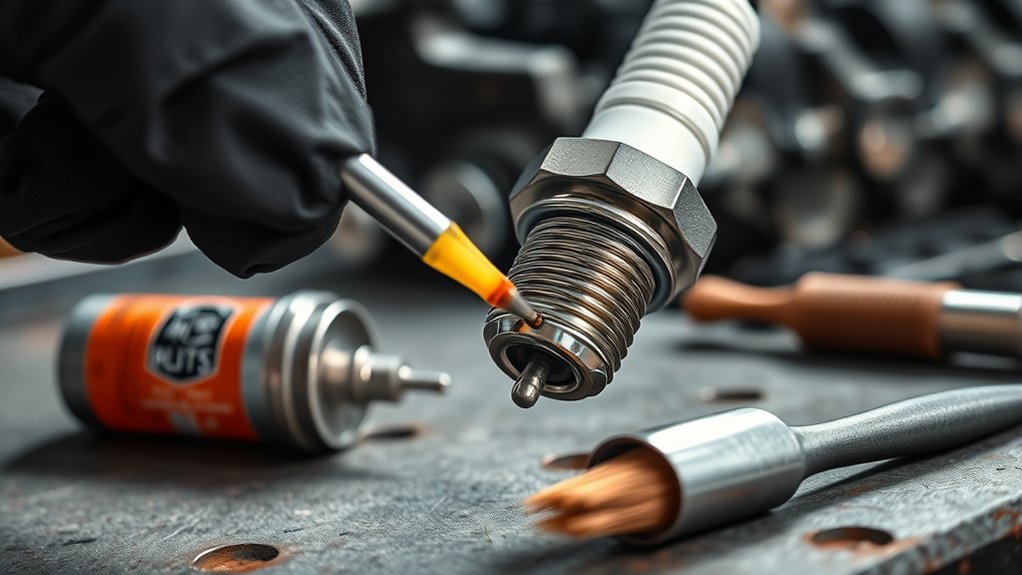
Choosing the right lubricant or anti-seize compound for spark plug threads is essential to guarantee proper installation, prevent thread galling, and facilitate future removal. For spark plug maintenance, using a high-quality anti-seize with excellent thread compatibility is critical, especially on aluminum cylinder heads prone to seizing.
Copper-based anti-seize compounds are common but can affect torque readings, so low-bleed synthetic lubricants or nickel-based anti-seize are often preferred for precise torque control. Avoid using generic grease, as it may degrade under high temperatures.
Confirm the selected compound withstands combustion heat and resists corrosion. By choosing the appropriate lubricant or anti-seize, you protect threads from damage and simplify future spark plug replacement, maintaining engine reliability and performance.
How to Apply Lubricants or Anti-Seize on Spark Plug Threads
Before applying any lubricant or anti-seize to spark plug threads, make sure the threads are clean and free of debris or old compound. Proper spark plug thread preparation guarantees accurate torque readings and prevents thread damage.
Follow these lubrication techniques for ideal application:
| Step | Action |
|---|---|
| 1. Inspection | Check threads for damage or contamination |
| 2. Cleaning | Use a wire brush or compressed air |
| 3. Application | Apply a thin, even coat of lubricant or anti-seize |
| 4. Installation | Insert spark plug and torque to manufacturer specs |
Only coat the threads lightly; excess material can cause inaccurate torque or misfires. Use tools carefully to avoid cross-threading. These steps help maintain thread integrity and enhance plug performance.
Avoid Common Mistakes When Preparing Spark Plug Threads
Applying the right amount of lubricant or anti-seize on spark plug threads helps prevent damage and guarantees accurate torque readings, but overlooking common preparation errors can still cause problems.
First, skip the temptation to reuse worn plugs without thorough spark plug cleaning; debris or carbon deposits can affect thread engagement. Next, always perform a detailed thread inspection on both the cylinder head and the spark plug to identify damage or contamination that might cause cross-threading or improper sealing.
Avoid over-applying lubricant, as excess can lead to inaccurate torque and potential plug loosening. Finally, never install plugs with damaged threads or dirt present, as this compromises performance and engine reliability.
Why Use Lubricants or Anti-Seize on Spark Plug Threads?
When you lubricate spark plug threads, you reduce friction during installation, which helps prevent thread galling and seizing in the cylinder head. Applying a lubricant or anti-seize compound guarantees smooth torque application, minimizing the risk of over-tightening or damaging the threads.
This practice directly contributes to spark plug longevity by facilitating easier removal during maintenance and preventing thread corrosion caused by heat and chemical exposure. Without lubrication, metal-to-metal contact can accelerate wear and corrosion, leading to costly repairs.
Additionally, anti-seize compounds form a protective barrier that withstands high temperatures and combustion byproducts. By using the correct thread lubricant, you maintain the integrity of the spark plug threads and cylinder head, assuring reliable engine performance and extending the service life of spark plugs.
How Engine Types Affect Spark Plug Thread Prep
Since different engine designs expose spark plug threads to varying temperatures, pressures, and materials, you need to tailor your thread preparation accordingly. For example, engines with high engine vibrations require lubricants that resist loosening. Those with sensitive spark plug materials may need non-corrosive anti-seize compounds.
Diesel engines often operate under higher pressures, demanding robust thread protection to prevent seizing.
| Engine Type | Thread Prep Consideration |
|---|---|
| High-Vibration | Use vibration-resistant lubricants |
| Sensitive Materials | Apply non-corrosive anti-seize |
| High-Pressure | Use heavy-duty thread protectants |
Understanding your engine type guarantees ideal spark plug performance and longevity by selecting the appropriate thread prep method.
Frequently Asked Questions
Can I Reuse Spark Plugs After Removing Them?
You can reuse spark plugs if they show no damage or excessive wear, but always check spark plug longevity. Follow installation tips carefully to avoid cross-threading and guarantee proper torque for maximum performance and safety.
How Often Should Spark Plugs Be Replaced?
You should replace spark plugs every 30,000 to 100,000 miles, depending on their lifespan. Watch for replacement indicators like misfires, poor fuel economy, or rough idling to maintain engine performance and efficiency.
What Happens if I Overtighten Spark Plugs?
If you overtighten spark plugs, you risk damaging the threads or breaking the spark plug. Proper spark plug torque and thread lubrication guarantee secure installation without stripping threads or causing engine issues.
Always follow torque specs precisely.
Are There Specific Tools Needed for Spark Plug Installation?
Installing spark plugs without the right tools is like painting without a brush. You’ll need a torque wrench, spark plug socket, and gap gauge to handle various spark plug types and guarantee precise installation techniques. This prevents damage and ensures peak performance.
Can Damaged Spark Plug Threads Be Repaired?
Yes, you can repair damaged spark plug threads using a thread repair kit designed for spark plug materials. These kits restore thread integrity, ensuring a secure fit and preventing further damage during installation or removal.
Conclusion
When prepping spark plug threads, using the right lubricant or anti-seize is like oiling the gears of a finely tuned machine—it guarantees smooth installation and prevents damage. Apply sparingly and evenly to avoid over-application, which can cause misfires or inaccurate torque readings.
Remember, different engines demand specific care, so choose your product wisely. With proper thread prep, you’ll safeguard your engine’s performance and extend its lifespan.
Making sure to use the correct material on spark plug threads is essential for reliable starts and long-lasting engine health.