To change spark plug boots, first ensure your engine is cool to prevent burns.
Begin by disconnecting the negative battery terminal to avoid electrical shocks. This initial step is crucial for safety before handling any ignition components.
Use a spark plug boot puller to grip the old boot firmly. Twist it gently at the base to remove it without causing damage to the boot or spark plug. Avoid pulling directly on the wire to prevent tearing or disconnection.
Next, clean the spark plug thoroughly to remove any dirt or debris.
Apply dielectric grease inside the new boot to ensure a good electrical connection and protect against moisture. Firmly seat the new boot onto the spark plug, applying enough pressure without using excessive force.
After reinstalling the boots, start the engine and observe its performance.
Check for smooth idling and listen for any signs of misfires. Following these precise steps will help maintain ignition integrity and prevent common errors discussed ahead.
Key Takeaways
- Disconnect the negative battery terminal and ensure the engine is cool before starting spark plug boot replacement.
- Use a spark plug boot puller to twist and safely remove the old boot without damaging the spark plug or wire.
- Apply dielectric grease inside the new boot to prevent moisture and corrosion before installing it onto the clean spark plug.
- Firmly seat the new boot on the spark plug, avoiding excessive force or sharp tools to protect the silicone material.
- Test engine performance post-replacement using an OBD-II scanner and check for stable RPM, smooth idling, and absence of misfires.
What Spark Plug Boots Do and Why They Wear Out
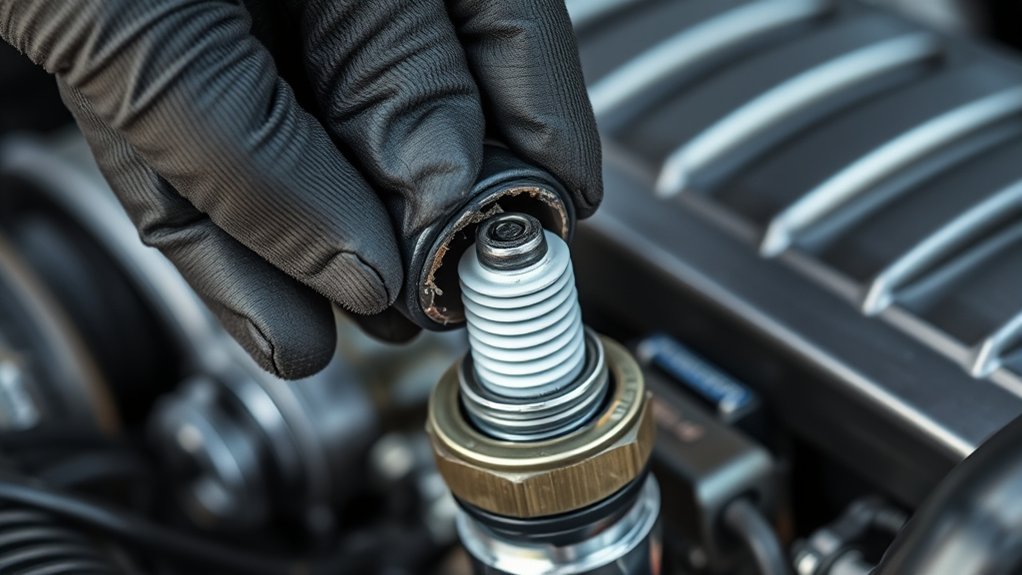
Although spark plug boots appear simple, they play a critical role in your engine’s ignition system by insulating and securely connecting the spark plug to the ignition coil or wire. The spark plug materials must withstand high voltage and extreme temperatures, which places significant stress on the boot.
Typically made from silicone or rubber compounds, these materials provide necessary flexibility and electrical insulation. Over time, exposure to heat, oil, and vibration degrades the boot, shortening its lifespan. You’ll find that boot lifespan varies based on the quality of spark plug materials and operating conditions.
Understanding these factors helps you anticipate wear and maintain peak engine performance by replacing boots before insulation failure or connection issues arise.
How to Spot When Spark Plug Boots Need Replacing
You’ll want to inspect spark plug boots for visible cracks, brittleness, or corrosion that compromise their insulation. Pay attention to engine performance issues like misfires, rough idling, or difficulty starting, which often indicate boot failure.
Identifying these signs early helps guarantee reliable ignition and prevents further engine damage.
Visible Wear And Tear
Visible wear and tear on spark plug boots can greatly impact engine performance and reliability. When inspecting the boot material, look for signs of cracking, brittleness, or hardening, which indicate aging or exposure to heat and chemicals.
Pay close attention to wear indicators, such as visible splits or frayed edges, as these compromise the boot’s insulating properties. Discoloration or deformation also signals deterioration. Use a flashlight to check hard-to-see areas thoroughly.
If the boot feels unusually stiff or sticky, it’s a sign the rubber compounds have degraded. Don’t overlook corrosion on metal connectors inside the boot, which can cause poor electrical contact.
Regular, methodical inspection of these visible factors guarantees you replace spark plug boots before they fail, maintaining peak ignition system function.
Engine Performance Issues
Wear and damage to spark plug boots often lead to noticeable engine performance issues that signal the need for replacement. You may experience engine misfires, rough idling, or hesitation during acceleration, all of which indicate poor electrical insulation or connection failure in the boots.
These issues disrupt spark delivery, impairing combustion efficiency and overall engine function. When performing performance tuning, monitoring for these symptoms helps you identify faulty boots early.
Use a diagnostic scan tool to detect misfire codes related to specific cylinders. Visually inspect boots for cracks, corrosion, or carbon tracking. Replacing compromised boots restores peak spark transmission, stabilizes ignition timing, and improves fuel efficiency.
Addressing these performance issues promptly prevents further engine damage and guarantees your vehicle runs smoothly and reliably.
Tools You’ll Need to Change Spark Plug Boots
To change spark plug boots efficiently, gather a few essential tools beforehand. You’ll need a spark plug boot puller to safely remove the boots without damaging the ignition wire.
A ratchet with the appropriate spark plug socket size is vital for loosening and tightening the plugs. Use a torque wrench to guarantee proper installation torque, preventing damage or poor connections.
A gap gauge helps verify spark plug types and correct gap settings, aligning with maintenance tips for peak engine performance. Additionally, have dielectric grease on hand to apply inside the boots, preventing moisture ingress and corrosion.
Finally, a clean rag and safety gloves protect your hands and help maintain a clean work area. These tools streamline the replacement process, assuring precision and reliability.
Choosing the Right Replacement Spark Plug Boots
When selecting replacement spark plug boots, you need to guarantee compatibility with your engine’s ignition system specifications. Confirming boot compatibility prevents misfires and maintains efficient ignition. Focus on these critical factors:
- Verify the spark plug materials to match resistance and conductivity requirements.
- Confirm the boot’s internal diameter suits your spark plug terminal size.
- Check the heat resistance rating to withstand your engine’s operating temperature.
- Ensure the boot’s design aligns with coil or distributor connections.
Choosing boots with appropriate materials, such as silicone or EPDM rubber, improves durability and insulation. Avoid generic options that might compromise performance. By methodically evaluating these elements, you maintain peak spark delivery and engine reliability, reducing the risk of ignition issues. This precise selection process is essential before proceeding to replace your spark plug boots.
Preparing Your Vehicle to Replace Spark Plug Boots
Before you begin replacing spark plug boots, verify the engine is completely cool to prevent burns and damage to ignition components. Park your vehicle on a flat surface, engage the parking brake, and disconnect the negative battery terminal to avoid electrical hazards.
Gather essential spark plug tools, including a spark plug socket, ratchet, and boot puller, guaranteeing they are in good condition. Remove any engine covers or components obstructing access to the ignition coils or spark plug wires.
Consult your vehicle maintenance manual to identify the exact location and configuration of the spark plug boots. Clean the surrounding area to prevent debris from entering the spark plug wells during replacement. Taking these preparatory steps methodically guarantees a safe, efficient process and protects critical ignition system components.
How to Remove Old Spark Plug Boots Safely
Grip the spark plug boot firmly at its base, close to the spark plug, and gently twist it to break the seal. Proper boot removal techniques prevent damage to the boot or spark plug.
Follow these safety precautions:
- Disconnect the battery to avoid accidental electrical shocks.
- Use insulated gloves to protect your hands from residual current.
- Avoid pulling on the wire; always pull by the boot to prevent wire damage.
- Inspect the boot and wire for cracks or wear before removal.
Applying these precise steps minimizes risk and guarantees the boot comes off cleanly. Twisting rather than pulling breaks the adhesion without stressing the components.
Adhering to safety precautions maintains your safety and preserves the integrity of your ignition system during boot removal.
Installing New Spark Plug Boots Without Damage
After carefully removing the old spark plug boots without damaging the wires or connectors, you can proceed to install the new boots. First, verify that the boot materials match your engine’s specifications. Silicone boots offer flexibility and heat resistance, while rubber boots provide durable insulation.
Before installation, apply a small amount of dielectric grease inside the boot to guarantee a secure electrical connection and prevent moisture intrusion. Align the boot carefully with the spark plug terminal and wire connector, avoiding any twisting or pulling that could stress internal components.
Use steady, even pressure to push the boot fully onto the spark plug until it clicks or seats firmly. Following these installation techniques guarantees peak performance and extends the lifespan of your spark plug boots without causing damage.
How to Test Your Engine After Replacement
Start by performing three key checks to confirm your engine runs smoothly after replacing the spark plug boots. First, conduct a visual inspection to verify all boots are securely seated on spark plugs and ignition coils. Next, initiate engine diagnostics using an OBD-II scanner to detect any error codes related to ignition or misfires.
Then, perform performance testing by starting the engine and monitoring RPM stability, acceleration responsiveness, and idle smoothness. Finally, listen for unusual noises or misfire symptoms that could indicate poor connections.
Follow this numeric checklist:
- Verify spark plug boot connections visually.
- Run engine diagnostics for fault codes.
- Execute performance testing under idle and load.
- Monitor for abnormal engine sounds or behaviors.
This methodical approach confirms peak ignition and engine reliability post-replacement.
Common Mistakes That Damage Spark Plug Boots
While replacing spark plug boots, you might unknowingly make errors that compromise their integrity and performance. One common misconception is pulling the boot off by the wire rather than the boot itself; this risks damaging the internal conductor and insulation.
Avoid using excessive force or sharp tools, as they can tear or deform the boot’s silicone material. Skipping proper spark plug maintenance, like cleaning or inspecting the boot, can lead to premature wear and misfires.
Additionally, neglecting to apply dielectric grease can cause moisture intrusion and corrosion, reducing boot lifespan. Always verify the boot seats firmly on the plug to prevent arcing.
Frequently Asked Questions
Can I Change Spark Plug Boots Myself Without Professional Help?
Yes, you can handle spark plug boot replacement yourself. Follow DIY repairs guidelines carefully, use proper tools, and apply maintenance tips to avoid damage.
Stay methodical, guarantee proper seating, and disconnect the battery for safety during the process.
How Often Should Spark Plug Boots Be Replaced for Optimal Performance?
You don’t want your spark plug boots to become ancient relics. Replace them every 30,000 to 50,000 miles to maintain ideal spark plug lifespan and enjoy performance benefits like consistent ignition and fuel efficiency.
Are Aftermarket Spark Plug Boots as Good as OEM Parts?
Aftermarket quality varies widely, so you should carefully check boot compatibility with your engine. Some aftermarket spark plug boots perform as well as OEM parts, but others lack durability or fit precision, impacting ignition reliability.
What Are the Signs of a Faulty Spark Plug Boot Besides Engine Misfire?
You’ll notice spark plug boot symptoms like visible cracks, corrosion, or carbon tracking. These indicate ignition system issues beyond misfires, including rough idling, poor acceleration, or increased fuel consumption.
These signs signal the boot’s compromised insulation and connection.
Can Damaged Spark Plug Boots Affect Fuel Efficiency?
Yes, damaged spark plug boots reduce spark plug boot longevity and disrupt the fuel mixture impact, causing incomplete combustion. This inefficiency lowers fuel economy, so maintaining boot integrity guarantees ideal fuel mixture and better overall fuel efficiency.
Conclusion
By changing your spark plug boots carefully, you not only prevent engine misfires but also extend your vehicle’s performance. It’s no coincidence that a well-maintained ignition system leads to smoother starts and better fuel efficiency.
Remember, using the right tools and avoiding common mistakes guarantees a precise fit and lasting durability. So, take your time, follow each step methodically, and enjoy the reliable engine response that comes with well-installed spark plug boots.
Properly changing spark plug boots ensures your engine runs smoothly and efficiently, making this maintenance task essential for any vehicle owner.