A spark plug boot connects the ignition coil to the spark plug, ensuring a secure, insulated path for high-voltage current to ignite your engine’s air-fuel mixture.
This essential component protects against moisture, dirt, and heat, preventing voltage leaks and corrosion that can cause misfires or rough idling.
You should inspect these boots regularly and replace them if damaged to maintain engine efficiency.
Understanding their role helps you keep your ignition system running smoothly and avoid costly repairs.
Key Takeaways
- A spark plug boot connects the ignition coil to the spark plug, ensuring a secure electrical path.
- It insulates the high-voltage current to prevent voltage leaks and electrical shorts.
- The boot protects the connection from moisture, dirt, heat, and corrosion.
- It plays a critical role in igniting the engine’s air-fuel mixture efficiently.
- Proper boot function prevents engine misfires, rough idling, and starting issues.
What Is a Spark Plug Boot and Why It Matters
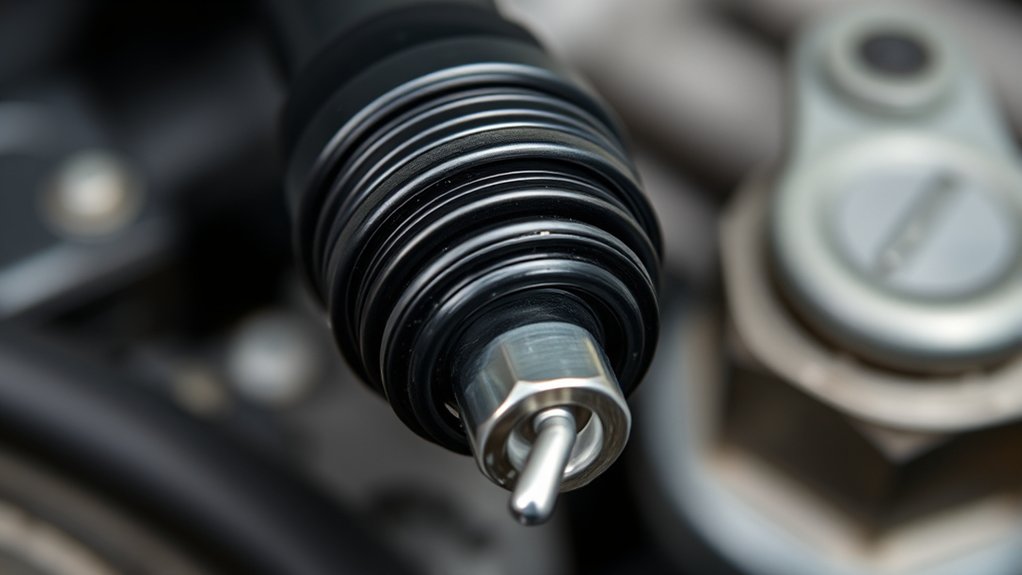
A spark plug boot is a critical component that connects the ignition coil to the spark plug, ensuring a secure electrical path for the high-voltage current needed to ignite the air-fuel mixture in an engine. You rely on this connection for the spark plug function, which is essential within the ignition system to initiate combustion.
The boot insulates the electrical current, preventing voltage leaks that could disrupt engine performance. It also protects the connection from moisture, dirt, and heat, which can degrade conductivity over time.
Without a properly functioning spark plug boot, the ignition system can’t deliver consistent sparks, leading to misfires, reduced efficiency, and potential engine damage. Understanding this component highlights why maintaining its integrity is crucial for your vehicle’s reliable operation.
How Can You Tell if Your Spark Plug Boot Needs Replacing?
How do you know when your spark plug boot is failing? You’ll likely notice a decline in spark plug performance, such as misfires, rough idling, or difficulty starting the engine. These symptoms occur because a damaged or deteriorated boot compromises the electrical connection, leading to inconsistent spark delivery.
Additionally, visible signs like cracks, brittleness, or corrosion on the boot indicate it’s time for replacement. A failing boot disrupts the ignition system, reducing engine efficiency and potentially causing increased fuel consumption.
If you experience these issues, it’s critical to assess the spark plug boot’s condition promptly. Addressing a faulty boot helps maintain peak spark plug performance and guarantees your engine runs smoothly and efficiently.
Inspecting and Replacing Spark Plug Boots
You should perform a thorough inspection of your spark plug boots at least twice a year to guarantee peak engine performance. Start by examining the spark boot materials for cracks, brittleness, or corrosion.
Follow these boot installation tips to replace them efficiently:
- Disconnect the battery to prevent electrical shock.
- Gently twist and pull the boot, avoiding wire damage.
- Clean the spark plug and terminal before installing a new boot.
- Confirm the new boot fits snugly on both spark plug and ignition wire.
- Use dielectric grease inside the boot to improve conductivity and seal moisture.
Proper inspection and replacement prevent misfires and maintain maximum ignition. Using the correct spark boot materials and adhering to precise installation steps extends boot lifespan and engine reliability.
How Spark Plug Boots Prevent Engine Problems
Inspecting and replacing spark plug boots regularly helps you avoid common ignition issues, but understanding their role in preventing engine problems reveals their full significance. Spark plug boots provide a critical seal that protects the spark plug function by ensuring a secure electrical connection between the ignition coil and the spark plug.
This connection is crucial for maintaining ignition efficiency, as any voltage leakage or poor contact can lead to misfires, rough idling, and reduced engine performance. Additionally, the boots shield the spark plug terminals from moisture, dirt, and heat, which can degrade the ignition system and cause corrosion or short circuits.
Tips to Keep Your Spark Plug Boots in Top Shape
Maintaining spark plug boots in ideal condition requires regular attention to cleaning, proper handling, and timely replacement. Effective spark plug maintenance directly impacts boot longevity and overall engine performance.
To keep your spark plug boots in top shape, follow these essential tips:
- Inspect boots regularly for cracks, corrosion, or wear.
- Clean boots with a dielectric grease-safe cleaner to remove dirt and moisture.
- Avoid pulling boots by the wire; grip the boot firmly when removing.
- Apply dielectric grease inside the boot to prevent moisture ingress and guarantee a secure electrical connection.
- Replace boots promptly if signs of damage or electrical leakage appear.
Frequently Asked Questions
Can Spark Plug Boots Affect Fuel Efficiency?
Yes, worn spark plug boots can reduce fuel efficiency by causing misfires. You should perform regular spark plug maintenance to guarantee your ignition system functions efficiently, improving combustion and maximizing fuel economy in your engine.
Are Spark Plug Boots Universal for All Car Models?
You shouldn’t assume spark plug boots are universal; spark plug compatibility varies by car model. Always check specifications and perform regular boot maintenance to guarantee proper fit and ideal engine performance, preventing misfires and efficiency loss.
What Materials Are Spark Plug Boots Made From?
You’ll find 90% of spark plug boots made from silicone or EPDM rubber due to their heat resistance. This guarantees reliable spark plug boot design and easy spark plug boot installation, maintaining peak engine performance.
Can Aftermarket Spark Plug Boots Improve Engine Performance?
Yes, aftermarket spark plug boots can offer performance enhancements by improving electrical insulation and heat resistance. You’ll benefit from reduced misfires, enhanced ignition efficiency, and overall engine reliability through these aftermarket benefits.
How Long Do Spark Plug Boots Typically Last?
Like a trusty pocket watch, spark plug boots typically last 30,000 to 50,000 miles. Their spark plug lifespan depends on ignition system conditions, heat, and wear, so inspect regularly to maintain peak engine performance and reliability.
Conclusion
In short, your spark plug boots act like the protective shield for your engine’s ignition system, sealing the connection and preventing misfires. Neglecting them can cause costly engine problems, so inspect and replace them when worn.
Think of them as the crucial link, like the insulation on a wire, ensuring electricity flows smoothly. By maintaining your spark plug boots, you keep your engine running efficiently and avoid unnecessary repairs down the road.
Proper care of your spark plug boots is essential to the overall health of your vehicle’s ignition system.