You should service your Jeep Wrangler every 6,000 to 8,000 miles to keep it running smoothly and safely. Regular maintenance is essential for ensuring your Jeep Wrangler’s performance and longevity.
If you often go off-roading or tow heavy loads, you’ll want to check it more frequently because those activities cause extra wear.
Regular tasks include oil changes, fluid checks, tire rotations, and brake inspections.
Don’t forget to inspect suspension and steering at least yearly, especially after rough terrain. Keeping up with these habits will guarantee reliable performance and extend the life of your vehicle.
There’s more to learn about tailoring maintenance to your driving style to get the most out of your Jeep Wrangler.
Key Takeaways
- Service your Jeep Wrangler every 6,000 to 8,000 miles, adjusting frequency for off-roading or towing conditions.
- Change engine oil every 5,000 to 7,500 miles, replacing the oil filter with each oil change.
- Inspect tires and brakes every 6,000 miles or during oil changes, with more frequent checks after off-road use.
- Perform suspension and steering inspections at least once a year or after off-road adventures.
- Conduct seasonal maintenance checks every six months to address terrain and weather-related wear.
How Often Should You Service Your Jeep Wrangler?
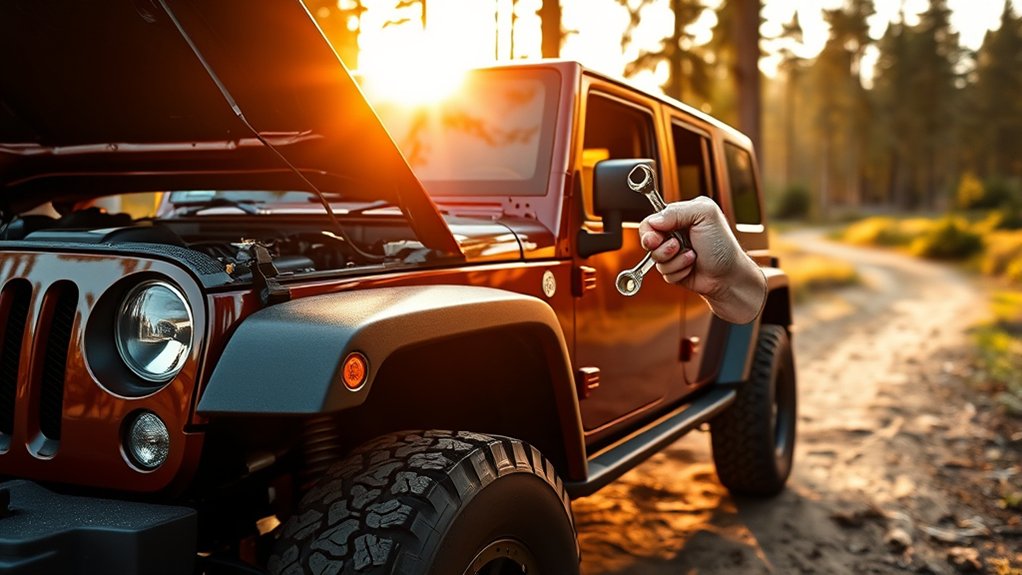
When should you service your Jeep Wrangler to keep it running smoothly? Generally, servicing every 6,000 to 8,000 miles is recommended to maintain Jeep longevity. Regular maintenance prevents wear and tear, ensuring your Wrangler performs reliably both on and off-road.
You don’t have to leave everything to professionals; many owners benefit from DIY maintenance like checking fluid levels, inspecting brakes, and replacing air filters. Staying consistent with scheduled service intervals, as outlined in your owner’s manual, helps catch issues early before they become costly repairs.
Paying attention to your Jeep’s specific needs based on driving conditions, such as frequent off-roading or towing, also influences how often you should service it. Proper care directly supports your Jeep’s durability and long-term value.
Which Maintenance Tasks Matter Most for Your Jeep Wrangler?
You’ll want to focus on essential fluid checks, including engine oil, coolant, and brake fluid, to keep your Jeep Wrangler running smoothly.
Regularly inspecting your tires and brakes guarantees safety and peak performance, especially if you take your Jeep off-road. Prioritizing these maintenance tasks helps prevent major issues and extends the life of your vehicle.
Essential Fluid Checks
Although inspecting your Jeep Wrangler’s fluids might seem straightforward, these checks play a critical role in maintaining its performance and longevity. You need to regularly assess various fluid types, such as engine oil, coolant, brake fluid, and transmission fluid.
Each fluid has a specific color that helps identify its condition; for example, fresh engine oil is amber, while old oil turns dark brown or black. Coolant should be bright green, orange, or pink, depending on type, and brake fluid is typically clear to light yellow but darkens with use.
Pay close attention to any changes in fluid colors, as contamination or degradation can indicate issues needing immediate attention. Consistent fluid checks prevent engine wear, overheating, and brake failure, keeping your Jeep Wrangler reliable and safe on every drive.
Tire and Brake Inspection
Since your Jeep Wrangler relies heavily on its tires and brakes for safety and performance, regular inspections of these components are essential. Neglecting them can lead to uneven tire wear or compromised stopping power.
Here’s what you should focus on during your tire and brake inspection:
- Check tire tread depth and look for signs of uneven wear, which might signal misalignment or the need for tire rotation.
- Inspect the condition of your tires for cuts, punctures, or bulges that could cause failure.
- Examine brake pads for thickness; worn pads reduce braking efficiency and should be replaced promptly.
- Test the brake system for unusual noises or vibrations, indicating possible rotor or caliper issues.
Regular tire rotation and brake pad checks keep your Jeep safe and performing at its best.
When to Change Your Jeep Wrangler’s Oil and Filters
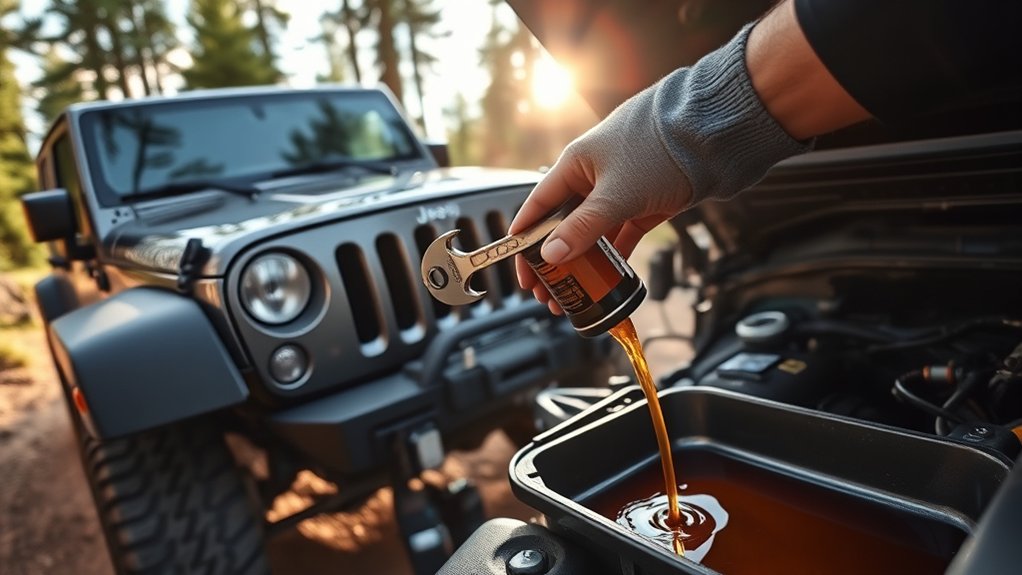
You should change your Jeep Wrangler’s oil every 5,000 to 7,500 miles, depending on your driving habits and conditions. Pay attention to signs like engine noise, reduced fuel efficiency, or the oil change light indicating it’s time for fresh oil.
Additionally, replace your oil and air filters during these intervals to maintain peak engine performance.
Recommended Oil Change Interval
A key part of maintaining your Jeep Wrangler’s performance and longevity involves changing its oil and filters at the right intervals. Following the manufacturer’s recommendations guarantees peak engine health and prevents premature wear.
The recommended oil change interval depends on several factors:
- Oil types: Conventional oil typically requires changes every 3,000 to 5,000 miles, while synthetic oil can last 7,500 to 10,000 miles.
- Mileage factors: Higher mileage vehicles or those driven under severe conditions may need more frequent changes.
- Driving habits: Frequent off-roading, stop-and-go traffic, or towing can accelerate oil degradation.
- Owner’s manual guidelines: Always consult your Jeep Wrangler’s manual for model-specific intervals.
Signs Oil Needs Changing
Engine oil plays an essential role in lubricating and protecting your Jeep Wrangler’s components, so recognizing when it’s time to change the oil and filters is crucial. One clear sign is the oil warning light on your dashboard; if it illuminates, don’t ignore it, as this indicates low oil pressure or degraded oil quality.
Additionally, checking the oil consistency can reveal problems. Fresh oil is smooth and amber, while old oil appears thick, dark, or gritty. If you notice a burnt smell or metallic particles in the oil, it’s time for a change.
Regularly inspecting these signs helps maintain engine performance and prevents costly damage. Staying attentive to oil warning indicators and oil consistency guarantees your Jeep runs smoothly between scheduled services.
Filter Replacement Timing
Maintaining your Jeep Wrangler’s performance depends heavily on timely oil and filter changes. Understanding filter replacement timing guarantees you protect your engine and optimize efficiency.
Different filter types, such as oil, air, and fuel filters, each require attention at specific intervals. Replacing them regularly offers several filter benefits, including improved engine longevity, better fuel economy, and reduced emissions.
Follow these guidelines:
- Change the oil filter every oil change, typically every 5,000 to 7,500 miles.
- Replace the air filter every 15,000 to 30,000 miles or more frequently in dusty conditions.
- Inspect and change the fuel filter every 30,000 miles or as recommended.
- Use OEM or high-quality filters to maintain filtration efficiency and engine protection.
Staying on top of filter replacement timing keeps your Jeep running smoothly and reliably.
How Often to Inspect and Replace Tires and Brakes on Your Jeep Wrangler
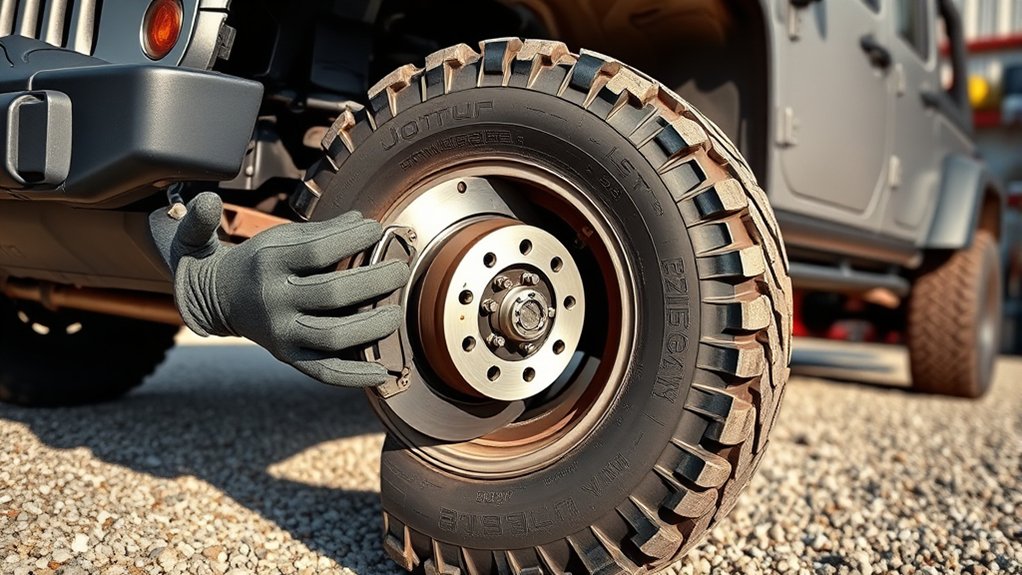
How often should you inspect your Jeep Wrangler’s tires and brakes to guarantee safety and peak performance? You should check tire wear and brake performance at least every 6,000 miles or during every oil change.
Regular tire rotation helps even out tire wear, extending their lifespan and maintaining off-road readiness. Inspect brake pads for thickness and any unusual noises; replace them when they’re worn down to ensure dependable stopping power.
Seasonal checks are essential, especially if you switch between summer and winter tires or tackle rough terrains frequently. Off-road driving accelerates wear, so inspect tires and brakes more often in those conditions.
Staying vigilant about these components keeps your Jeep safe, maximizes performance, and avoids costly repairs down the line.
How to Maintain Your Jeep Wrangler’s Fluids and Battery
Regularly checking and topping off your Jeep Wrangler’s fluids and battery guarantees reliable performance and prevents unexpected breakdowns. Different fluid types, like engine oil, coolant, brake fluid, and transmission fluid, require specific attention to maintain peak function. Proper battery care guarantees your Jeep starts smoothly and avoids electrical issues.
Follow these steps to maintain your fluids and battery:
- Inspect fluid levels monthly and refill according to manufacturer recommendations.
- Use the right fluid types specified in your Jeep’s manual to avoid damage.
- Clean battery terminals and check for corrosion every few months.
- Test battery voltage regularly, especially before extreme weather, replacing it if necessary.
When and Why to Check Suspension and Steering on Your Jeep Wrangler
Why should you pay close attention to your Jeep Wrangler’s suspension and steering systems? These components directly affect your vehicle’s handling, safety, and comfort. Regularly checking for suspension wear helps you identify issues like worn bushings, shocks, or springs before they cause uneven tire wear or compromised ride quality.
Likewise, maintaining proper steering alignment is essential to avoid pulling, excessive tire wear, and reduced fuel efficiency. It’s best to inspect suspension and steering at least once a year or after any off-road adventures, as these conditions accelerate wear.
Early detection allows timely repairs, preventing costly damage and ensuring your Wrangler responds precisely to your inputs. Staying proactive with these checks keeps your Jeep safe and reliable on and off the road.
How Driving Conditions Affect Your Jeep Wrangler’s Service Schedule
Your Jeep Wrangler’s maintenance needs can change considerably based on the driving conditions you encounter. Off road adventures, for example, expose your vehicle to rough terrain, dirt, and debris, increasing wear on components. Weather impact also plays a significant role; extreme temperatures and moisture can accelerate corrosion and degrade fluids faster.
To tailor your service schedule effectively, consider these factors:
- Frequency of off road adventures. More frequent trips demand more regular checks.
- Terrain type. Muddy or rocky paths increase suspension and drivetrain stress.
- Weather conditions. Extreme heat or cold affect fluid viscosity and battery performance.
- Exposure to moisture. Rain or snow can cause rust and electrical issues.
Adjusting your service intervals based on these conditions helps maintain reliability and prolong your Jeep’s life.
Tips for Staying on Track With Your Jeep Wrangler’s Maintenance
Although it can be challenging to keep up with every maintenance task, developing a systematic approach guarantees your Jeep Wrangler stays in peak condition. Prioritize preventive maintenance by scheduling regular oil changes, brake inspections, and tire rotations.
Incorporate seasonal checks to prepare for temperature and terrain changes, which helps avoid unexpected breakdowns.
Use a maintenance log or app to record service dates and upcoming tasks. This keeps your schedule organized and ensures no task is overlooked.
| Maintenance Task | Recommended Frequency |
|---|---|
| Oil Change | Every 5,000 miles |
| Tire Rotation | Every 7,500 miles |
| Seasonal Checks | Every 6 months |
Following these tips keeps your Jeep reliable and extends its lifespan efficiently.
Frequently Asked Questions
Can I Service My Jeep Wrangler at Home or Should I Visit a Mechanic?
You can handle basic DIY maintenance like oil changes and air filter replacements at home. For complex issues or thorough inspections, it’s best to rely on professional services to guarantee your Jeep Wrangler stays in top shape.
What Are Signs My Jeep Wrangler Needs Immediate Servicing?
You need immediate servicing if your dashboard warning lights flash persistently or if you hear strange noises like grinding or squealing. These signs indicate urgent issues that could worsen without prompt professional attention.
How Does Jeep Wrangler Model Year Affect Service Intervals?
Think of your Jeep’s model year differences like software updates. Newer models have refined service interval guidelines.
You’ll need to check your owner’s manual closely, as newer years often require different maintenance schedules than older ones.
Are There Any Special Tools Required for Jeep Wrangler Maintenance?
You’ll need some essential tools like a torque wrench and specialized socket sets for Jeep Wrangler maintenance. Following maintenance tips, having these tools ready guarantees precise work and helps you handle routine tasks efficiently and safely.
How Can I Keep Service Records for Warranty Purposes?
You should maintain thorough service documentation by keeping receipts, invoices, and service records organized. This guarantees warranty compliance and protects your Jeep Wrangler’s coverage.
Digital backups can help you avoid losing important service history details.
Conclusion
You might think skipping Jeep Wrangler maintenance is no big deal, but trust me—it’s like ignoring a ticking time bomb under your hood. Regularly servicing your Jeep keeps it roaring through off-road adventures and daily drives without turning into a money pit.
Stay on top of oil changes, tire checks, and fluid replacements to avoid breakdowns and costly repairs. Your Wrangler deserves the best care, and so do you—keep that maintenance schedule tight!
For optimal performance and longevity, know how often you should service your Jeep Wrangler and stick to it.