To change your Jeep Wrangler’s air filter, start by opening the hood and locating the black plastic air filter housing near the engine, usually on the driver’s side. This is where the air filter is contained, playing a crucial role in your vehicle’s performance.
Unclip or unscrew the housing cover to access the old filter. Remove it carefully, noting its orientation to ensure proper installation of the new one.
Insert a compatible replacement, making sure it fits securely and airtight before closing the housing.
Regular maintenance of your air filter helps keep your Jeep running smoothly and efficiently.
Keep going to explore detailed steps for choosing, replacing, and maintaining your air filter effectively.
Key Takeaways
- Open the Jeep Wrangler hood and locate the black plastic air filter housing on the driver’s side near the engine.
- Unfasten clips or screws on the air filter housing to access and remove the old air filter carefully.
- Inspect the housing for debris and ensure the new filter matches Jeep Wrangler’s model year and engine specifications.
- Insert the new air filter in the correct orientation, then securely close the housing for an airtight seal.
- Replace the air filter every 12,000 miles or sooner in dusty conditions to maintain engine performance and fuel efficiency.
How to Locate and Access the Air Filter on Your Jeep Wrangler
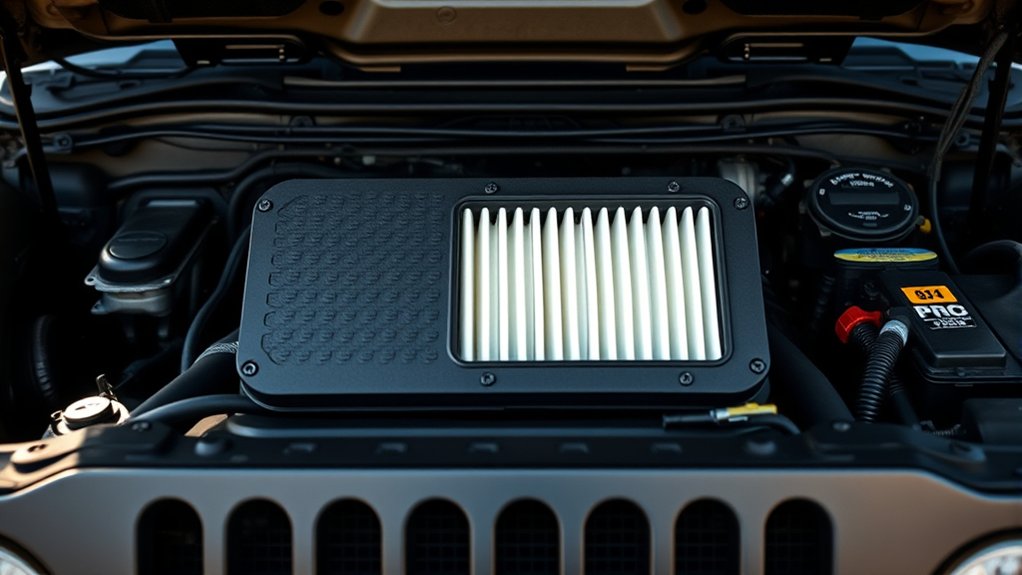
To locate and access the air filter on your Jeep Wrangler, start by opening the hood and securing it with the prop rod. The air filter housing is typically a black plastic box situated near the engine, often on the driver’s side.
Depending on your model, you may encounter different filter types, such as panel or round filters. Identify the access points by locating clips, screws, or clamps that secure the housing cover.
Use the appropriate tool to release these fasteners carefully. Once removed, you’ll have direct access to the air filter inside. Confirm you note the orientation of the existing filter before removal, as this will guide proper installation of the replacement.
Proper access and identification of filter types streamline the maintenance process efficiently.
How to Choose the Right Air Filter for Your Jeep Wrangler
How do you determine the best air filter for your Jeep Wrangler? Start by understanding the available filter types and their performance benefits. Selecting the right filter guarantees ideal airflow and engine protection.
Consider these factors:
- Material: Choose between paper, foam, or cotton gauze. Paper filters offer standard filtration, foam excels in dusty environments, and cotton gauze provides reusable, high-flow options.
- Filtration Efficiency: Look for filters that balance dirt trapping with airflow to maintain engine performance and longevity.
- Compatibility: Verify the filter matches your Wrangler’s model year and engine specifications to guarantee proper fit and function.
How to Remove and Replace Your Jeep Wrangler’s Air Filter
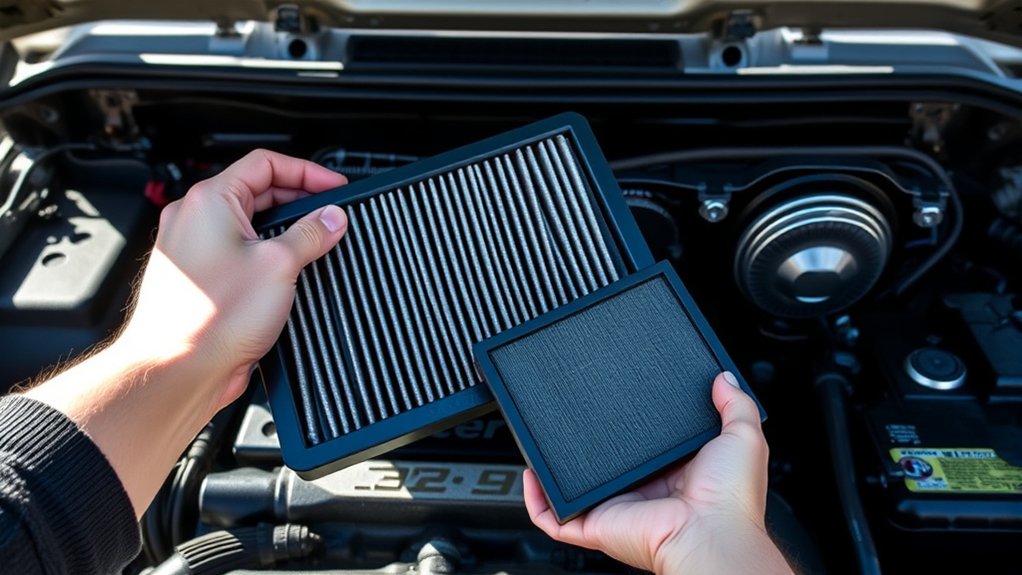
Start by locating the air filter housing under the hood of your Jeep Wrangler, typically a black plastic box secured with clips or screws. Unfasten the clips or unscrew the housing cover to access the air filter.
Remove the old filter carefully, noting its orientation. Inspect the housing for debris before inserting the new air filter. Align the new filter according to the air filter types specified for your model.
Replace the housing cover and secure it firmly. Follow the recommended filter replacement frequency to maintain peak engine performance and fuel efficiency.
| Step | Tool Needed | Notes |
|---|---|---|
| Locate housing | None | Black plastic box |
| Remove cover | Screwdriver/Hands | Depends on fastener type |
| Replace filter | None | Match air filter types |
| Secure housing | Screwdriver/Hands | Guarantee airtight seal |
Maintaining Your Jeep Wrangler Air Filter for Peak Performance
Replacing your Jeep Wrangler’s air filter is only part of the process; maintaining it regularly guarantees your engine runs efficiently and prolongs filter life. To guarantee peak filter maintenance and performance enhancement, follow these steps:
- Inspect the air filter every 12,000 miles or more frequently if you drive on dusty terrain. Look for dirt buildup, tears, or damage.
- Clean reusable filters with compressed air or a specialized cleaning kit, avoiding harsh chemicals that degrade filter material.
- Replace disposable filters promptly when clogged or damaged. Use OEM or high-quality aftermarket filters to maintain airflow specifications.
Consistent filter maintenance reduces engine strain, improves fuel efficiency, and sustains peak power output. By adhering to this routine, you maximize your Jeep Wrangler’s performance enhancement and extend the air filter’s service life.
Frequently Asked Questions
How Often Should I Check the Air Filter in Extreme Weather?
You should check your air filter every 5,000 miles or more frequently during extreme weather.
Extreme weather effects increase debris buildup, so regular air filter maintenance guarantees peak engine performance and prevents airflow restrictions.
Can a Dirty Air Filter Affect My Jeep’s Fuel Efficiency?
Yes, a dirty air filter reduces your Jeep’s fuel economy by restricting airflow, forcing the engine to work harder. You’ll notice decreased engine performance and increased fuel consumption.
Replace or clean the filter regularly for maximum efficiency.
Are There Any Signs My Jeep Needs a New Air Filter?
If your Jeep suddenly runs like it’s swimming through molasses, that’s a classic symptom of blockage. Track your air filter lifespan, typically 12,000 to 15,000 miles, and watch for reduced power, rough idling, or strange engine noises signaling a replacement.
Can I Use a Reusable Air Filter in My Jeep Wrangler?
Yes, you can use a reusable filter in your Jeep Wrangler. Reusable filter benefits include cost savings and improved airflow.
For installation tips, guarantee a proper seal and clean the filter regularly to maintain performance and longevity.
Does Off-Roading Require More Frequent Air Filter Changes?
Yes, off-road conditions demand more frequent air filter changes. You’ll monitor dust buildup, inspect for debris, and maintain ideal airflow.
Regular filter maintenance guarantees engine efficiency, prevents damage, and keeps your Jeep Wrangler performing at its best.
Conclusion
Changing your Jeep Wrangler’s air filter is like giving your engine a refreshing boost. By locating the filter housing, selecting the right filter, and replacing it carefully, you guarantee ideal airflow and engine performance.
Regular maintenance keeps your Wrangler running smoothly and efficiently. Don’t let a clogged filter choke your engine—stay proactive, and your Jeep will thank you with every mile you drive.
Remember, changing the air filter Jeep Wrangler regularly is key to maintaining optimal engine health and performance.