Your Jeep Wrangler leaking oil is often caused by worn gaskets, seals, or damaged components such as the valve cover or oil pan that allow oil to escape.
Loose drain plugs or old, corroded oil filters can also lead to leaks.
Incorrect oil viscosity and lack of timely maintenance increase the risk of oil leakage.
Regularly inspect common leak points and monitor oil levels to spot issues early.
Understanding these causes helps you diagnose and address leaks effectively, preventing further engine damage.
Key Takeaways
- Worn piston rings, valve seals, or degrading gaskets commonly cause oil leaks in Jeep Wranglers.
- Loose or damaged drain plugs and oil filters often lead to compromised seals and oil seepage.
- Incorrect oil viscosity can increase leaks by either causing pressure buildup or allowing oil to escape.
- Oil leaks often originate from valve cover gaskets, oil pans, or drain plugs, requiring thorough inspection.
- Timely gasket replacement and proper maintenance prevent leaks and extend engine performance and life.
Common Causes of Jeep Wrangler Oil Leaks
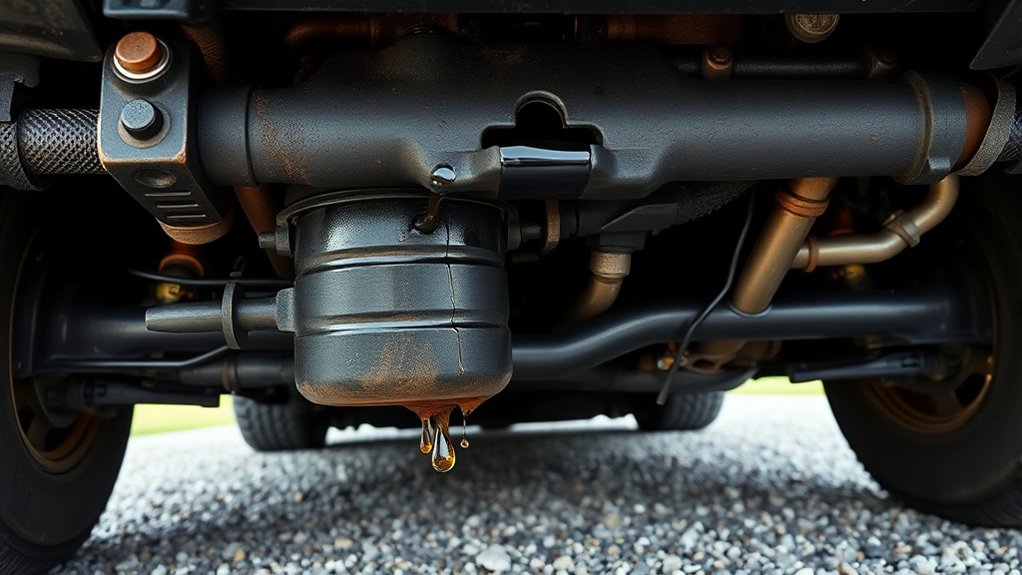
Several factors can cause your Jeep Wrangler to leak oil, and identifying the exact source is essential for effective repair. Engine wear is a primary cause, as worn piston rings or valve seals allow oil to escape combustion chambers.
Additionally, degrading gaskets and seals, particularly the valve cover gasket and oil pan gasket, often fail due to age or heat exposure. Incorrect oil viscosity can exacerbate leaks; using oil that’s too thin increases seepage through tight tolerances, while overly thick oil may not circulate properly, causing pressure buildup and leaks.
Also, check for loose or damaged drain plugs and oil filters, which can compromise the seal. Being aware of these common issues helps you diagnose leaks promptly and maintain your Jeep’s engine performance.
How to Identify Where Your Jeep Wrangler Is Leaking Oil
Start by inspecting common leak points like the valve cover gasket, oil pan, and drain plug. Use a flashlight to spot fresh oil trails and clean the engine surface to pinpoint active leaks.
For tougher cases, apply an oil leak dye and use a UV light to trace the exact source efficiently.
Common Leak Locations
Oil leaks in your Jeep Wrangler typically originate from specific engine components, making it easier to pinpoint the source by examining common leak locations. Start by focusing on the valve cover gasket, a frequent culprit due to heat and age-related wear.
Next, check the oil pan gasket at the bottom of the engine; it’s prone to damage from road debris. The front and rear crankshaft seals also often develop leaks, especially as the vehicle ages.
Additionally, the timing cover gasket and oil filter housing are known leak points. Effective leak detection requires targeting these components systematically.
Visual Inspection Tips
Knowing the common leak points helps you focus your visual inspection more effectively. Begin by checking fluid levels to confirm oil loss.
Next, examine engine components such as the valve cover gasket, oil pan, and timing chain cover for fresh oil traces or wet spots. Use a flashlight to inspect hard-to-see areas, paying close attention to seals and gaskets.
Look for accumulated grime mixed with oil, which often indicates a slow leak. Also, inspect under the vehicle for drips or puddles.
Clean suspicious areas before rechecking after a short drive to pinpoint active leaks. This systematic approach helps you localize the leak source accurately, preventing unnecessary part replacements and ensuring targeted repairs on your Jeep Wrangler.
Using Oil Leak Dyes
How can you pinpoint the exact source of an oil leak on your Jeep Wrangler when visual inspection isn’t enough? Oil dye application provides a precise method for leak detection.
Start by adding a UV-reactive oil dye to your engine oil reservoir, ensuring it mixes thoroughly during engine operation. Run the engine to circulate the dye through the system.
Then, use a UV light in a dark environment to inspect the engine and surrounding components. The dye will fluoresce brightly at the leak’s origin, revealing even minor seepage that’s invisible under normal lighting.
This targeted approach saves time and prevents unnecessary part replacements. By incorporating oil dye application, you gain a reliable diagnostic tool to accurately locate your Jeep Wrangler’s oil leaks and address them efficiently.
Why Worn Gaskets and Seals Cause Jeep Wrangler Oil Leaks
Although Jeep Wranglers are built for rugged performance, worn gaskets and seals often become the weak points that cause oil to leak. Over time, gasket degradation occurs due to exposure to heat, pressure, and engine vibrations. This breakdown compromises the gasket’s ability to maintain a tight seal between engine components.
Likewise, seal wear results from material fatigue and environmental factors, causing seals to harden, crack, or shrink. When these components fail, oil escapes through gaps, leading to leaks that can worsen if ignored.
Diagnosing gasket and seal wear involves inspecting for visible cracks, hardened surfaces, or oil residue around joints. Addressing gasket degradation and seal wear promptly helps prevent further engine damage and maintains proper oil containment in your Jeep Wrangler.
How to Spot and Fix Oil Pan and Valve Cover Problems
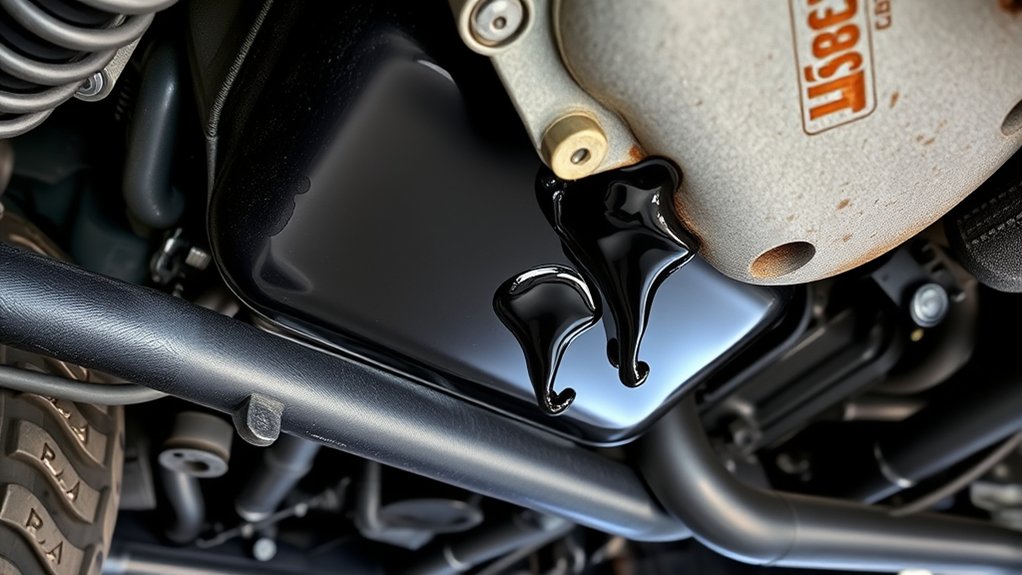
You can spot an oil pan leak by looking for fresh oil pooling beneath the engine and inspecting the pan’s gasket for cracks or damage. Valve cover leaks often appear as oil seeping around the cover edges, usually caused by worn gaskets.
To fix these issues, replace the faulty gaskets and guarantee all bolts are properly torqued to prevent further leaks.
Identifying Oil Pan Leaks
Where exactly is the oil leak originating? Start by inspecting the oil pan, located at the engine’s lowest point. Different oil pan types, steel stamped or aluminum cast, can develop leaks due to corrosion, impact damage, or gasket failure.
Use leak detection methods like UV dye and a blacklight to pinpoint the exact source. Clean the area thoroughly before inspection to avoid false positives from old residue.
Check the oil pan bolts for proper torque; loose bolts often cause leaks. Also, examine the gasket between the pan and engine block for cracks or deformation.
Early detection prevents oil loss and engine damage. If the leak is from the pan itself, you may need to replace the pan or gasket, depending on the damage severity.
Fixing Valve Cover Gaskets
Since valve cover gaskets seal the top of your Jeep Wrangler’s engine, they often develop leaks from heat cycles and age, causing oil to seep or drip onto engine components. To diagnose, inspect for oil around the valve cover edges and check for hardened or cracked gasket materials.
If you spot leakage, plan for a valve cover replacement. Start by removing the valve cover bolts carefully, avoid damaging the cover, and clean the mating surfaces thoroughly. Choose high-quality gasket materials, such as silicone or rubber composites, which offer durability and heat resistance.
Install the new gasket evenly, ensuring proper alignment to prevent future leaks. Tighten bolts to manufacturer torque specs to avoid warping or insufficient sealing. After reassembly, run the engine and verify no oil seepage occurs.
How Driving Habits and Maintenance Affect Jeep Wrangler Oil Leaks
Although oil leaks can stem from mechanical issues, your driving habits and maintenance routines play a critical role in preventing or accelerating these leaks in a Jeep Wrangler. Aggressive driving styles increase engine stress, potentially worsening gasket wear and oil seal damage.
Conversely, adhering to recommended maintenance schedules guarantees timely inspections and replacements, reducing leak risks.
| Driving Habits | Impact on Oil Leaks |
|---|---|
| Aggressive driving | Accelerates gasket and seal wear |
| Frequent off-roading | Increases vibration and stress |
| Prolonged idling | Causes oil breakdown |
| Smooth driving | Minimizes engine stress |
| Regular maintenance | Detects and prevents early leaks |
Stay consistent with your maintenance schedule and adopt smoother driving styles to protect your Jeep’s engine integrity.
Steps to Fix and Prevent Jeep Wrangler Oil Leaks
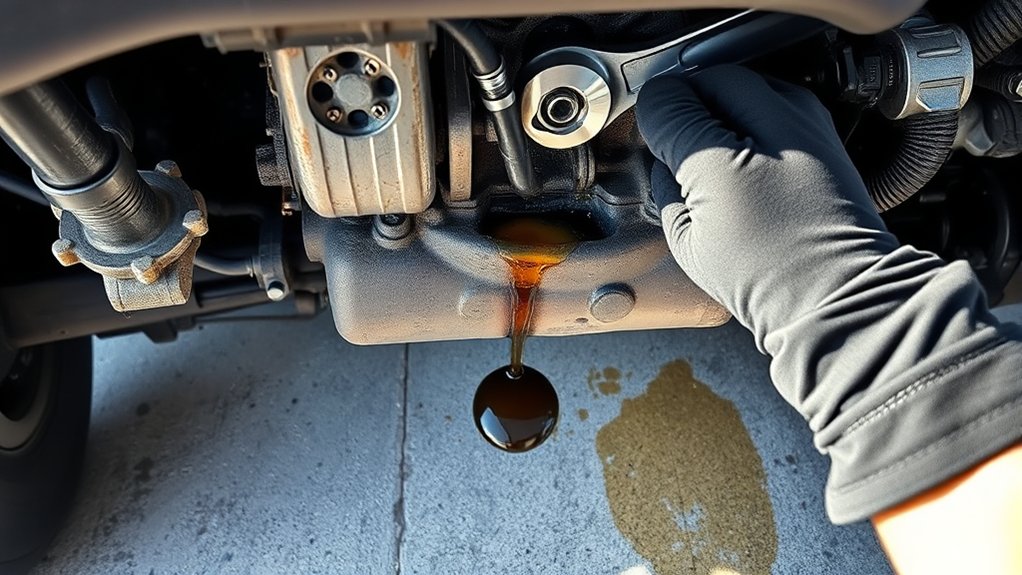
To effectively fix and prevent oil leaks in your Jeep Wrangler, you need to identify the leak’s source and address it with the right repair techniques. Start with a thorough inspection around the valve cover gasket, oil pan, and drain plug. Replace any worn or damaged seals promptly.
During an oil change, make sure the drain plug and filter are tightened to specification to avoid leaks. Use high-quality gaskets and sealants designed for your engine model.
Regular engine care, including timely oil changes and checking oil levels, reduces pressure on seals and prevents degradation. Finally, monitor your Jeep after repairs to confirm the leak is resolved. Consistent maintenance combined with precise repairs will keep your Wrangler’s engine oil-tight and running smoothly.
Frequently Asked Questions
Can a Jeep Wrangler Oil Leak Damage the Engine?
Yes, an oil leak can damage your engine by reducing lubrication. You should prioritize engine maintenance and check oil seals regularly to prevent wear and overheating. This ensures your Jeep Wrangler runs smoothly without costly repairs.
Is It Safe to Drive With a Small Oil Leak?
You wouldn’t want a minor oil leak to turn into a Niagara Falls disaster. Small oil leak causes can lead to serious engine damage.
While minor leak implications seem harmless, you should fix them promptly to stay safe.
How Much Does It Cost to Repair an Oil Leak?
You’ll find repair estimates range from $150 to $1,200, depending on leak severity and location. Prioritize leak prevention by addressing seals or gaskets promptly to avoid costly engine damage and maintain peak Jeep Wrangler performance.
Can Synthetic Oil Cause Leaks in a Jeep Wrangler?
About 15% of oil leaks relate to seal degradation. Using synthetic oil with incorrect viscosity can accelerate seal wear in your Jeep Wrangler, causing leaks.
Always match oil viscosity to manufacturer specs to avoid premature seal degradation.
Do Oil Leaks Affect Jeep Wrangler Performance or Fuel Efficiency?
Yes, oil leak symptoms like low oil levels can cause a performance impact by reducing engine lubrication, leading to overheating and wear. This also lowers fuel efficiency as your Jeep Wrangler’s engine works harder to compensate.
Conclusion
If you ignore your Jeep Wrangler’s oil leak, you might as well be watching a tiny oil river carve through your driveway. Identifying worn gaskets, faulty seals, or a cracked oil pan isn’t just smart—it’s essential.
By diagnosing leaks early and adjusting your driving habits, you prevent catastrophic engine damage. Stay vigilant, fix issues promptly, and your Wrangler will keep running like a well-oiled machine instead of turning into an oil-slicked hazard.
Addressing the problem quickly is key to maintaining your vehicle’s performance. Don’t let a small issue turn into a major repair. Understanding why your Jeep Wrangler is leaking oil will help you take the right steps to protect your investment.