A Jeep Wrangler’s weight varies widely depending on the model, trim, and added features, typically ranging from about 3,800 to over 4,800 pounds.
Two-door versions weigh less than four-door Wranglers, while trims like Rubicon add extra weight due to reinforced suspensions and equipment.
This weight influences your Jeep’s handling, fuel efficiency, and towing capacity.
If you want to understand how these factors shape performance and off-road capabilities, there’s more to explore.
Key Takeaways
- Jeep Wrangler weight varies by model, with two-door versions lighter than four-door Wrangler Unlimiteds.
- Typical curb weight ranges from approximately 3,900 to 4,500 pounds depending on trim and equipment.
- Rubicon trims weigh more due to reinforced suspensions and off-road features.
- Additional options and luxury packages increase overall vehicle weight.
- Weight affects fuel economy, handling, and towing capacity, important for performance and safety.
What Affects Jeep Wrangler Weight
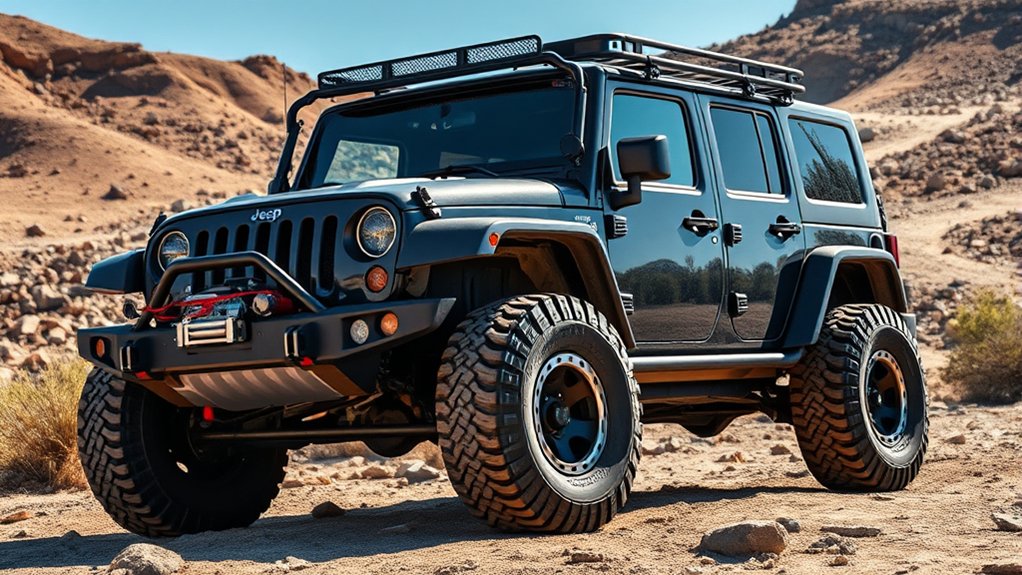
Although you might expect all Jeep Wranglers to weigh about the same, several factors influence their actual weight. One key factor is the material composition used in the vehicle’s construction. For example, Wranglers with aluminum hoods or steel frames will differ in weight compared to those using lighter composites.
Additionally, weight distribution plays an essential role; the placement of the engine, fuel tank, and other components affects overall balance and handling. Optional equipment and trim levels also contribute, as heavier accessories like winches or upgraded suspension systems add pounds.
Understanding these variables helps you grasp why Jeep Wranglers do not have a uniform weight, reflecting a blend of design choices tailored to performance, durability, and specific functionality requirements.
Jeep Wrangler Weight Across Different Models
The factors influencing Jeep Wrangler weight lead to noticeable differences across its various models. When you look at Jeep models like the two-door Wrangler, you’ll find it weighs less than its four-door counterpart, the Wrangler Unlimited, due to a shorter wheelbase and fewer materials.
Weight variations also come from trim levels and engine options; for instance, models with larger engines or additional off-road equipment weigh more. Rubicon trims generally add weight because of their reinforced suspension and protective components.
Additionally, special editions or models with luxury packages can increase weight further. Understanding these weight variations helps you anticipate performance changes, such as fuel efficiency and towing capacity, specific to the Jeep Wrangler model you choose.
Comparing Jeep Wrangler Weight to Other SUVs
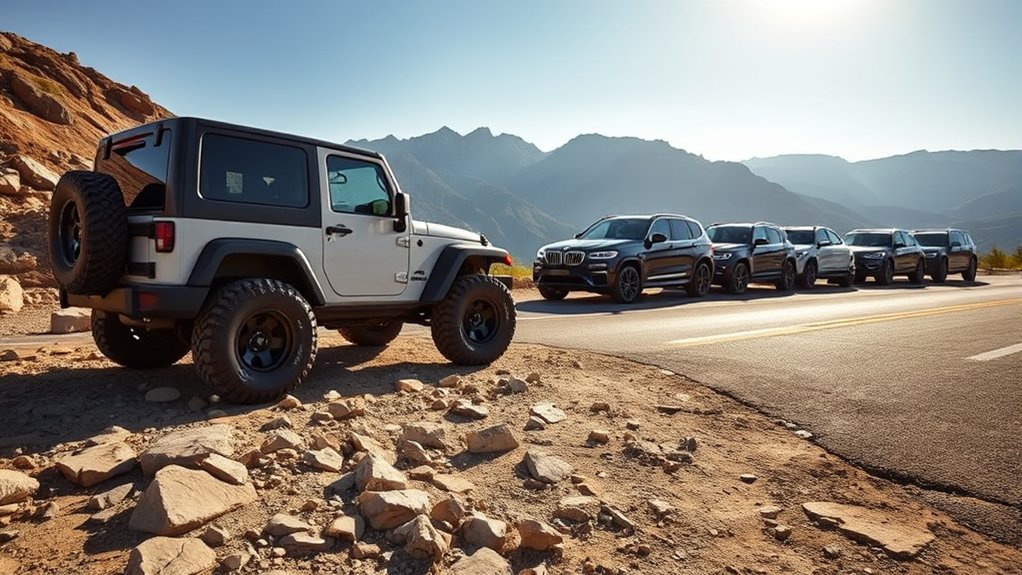
When comparing Jeep Wrangler weight to other SUVs, you’ll notice it generally falls on the lighter side of the spectrum, especially against larger, more luxury-oriented models. This trend ties back to Jeep history, where the Wrangler was designed for off-road capability and maneuverability rather than sheer mass.
Contemporary SUV trends often favor bigger, heavier vehicles packed with technology and luxury features, increasing their curb weight. In contrast, the Wrangler maintains a balance between durability and weight, contributing to its rugged appeal.
If you look at mid-size and full-size SUVs from other brands, many exceed the Wrangler’s weight by several hundred pounds, reflecting different design priorities. Understanding this weight comparison helps you appreciate the Wrangler’s unique position in the SUV market.
How Jeep Wrangler Weight Affects Performance and Fuel Economy
Since the Jeep Wrangler carries a moderate curb weight, you’ll notice its impact on both performance and fuel economy. The weight influences acceleration and handling; a heavier Wrangler demands more engine power to maintain speed and responsiveness, which can slightly reduce agility.
Proper weight distribution plays an essential role in stability, especially during cornering and off-road maneuvers, helping you maintain control despite the vehicle’s mass. However, the additional weight also affects fuel economy, as the engine consumes more fuel to move the vehicle efficiently.
While the Wrangler’s design balances rugged capability with manageable weight, you’ll experience a trade-off between power demands and fuel efficiency. Understanding this balance helps you appreciate how weight factors into the Wrangler’s overall driving dynamics and fuel consumption.
Tips for Towing and Off-Roading With Your Jeep Wrangler
Although the Jeep Wrangler is designed for rugged use, towing and off-roading require specific techniques to maximize safety and performance. You need to adopt proper towing techniques and prioritize off-roading safety to protect your vehicle and yourself.
The Jeep Wrangler excels in rugged conditions, but proper towing and off-roading techniques are essential for safety and performance.
Here are three essential tips:
- Check Weight Limits: Always verify your Wrangler’s towing capacity and avoid exceeding it to maintain control and prevent damage.
- Use Proper Gear: Engage four-wheel drive and low-range gears when off-roading to enhance traction and stability.
- Drive Carefully: Maintain slow, steady speeds on rough terrain and avoid sudden maneuvers to reduce the risk of rollovers or mechanical strain.
Following these guidelines guarantees your Jeep Wrangler performs at its best while keeping safety a top priority.
Frequently Asked Questions
What Is the Jeep Wrangler’s Ground Clearance Measurement?
The Jeep Wrangler’s ground clearance measures around 10.8 inches, enhancing your off-road capabilities. This clearance lets you navigate rough terrain confidently, ensuring you avoid obstacles and maintain traction during challenging off-road adventures.
How Often Should I Service My Jeep Wrangler?
Think of your Jeep Wrangler as a loyal companion needing care. You should service it every 6,000 miles, including an oil change and tire rotation, to guarantee peak performance and longevity on every adventure you take together.
What Are Common Interior Features of a Jeep Wrangler?
You’ll find common interior features like customizable seating, durable materials, and advanced tech features such as touchscreen infotainment, smartphone integration, and navigation.
Jeep offers extensive interior customization to fit your style and functional needs perfectly.
Can the Jeep Wrangler Be Converted to Electric?
Yes, you can convert a Jeep Wrangler to electric, blending rugged tradition with modern tech. You’ll find various electric conversion kits and battery options, letting you customize performance and range while keeping that iconic off-road spirit alive.
What Safety Ratings Does the Jeep Wrangler Have?
You’ll find the Jeep Wrangler has mixed safety ratings; it performs well in side crash tests but less so in frontal crashes.
It includes essential safety features like airbags and stability control, but it’s not top-tier overall.
Conclusion
When you slide behind the wheel of a Jeep Wrangler, knowing its weight helps you navigate rugged trails and city streets with confidence. Whether you’re towing gear or tackling rocky paths, understanding the impact of each model’s heft guarantees better control and fuel efficiency.
Keep these weight insights in mind, and you’ll master every adventure with precision. This knowledge makes your Jeep Wrangler not just a vehicle, but a powerful extension of your journey, perfectly suited to handle whatever comes your way. Understanding how much a Jeep Wrangler weighs is key to unlocking its full potential.