You can expect your Jeep Wrangler to last between 200,000 and 250,000 miles with proper maintenance and mindful driving.
Regular oil changes, fluid checks, and rust prevention keep it running strong. This is especially true if you avoid aggressive driving and adjust tire pressure for terrain.
Off-road use may shorten its lifespan, but careful care helps you get the most miles out of it.
Understanding these factors can help you maximize your Wrangler’s durability. It also helps you know when upgrades make sense.
Key Takeaways
- Jeep Wranglers typically last between 200,000 to 250,000 miles with proper care.
- Engine durability and drivetrain design support extended off-road and on-road use.
- Regular maintenance like timely oil changes significantly extends vehicle lifespan.
- Driving habits, especially gentle throttle and smooth steering, affect overall mileage.
- Frequent heavy off-roading and neglect can reduce the Jeep Wrangler’s longevity.
What Affects How Long Your Jeep Wrangler Lasts?
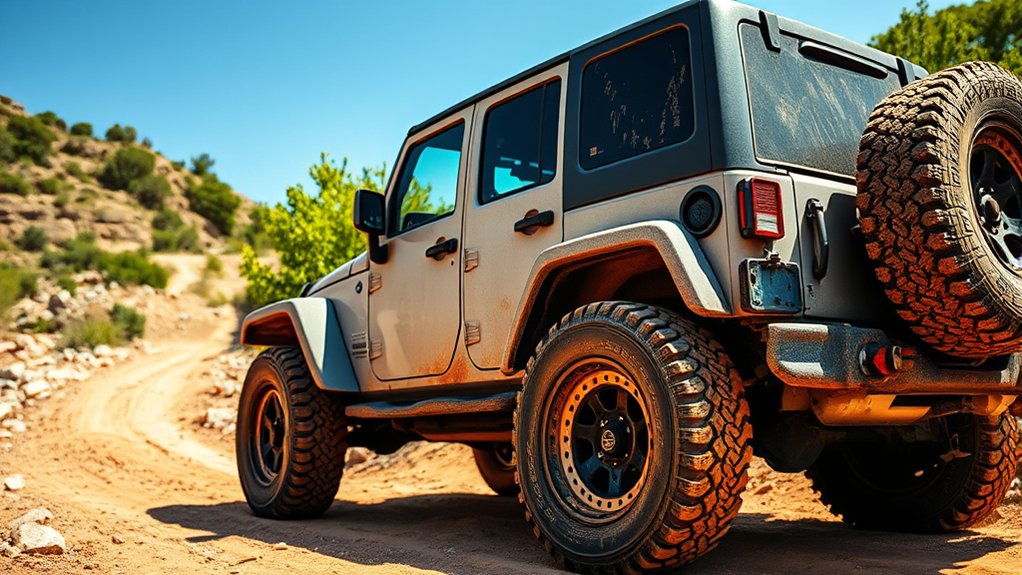
Several factors influence how long your Jeep Wrangler will last, ranging from maintenance habits to driving conditions. Engine quality plays a vital role; a well-built engine withstands wear better, especially under stress.
Maintenance habits and engine quality are key to your Jeep Wrangler’s longevity, especially under challenging conditions.
You’ll find that off-road conditions accelerate wear due to rough terrain, which challenges part durability. How often you drive, or driving frequency, also impacts longevity since constant use increases component fatigue.
Sticking to a strict maintenance schedule guarantees timely oil changes and inspections, preventing minor issues from escalating. Additionally, the fuel type you use affects engine performance and lifespan; premium fuels often support better combustion in some models.
Understanding these elements helps you optimize your Jeep’s durability and avoid premature failures.
How Many Miles Does a Jeep Wrangler Typically Last?
Knowing the factors that influence your Jeep Wrangler’s lifespan gives you a clearer picture of what to expect regarding mileage. Typically, a Jeep Wrangler can last between 200,000 to 250,000 miles, thanks largely to its robust engine durability.
This range represents average mileage expectations, though some models exceed this with proper use. The engine, transmission, and drivetrain are built to handle off-road conditions, which contributes to longevity.
However, how you drive and the terrain you cover directly impact these numbers. While Wranglers are designed for toughness, consistent heavy off-roading might reduce overall lifespan.
Understanding these mileage expectations helps you plan for ownership duration and resale value more effectively, setting realistic goals about how long your Jeep Wrangler will serve you reliably.
How Maintenance Extends Your Jeep Wrangler’s Life
Although Jeep Wranglers are built for durability, regular maintenance plays an important role in extending their lifespan beyond average mileage expectations. You need to prioritize engine care, tire maintenance, and fluid checks to keep your Wrangler running smoothly.
Rust prevention is also vital, especially if you drive in wet or salty environments. Off-road practices can strain your vehicle, so thorough inspections after these adventures help catch wear early.
Seasonal preparations, like switching tires and checking antifreeze, protect your Wrangler year-round.
| Maintenance Task | Key Benefit |
|---|---|
| Engine Care | Guarantees peak performance |
| Tire Maintenance | Improves safety and traction |
| Fluid Checks | Prevents mechanical failure |
Which Driving Habits Help Jeep Wranglers Last Longer?
Maintaining your Jeep Wrangler properly sets the foundation, but how you drive it plays a significant role in its longevity. To extend your Wrangler’s life, adopt driving habits that reduce wear and tear.
For off-road techniques, avoid aggressive acceleration and braking. Gentle throttle control minimizes stress on the drivetrain. Always adjust tire pressure to match terrain conditions. Lower pressure off-road improves traction but increase it on pavement to prevent premature tire wear.
Smooth steering inputs and avoiding high-speed impacts over rough terrain also protect suspension components. Consistently monitoring tire pressure guarantees even tire wear and better fuel efficiency, both critical for lasting performance.
When to Replace or Upgrade Your Jeep Wrangler
How do you determine the right time to replace or upgrade your Jeep Wrangler? Start by identifying clear replacement signs: frequent costly repairs, declining fuel efficiency, or safety features that no longer meet your needs.
If your Wrangler’s performance consistently drops despite maintenance, it’s worth considering a replacement. On the other hand, Jeep upgrades can extend your vehicle’s life and enhance its capabilities. Upgrading suspension, tires, or engine components can improve performance without the expense of a new vehicle.
However, weigh the cost of upgrades against potential repair bills. When the investment in upgrades approaches or exceeds the value of your Jeep, replacement becomes more practical. By evaluating these factors objectively, you can make an informed decision on whether to upgrade or replace your Wrangler.
Frequently Asked Questions
What Is the Average Resale Value of a Jeep Wrangler?
You can expect the average resale value of a Jeep Wrangler to stay strong due to Jeep durability and Wrangler maintenance. Keeping up with regular service helps preserve value, making it a smart investment for long-term ownership.
Are Jeep Wranglers Good for Off-Roading?
You’ll find Jeep Wranglers excel in off-road capabilities, thanks to their rugged design and Jeep durability. They handle tough terrain confidently, making them a top choice if you’re serious about exploring trails and rough landscapes.
How Does a Jeep Wrangler Compare to Other SUVS?
You’ll find Jeep Wrangler durability excels compared to many SUVs, especially off-road. Its safety features are solid but less refined than some modern SUVs, so weigh ruggedness against advanced tech when comparing models.
What Are Common Modifications for Jeep Wranglers?
Picture your Jeep climbing rocky trails. Common modifications include suspension upgrades for better clearance and durability, plus tire choices like all-terrain or mud-terrain to enhance grip. These changes boost off-road performance and reliability effectively.
Is a Jeep Wrangler Fuel-Efficient?
Jeep Wranglers aren’t known for fuel efficiency, but you can improve it by adjusting your driving habits. Smooth acceleration and avoiding excessive idling help, though their design focuses more on off-road capability than maximizing miles per gallon.
Conclusion
Your Jeep Wrangler can last well beyond 200,000 miles with proper care, yet neglecting maintenance might cut its life short. While some Wranglers thrive on rugged trails for decades, others falter on smooth roads due to poor habits.
By staying proactive with upkeep and mindful driving, you’re not just extending miles—you’re preserving freedom and adventure.
Remember, the choice between a worn-out ride and an enduring companion lies in how you treat your Jeep every day.
Ultimately, how many miles can a Jeep Wrangler last depends largely on the care and attention you give it.