To draw a Jeep Wrangler, start by sketching its basic frame using simple geometric shapes like rectangles and squares to establish correct proportions.
Carefully render the iconic seven-slot grille and symmetrical round headlights, ensuring precise alignment.
Draw rugged wheels with detailed tire treads using sharp lines and perfect circles for rims.
Add angular body lines, door details, and a boxy roof frame with rectangular windows.
Apply layered shading to emphasize metallic surfaces and textures.
Following these steps, you’ll soon capture the Wrangler’s rugged character accurately.
Key Takeaways
- Begin with light geometric shapes to outline the Jeep Wrangler’s cabin, engine, and rear for accurate proportions and frame structure.
- Sketch the seven-slot front grille and round headlights symmetrically, paying attention to spacing and vertical alignment for an iconic front view.
- Draw rugged wheels with perfect circles, detailed spokes, and angular tire treads, anchoring them firmly to the vehicle’s body.
- Apply shading techniques like cross-hatching and smooth gradients to depict metallic surfaces, glass reflections, and tire textures realistically.
- Refine details with fine liners, deepen shadows in recesses, and ensure symmetry and balanced proportions for enhanced realism.
Gather Your Drawing Materials for the Jeep Wrangler
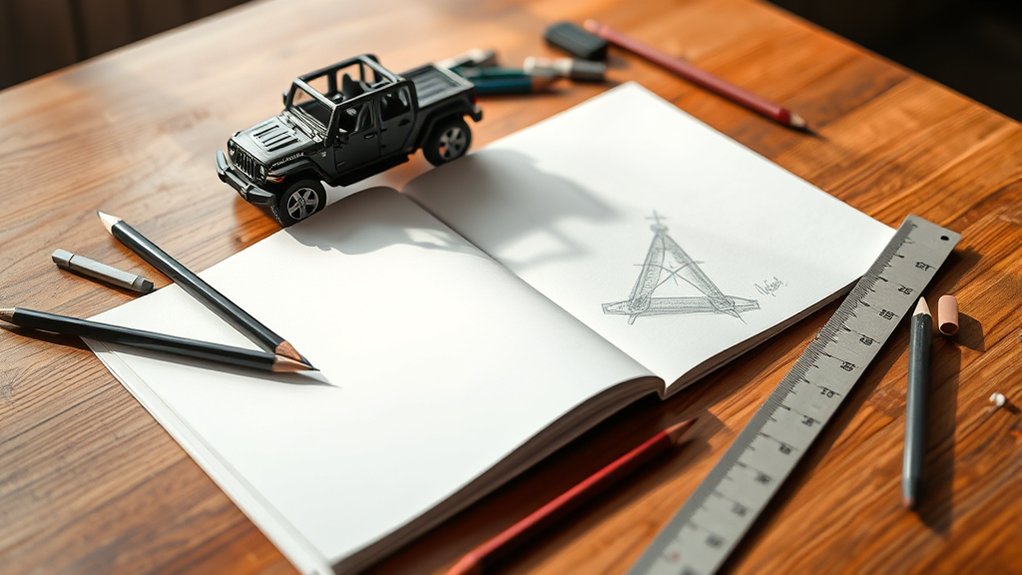
To begin drawing a Jeep Wrangler, you’ll need a well-curated set of materials that guarantee accuracy and ease throughout the process. Start with high-quality graphite pencils ranging from 2H to 6B to allow varied line intensity and shading control, essential for precise sketching techniques.
Choose a smooth, heavyweight drawing paper that withstands erasing and layering without warping. Include a reliable eraser, preferably a kneaded type, for subtle corrections without damaging the paper’s surface.
A ruler and compass are vital for maintaining the Jeep’s geometric proportions, ensuring your lines and curves are accurate. Finally, consider fine-tipped pens or markers for inking details once your initial sketches are complete.
Thoughtful material selection directly impacts the clarity and precision of your Jeep Wrangler drawing.
Sketch the Basic Jeep Wrangler Shape and Frame
Start by outlining the Jeep Wrangler’s main body as a combination of geometric shapes, focusing on its boxy silhouette. Next, establish the frame proportions carefully, ensuring the distance between the wheels and the height of the roof match the vehicle’s iconic stance.
Use light, controlled strokes to maintain flexibility for adjustments.
Outline Main Body
Three fundamental geometric shapes will help you establish the Jeep Wrangler’s main body: a rectangle for the cabin, a slightly larger rectangle for the engine compartment, and a square for the rear cargo area. These forms reflect the vehicle’s rugged design, rooted in Jeep history and off-road capabilities.
Start by sketching these shapes lightly to form the structural basis.
| Shape | Purpose |
|---|---|
| Engine Rectangle | Houses the engine & front grille |
| Cabin Rectangle | Driver and passenger compartment |
| Rear Square | Rear cargo space and spare tire |
Align these shapes precisely to maintain the Wrangler’s characteristic proportions. This step guarantees your drawing captures the vehicle’s robust frame, essential for its renowned off-road performance.
Define Frame Proportions
You’ll want to establish the Jeep Wrangler’s frame proportions by connecting the basic shapes with precise lines that define its overall silhouette. Employ proportion techniques to guarantee the distinct boxy and rugged profile characteristic of Jeep frame styles. Focus on balancing height, width, and length ratios to capture its iconic stance.
Pay particular attention to the wheelbase length relative to the cabin and hood, maintaining accurate spacing. The vertical height of the windshield and roofline should guarantee correct angular placement. The width of the fenders and door panels conveys the vehicle’s robust frame.
Draw the Jeep’s Iconic Front Grille
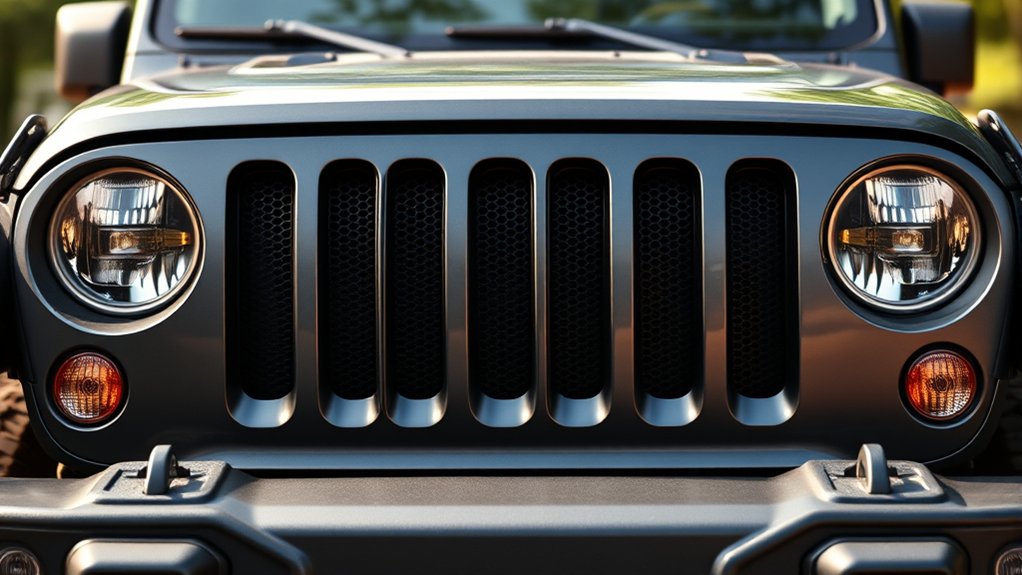
Start by outlining the Jeep’s seven-slot grille, ensuring each slot is evenly spaced and vertically aligned. Position the round headlights precisely on either side, matching their size to the grille’s height for balance.
Add texture by shading the grille slots and incorporating subtle reflections to enhance depth and realism.
Seven-Slot Grille Shape
To capture the Jeep Wrangler’s distinctive front appearance, focus on accurately rendering the seven-slot grille. This grille design is central to Jeep aesthetics, embodying ruggedness and heritage.
Begin by sketching a slightly curved rectangular frame that houses the seven vertical slots. Confirm each slot is evenly spaced and consistent in width, maintaining the iconic symmetry. The slots should have rounded edges, not sharp corners, reflecting the authentic grille shape.
Pay attention to the grille’s depth by shading the slots to suggest recessed openings.
Key details to emphasize include:
- The uniform width and spacing of the seven slots
- The gentle curvature of the grille frame to match the hood contour
- The interplay of light and shadow within the slots for dimensionality
Precision here strengthens the overall Jeep Wrangler likeness.
Headlight Placement Tips
After defining the seven-slot grille, position the headlights with exactness to maintain the Jeep Wrangler’s iconic front profile. Start by identifying the circular headlight openings flanking the grille’s outer edges.
The Jeep Wrangler traditionally features round headlight styles, so make sure your circles are symmetrical and aligned horizontally with the grille’s top edge. For accurate light placement, measure the distance from the grille’s slots to the headlight centers, maintaining consistent spacing on both sides.
Avoid placing headlights too close to or too far from the grille to preserve the recognizable front view. Keep the headlights slightly inset relative to the grille’s face to add depth.
Adding Texture Details
Although the grille’s basic shape is already outlined, you’ll need to carefully render its texture to convey the Jeep Wrangler’s rugged character. Use texture techniques that emphasize the vertical slots and the mesh behind them, ensuring depth and realism.
Pay attention to light reflection on the metallic surfaces to enhance dimensionality. Here are some detailing tips for precision:
- Employ cross-hatching to simulate shadow within the grille slots.
- Use fine lines to represent the subtle grooves and ridges on the grille’s frame.
- Apply consistent spacing to replicate the uniform pattern of the mesh behind the slots.
Draw the Wheels and Rugged Tires
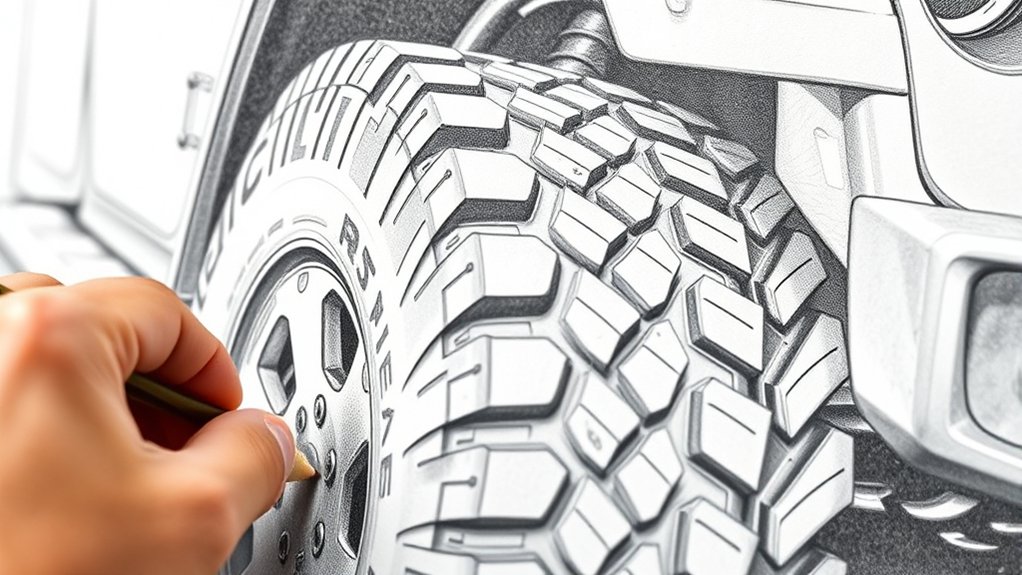
When you draw the wheels for your Jeep Wrangler, focus on capturing their robust, circular structure with accurate proportions relative to the vehicle’s body. Begin by sketching perfect circles for the rims, ensuring symmetry on both sides.
Next, detail the wheel designs by outlining the spokes, which typically feature a rugged, utilitarian style for this model. Pay attention to the central hub and lug nuts to enhance realism.
For the tires, emphasize the rugged tire tread by drawing distinct, angular patterns that convey durability and traction. Use sharp, repetitive lines to mimic the deep grooves and raised blocks characteristic of off-road tires.
This precise detailing will anchor the wheels firmly in the vehicle’s overall design, highlighting both functionality and aesthetics.
Add Body Lines and Door Details
Define the Jeep Wrangler’s distinctive body lines by carefully sketching sharp, angular contours along the doors and side panels. Focus on emphasizing the vehicle’s rugged body contours, which add depth and structure. Accurately render door features, such as the recessed door handles and hinges, to maintain authenticity.
Pay attention to the alignment of these elements to the overall shape. Highlight the creases running horizontally along the door panels to accentuate the muscular profile. Sketch the rectangular side mirrors attached near the door frame with precise angles.
Include the subtle flare of the fender edges blending into the door area.
Draw the Jeep Wrangler’s Roof Frame and Windows
Start by outlining the Jeep Wrangler’s roof frame with clean, straight lines that capture its iconic boxy shape. Focus on the roof structure’s angular edges, ensuring the frame appears sturdy and well-defined.
Next, sketch the window design by drawing the rectangular side windows and the rear window within the roof frame. Use precise, parallel lines to define the window panes and the dividing bars between them.
Pay attention to the slight curvature where the roof meets the door frame, maintaining consistency with the body lines you previously added. Keep the window proportions accurate to the Wrangler’s dimensions, emphasizing the functional yet rugged appearance.
This approach will give your drawing a realistic and detailed roof structure and window design, essential elements of the Jeep Wrangler’s distinctive silhouette.
Add Shading and Texture to Your Jeep Wrangler Drawing
Adding shading and texture enhances the depth and realism of your Jeep Wrangler drawing. Use precise shading techniques to define light sources, emphasizing the vehicle’s contours and metallic surfaces. Apply varied texture styles to differentiate materials like rubber tires, rugged body panels, and glass windows.
Use cross-hatching and stippling for subtle gradients on curved surfaces. Incorporate directional lines to simulate the rough texture of the tires. Apply smooth, reflective shading on windows to suggest transparency and gloss.
Focus on consistent light direction to maintain realism. Layer your shading gradually, avoiding harsh shifts. These detailed shading techniques and texture styles bring dimensionality and tactile quality, making your Jeep Wrangler drawing visually convincing and technically accurate.
Add Final Touches to Your Jeep Wrangler Drawing
Final touches bring your Jeep Wrangler drawing to completion by refining details and correcting minor imperfections. Begin by scrutinizing every section, ensuring the wheels’ treads, grille lines, and door hinges are crisply defined. Use fine liners or a sharpened pencil to emphasize these final details with precision.
Revisit your shading techniques; deepen shadows where metal overlaps or recesses exist, and lighten areas exposed to light sources to enhance dimensionality. Employ subtle cross-hatching or blending to smooth shifts without losing texture.
Double-check the proportions and symmetry, especially on the iconic round headlights and side mirrors. Finally, erase stray marks carefully to maintain a clean presentation. These final adjustments will elevate your drawing’s realism and showcase the Jeep Wrangler’s rugged character effectively.
Frequently Asked Questions
What Is the History of the Jeep Wrangler Design?
You’ll see the Jeep Wrangler’s design evolution traces back to WWII, retaining iconic features like the seven-slot grille and round headlights. It combines rugged utility with modern engineering, reflecting both tradition and advanced off-road capabilities.
Which Jeep Wrangler Model Is Best for Off-Roading?
You’ll find the Jeep Wrangler Rubicon excels in off road capabilities, thanks to its locking differentials, enhanced suspension, and rock rails. Model comparisons clearly favor Rubicon for rugged terrain and technical trails demanding superior traction.
How Do I Customize a Real Jeep Wrangler?
You customize your Jeep Wrangler by selecting custom accessories like bumpers, winches, and lighting. Then install high-quality aftermarket parts such as suspension lifts, tires, and skid plates.
Ensure compatibility and durability for enhanced off-road performance.
What Colors Are Most Popular for Jeep Wranglers?
You’ll find Jeep color trends favor classic shades like Bright White, Black, and Granite Crystal Metallic.
Wrangler paint options also include vibrant hues like Firecracker Red and Ocean Blue, offering both timeless and bold choices for customization.
Where Can I Find Jeep Wrangler Technical Specifications?
Think of Jeep specifications as a blueprint map. You can find detailed Wrangler features on Jeep’s official website, automotive review sites, or the owner’s manual, ensuring you get precise, technical data for every model year and trim level.
Conclusion
As you finish your Jeep Wrangler drawing, think of it like assembling a rugged off-road vehicle—each line and detail is a vital bolt holding it together. Just as Jeep’s iconic seven-slot grille took decades to perfect, your careful shading and precise body lines bring authenticity and character.
Remember, every stroke builds strength and depth, transforming your sketch into a powerful symbol of adventure and resilience. Keep pushing those creative boundaries!
With each added detail, you’re not just drawing—you’re capturing the spirit and toughness that define the Jeep Wrangler. Let your artwork stand strong as a tribute to this legendary vehicle.