Your Jeep Wrangler typically needs between 5 and 6 quarts of oil, depending on your engine model.
Knowing how much oil a Jeep Wrangler takes is essential for proper maintenance. Always check your owner’s manual for the exact oil capacity and recommended viscosity, like 5W-20 or 0W-40 synthetic oils that meet API SN or ACEA standards.
Using the right amount and type of oil guarantees proper lubrication and engine performance.
Keep your oil levels precise to avoid damage and maintain efficiency.
You can also explore how to check, top off, and change it properly.
Key Takeaways
- Jeep Wrangler oil capacity typically ranges from 5 to 6 quarts, depending on the engine model.
- Consult the owner’s manual for the exact oil volume and specifications for your specific Wrangler.
- Use full synthetic oil with recommended viscosity grades like 5W-20 or 0W-40 for optimal engine protection.
- Proper oil levels prevent engine damage by maintaining lubrication, reducing friction, and dissipating heat.
- Overfilling or underfilling oil can cause engine issues, so measure carefully during oil changes.
Jeep Wrangler Oil Capacity: How Much Oil Do You Need?
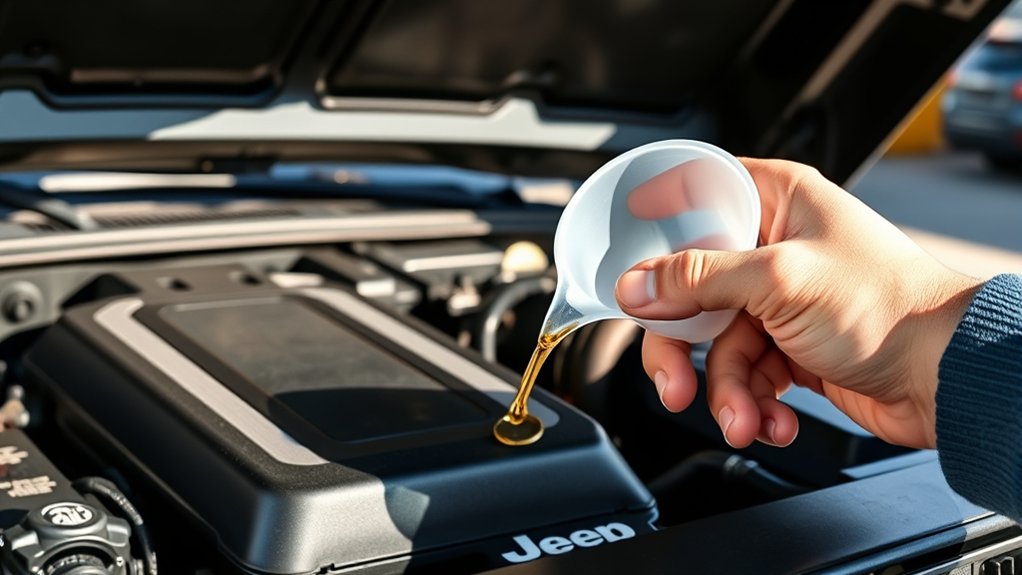
How much oil does your Jeep Wrangler actually need? The oil capacity varies depending on the engine model, but typically ranges between 5 to 6 quarts. For accurate engine maintenance, you should consult your owner’s manual or a reliable source to verify the exact amount.
Using the correct oil volume is essential to guarantee ideal oil performance, preventing underfilling or overfilling, which can cause engine damage. Proper oil levels maintain lubrication, reduce friction, and help dissipate heat efficiently.
When changing your Jeep Wrangler’s oil, always measure the quantity precisely and check the dipstick after filling. This discipline guarantees your engine runs smoothly, maximizes performance, and extends its lifespan without risking mechanical issues caused by improper oil capacity.
What Oil Specifications Are Recommended for Jeep Wranglers?
You’ll need to use the oil types specified by Jeep, typically full synthetic oils that meet certain performance standards. Understanding viscosity grades like 5W-20 or 0W-40 is essential to match your Wrangler’s engine requirements.
Always check for manufacturer certifications like API SN or ACEA to guarantee ideal protection and performance.
Recommended Oil Types
Although Jeep Wranglers can tolerate various oil types, using the manufacturer-recommended specifications guarantees maximum engine performance and longevity. You should opt for synthetic oils for enhanced engine protection and better temperature stability, especially in extreme conditions.
Conventional oils are acceptable for basic use but don’t offer the same level of performance or protection. Always check your owner’s manual for specific oil types compatible with your Wrangler’s engine.
| Oil Type | Benefits | Application |
|---|---|---|
| Synthetic Oils | Superior engine protection | Recommended for all models |
| Conventional Oils | Cost-effective, basic use | Older models, light driving |
| Synthetic Blend | Balanced performance | Moderate driving conditions |
Choosing the right oil guarantees peak engine health and efficiency.
Viscosity Grades Explained
Why does oil viscosity matter for your Jeep Wrangler? Viscosity directly affects oil performance by determining how well the oil flows and protects engine components under varying temperatures. Choosing the right viscosity grade guarantees ideal lubrication, reduces wear, and improves efficiency.
Here’s what you need to know about viscosity impact:
- Cold Start Protection: Lower viscosity oils (e.g., 0W-20) flow easier on startup, reducing engine wear.
- High Temperature Stability: Higher viscosity oils (e.g., 5W-30) maintain a thicker film at operating temperatures, preventing metal-to-metal contact.
- Fuel Efficiency: Proper viscosity minimizes drag, aiding fuel economy without compromising protection.
For Jeep Wranglers, always select oil grades recommended for your engine’s climate and driving conditions to maintain peak oil performance and engine longevity.
Manufacturer Oil Standards
When maintaining your Jeep Wrangler, adhering to the manufacturer’s oil specifications guarantees peak engine performance and longevity. Jeep recommends using engine oils that meet specific standards, primarily SAE 5W-20 or 5W-30 oil grades, depending on your Wrangler’s engine type and operating conditions. These oil grades guarantee ideal viscosity for proper lubrication under varying temperatures.
Additionally, you should look for oils that meet the API SN or newer standards, as they provide superior protection against wear, deposits, and corrosion. Using the recommended oil grade and specification supports engine longevity by maintaining perfect oil pressure and reducing friction.
Always consult your owner’s manual to confirm the exact oil requirements for your model year and engine variant to avoid compromising performance or warranty coverage.
How to Spot If Your Jeep Wrangler Has Too Much or Too Little Oil
You should regularly check your Jeep Wrangler’s oil level using the dipstick to guarantee it’s within the recommended range.
Too much oil can cause foaming and increased pressure, while too little leads to engine overheating and noise. Recognizing these symptoms early helps prevent serious engine damage.
Oil Level Checking
A properly checked oil level guarantees your Jeep Wrangler operates efficiently and avoids engine damage. To perform accurate oil level checking, start with engine oil maintenance by warming the engine, then turning it off and waiting a few minutes.
Use the oil dipstick usage method precisely:
- Pull out the dipstick, wipe it clean with a lint-free cloth.
- Reinsert fully, then remove again to check the oil level against the marked indicators.
- Confirm the oil level sits between the “Min” and “Max” marks; avoid overfilling or underfilling.
Consistent monitoring via this method helps you maintain peak lubrication, prevents wear, and supports engine longevity. Proper oil level checking is an essential, straightforward step in your Jeep Wrangler’s routine maintenance schedule.
Symptoms Of Improper Oil
If the oil level in your Jeep Wrangler deviates from the ideal range, engine performance and component health can suffer considerably. Too little oil leads to insufficient lubrication, causing increased friction and potential engine overheating. You might notice a knocking noise or reduced power during acceleration.
Conversely, overfilling the oil can cause crankshaft aeration, reducing oil pressure and leading to poor lubrication. This can trigger engine overheating and damage seals, resulting in an oil leak. Check for oil pooling under the vehicle or a burning smell, both signs of excess oil.
Regularly monitor the dipstick and maintain the correct oil level to prevent these issues. Promptly addressing improper oil levels helps guarantee your Jeep Wrangler’s engine runs smoothly and avoids costly repairs.
How to Check Your Jeep Wrangler’s Oil Level Correctly
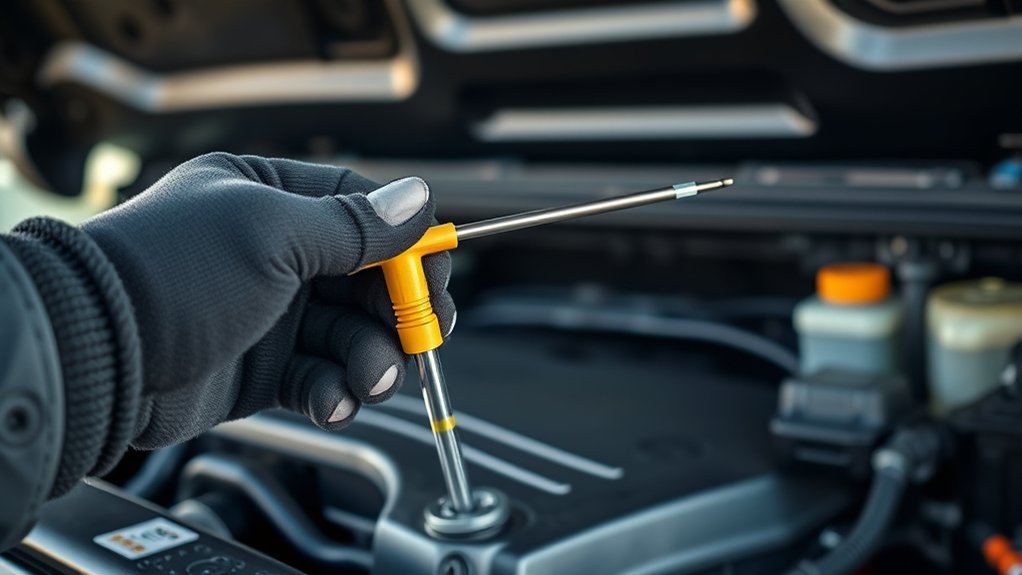
How often should you check your Jeep Wrangler’s oil level to secure peak engine performance? Regular checks guarantee timely engine oil maintenance and prevent damage. Use the oil dipstick usage method for accuracy. Follow these steps:
Park your Wrangler on level ground and let the engine cool for at least 10 minutes. Locate and remove the oil dipstick, wipe it clean, reinsert fully, and then pull it out again to check the oil level.
Verify the oil level falls between the “Min” and “Max” marks on the dipstick; also assess oil color and consistency for contamination signs.
Consistent oil dipstick usage helps you maintain ideal oil levels, securing your Jeep Wrangler runs efficiently and prolonging engine life.
How to Top Off and Change Your Jeep Wrangler’s Oil
When your Jeep Wrangler’s oil level dips below the recommended range, topping off or performing a full oil change becomes essential to maintain engine health. To top off, use the specified oil grade, add slowly, and recheck the dipstick to avoid overfilling.
For an oil change, drain the old oil completely, replace the oil drain plug securely, and install a new oil filter to guarantee proper oil flow and filtration. Follow the manufacturer’s oil change frequency to prevent engine wear and maintain performance.
Proper oil filter maintenance during each oil change is critical, as a clogged filter reduces oil circulation, risking engine damage. Always use OEM or high-quality parts and dispose of used oil responsibly.
Common Oil Change Mistakes Jeep Wrangler Owners Make
Why do some Jeep Wrangler owners struggle with oil changes? Often, it’s due to avoidable errors that compromise your engine’s health. To guarantee effective oil change maintenance, watch out for these common mistakes:
- Using the wrong oil type or viscosity, which can impair lubrication and engine performance.
- Neglecting to replace the oil filter, leading to contaminants circulating in the engine.
- Overfilling or underfilling the oil, causing pressure issues or inadequate lubrication.
Following proper maintenance tips, like consulting your owner’s manual for oil specifications and using calibrated tools to measure oil levels, is essential. Avoiding these pitfalls helps maintain your Jeep Wrangler’s engine longevity and peak performance. Remember, precision during an oil change is key to preserving your vehicle’s reliability and efficiency.
Frequently Asked Questions
How Often Should I Change My Jeep Wrangler’s Oil?
You should follow the recommended oil change interval in your Jeep Wrangler’s manual, typically every 5,000 to 7,500 miles.
Regular oil changes guarantee engine longevity by preventing wear and maintaining peak performance.
Can Synthetic Oil Improve My Jeep Wrangler’s Performance?
Think of synthetic oil as a high-performance lubricant shield. It reduces friction and heat, boosting engine longevity and delivering measurable performance enhancements.
It ensures smoother, more efficient operation under varied driving conditions in your Jeep Wrangler.
Does Oil Type Affect Jeep Wrangler’s Fuel Efficiency?
Yes, oil viscosity and fuel additives directly affect your Jeep Wrangler’s fuel efficiency. Using the correct viscosity reduces engine friction, while quality fuel additives optimize combustion.
This helps your engine run smoother and consume less fuel overall.
What Are Signs of Oil Leaks in a Jeep Wrangler?
You’ll notice oil spots under your Jeep, burning oil smells, or smoke from the engine. Oil leak causes include worn gaskets or seals.
Address these promptly with professional oil leak repairs to prevent engine damage.
Can I Use Jeep Wrangler Oil in Other Vehicles?
You shouldn’t use Jeep Wrangler oil in other vehicles unless their engine compatibility and oil viscosity match exactly. Using the wrong oil is like fitting a square peg in a round hole. It risks serious engine damage.
Conclusion
So, you’ve learned exactly how much oil your Jeep Wrangler needs—yet some still guess and stress over it. Ironically, the very thing that keeps your engine running smoothly often gets ignored or overdone.
Follow the specs, check levels right, and change oil correctly to avoid costly mistakes. After all, your Wrangler’s heart isn’t a mystery—just treat it like the precision machine it is, not a guessing game.
Knowing how much oil your Jeep Wrangler takes is essential to keeping it in top shape and ensuring long-lasting performance.