Most cars have between four and eight spark plugs, matching the engine’s cylinder count—one plug per cylinder. The number of spark plugs in a car directly relates to the type and size of its engine.
For example, a four-cylinder engine uses four plugs, while a V6 typically has six. Some high-performance engines use dual ignition systems, doubling the plug count for better combustion.
Knowing the correct number guarantees efficient ignition and smooth engine operation.
If you want to understand how engine type and maintenance affect spark plug needs, there’s more to explore.
Key Takeaways
- Most cars have one spark plug per cylinder, commonly totaling four, six, or eight plugs depending on engine size.
- V6 engines typically contain six spark plugs, matching their six cylinders.
- Dual ignition systems or high-performance engines may have two spark plugs per cylinder, doubling the total count.
- Checking the vehicle’s engine type or owner’s manual provides the exact spark plug count.
- Proper spark plug count ensures efficient combustion and optimal engine performance.
How Many Spark Plugs Does a Car Have?
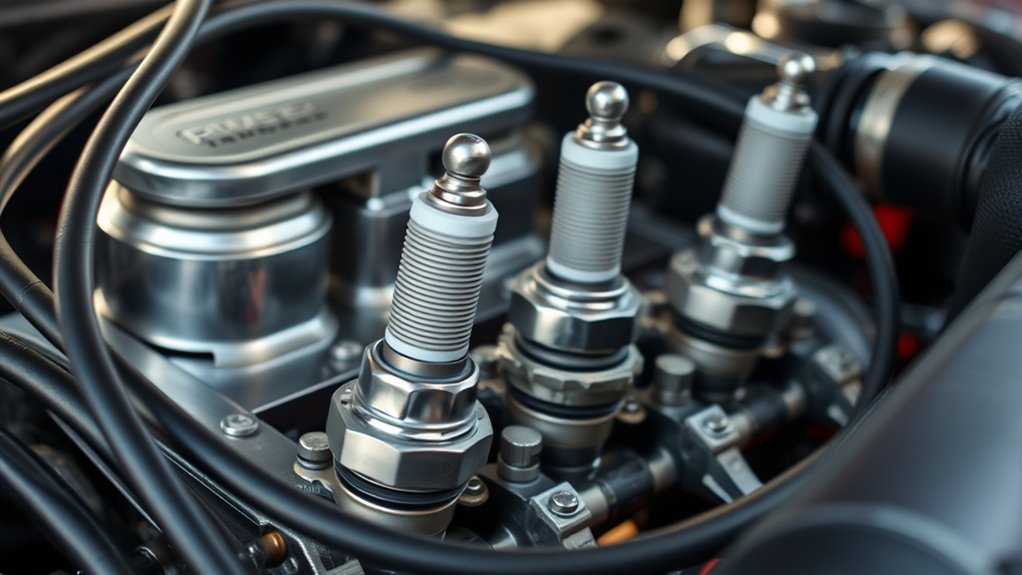
How many spark plugs does your car have? Typically, each cylinder in your engine requires one spark plug to ignite the air-fuel mixture, so the total number depends on your engine’s cylinder count. Most standard cars have four, six, or eight cylinders, meaning you’ll find an equal number of spark plugs.
Understanding spark plug types is essential; they vary by material and design to enhance the ignition system’s performance. For example, iridium and platinum plugs offer better durability and efficiency compared to copper ones.
The ignition system relies on these plugs to deliver the precise spark needed for combustion. Knowing the exact spark plug count helps you maintain the ignition system effectively, ensuring peak engine performance and fuel efficiency.
How Engine Types Affect Spark Plug Counts
Because different engine designs have unique combustion requirements, the number of spark plugs per engine can vary considerably. Engine configurations like inline, V-type, and boxer engines influence how many cylinders—and consequently spark plugs—are present.
Typically, each cylinder requires at least one spark plug to ignite the air-fuel mixture. However, some ignition systems employ dual spark plugs per cylinder to improve combustion efficiency and reduce emissions, especially in performance or modern engines.
For example, a V6 engine usually has six spark plugs, but if it uses a dual ignition system, it will have twelve. Understanding your engine’s configuration and ignition system is essential because they directly determine the spark plug count, affecting maintenance schedules and engine performance.
How to Identify Your Car’s Spark Plug Count
Knowing your engine’s configuration and ignition type gives you a solid starting point for determining the number of spark plugs in your car. Typically, each cylinder has at least one spark plug, but some engines use multiple plugs per cylinder for efficiency.
To identify your car’s spark plug count, check the engine specifications or consult the owner’s manual. Also, inspecting spark plug types and spark plug materials can hint at the plug count; certain materials like iridium are used in high-performance multi-plug setups.
| Engine Type | Typical Spark Plug Count | Spark Plug Types | Spark Plug Materials |
|---|---|---|---|
| Inline 4-cylinder | 4 | Standard | Copper |
| V6 | 6 | Double Platinum | Platinum |
| V8 | 8 | Iridium | Iridium |
Why Spark Plug Count Matters for Engine Performance
Since spark plugs ignite the air-fuel mixture inside each cylinder, their number directly affects combustion efficiency and engine performance. When you have the correct spark plug count, you guarantee peak spark plug efficiency, allowing each cylinder to fire at the precise moment needed for maximum power output.
Ignition timing depends on this precise firing sequence, so if your engine has fewer or malfunctioning spark plugs, combustion becomes uneven, reducing efficiency and increasing emissions. Additionally, the right spark plug count supports balanced engine operation and smooth acceleration.
You’ll notice improved fuel economy and lower vibration when spark plug count aligns with engine design specifications. In short, maintaining the proper spark plug count is critical for achieving consistent ignition timing and maximizing your engine’s performance potential.
When You Should Replace Your Spark Plugs: And Why
Although spark plugs are built to last, they wear down over time and lose their effectiveness, which means you need to replace them at specific intervals to maintain peak engine performance. The typical spark plug lifespan ranges from 30,000 to 100,000 miles, depending on the type and manufacturer recommendations.
Ignoring replacement can lead to engine misfire causes such as fouling, electrode erosion, and increased gap size, which reduce combustion efficiency. You’ll notice symptoms like rough idling, reduced acceleration, and lower fuel economy.
Replacing spark plugs promptly guarantees consistent ignition, ideal fuel combustion, and prevents misfires that stress engine components. Always follow your vehicle’s maintenance schedule and inspect plugs regularly to avoid performance issues and costly repairs.
Proper timing in replacement maintains engine reliability and longevity.
Frequently Asked Questions
What Tools Do I Need to Change Spark Plugs?
You’ll need a spark plug socket, ratchet, extension, and gap gauge. Check your spark plug types and changing frequency in the manual to verify proper fit and timing.
Gloves and anti-seize compound help during installation.
Can Bad Spark Plugs Cause Engine Misfires?
You might think spark plug types don’t affect engine misfires, but bad plugs definitely cause them, degrading engine performance.
Worn or incorrect plugs disrupt ignition timing, so swapping to the right type restores smooth, efficient combustion.
How Do Spark Plugs Affect Fuel Efficiency?
You improve fuel efficiency by maintaining spark plugs; proper spark plug maintenance guarantees ideal fuel combustion, reducing unburned fuel waste.
Neglected plugs cause incomplete combustion, decreasing mileage and increasing emissions, so regular checks keep your engine running efficiently.
Are All Spark Plugs Compatible With Any Car?
You can’t use all spark plug types in any car; each requires specific engine compatibility. Matching the right spark plug type guarantees ideal ignition, performance, and fuel efficiency.
Always consult your vehicle’s manual before buying replacements.
What Is the Cost of Replacing Spark Plugs?
You’ll typically pay $100 to $300 for spark plug replacement, depending on spark plug brands and vehicle type. Following manufacturer replacement intervals guarantees peak performance and longevity, minimizing costly engine issues and maintaining efficiency.
Conclusion
You now know that most cars typically have one spark plug per cylinder, meaning a 4-cylinder engine usually has 4 spark plugs. Notably, high-performance engines can have up to two spark plugs per cylinder to improve combustion efficiency. This highlights why understanding your engine type is essential—it directly affects spark plug count and overall performance.
Regularly checking and replacing your spark plugs guarantees maximum engine function and fuel efficiency, keeping your car running smoothly. Knowing how many spark plugs a car has is key to proper maintenance and ensuring optimal engine operation.