You should never pour used engine oil down drains or throw it in the trash because it contains toxic contaminants that harm soil, water, and aquatic life. Proper disposal of engine oil is essential to protect the environment and public health.
Store used engine oil in a clean, sealed container labeled with the date and contents. Keep it in a cool, dry place to prevent leaks or spills.
Take the used oil to local recycling centers, auto shops, or service stations that accept it. Avoid mixing engine oil with other fluids or improper disposal methods to prevent fines and environmental damage.
Uncover practical steps to manage and repurpose used engine oil safely. Following these guidelines helps ensure responsible handling and environmental protection.
Key Takeaways
- Store used engine oil in clean, labeled, leak-proof containers away from heat and sunlight before disposal.
- Do not pour engine oil down drains, soil, or trash to prevent environmental contamination.
- Take used engine oil to local recycling centers, auto repair shops, or authorized collection points.
- Avoid mixing engine oil with other fluids to ensure safe and effective recycling.
- Follow local regulations on disposal to avoid fines and minimize environmental damage.
Why You Should Dispose of Engine Oil the Right Way
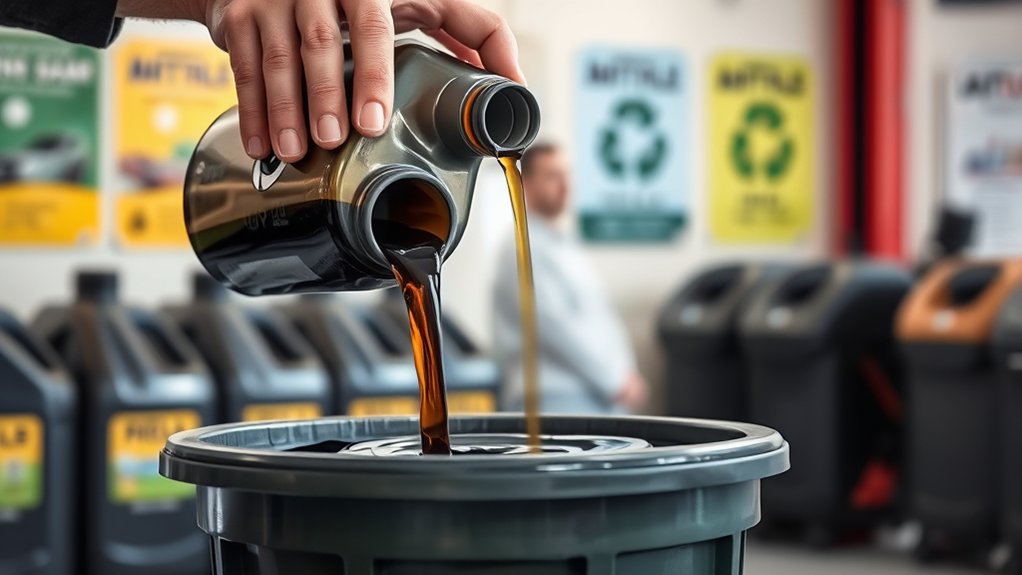
Although it might seem convenient to pour used engine oil down the drain or into the trash, doing so poses serious environmental and health risks. Used engine oil contains toxic contaminants that can pollute soil and water, severely impacting ecosystems and human health.
You must understand that improper disposal contributes to long-lasting environmental damage, including groundwater contamination and harm to aquatic life. Additionally, strict legal regulations govern the disposal of used engine oil, and failing to comply can result in significant fines or legal action.
How to Collect and Store Used Engine Oil Safely
Properly collecting and storing used engine oil requires three essential steps: using a clean, leak-proof container, labeling it clearly, and keeping it in a cool, dry place away from direct sunlight and heat sources. Choose appropriate oil container types, such as high-density polyethylene (HDPE) or metal containers designed for chemical storage, to prevent leaks and contamination.
Avoid reusing containers that previously held hazardous substances. Clearly label the container with the date and contents to track storage duration accurately. Limit storage duration to avoid degradation or spills. Ideally, store used oil no longer than six months before recycling or disposal.
Keep containers tightly sealed to prevent evaporation and contamination. Store them on a stable surface to avoid tipping. By following these steps, you’ll guarantee safe handling and compliance with environmental standards.
Where to Recycle Your Used Engine Oil
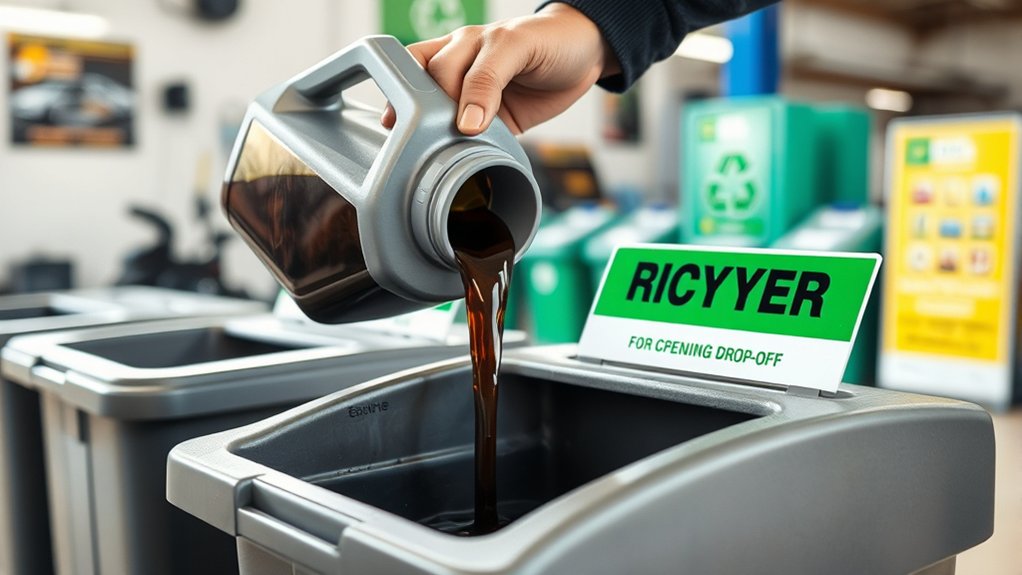
Once you’ve securely stored your used engine oil, the next step is finding a responsible recycling location. Start by checking with local recycling centers, as many accept used engine oil for proper processing. You can often find these centers through municipal websites or waste management authorities.
It’s essential to follow local regulations regarding oil disposal to avoid fines and environmental harm. Some auto repair shops and service stations also offer oil recycling services; verify their participation beforehand. Make sure you transport the oil in sealed, leak-proof containers to prevent spills.
Common Mistakes to Avoid When Disposing of Engine Oil
Why do so many people mishandle used engine oil despite clear guidelines? One common mistake is improper storage, which increases the risk of oil contamination. You must use clean, sealed containers to prevent dirt or water from compromising the oil.
Another error is disposing of oil in drains, soil, or regular trash, which causes severe environmental impact by polluting water and harming wildlife. Avoid mixing engine oil with other fluids, as this complicates recycling and disposal processes.
Also, don’t underestimate the importance of using authorized collection centers; unauthorized disposal sites often lack proper treatment facilities. By steering clear of these mistakes, you help minimize environmental damage and guarantee that used engine oil is handled safely and responsibly.
Safe Ways to Reuse or Repurpose Used Engine Oil
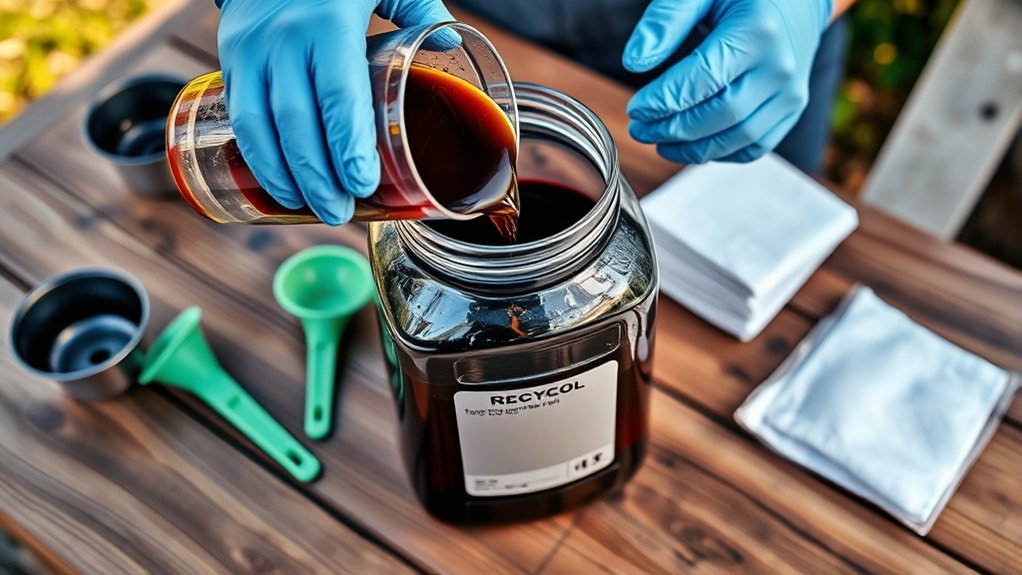
Although used engine oil cannot be reused directly in engines, you can repurpose it safely in several practical ways. For instance, you can use it in oil-based projects such as lubrication for metal parts, rust prevention on tools, or as a component in homemade wood preservatives.
Before repurposing, verify the oil is filtered to remove contaminants that could cause damage or environmental harm. Always avoid using it in ways that result in direct soil or water contamination, as this increases environmental impact.
Proper containment and careful application help minimize risks. By reusing used engine oil in controlled, appropriate oil-based projects, you reduce waste and lower the demand for new oil, contributing to a more sustainable approach and lessening environmental impact effectively.
Frequently Asked Questions
Can Engine Oil Disposal Harm Local Wildlife?
Yes, improper engine oil disposal causes oil contamination, threatening local ecosystems. You must follow regulations for wildlife protection, ensuring oil doesn’t leak into soil or water, preventing toxic exposure and preserving biodiversity effectively.
How Often Should I Change My Engine Oil?
You should change your engine oil every 3,000 to 7,500 miles, depending on your vehicle and oil type. Maintaining proper oil change frequency guarantees engine oil benefits like lubrication, cooling, and protecting engine components.
Is Synthetic Oil Harder to Recycle Than Conventional Oil?
Unlike conventional oil, synthetic oil’s complex additives slightly complicate the oil recycling process, but its synthetic oil benefits like longer engine life outweigh this.
You’ll find both oils recyclable with proper filtration and separation techniques.
Can I Mix Different Types of Used Engine Oil Before Recycling?
You shouldn’t mix different types of used engine oil because oil compatibility varies, which can complicate recycling processes.
Keeping oils separate guarantees efficient treatment and prevents contamination during recycling, maintaining quality and environmental safety.
What Are the Legal Penalties for Improper Engine Oil Disposal?
You know what they say, “Don’t bite off more than you can chew.” Ignoring proper disposal can lead to severe legal consequences, including hefty fines and penalties, due to the significant environmental impact caused by contaminated engine oil leaks.
Conclusion
Disposing of engine oil properly isn’t just good practice—it’s your responsibility, like keeping your own backyard clean. By collecting and storing used oil carefully, you avoid contamination and hazards. Take it to certified recycling centers to guarantee it’s handled safely.
Avoid common pitfalls like mixing oil with other fluids. Remember, just as you wouldn’t toss a wrench into the river, don’t dump oil anywhere harmful. Your careful actions protect both your engine and the environment.
Proper disposal of engine oil is essential to keep our surroundings safe and your vehicle running smoothly. Always follow recommended procedures for disposing of engine oil.