You should change your engine oil based on your vehicle manufacturer’s guidelines and oil life monitoring systems rather than fixed mileage intervals.
How often to change engine oil depends on various factors including driving conditions and habits.
Driving habits like stop-and-go traffic, extreme temperatures, and dusty conditions can require more frequent changes.
Using the correct oil type and viscosity, especially synthetic with advanced additives, helps extend oil life.
Always watch for signs like dark, gritty oil or warning lights signaling urgent changes.
Understanding these factors will help you maintain peak engine health.
Key Takeaways
- Follow the manufacturer’s recommended oil change intervals for your specific vehicle model.
- Use oil life monitoring systems or indicators for accurate, real-time oil condition assessment.
- Change oil more frequently under severe driving conditions like stop-and-go traffic or extreme temperatures.
- Choose the correct oil type and viscosity as specified in the owner’s manual for optimal engine protection.
- Immediately change oil if you notice leaks, dark/gritty oil, warning lights, or unusual engine noise.
How to Determine Your Engine Oil Change Interval
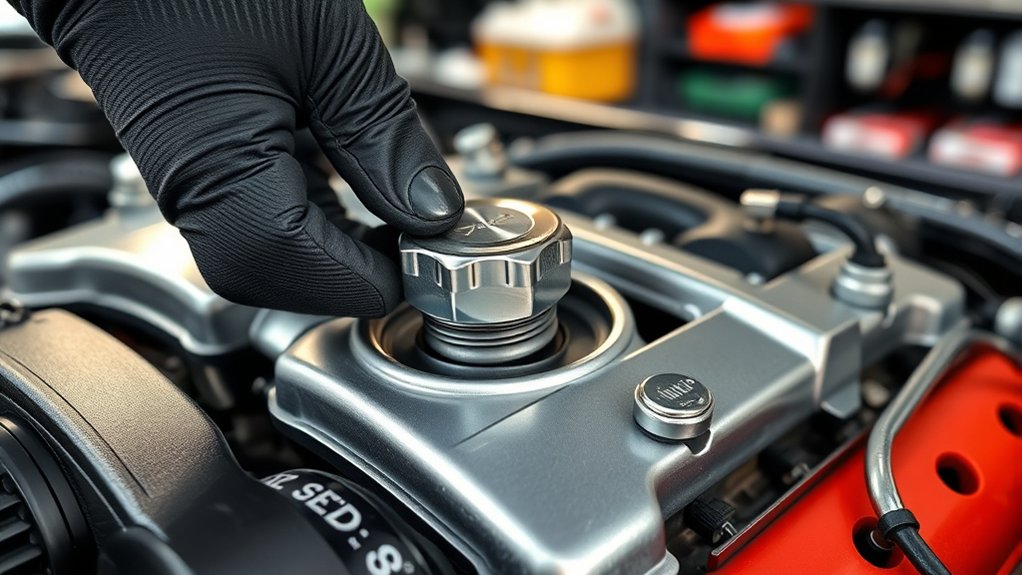
How do you accurately determine when to change your engine oil? Begin by consulting your vehicle’s manufacturer guidelines, which provide recommended maintenance schedules based on your engine type and driving conditions.
Modern vehicles often feature an oil life monitoring system that calculates oil degradation in real-time, factoring in temperature, engine load, and mileage. You should rely on the oil life indicator as a precise gauge rather than arbitrary mileage intervals.
Modern oil life monitors track engine conditions in real time, providing accurate guidance beyond fixed mileage intervals.
Regularly check this system’s readout and plan oil changes accordingly. Adhering strictly to maintenance schedules prevents premature engine wear and maintains ideal lubrication performance.
Avoid extending oil change intervals beyond manufacturer recommendations, as oil life can vary considerably depending on usage, affecting engine reliability and efficiency.
How Driving Habits and Car Type Affect Engine Oil Change Frequency
Your driving habits and the type of vehicle you operate directly influence the frequency at which you should change your engine oil. If you frequently drive in severe driving conditions, such as stop-and-go traffic, extreme temperatures, or dusty environments, your engine oil degrades faster, requiring more frequent changes.
Additionally, older vehicles typically demand more frequent oil changes due to increased engine wear and reduced oil efficiency. High-performance cars or those with turbocharged engines often require specific oil change intervals distinct from standard vehicles because of their operating stresses.
Understanding your vehicle’s age and typical driving conditions helps you tailor your maintenance schedule precisely, ensuring maximum engine protection and performance. Adjusting oil change frequency based on these factors prevents premature engine wear and maintains efficient operation.
Choosing the Right Engine Oil to Extend Oil Changes
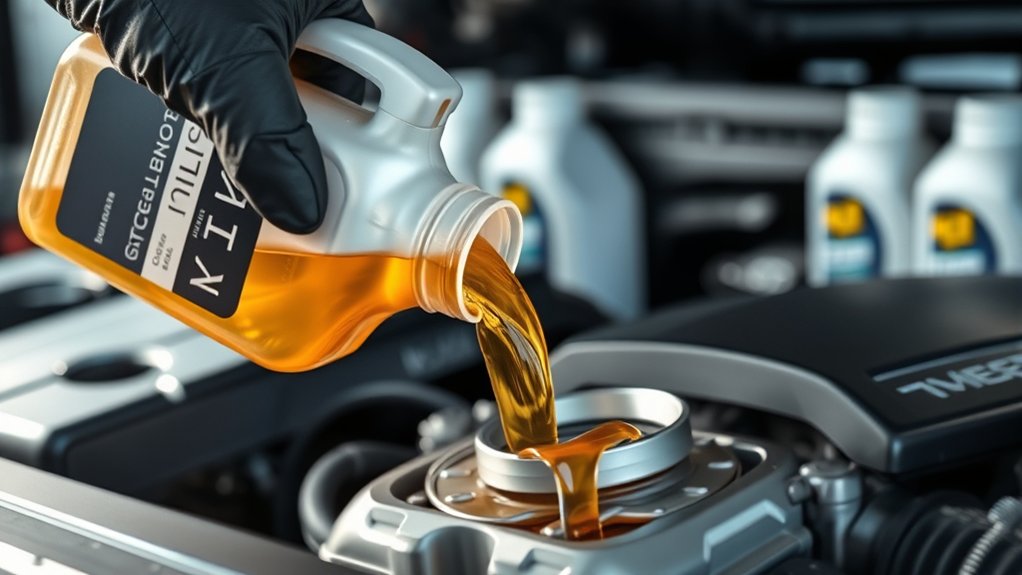
Although selecting the right engine oil might seem straightforward, choosing a formulation that matches your vehicle’s specifications and driving conditions can considerably extend the interval between oil changes. You should focus on:
- Oil viscosity: Pick the grade recommended in your owner’s manual to guarantee ideal flow and protection under temperature extremes.
- Synthetic benefits: Synthetic oils resist breakdown better than conventional oils, offering enhanced thermal stability and longer-lasting lubrication.
- Additive packages: Choose oils with advanced detergents and anti-wear additives to keep engine components cleaner and reduce degradation.
Signs You Should Change Engine Oil Immediately
When engine oil degrades beyond its functional limits, it compromises lubrication and protection, risking severe engine damage. You should change your engine oil immediately if you detect oil leak signs such as puddles beneath the vehicle or a burning oil smell.
Also, oil color changes from amber to dark black or gritty indicate contamination or oxidation, reducing oil efficiency. Monitor your oil level and consistency regularly to avoid catastrophic engine wear.
| Sign | Description | Action Required |
|---|---|---|
| Oil Leak Signs | Visible oil under vehicle or smell | Inspect and repair leaks |
| Oil Color Changes | Dark or gritty oil | Change oil immediately |
| Engine Noise | Increased friction sounds | Check oil level and viscosity |
| Warning Lights | Oil pressure or check engine light | Immediate oil and system check |
Frequently Asked Questions
Can Using Synthetic Oil Damage My Engine?
Using synthetic oil won’t damage your engine; its synthetic benefits include superior lubrication and thermal stability, which enhance engine longevity by reducing wear and deposits. Just guarantee you choose the correct grade recommended for your vehicle.
How Does Oil Change Affect Fuel Efficiency?
You might think oil changes slow you down, but they actually optimize oil viscosity, reducing friction. This improves fuel consumption by allowing your engine to run smoother and more efficiently, ultimately saving you money on gas.
Is It Necessary to Change the Oil Filter Every Time?
Yes, you should change the oil filter every time you change the oil. Different oil filter types have varying lifespans, but replacing it guarantees maximum filtration.
This prevents contaminants from harming your engine and helps maintain its performance.
Can I Extend Oil Change Intervals With Oil Additives?
You can’t reliably extend oil change intervals with oil additives alone; while they may enhance engine performance temporarily, they don’t replace the need for regular oil changes. Regular changes are necessary to maintain proper lubrication and prevent engine wear.
What Happens if I Overfill My Engine Oil?
Don’t worry, a slight overfill won’t ruin engine performance immediately, but too much oil causes increased pressure, leading to oil leaks and potential damage.
You’ll want to drain the excess to maintain ideal engine function and avoid costly repairs.
Conclusion
You don’t want your engine oil to run on fumes—regular changes keep your engine running smoothly and efficiently. By understanding your driving habits, vehicle type, and choosing the right oil, you can tailor oil change intervals to maximize performance and longevity.
Keep an eye out for warning signs, and don’t delay oil changes. Staying proactive guarantees your engine stays protected, saving you from costly repairs down the road.
To ensure your vehicle remains in top condition, knowing how often to change engine oil is essential. Regular maintenance is key to extending your engine’s life and maintaining optimal performance.