To get engine oil out of clothes, act quickly by blotting the excess oil without rubbing. This prevents the stain from spreading further into the fabric.
Next, cover the stain with an absorbent material like baking soda or cornstarch and let it sit for 15–30 minutes. Afterward, gently brush off the powder.
Pre-treat the stain with a heavy-duty grease remover or an enzyme detergent, allowing it to penetrate before washing. Use the hottest water that is safe for your fabric to help break down the oil.
Avoid drying your clothes on high heat, as this can set the stain permanently. For stubborn spots, commercial degreasers are effective in restoring your garment’s condition.
By following these steps, you can uncover effective techniques to tackle even the toughest oil stains.
Key Takeaways
- Blot excess engine oil gently without rubbing to avoid pushing the stain deeper into the fabric fibers.
- Apply absorbent powder like baking soda or cornstarch on the stain for 15-30 minutes to soak up oil.
- Pre-treat the stain with a specialized grease remover or enzyme-based detergent, letting it sit for 5-10 minutes.
- Wash the garment in the hottest water safe for the fabric using a heavy-duty detergent formulated for grease removal.
- Air-dry or use low heat after washing and repeat treatment if the stain persists before drying completely.
Why Engine Oil Stains Are Difficult to Remove
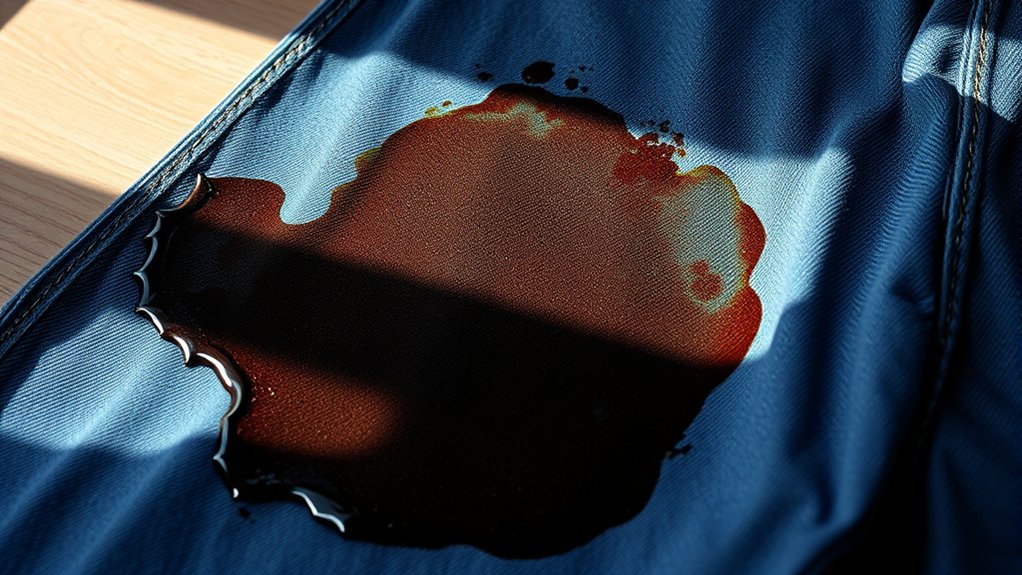
Because engine oil contains complex hydrocarbons and additives, it bonds strongly with fabric fibers, making stains tough to lift. The engine oil composition includes heavy molecules that penetrate deeply into the weave of your clothes, embedding themselves beyond the surface.
This penetration creates a significant stain removal challenge since typical detergents struggle to break down these hydrocarbons effectively. The additives in engine oil, designed to improve performance and reduce wear, also contribute to the stain’s persistence by creating a resistant layer on fibers.
When you deal with engine oil stains, you face a chemical and physical barrier that standard washing processes can’t easily overcome. Understanding these factors helps you approach the problem with the right techniques and products designed to tackle the unique stain removal challenges posed by engine oil.
How to Quickly Treat Engine Oil Stains to Prevent Setting
You need to act immediately after an engine oil stain occurs to prevent it from setting. Start by blotting the area with absorbent materials like paper towels or cloth to soak up excess oil.
Then, apply a pre-treatment solution designed to break down grease before washing.
Act Immediately After Stain
Although engine oil stains can seem stubborn, acting quickly prevents them from setting into the fabric. Stain urgency is critical. Delays allow oil to penetrate deeper, making removal harder. As soon as you notice the stain, take prompt action to limit absorption.
Blot the affected area gently with a clean cloth or paper towel to remove excess oil without spreading it. Avoid rubbing, which pushes oil further into fibers. Next, treat the stain with a specialized detergent or stain remover designed for grease.
Let it sit briefly to break down the oil molecules. The faster you respond, the better your chances of fully eliminating the stain. Remember, immediate intervention is key to preventing permanent damage to your clothing.
Use Absorbent Materials
Three types of absorbent materials, cat litter, baking soda, and cornstarch, work effectively to soak up fresh engine oil stains. You should apply one immediately to prevent the oil from setting into the fabric. These absorbent materials enhance stain absorption by pulling oil away from fibers.
Follow these steps for ideal results:
- Sprinkle a generous layer of your chosen absorbent material over the stain.
- Let it sit for 15-30 minutes to maximize oil uptake.
- Gently brush off the powder without spreading the stain.
- Repeat if the stain remains visibly oily.
Using absorbent materials quickly after staining limits oil penetration, making subsequent cleaning more efficient and increasing your chances of complete stain removal.
Apply Pre-Treatment Solutions
After absorbing as much oil as possible, the next step is to apply a pre-treatment solution directly to the stain. Choose a product designed for heavy grease or engine oil, such as a liquid detergent with enzymes or a specialized stain remover.
Apply it liberally, guaranteeing full saturation to maximize oil absorption and break down the stain’s molecules. Let the solution sit for 5 to 10 minutes but don’t let it dry, as this could set the stain.
For stubborn spots, gently rub the fabric together or use a soft brush to enhance penetration. This quick treatment is essential for stain prevention, stopping the oil from bonding with fibers.
Following this, launder the garment promptly using the hottest water safe for the fabric to assure thorough removal.
Effective Household Products for Engine Oil Removal
Several common household products can effectively break down engine oil stains on your clothes. You’ll find these items useful for loosening and lifting oil residues before washing.
- Baking soda and cornstarch powder: Both absorb fresh oil, preventing deeper fabric penetration.
- Dish soap and laundry detergent: These contain surfactants that emulsify oil, making it easier to rinse out.
- Vinegar solution and lemon juice: Their mild acidity helps break down oil molecules and neutralize odors.
- Rubbing alcohol and baby powder: Alcohol dissolves oil, while baby powder absorbs residual grease on delicate fabrics.
Using these products appropriately improves stain removal efficiency and protects fabric integrity, ensuring your clothes come out clean without damage.
Step-by-Step Guide to Removing Engine Oil Stains
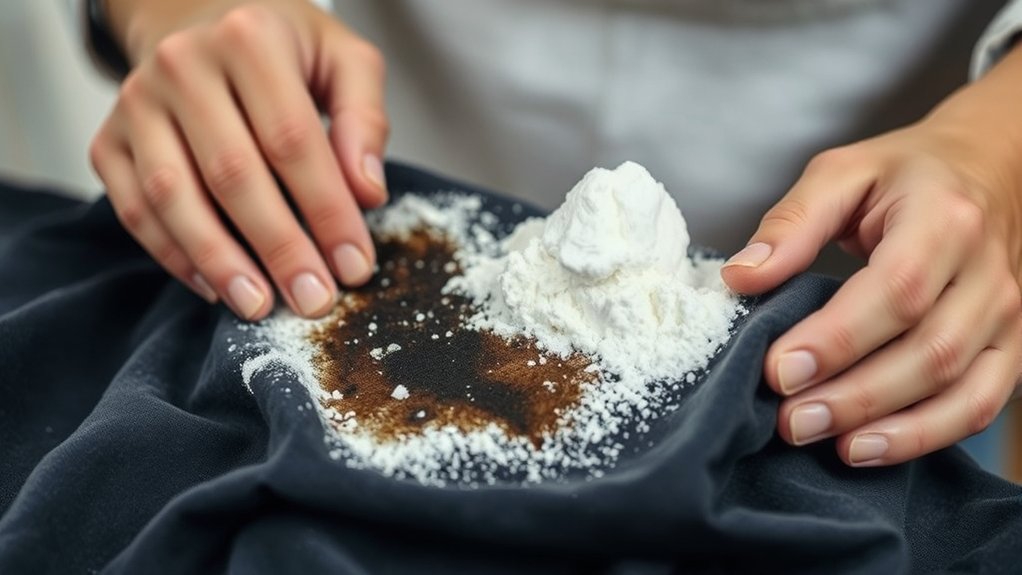
Start by applying a pre-treatment solution directly to the oil stain to break down the grease. Then, use an effective washing method with hot water and a strong detergent to remove the residue.
Following these steps will maximize your chances of fully eliminating the engine oil from your clothes.
Pre-Treatment Techniques
Tackle engine oil stains quickly to prevent them from setting into the fabric. Prompt action is essential for effective stain prevention and fabric care. Start by gently blotting excess oil with a clean cloth, don’t rub, as that spreads the stain. Next, apply a pre-treatment solution designed for heavy grease or use liquid dish soap to break down the oil.
Follow these steps for ideal pre-treatment:
- Blot excess oil carefully without rubbing.
- Apply a grease-fighting pre-treatment or dish soap directly to the stain.
- Let the solution sit for 10-15 minutes to penetrate and loosen the oil.
- Rinse the treated area with cold water before washing.
These steps prepare the fabric for washing while minimizing damage and maximizing stain removal.
Effective Washing Methods
Begin by selecting the right washing method to guarantee the engine oil stain is fully removed without damaging your clothes. First, check the fabric types; delicate fabrics like silk or wool require gentler cycles and cold water, while cotton and synthetics can handle warm water and more vigorous agitation.
Use a heavy-duty detergent formulated for grease removal to improve stain prevention. Avoid using hot water initially, as it can set the stain.
After pre-treatment, wash the garment separately or with similar fabrics to avoid cross-contamination. Inspect the stain after washing. If it persists, repeat treatment before drying, as heat can make stains permanent.
Always follow care label instructions to preserve fabric integrity while effectively removing engine oil stains.
Using Commercial Stain Removers for Engine Oil
Apply a commercial stain remover specifically designed for grease and oil to the affected area as soon as possible. These products contain solvents and surfactants that break down engine oil effectively.
Before application, use oil absorbents like baking soda or cornstarch to lift excess oil. Follow these steps for best results:
- Blot the stain gently with oil absorbents to remove surface oil.
- Apply the commercial stain remover directly on the spot.
- Let it sit for the recommended time to penetrate the fibers.
- Avoid rubbing; instead, blot to prevent spreading the stain.
Using a commercial stain remover after oil absorbents can drastically improve stain removal efficiency and prevent permanent damage to your clothes.
Washing and Drying Clothes After Engine Oil Stain Treatment
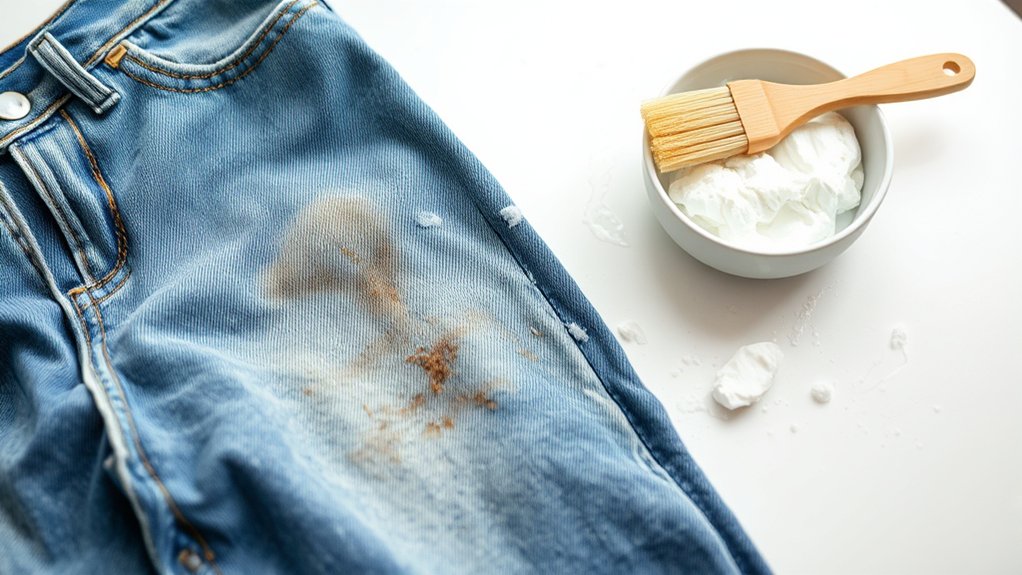
Once you’ve treated the oil stain with absorbents and stain remover, it’s time to wash the garment to remove any remaining residue. Use the warmest water safe for the fabric according to the care label to avoid stain setting. Choose a heavy-duty detergent that targets grease and oils.
After treating oil stains, wash with warm water and a heavy-duty grease-fighting detergent for best results.
Avoid using bleach unless the fabric care instructions explicitly allow it, as it can damage fibers and alter colors. Wash the item separately or with similar fabrics to prevent cross-contamination.
After washing, inspect the stain before drying; heat can permanently set any leftover oil. If the stain persists, repeat treatment before drying.
For drying, air-dry or use a low heat setting to preserve fabric integrity and prevent stain setting. Proper washing and drying guarantee the stain and treatment chemicals are fully removed.
How to Handle Persistent Engine Oil Stains
If the engine oil stain remains after initial treatments, you’ll need to intensify your approach using specialized techniques and products designed for stubborn grease. Persistent stain solutions focus on breaking down the oil molecules more effectively and preventing the stain from setting.
Follow these steps:
- Apply a commercial degreaser specifically formulated for engine oil.
- Use a soft brush to work the product into the fabric fibers.
- Let it sit for at least 15 minutes to penetrate deep stains.
- Rinse with warm water before rewashing with a heavy-duty detergent.
Frequently Asked Questions
Can Engine Oil Stains Cause Skin Irritation?
Yes, engine oil toxicity can cause skin irritation, especially if you have skin sensitivity. You should avoid prolonged contact, wash the area promptly, and use gloves to prevent adverse reactions from harmful chemicals in the oil.
Is It Safe to Use Bleach on Engine Oil Stains?
You shouldn’t use bleach on engine oil stains; it can damage fabric and set stains. Instead, try bleach alternatives like oxygen-based cleaners or degreasers designed for oil stain removal, ensuring safer and more effective results.
How Long Should I Wait Before Washing Stained Clothes?
You should wait about 15-30 minutes after applying oil absorption methods like baking soda or cornstarch before washing. This allows stain removal techniques to work effectively, breaking down and lifting the engine oil from your clothes.
Can Engine Oil Stains Damage Fabric Fibers Permanently?
Yes, engine oil stains can damage fabric fibers permanently if untreated. Using prompt stain removal techniques and proper fabric care minimizes damage.
Act quickly to prevent oil from setting deep, preserving your clothes’ integrity.
Are There Special Detergents for Synthetic Fabrics With Oil Stains?
Yes, you’ll find detergents designed for oil stain removal and synthetic fabric care. They contain enzymes and solvents targeting oil without damaging fibers, ensuring effective cleaning while preserving your synthetic clothes’ integrity.
Conclusion
Engine oil stains can feel like dark shadows on your favorite clothes, but with quick action and the right products, you can wipe them away. Treat the stain promptly, apply household or commercial removers, and follow through with proper washing and drying.
Persistent stains may need extra care, but don’t let them settle in. Stay sharp, act fast, and your clothes will come out looking clean and fresh every time.
By following these steps, you can successfully get engine oil out of clothes and keep your wardrobe looking its best.