Yes, engine oil is flammable, but it requires much higher temperatures to ignite compared to gasoline due to its thicker structure and higher flash point, typically above 200°C.
Unlike gasoline, engine oil doesn’t vaporize easily, which limits its flammability under normal conditions.
However, leaks near hot engine parts or sparks can still cause fires. Proper handling and storage of engine oil are essential to minimize these risks.
Understanding these factors will help you manage engine oil hazards more effectively and safely.
Key Takeaways
- Engine oil is flammable but has a much higher flash point (over 200°C) than gasoline, requiring higher temperatures to ignite.
- It vaporizes slowly due to its viscosity, making it less volatile and less likely to form flammable air mixtures under normal conditions.
- Oil leaks near hot engine parts or ignition sources can ignite if local temperatures exceed the combustion threshold.
- Contaminated or improperly stored used oil increases fire risk due to mixed solvents or fuels.
- Safe handling involves storing oil in cool, ventilated areas and promptly cleaning spills to minimize fire hazards.
Is Engine Oil Flammable Like Gasoline?
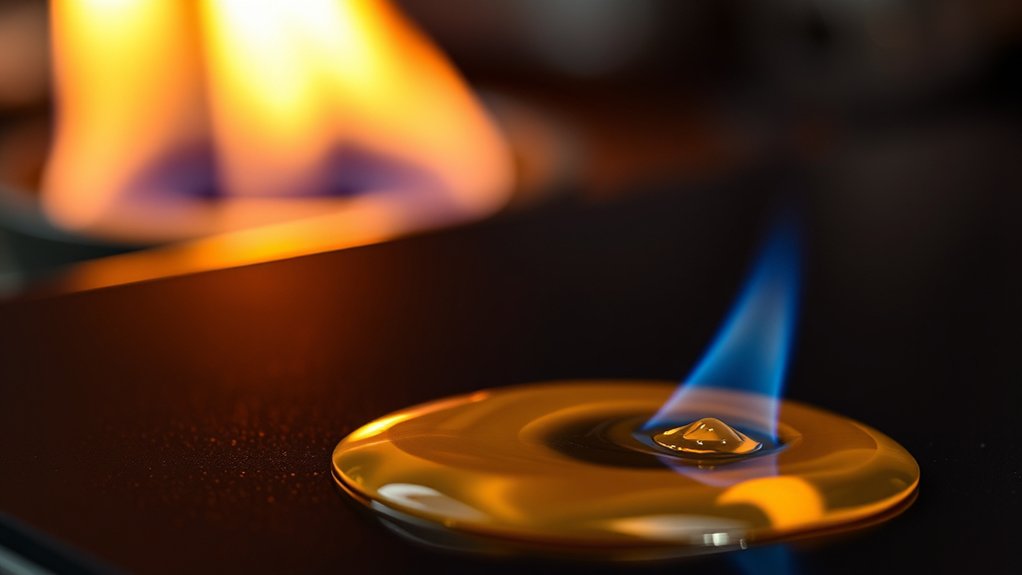
How does engine oil’s flammability compare to gasoline? You should know that engine oil properties differ greatly from gasoline, especially regarding flammability. Gasoline has a low flash point, around -43°C, making it highly volatile and easy to ignite.
In contrast, engine oil exhibits a much higher flash point, typically above 200°C, due to its thicker molecular structure and additives. This means engine oil requires substantially higher combustion temperatures to ignite.
While gasoline vaporizes readily, mixing with air to form flammable mixtures, engine oil’s viscosity limits vapor release under normal conditions. Thus, although engine oil is technically flammable, it’s far less prone to ignition compared to gasoline.
Understanding these distinctions helps you accurately assess the relative fire risks linked with engine oil properties and combustion temperature thresholds.
Common Engine Oil Fire Risks and Flammability Hazards
Although engine oil is less flammable than gasoline, it still poses specific fire risks that you need to understand. Engine oil ignition can occur under certain conditions, especially when oil leaks accumulate near hot surfaces or electrical components.
Recognizing these hazards is essential for effective fire prevention.
| Risk Factor | Explanation |
|---|---|
| Oil leaks | Create flammable film near ignition sources |
| High engine temperatures | Lower ignition threshold for oil vapors |
| Electrical shorts | Sparks can ignite accumulated oil |
| Improper disposal | Used oil is more volatile, increasing risk |
| Contaminated surfaces | Residual oil mixed with fuel or solvents |
How Heat and Open Flames Can Spark Engine Oil Fires

When engine oil comes into contact with intense heat or open flames, it can rapidly reach its flash point, igniting and causing fires that spread quickly. You need to understand that oil ignition occurs when the oil’s temperature hits the combustion temperature, a threshold where the oil vaporizes and mixes with oxygen, creating a flammable mixture.
Exceeding this temperature triggers rapid combustion, especially near ignition sources like open flames or hot surfaces. Because engine oil has a relatively high flash point compared to gasoline, it requires substantial heat, but once that threshold is surpassed, the fire risk escalates sharply.
As you analyze potential hazards, consider how localized heat spikes from engine components or external flames can induce oil ignition, emphasizing the need for rigorous temperature control in environments handling engine oil.
How to Safely Handle and Store Engine Oil
Since engine oil poses flammability risks under high temperatures, you must implement strict handling and storage protocols to minimize fire hazards. For oil storage, choose cool, well-ventilated areas away from direct sunlight and ignition sources.
Use containers specifically designed for engine oil, ensuring they are tightly sealed to prevent leaks and contamination. Always handle engine oil with care, wearing appropriate personal protective equipment to avoid skin contact and accidental spills.
Adhere to established safety practices by regularly inspecting storage areas for leaks or damage and maintaining clear labeling on all containers. Proper segregation of oil from incompatible materials further reduces risks.
Tips to Prevent Engine Oil Fires
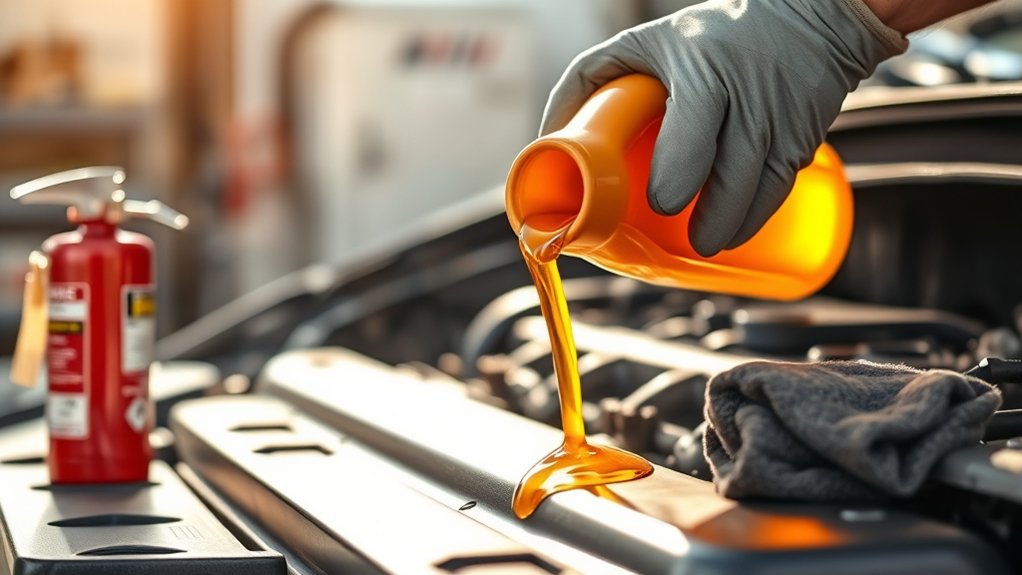
To prevent engine oil fires, you must proactively manage both the oil’s exposure to heat sources and its containment integrity. Start by adhering strictly to regular engine maintenance schedules to detect leaks early; even small oil leaks near hot engine parts can ignite.
Use appropriate gaskets and seals to maintain containment integrity, and replace worn components promptly. Avoid overfilling the oil reservoir, as excess oil can spill and contact heated surfaces.
During engine repairs or modifications, guarantee all oil lines are correctly routed away from exhaust manifolds or turbochargers. Additionally, clean any oil residues from engine surfaces to reduce fire risk.
Implementing these fire prevention strategies helps maintain operational safety and minimizes the chances of oil-induced fires in your engine system.
Frequently Asked Questions
Can Engine Oil Ignite Without Direct Flames?
You can’t expect oil ignition without direct flames, but engine oil poses fire hazards if exposed to high heat or sparks.
Always handle it carefully to prevent accidental combustion in your equipment or workspace.
Does Engine Oil Emit Flammable Vapors?
You’ll notice a subtle mist rising, as oil vapor composition includes light hydrocarbons. While these vapors can contribute under specific oil combustion factors like heat and oxygen, they’re generally stable, requiring precise conditions to become flammable.
How Does Engine Oil Compare to Other Lubricants in Flammability?
You’ll find engine oil less flammable than many lubricants due to its higher oil viscosity and specific lubricant properties. These factors reduce vapor formation, making it safer under typical operating temperatures compared to lighter, more volatile lubricants.
Can Used Engine Oil Be More Flammable Than New Oil?
Like a once-calm forest now tinder-dry, used engine oil can be more flammable due to altered combustion properties.
You must respect used oil hazards, as contaminants and breakdown products increase its ignition risk considerably.
What Is the Flash Point of Typical Engine Oil?
The flash point of typical engine oil ranges between 200°C and 250°C, depending on oil composition.
You’ll find that ignition temperature varies with additives and base oils, influencing how easily it ignites under heat exposure.
Conclusion
You might assume engine oil, unlike gasoline, poses no fire threat—after all, it’s thicker, less volatile, right? Ironically, under high heat or near open flames, that slick lubricant can ignite, becoming a hidden hazard.
So, don’t get too comfortable handling engine oil carelessly. Treat it with respect, store it properly, and avoid sparks. Your engine’s lifeblood isn’t invincible; it demands the same fire safety vigilance as more obviously flammable fluids.
In conclusion, engine oil is flammable under certain conditions, so always handle it with caution to prevent fire risks.