Your car needs engine oil that matches the manufacturer’s specified grade and viscosity to guarantee proper lubrication and protect engine components.
Knowing what engine oil your car takes is essential for maintaining its performance and longevity.
Using oil with the correct thickness, like 5W-30, ensures proper flow at both low and high temperatures.
Choose between conventional, synthetic, or blend oils based on your performance needs and budget.
Always follow your vehicle’s manual to avoid excessive wear and engine damage.
Understanding these details helps optimize efficiency and extend your engine’s life.
Key Takeaways
- Check your car’s owner manual to find the recommended oil viscosity and grade for optimal engine performance.
- Use manufacturer-approved oil types that meet specified viscosity and additive standards for protection and longevity.
- Consider driving conditions and engine age when selecting between synthetic, conventional, or blend oils.
- Avoid using incorrect oil to prevent engine wear, sludge buildup, and reduced fuel efficiency.
- Regularly check oil levels and color, and follow recommended oil change intervals for your specific vehicle.
What Engine Oil Grades and Viscosities Mean
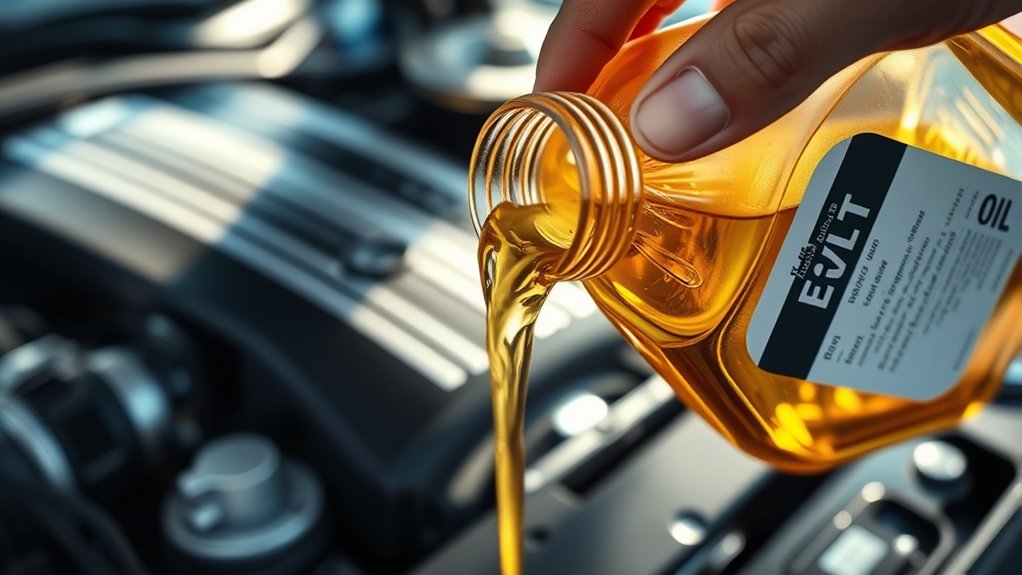
Although engine oil grades might seem complex at first, understanding their viscosity ratings is crucial for choosing the right oil for your car. Viscosity indicates how well the oil flows at specific oil temperatures, affecting lubrication efficiency.
For instance, a 5W-30 oil flows better at low temperatures (the “5W”) and maintains thickness at high oil temperatures (the “30”). This balance guarantees your engine operates smoothly under varying conditions.
Additionally, oil additives enhance performance by reducing wear, preventing corrosion, and improving thermal stability. When selecting oil, consider both viscosity and additive packages, as these factors influence protection and efficiency.
Proper viscosity guarantees ideal oil film strength during temperature fluctuations, while additives support engine longevity. Understanding these ratings helps maintain engine health and performance.
Why Manufacturer Recommendations Matter for Engine Oil
When you follow your vehicle manufacturer’s engine oil recommendations, you guarantee peak engine performance and longevity. Manufacturers design their engines with specific oil grades and formulations in mind to enhance oil efficiency and reduce wear.
Using the recommended oil guarantees proper lubrication, minimizes friction, and maintains critical tolerances within the engine. Deviating from these specifications can lead to increased engine deposits, reduced fuel economy, and accelerated component wear.
Additionally, manufacturer-approved oils meet precise viscosity and additive package standards, which protect against oxidation, corrosion, and thermal breakdown. By adhering to these guidelines, you maintain prime oil flow and pressure, critical for engine efficiency.
Ultimately, respecting your vehicle’s oil requirements safeguards performance, reliability, and extends engine life while preventing costly repairs.
How to Choose the Right Engine Oil for Your Car
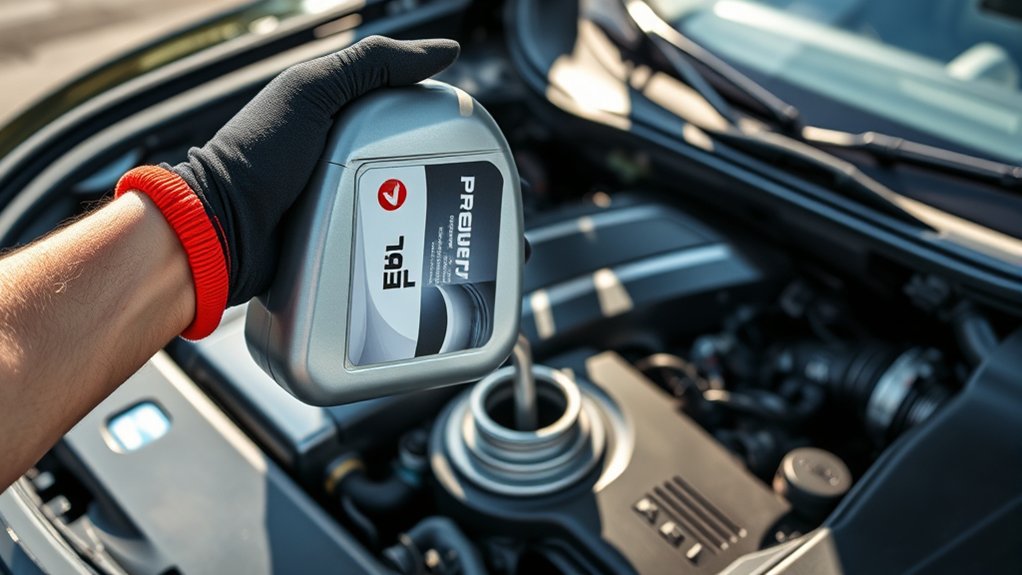
You need to focus on the oil viscosity that matches your engine’s requirements for ideal performance and protection. Deciding between synthetic and conventional oil depends on your driving conditions and manufacturer guidelines.
Always verify the oil meets the specifications outlined in your car’s manual to confirm compatibility and warranty compliance.
Oil Viscosity Importance
Viscosity plays an essential role in engine oil performance, directly affecting how well the oil lubricates engine components under various temperatures and operating conditions. Choosing the right viscosity guarantees your engine runs smoothly and reduces engine wear. Here’s why it matters:
- Oil Temperature Adaptation: Proper viscosity allows oil to maintain an ideal thickness across temperature ranges, guaranteeing effective lubrication during cold starts and high operating temperatures.
- Minimized Engine Wear: Correct viscosity forms a protective film between moving parts, reducing friction and preventing metal to metal contact.
- Fuel Efficiency and Performance: Using oil with inappropriate viscosity can increase resistance, decreasing fuel efficiency and engine responsiveness.
Synthetic Vs. Conventional
How do you determine whether synthetic or conventional oil suits your car best? Synthetic oils offer superior performance by providing enhanced thermal stability, reduced engine wear, and better resistance to oxidation.
These synthetic benefits translate to improved fuel efficiency and longer oil change intervals. On the other hand, conventional oils, derived from crude oil, have conventional drawbacks such as lower resistance to breakdown under high temperatures and quicker degradation.
While conventional oils may be less expensive initially, they often require more frequent changes and may not protect modern engines as effectively. To optimize engine longevity and performance, synthetic oil is generally the preferred choice, especially for high-performance or newer vehicles.
Understanding these synthetic benefits and conventional drawbacks helps you make an informed decision tailored to your car’s needs.
Manufacturer Specifications
Selecting the appropriate engine oil goes beyond choosing between synthetic and conventional types. You must adhere strictly to your car’s manufacturer guidelines to guarantee peak performance and engine longevity. These guidelines specify critical oil specifications like viscosity grade and performance standards.
To choose the right oil, follow these steps:
- Consult your owner’s manual for recommended oil specifications, including viscosity (e.g., 5W-30) and certification standards (API, ACEA).
- Verify that the oil meets or exceeds these manufacturer guidelines to maintain warranty compliance.
- Consider driving conditions and engine age to select oils with additives that enhance protection per specifications.
Differences Between Conventional, Synthetic, and Blend Oils
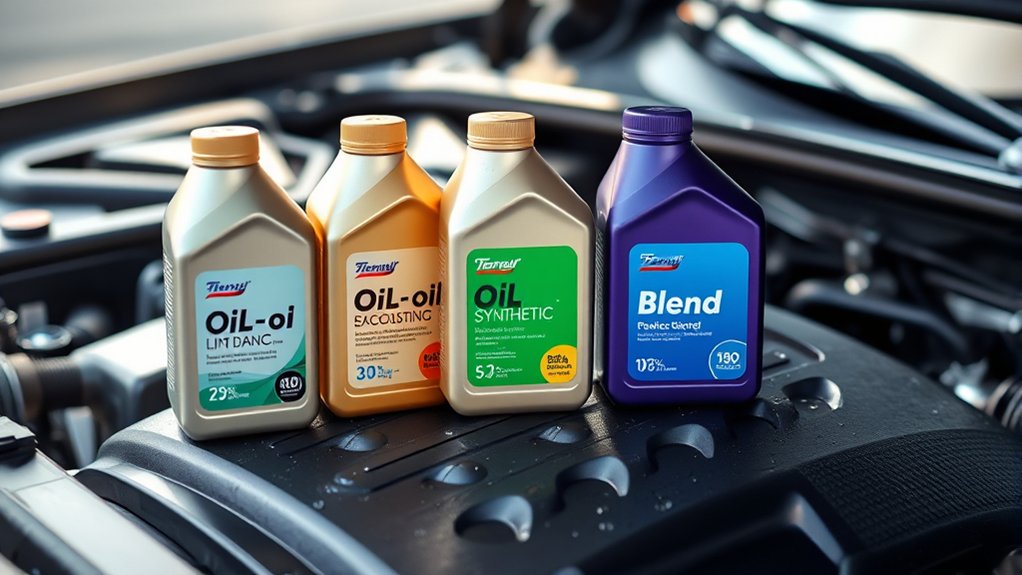
You’ll find that conventional, synthetic, and blend oils differ primarily in their base composition and additive packages. These differences directly affect their performance, engine protection, and how long they last between changes.
Understanding these factors will help you balance cost, availability, and the specific needs of your engine.
Oil Composition Differences
Engine oil types differ primarily in their molecular structure and refining processes, which affect performance and protection. Understanding these differences helps you choose the right oil for your vehicle.
- Conventional Oil: Derived from crude oil, it contains larger, uneven molecules. It relies heavily on oil additives to enhance stability and reduce wear but has a higher environmental impact due to less efficient refining.
- Synthetic Oil: Fully engineered with uniform molecular structures, synthetic oil offers superior thermal stability and oxidation resistance. It uses advanced oil additives, resulting in lower environmental impact and better engine protection.
- Blend Oil: A mix of conventional and synthetic oils, blend oil balances cost and performance. It contains moderate oil additives to improve durability while reducing the environmental footprint compared to conventional oil alone.
Performance and Longevity
Although all engine oils serve the basic function of lubricating, their performance and longevity vary considerably due to differences in formulation. Conventional oils, derived from crude oil, provide adequate engine performance but degrade faster under extreme conditions, reducing oil longevity.
Synthetic oils, engineered through chemical processes, offer superior thermal stability and oxidation resistance, greatly enhancing engine performance and extending oil longevity. Synthetic blends combine both types, balancing improved performance and longevity at a moderate cost.
When you choose synthetic oil, you benefit from consistent viscosity, reduced sludge formation, and better protection in high-stress environments, which all contribute to prolonged engine life. Conversely, conventional oils may require more frequent changes to maintain ideal engine performance.
Understanding these distinctions helps you select the right oil to maximize your vehicle’s efficiency and durability.
Cost and Availability
Three main types of engine oils: conventional, synthetic, and blends, differ greatly in cost and availability. Understanding oil pricing and local availability helps you make an informed choice.
- Conventional oils are the most affordable and widely available at local stores, making them a cost-effective option for standard vehicles.
- Synthetic oils carry a higher price due to advanced refining and additives but offer superior performance and extended drain intervals. However, their local availability might be limited in some areas.
- Blend oils combine features of both types, offering moderate oil pricing and generally good local availability.
How Using the Wrong Engine Oil Can Damage Your Engine
If you choose the wrong engine oil, you risk compromising your car’s lubrication system, which can lead to increased friction, overheating, and accelerated wear of internal components. Incorrect oil viscosity or formulation fails to maintain an adequate lubricating film, increasing metal-to-metal contact and causing premature engine wear.
Additionally, incompatible oil can accelerate oil breakdown, reducing its ability to protect against corrosion and deposits. This breakdown diminishes the oil’s thermal stability and its capacity to resist oxidation, further impairing engine performance.
Using oil that doesn’t meet your engine’s specifications also disrupts the efficiency of hydraulic components and can cause sludge buildup. Ultimately, these issues compromise engine longevity and reliability, making it essential to select the exact oil grade and type recommended by your vehicle manufacturer.
When and Why You Should Change Your Engine Oil
Because engine oil degrades over time and with use, you should change it regularly to maintain peak engine performance and protection. Adhering to the proper oil change frequency is critical to prevent sludge buildup, reduce engine wear, and maintain lubrication efficiency.
Follow these maintenance tips to know when and why:
- Mileage Intervals: Change oil every 5,000 to 7,500 miles, or as recommended by your vehicle’s manufacturer, to guarantee best viscosity and additive function.
- Driving Conditions: Increase frequency if you frequently drive in severe conditions like stop-and-go traffic, extreme temperatures, or dusty environments, as these accelerate oil breakdown.
- Oil Quality and Type: Synthetic oils last longer than conventional oils, so adjust oil change intervals accordingly to maximize engine protection.
Regular oil changes preserve engine longevity, fuel efficiency, and emissions control by maintaining clean, effective lubrication.
How to Check and Top Up Your Engine Oil
Checking and topping up your engine oil is a straightforward yet essential task that guarantees your engine runs smoothly and avoids damage. First, make sure the engine is cool and parked on level ground.
Locate the dipstick, pull it out, wipe it clean, and reinsert it fully. Pull it out again to check the oil level; it should be between the minimum and maximum marks. Observe the oil color, which should be clear amber; dark or gritty oil indicates a change is needed.
To top up, remove the oil filler cap and add the correct oil grade gradually, checking the level frequently to avoid overfilling. Always use the oil type specified in your owner’s manual for peak performance and engine longevity.
Frequently Asked Questions
Can I Mix Different Brands of Engine Oil?
You can mix different engine oil brands, but you risk oil brand compatibility issues. Mixing oils risks altering additive effectiveness and viscosity, potentially harming your engine.
Always prioritize using oils meeting your car’s specifications to guarantee peak performance.
How Does Engine Oil Affect Fuel Efficiency?
Engine oil is the lifeblood of your engine; its fuel viscosity and oil additives reduce friction, improving fuel efficiency by allowing smoother movement.
Using the right oil guarantees peak performance and better mileage, saving you money at the pump.
What Are the Signs of Low Engine Oil Pressure?
You’ll notice oil pressure indicators warning you of low engine oil pressure, often caused by leaks, worn pump, or clogged filters.
Your engine may make unusual noises or perform poorly, signaling immediate attention is needed.
Is Engine Oil Recycling Beneficial for the Environment?
Think of oil recycling as a river cleansing itself, preserving life’s flow. You’ll see oil recycling benefits by reducing waste and lowering environmental impact.
It helps maintain ecosystems while conserving resources through efficient reuse of engine oil.
Can Engine Oil Expire Before Use?
Yes, engine oil can expire before use. Its oil shelf life depends on storage conditions like temperature, humidity, and container sealing.
Poor storage accelerates degradation, reducing oil performance and protection when you eventually use it.
Conclusion
Choosing the right engine oil isn’t just a suggestion—it’s the lifeblood of your car’s performance. Ignoring manufacturer recommendations or mixing viscosities can cause engine wear faster than a rocket launch. By understanding oil grades, types, and maintenance schedules, you’ll guarantee ideal lubrication and longevity.
Regularly checking and topping up your oil keeps your engine running smoothly and guards against costly damage. Don’t underestimate oil—it’s the silent guardian of your engine’s health.
Always remember, knowing what engine oil does my car take is essential for maintaining optimal performance and extending your vehicle’s life.