You should dump engine oil only at designated collection centers, certified recycling facilities, or authorized auto shops to avoid environmental harm.
Store the oil in clean, sealed containers labeled “Used Engine Oil” to prevent leaks during transport.
Never pour oil on the ground, in drains, or trash.
Proper disposal reduces toxic contamination and complies with regulations.
If you need more detailed guidance on safe storage, recycling options, or handling procedures, there’s additional important information to evaluate.
Key Takeaways
- Deliver used engine oil to designated collection centers or certified recycling facilities for safe disposal.
- Many automotive repair shops accept used oil for proper handling and recycling.
- Utilize municipal hazardous waste programs or local government drop-off points for used oil disposal.
- Store used oil in clean, sealed containers labeled “Used Engine Oil” before transport.
- Avoid dumping oil on the ground, in drains, or regular trash to prevent environmental contamination.
Where to Safely Dispose of Used Engine Oil
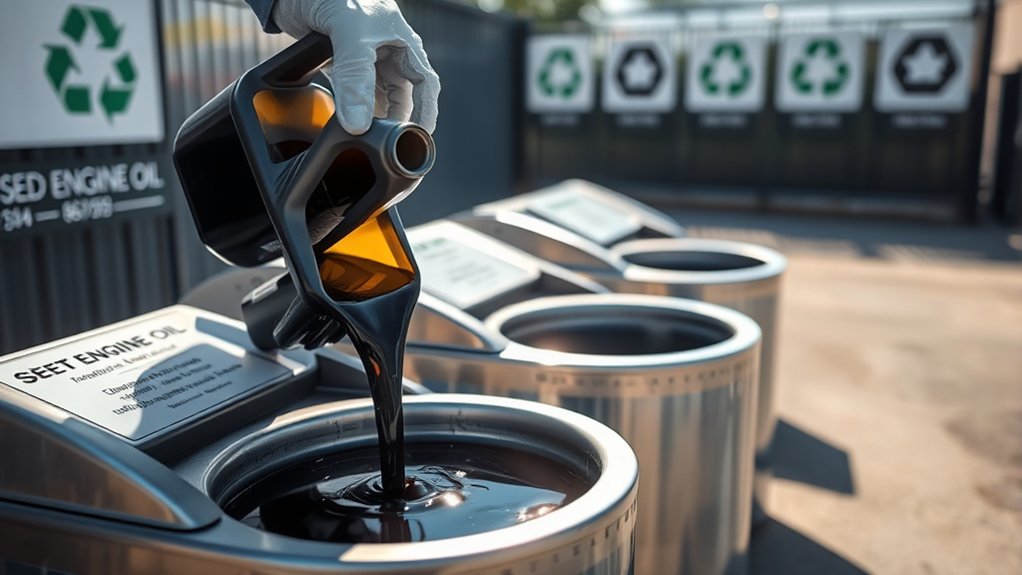
Where can you safely dispose of Used Engine Oil to prevent environmental harm? The most effective oil disposal methods involve delivering your used oil to designated collection centers, automotive repair shops, or recycling facilities authorized to handle hazardous waste.
These locations guarantee the oil is processed or recycled properly, minimizing its environmental impact. Avoid dumping oil on the ground, into drains, or in regular trash, as improper disposal contaminates soil and water.
You should store used oil in clean, sealed containers to prevent leaks during transport. Municipal hazardous waste programs often offer convenient drop-off points.
Why Dumping Used Engine Oil Harms the Environment
Because used engine oil contains toxic substances and heavy metals, dumping it improperly can cause severe environmental damage. When you discard oil carelessly, it seeps into soil and water, leading to oil pollution that disrupts ecosystems.
Contaminants in the oil interfere with natural biological processes, harming aquatic life and contaminating drinking water sources. The environmental impact extends to soil degradation, reducing fertility and affecting plant growth.
Additionally, oil pollution creates a persistent hazard because these substances degrade slowly, accumulating in the environment over time. By understanding these consequences, you realize that improper disposal not only threatens wildlife but also human health.
Preventing oil pollution by following proper disposal protocols is vital to minimizing the long-term environmental impact of used engine oil.
How to Store Used Oil Safely Before You Drop It Off
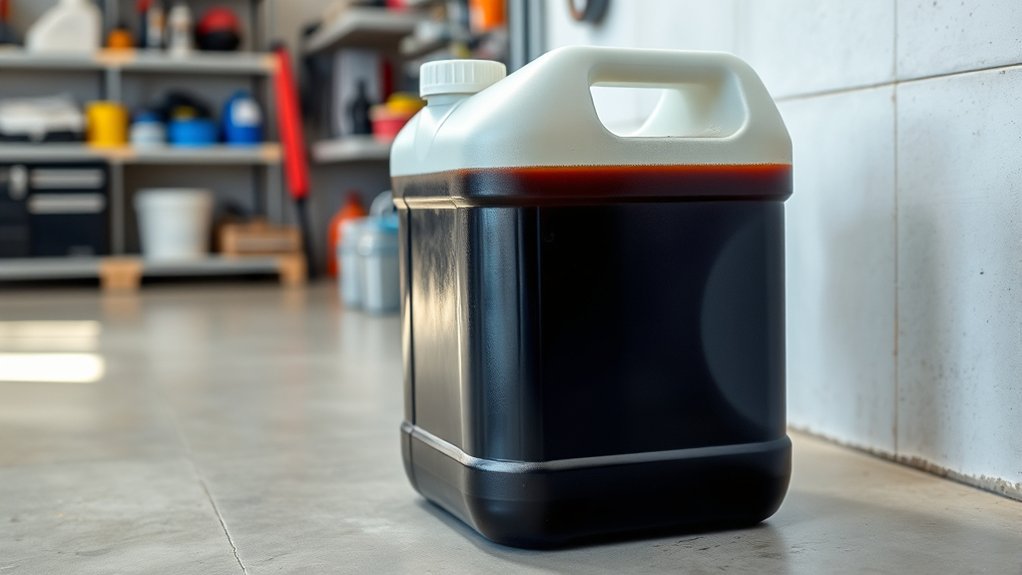
Before you drop off used engine oil, you need to store it properly to prevent leaks, contamination, and safety hazards. Use a clean, leak-proof container specifically designed for oil container safety. Preferably one made of durable plastic or metal with a secure, tight-fitting cap.
Avoid containers that previously held other chemicals to prevent contamination. Label the container clearly as “Used Engine Oil” to guarantee proper handling. Limit the storage duration to no more than six months to maintain oil quality and comply with most local regulations.
Store the container in a cool, dry place away from direct sunlight, heat sources, and children or pets. Always place it on a stable, non-absorbent surface to catch any accidental spills. Following these guidelines guarantees safe, responsible storage until you’re ready to drop off your used oil.
Where to Recycle Used Engine Oil Near You
You can recycle used engine oil at local recycling centers equipped to handle hazardous materials safely. Many automotive service stations also accept used oil for proper disposal and recycling.
Check with these facilities to verify they follow environmental regulations and have the correct drop-off procedures.
Local Recycling Centers
When searching for a convenient way to dispose of used engine oil, local recycling centers offer specialized services designed to handle hazardous automotive fluids safely. By choosing these centers, you contribute to recycling benefits that reduce environmental contamination and conserve natural resources.
Additionally, your participation supports community involvement in sustainable waste management.
At a local recycling center, you can:
- Drop off used engine oil in designated containers to guarantee proper handling
- Access guidance on safe storage and transportation of automotive fluids
- Participate in programs that promote environmental education and local cleanup efforts
Before visiting, check your center’s hours and any specific requirements. Proper disposal prevents soil and water pollution, protecting public health and ecosystems.
Automotive Service Stations
Many automotive service stations accept used engine oil for recycling, providing an accessible option close to home. When you perform an oil change at these stations, you can often leave your used oil for proper disposal or recycling.
This service benefits both you and the environment by preventing improper dumping and reducing pollution risks. Additionally, many stations offer service benefits such as discounts or loyalty points when you recycle your oil with them.
Before visiting, verify the station’s specific policies on oil recycling, as some may require you to bring the oil in sealed containers. Utilizing service stations for oil recycling guarantees your used engine oil is handled according to environmental regulations, supporting sustainable automotive maintenance practices.
Auto Shops That Accept Used Engine Oil
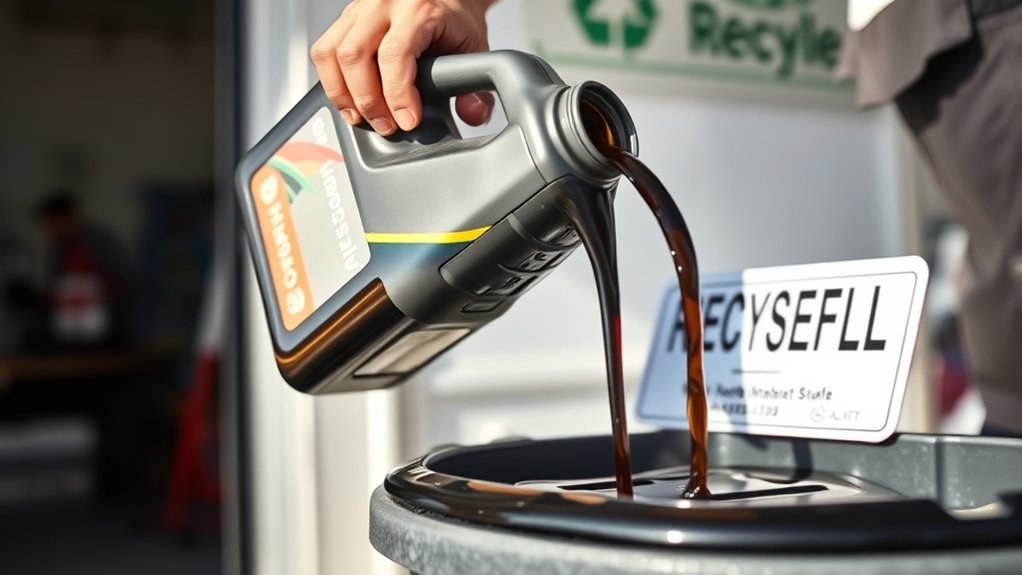
You can often drop off used engine oil at local auto shops that participate in recycling programs. These shops typically accept various types of engine oil but may have specific guidelines for the condition and container of the oil.
Before visiting, check their drop-off procedures to guarantee proper handling and compliance with regulations.
Local Auto Shop Options
Although finding the right place to dispose of used engine oil can sometimes be challenging, local auto shops often provide convenient and environmentally responsible options. Many shops involved in auto repair or routine oil change services accept used oil to guarantee proper recycling.
When considering local auto shop options, keep these points in mind:
- Confirm the shop’s policy on accepting used engine oil before dropping it off.
- Make certain the oil is stored in a sealed container to prevent leaks during transport.
- Ask if the shop offers additional services like oil filter recycling or hazardous waste disposal.
Accepted Oil Types
Auto shops that accept used engine oil typically handle a variety of oil types, including conventional, synthetic, and blended formulations. When you bring in used oil, these shops are equipped to process synthetic oils and some biodegradable oils, ensuring safe recycling or disposal.
Understanding which oils are accepted helps you avoid contamination and environmental harm.
| Oil Type | Common Acceptance Status |
|---|---|
| Conventional Oil | Widely accepted |
| Synthetic Oils | Accepted by most auto shops |
| Blended Oils | Generally accepted |
| Biodegradable Oils | Accepted at select locations |
Always verify with your local shop to confirm they accept biodegradable oils, as policies can vary by facility.
Drop-Off Procedures
Knowing which types of used engine oil are accepted helps streamline the drop-off process at service locations. When you visit auto shops that serve as drop-off locations, follow established safety guidelines to prevent spills and contamination.
Typically, these shops require you to bring oil in sealed, leak-proof containers and may limit quantities.
To guarantee efficiency and compliance, remember to:
- Confirm accepted oil types and container requirements before arrival
- Transport oil securely to avoid leaks or exposure
- Follow staff instructions regarding drop-off points and documentation
Adhering to these procedures not only protects the environment but also guarantees your used engine oil is recycled or disposed of properly. Always check with the specific auto shop for any unique protocols or additional safety guidelines they enforce.
What to Do If You Can’t Find Local Oil Recycling Options
If you can’t find local oil recycling options, don’t dispose of used engine oil in regular trash or down drains, as this causes severe environmental damage. Instead, explore oil disposal alternatives such as automotive service centers, repair shops, or hazardous waste collection events, which often accept used oil.
Contact municipal waste management or environmental agencies to identify community resources that might not be widely advertised. You can also check with local government websites for guidance on proper disposal methods.
In some regions, mail-back programs allow you to send used oil to certified recyclers safely. Always store used oil in clean, sealed containers to prevent leaks while seeking disposal solutions.
Following these steps guarantees you handle used engine oil responsibly, minimizing ecological risks and complying with regulatory requirements.
Frequently Asked Questions
Can I Mix Used Engine Oil With Other Automotive Fluids?
You shouldn’t mix used engine oil with other automotive fluids, as it complicates recycling options and disposal methods.
Always keep fluids separate to guarantee proper processing and environmental safety during recycling or disposal at authorized facilities.
How Often Should I Change My Engine Oil?
You should change your engine oil every 5,000 to 7,500 miles, depending on engine oil types.
Modern synthetic oils allow longer oil change frequency, improving engine performance and longevity while reducing maintenance costs.
What Are the Signs of Contaminated Engine Oil?
You’ll notice contaminated engine oil by darkening oil color and unusual viscosity changes, like becoming thicker or thinner than normal. These signs indicate dirt, moisture, or fuel contamination, affecting lubrication and engine performance.
Can Used Engine Oil Be Reused in Any Way?
Yes, you can reuse used engine oil through recycling methods like re-refining, where contaminants are removed. This allows oil repurposing for lubrication or industrial use.
This process conserves resources and reduces environmental impact effectively.
Is It Safe to Handle Used Engine Oil Without Gloves?
You shouldn’t handle used engine oil without gloves due to oil safety risks. Direct skin contact can cause irritation and absorb harmful chemicals.
Always follow handling precautions, including wearing gloves and washing hands thoroughly afterward.
Conclusion
You might’ve heard that pouring used engine oil down the drain or on the ground won’t cause much harm, but that’s a dangerous myth. Even a small amount contaminates water and soil, posing serious risks to ecosystems and health.
By storing your used oil properly and taking it to certified recycling centers or auto shops, you’re preventing pollution and promoting resource recovery. This simple action helps keep the environment safe and clean.
Following these steps guarantees you handle engine oil responsibly and protect the environment effectively. Proper disposal is key when deciding where to dump engine oil.