You can recycle your used engine oil at authorized auto shops, dedicated recycling centers, and certified retailers that accept and responsibly handle used oil.
These locations use sealed containers and advanced systems to prevent leaks and safely re-refine oil, conserving resources and protecting the environment.
Make sure to prepare your used oil in clean, leak-proof containers and confirm acceptance policies before drop-off.
Keep following for detailed guidance on finding and using these convenient recycling options.
Key Takeaways
- Many auto shops accept used engine oil and provide sealed containers for safe drop-off.
- Dedicated recycling centers offer secure collection points and advanced oil re-refining systems.
- Automotive retailers and service centers often accept used oil with convenient drop-off locations.
- Confirm acceptance policies and container requirements before transporting used engine oil for recycling.
- Some retailers provide incentives like discounts or rewards to encourage used oil recycling.
Why Recycling Used Engine Oil Matters
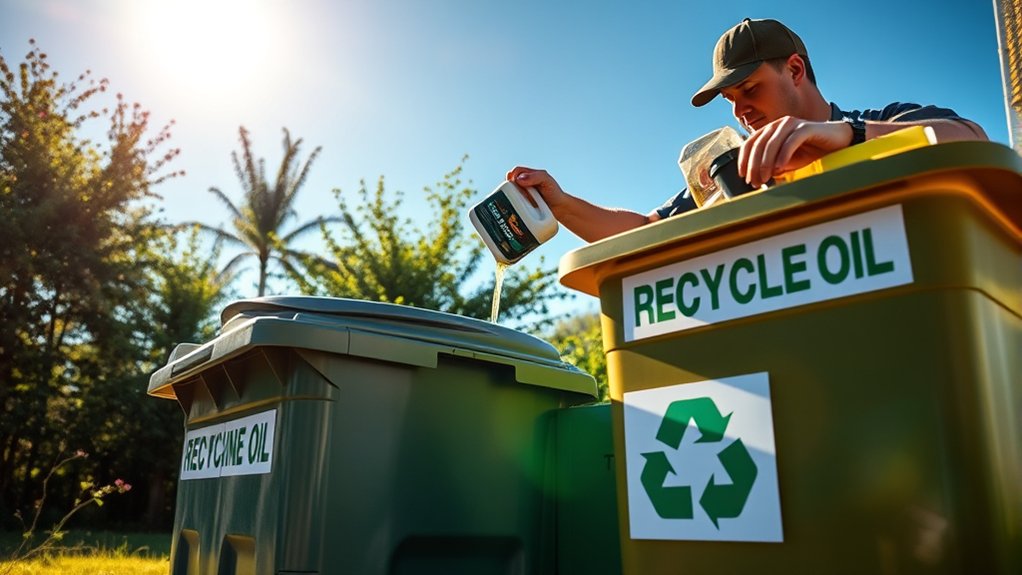
Recycling used engine oil prevents the release of harmful contaminants into the environment, protecting soil and water quality. When you recycle, you reduce oil contamination, which can severely damage ecosystems and groundwater supplies.
Improper disposal leads to toxic substances seeping into soil, causing long-term environmental impact that’s costly to remediate. By choosing to recycle, you help limit these risks and conserve natural resources, as recycled oil can be re-refined into usable lubricants.
Improper disposal contaminates soil with toxins, but recycling reduces risks and conserves valuable natural resources.
This process also reduces the demand for crude oil extraction, further minimizing environmental harm. You play an essential role in breaking the cycle of pollution by ensuring used oil is collected and processed correctly.
Prioritizing proper recycling methods directly mitigates oil contamination, safeguarding public health and preserving ecosystem integrity.
Auto Shops That Recycle Used Engine Oil
Proper disposal of used engine oil hinges on finding reliable collection points that handle recycling responsibly. Many auto shops have specific policies to accept and recycle used engine oil, ensuring environmental safety and compliance with regulations.
These shops provide a convenient option for you to drop off oil, facilitating recycling benefits like resource conservation and pollution reduction.
| Auto Shop Policies | Recycling Benefits |
|---|---|
| Accept used oil from customers | Conserves natural resources |
| Store oil in sealed containers | Reduces soil and water contamination |
| Partner with certified recyclers | Supports sustainable energy production |
Before visiting, check each shop’s policies to confirm acceptance criteria. This guarantees your used oil is handled correctly, maximizing recycling benefits and preventing environmental hazards.
Recycling Centers Accepting Used Engine Oil

When you need to dispose of used engine oil safely, many dedicated recycling centers offer specialized services designed to handle and process it efficiently. These centers play a critical role in maximizing recycling benefits while minimizing environmental impact.
By accepting used oil, they prevent contamination of soil and water sources through proper treatment and disposal.
At recycling centers, you’ll find:
- Secure collection points designed to avoid leaks and spills
- Advanced filtration and re-refining systems that restore oil quality
- Compliance with environmental regulations to guarantee safe processing
Using these centers assures your used engine oil is recycled correctly, reducing hazardous waste. This responsible action supports resource conservation and helps protect ecosystems from pollution caused by improper disposal.
Retailers That Accept Used Engine Oil for Recycling
Many automotive retailers and service centers accept used engine oil for recycling, making it convenient for you to dispose of it responsibly. These establishments often participate in retail partnerships with local waste management authorities, ensuring they meet regulatory standards for safe collection and handling.
By utilizing such retailers, you gain easy access to approved drop-off points without traveling to specialized centers. Additionally, some retailers offer recycling incentives, such as discounts on new oil purchases or loyalty rewards, encouraging you to return used oil consistently.
To maximize these benefits, check with your preferred retailer regarding their participation in recycling programs and any applicable incentives. Using retailers that accept used engine oil streamlines the recycling process and supports environmental compliance, making your disposal efforts both effective and efficient.
What to Prepare Before Recycling Used Engine Oil
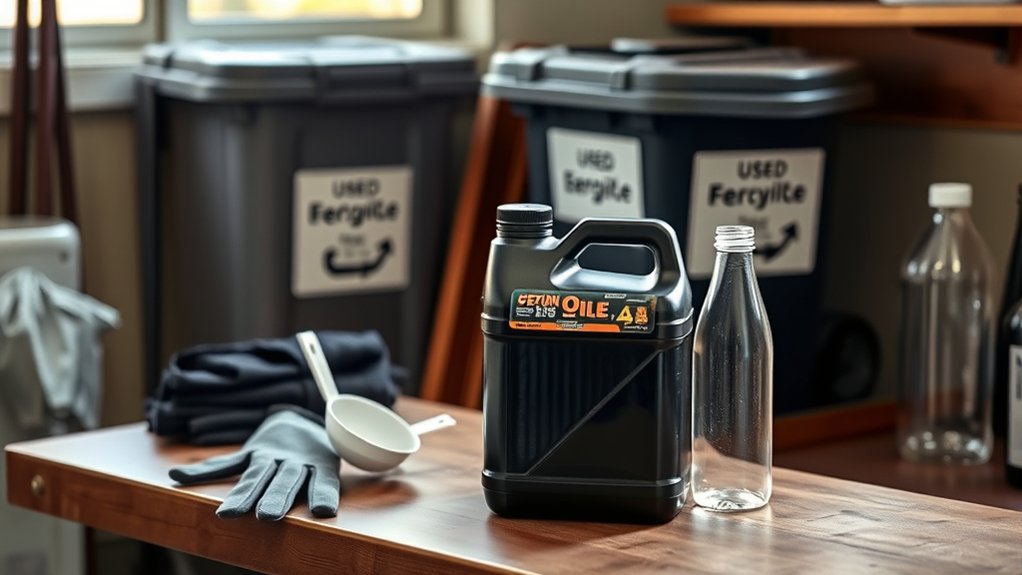
Before dropping off your used engine oil at a retailer or recycling center, you should gather and prepare the necessary materials to guarantee safe and compliant disposal. Proper preparation maximizes oil recycling benefits and supports community initiatives aimed at environmental protection.
Ensure you have:
- A clean, leak-proof container specifically designated for used engine oil
- Documentation or receipts from previous oil changes, if required by the facility
- Contact information for the recycling location to confirm acceptance policies
Safe Storage and Transport of Used Engine Oil
You’ll need to store used engine oil in a container that’s airtight, leak-proof, and made of compatible materials like metal or high-density plastic.
When transporting, secure the container to prevent spills and avoid exposure to extreme temperatures or direct sunlight. Following these steps guarantees safety and compliance with environmental regulations.
Proper Container Selection
Selecting the right container plays a critical role in safely storing and transporting used engine oil. You need to focus on container materials and container size to prevent leaks and contamination.
Choose containers made from high-density polyethylene (HDPE) or metal, as these resist corrosion and chemical degradation. Avoid containers previously used for other chemicals to prevent cross-contamination.
Consider these points when selecting your container:
- Use containers with secure, tight-fitting lids to prevent spills during movement.
- Select a container size appropriate for the volume you’ll store; overfilling increases risk.
- Make certain containers are clearly labeled as “Used Engine Oil” to comply with regulations.
Transportation Safety Tips
When transporting used engine oil, securing the container properly is essential to prevent leaks and spills that could harm the environment or pose safety hazards. Use tightly sealed, durable containers designed for oil storage, and place them upright in your vehicle’s cargo area.
Make certain containers are stable and won’t shift during transit by using non-slip mats or securing straps. Before you start, check your vehicle’s maintenance, especially tire pressure and brakes, to support safe transport. Avoid overloading your vehicle, which can compromise road safety.
Drive cautiously, obey speed limits, and plan routes that minimize sharp turns or sudden stops. By following these steps, you’ll reduce the risk of accidents or contamination and make certain used engine oil reaches recycling centers safely and responsibly.
Frequently Asked Questions
Can Used Engine Oil Be Recycled at Home?
You can’t safely recycle used engine oil through home recycling because proper oil disposal requires specialized equipment to prevent contamination and environmental harm.
Instead, collect and take it to authorized recycling centers for responsible processing.
How Often Should I Recycle My Used Engine Oil?
You should recycle your used engine oil every time you change it, typically every 3,000 to 5,000 miles.
Proper engine oil disposal maximizes recycling benefits, preventing environmental harm and conserving resources efficiently.
What Happens to Engine Oil After Recycling?
You might be surprised. After recycling, your used engine oil undergoes oil purification, removing contaminants and water. This recycling process transforms it into base oil, ready to be refined into new lubricants, conserving resources efficiently.
Are There Any Costs Involved in Recycling Used Engine Oil?
You typically won’t face costs at recycling centers since many accept used engine oil free. However, some disposal methods might charge fees based on volume or contamination, so verify with local facilities before dropping off your oil.
Can Contaminated Oil Be Recycled Safely?
Yes, you can safely salvage soiled oil despite oil contamination effects. Advanced recycling processes precisely purify pollutants, preventing harm and ensuring reused oil meets strict standards.
Trust technology to tackle toxins efficiently and effectively every time.
Conclusion
Recycling used engine oil is like giving your car’s lifeblood a second chance to flow cleanly through the environment. By taking it to auto shops, recycling centers, or participating retailers, you prevent harmful pollution and promote sustainability.
Before recycling, make sure you prepare and store the oil safely to avoid spills or hazards. Proper handling ensures the process is safe for you and the environment.
With these precise steps, you’ll effectively protect both your vehicle and the planet. Remember, knowing where to recycle used engine oil is key to making a positive environmental impact.