Your engine oil should be a clear amber or light golden color when fresh, signaling proper lubrication and ideal engine protection. This color is a key indicator of healthy engine oil.
As it circulates, heat, oxygen, and contaminants darken it, which can indicate wear or breakdown.
If you see milky, thick, or gritty oil, it’s time for a change. Maintaining the right oil color and consistency helps prevent costly damage and keeps your engine efficient.
You can learn more about what each color change means and how to keep oil healthy.
Key Takeaways
- Fresh engine oil is typically amber or light golden with a clear, translucent appearance.
- Dark brown or black oil indicates contamination, wear, or oil degradation.
- Milky or frothy oil suggests possible coolant mixing or water contamination.
- A reddish hue may be due to synthetic or performance oil additives.
- Very dark, thick oil signals additive depletion and the need for an oil change.
What Color Should Engine Oil Be When It’s Fresh?

When you check your engine oil fresh out of the container or right after a change, it should appear amber or light golden in color. Fresh oil has a clear, translucent quality, allowing you to easily observe its color and consistency.
The oil consistency should be smooth and viscous, neither too thick nor overly thin, ensuring ideal lubrication. High-quality fresh oil maintains this consistency under normal temperature conditions, which is essential for protecting engine components and reducing wear.
Any deviation in color or texture at this stage could indicate contamination or degradation. Regularly verifying the color and consistency of fresh oil helps you maintain engine performance and longevity by ensuring the oil meets manufacturer specifications before use.
Why Does Engine Oil Change Color Over Time?
As engine oil circulates through your engine, it undergoes chemical and physical changes that affect its color. One primary factor is oil oxidation, a process where heat and oxygen cause the oil molecules to break down and darken. This natural degradation thickens the oil and alters its appearance.
Additionally, contamination sources such as combustion byproducts, metal particles, and dirt enter the oil, contributing to color changes. These contaminants mix with the oil and cause it to darken further.
Water condensation and fuel dilution can also affect the oil’s hue and consistency. Over time, these combined effects result in a noticeable shift from fresh amber to darker shades, signaling the oil’s changing condition as it performs its protective role in your engine.
What Different Engine Oil Colors Mean for Your Car
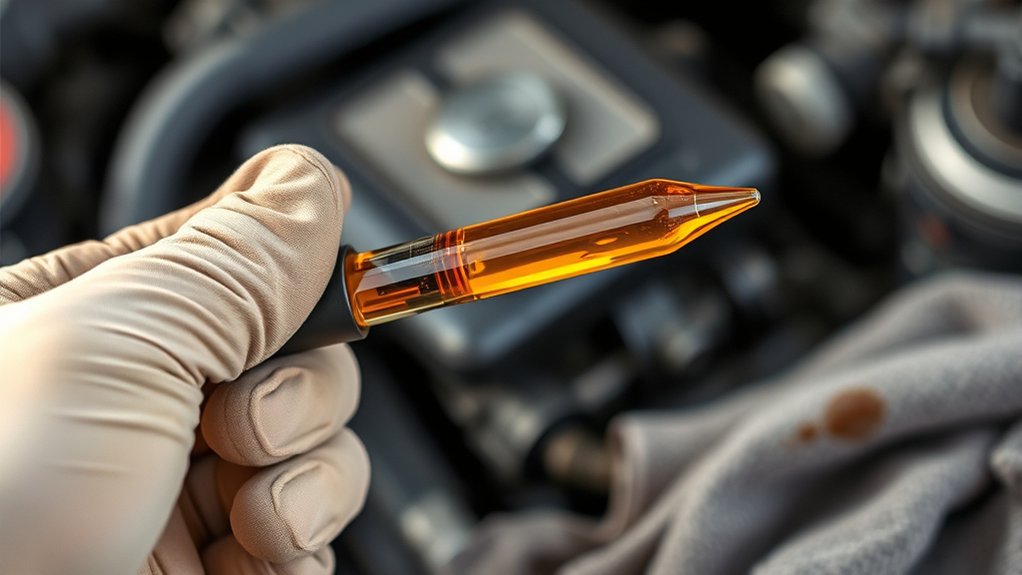
Engine oil color provides valuable clues about your car’s engine health and oil condition. Fresh engine oil types typically appear amber or golden due to their base oils and oil additives designed for lubrication and protection.
As the oil circulates, it darkens to brown or black, indicating contamination from combustion byproducts and metal particles. However, very dark or thick oil can signal additive depletion or excessive wear.
Milky or frothy oil suggests coolant intrusion, often pointing to gasket failure. A reddish hue may indicate synthetic or performance oils with specific dye additives.
How to Tell When Engine Oil Needs Changing
How can you accurately determine when your oil needs changing? Begin by checking the engine oil viscosity. If the oil feels unusually thick or gritty, its viscosity has likely degraded, signaling the need for replacement.
Additionally, monitor your vehicle’s recommended oil change intervals, typically found in the owner’s manual. These intervals account for time and mileage, ensuring oil maintains ideal lubrication.
Visual inspection helps too. Fresh oil has a translucent amber color; dark, opaque oil indicates contamination or breakdown. Relying solely on color isn’t foolproof, so combine it with viscosity assessment and adherence to oil change intervals.
Regularly changing oil at the proper intervals protects engine components, maintains efficiency, and prevents wear caused by degraded oil viscosity. Stay proactive to avoid costly repairs.
Tips to Keep Your Engine Oil Clean and Healthy
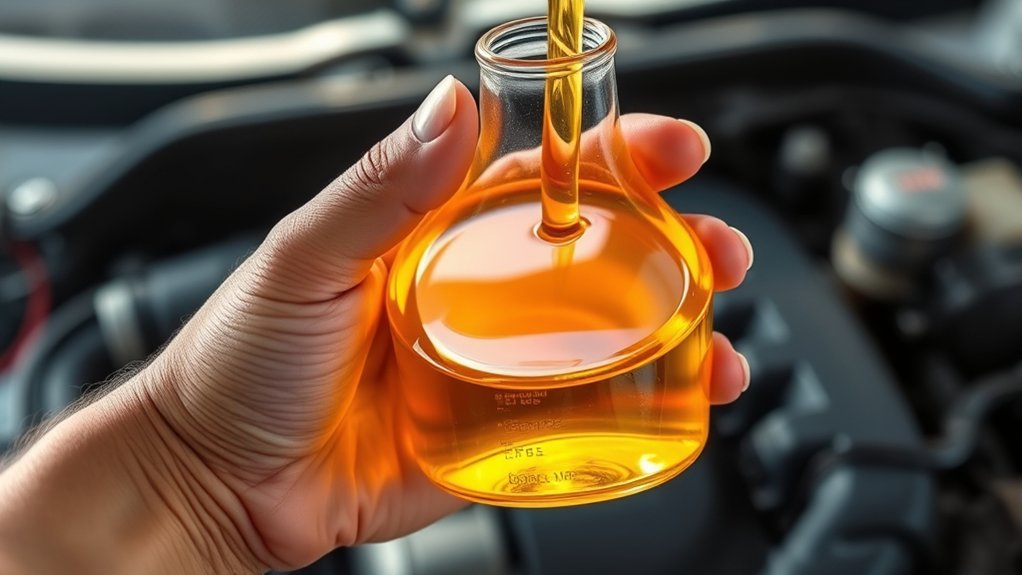
Maintaining clean and healthy oil extends the benefits of timely oil changes and prevents premature engine wear. To keep your engine oil in prime condition, follow these engine care essentials.
First, regularly check and top off your oil to maintain proper levels and avoid contamination. Second, use the manufacturer-recommended oil type and viscosity to guarantee compatibility and performance.
Third, change your oil and filter at intervals specified in your vehicle’s manual to remove accumulated debris and prevent sludge buildup. These oil maintenance tips help preserve oil integrity and engine efficiency, reducing the risk of costly repairs.
Frequently Asked Questions
Can Engine Oil Color Affect Fuel Efficiency?
Yes, engine oil color can indirectly affect fuel economy. Dark, contaminated oil often indicates degraded oil viscosity, which reduces lubrication efficiency. This increases engine friction and lowers fuel economy. You should monitor oil condition to maintain ideal viscosity and performance.
Does Synthetic Oil Change Color Differently Than Conventional Oil?
Yes, synthetic oil changes color more slowly than conventional oil due to its superior oil stability and synthetic advantages. You’ll notice it resists darkening, helping you monitor engine health more accurately and extend oil change intervals.
How Often Should Engine Oil Be Checked for Color?
Check your engine oil’s color weekly to watch for wear and viscosity variations. Frequent, focused inspections help you detect early engine wear, ensuring ideal oil viscosity and preventing potential performance problems or costly repairs.
Can Additives Alter Engine Oil Color?
Yes, additives can alter engine oil color due to their oil composition impact. You’ll notice additive effects changing the oil’s hue, which helps indicate performance properties and contamination levels.
Is Engine Oil Color the Same for All Vehicle Types?
No, engine oil color varies by vehicle type due to different oil formulations and viscosity grades tailored to optimize vehicle performance.
Always check your owner’s manual to confirm you use the correct oil for your specific engine.
Conclusion
In the long run, keeping an eye on your engine oil color helps you avoid a world of hurt. Fresh oil should be clear amber, but darkening or unusual hues signal it’s time for a change.
Don’t wait until the oil looks like a muddy river—regular checks and timely changes keep your engine running smoothly and efficiently.
Remember, a stitch in time saves nine when it comes to engine maintenance, so always monitor what color engine oil should be to maintain optimal performance.