Your engine burns oil when worn piston rings or failing valve seals allow oil to leak into the combustion chamber, disrupting combustion and increasing consumption. This issue is a common reason why your engine burns oil.
A damaged head gasket can also cause oil to mix with coolant or escape through leaks.
Aggressive driving and engine design factors may accelerate oil burning, leading to blue smoke, reduced performance, and fouled spark plugs.
Recognizing these signs and understanding the causes can help you diagnose and address the issue effectively.
Key Takeaways
- Worn piston rings allow oil to leak into the combustion chamber, causing oil burning and increased consumption.
- Valve seal failure lets oil seep into the engine cylinders, leading to blue smoke and rough idling.
- Damaged head gaskets can mix oil with coolant, causing oil burning and engine overheating.
- Aggressive driving and high RPMs increase engine temperature, accelerating oil breakdown and consumption.
- Faulty PCV valves and poor engine ventilation lead to pressure buildup, forcing oil into the combustion chamber.
What Happens When Your Engine Burns Oil
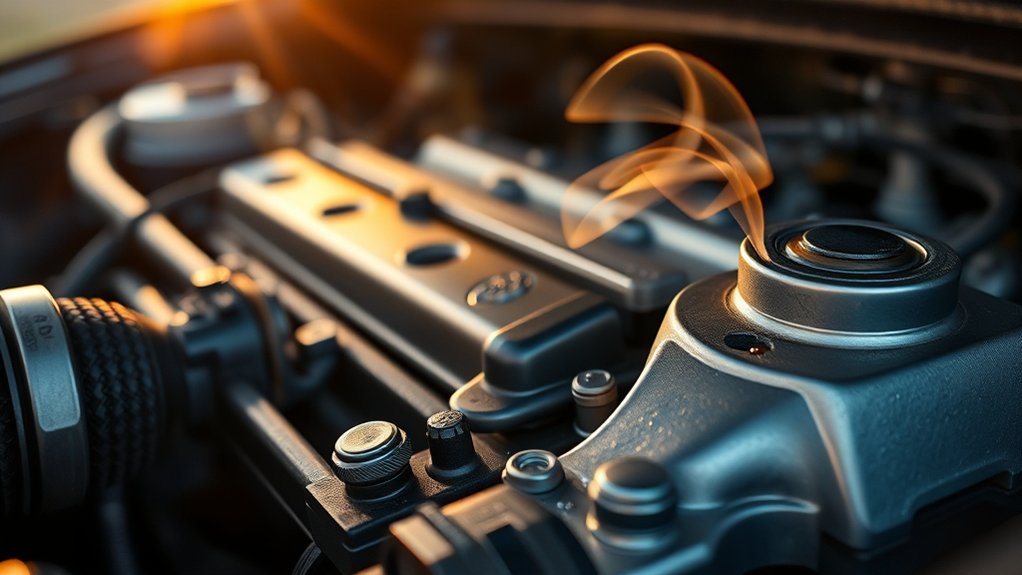
When your engine burns oil, it means the oil is entering the combustion chamber and burning along with the fuel. This abnormal oil consumption disrupts the combustion process and directly impacts engine performance. You’ll notice reduced power output, increased emissions, and potential fouling of spark plugs.
Excessive oil consumption also leads to insufficient lubrication of critical engine components, accelerating wear and risking engine damage. The combustion of oil generates carbon deposits on valves and piston crowns, which can further degrade performance and efficiency.
Additionally, burning oil can clog the catalytic converter, impairing exhaust flow and emissions control. Understanding these effects helps you diagnose the severity of oil burning and prioritize timely maintenance to preserve engine reliability and peak performance.
How to Tell If Your Engine Is Burning Oil
Recognizing the signs of an engine burning oil allows you to address the issue before it causes severe damage. Monitor your vehicle’s oil consumption closely; if you find yourself topping off oil more frequently than usual, it’s a key indicator.
Pay attention to exhaust smoke. Blue or gray smoke during acceleration often signals oil is entering the combustion chamber. Additionally, a drop in engine performance, such as reduced power or rough idling, can result from oil fouling spark plugs or clogging catalytic converters.
Check for oil deposits on the spark plugs or inside the exhaust pipe. Regularly inspect the oil level and watch for any unusual changes in consumption patterns. Early detection through these diagnostic signs helps maintain engine efficiency and prevents costly repairs.
How Worn Piston Rings Cause Oil Burning
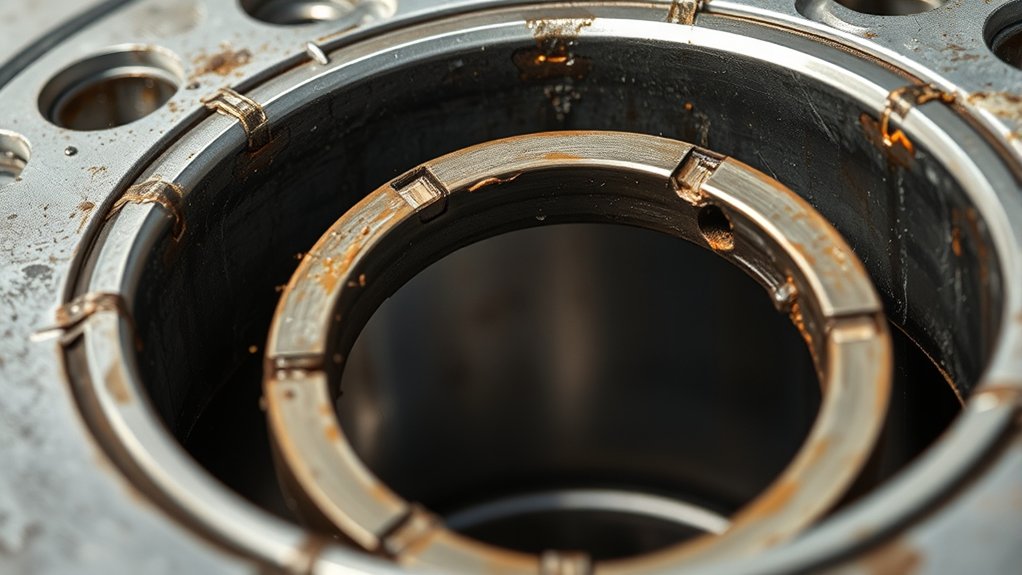
Your piston rings seal the combustion chamber and control oil consumption by scraping excess oil off the cylinder walls. When these rings wear out, they lose their sealing capability, allowing oil to leak into the combustion chamber.
This oil leakage burns during combustion, causing your engine to consume oil abnormally.
Piston Ring Function Breakdown
Although piston rings play a critical role in sealing the combustion chamber, worn or damaged rings allow oil to pass into the combustion area, leading to excessive oil burning. Piston ring materials, typically cast iron or steel alloys, are designed for durability and heat resistance.
However, prolonged exposure to high temperatures and friction can cause these materials to degrade or lose elasticity. The piston ring design, including the cross-sectional shape and tension, guarantees a tight seal against the cylinder wall.
When wear or deformation occurs, this seal breaks down, allowing oil to bypass the rings and enter the combustion chamber. You’ll notice increased oil consumption and blue smoke in the exhaust as direct consequences.
Diagnosing piston ring failure involves inspecting ring end gaps, surface wear, and compression levels to confirm their compromised function.
Oil Leakage Mechanism
When piston rings wear out or deform, they fail to maintain a proper seal between the piston and cylinder wall. This breakdown allows oil to bypass the rings and enter the combustion chamber, leading to oil burning.
The oil’s viscosity and engine temperature directly affect this leakage; thinner oil at high temperatures slips past more easily. Worn rings lose tension, reducing their ability to scrape excess oil off the cylinder walls.
| Cause | Effect |
|---|---|
| Ring wear or deformation | Poor seal, oil bypass |
| Low oil viscosity | Increased oil flow past rings |
| High engine temperature | Reduced oil film thickness |
| Reduced ring tension | Ineffective oil scraping |
Understanding these mechanisms helps you diagnose and address oil burning efficiently.
Why Valve Seals Fail and Lead to Oil Burning
You’ll notice valve seals fail due to heat, wear, or contamination, which lets oil leak into the combustion chamber. If you spot blue smoke at startup or rough idling, worn seals might be the culprit.
Fixing this usually means replacing the seals to restore proper sealing and stop oil burning.
Common Causes Of Valve Seal Failure
Valve seals play a critical role in preventing oil from leaking into the combustion chamber, but several factors can cause them to fail and lead to oil burning. The durability of valve seals depends largely on the quality of valve seal materials, commonly rubber or synthetic composites, which degrade over time due to heat and chemical exposure.
Seal wear factors include prolonged engine operating temperatures, exposure to contaminants, and mechanical stress from valve stem movement. If the valve seal materials harden or crack, they lose their elasticity, allowing oil to bypass and enter the combustion chamber.
Additionally, improper installation or using incompatible materials can accelerate wear. Understanding these causes helps you diagnose valve seal failure and its contribution to oil burning efficiently.
Symptoms Of Worn Valve Seals
A worn valve seal often causes noticeable engine performance issues that indicate oil is leaking into the combustion chamber. You’ll likely observe increased oil consumption paired with blue smoke from the exhaust during startup or acceleration.
Misfires and rough idling may also occur due to oil fouling the spark plugs.
| Symptom | Cause | Effect |
|---|---|---|
| Blue Exhaust Smoke | Oil passes worn valve seals | Visible sign of oil burning |
| Increased Oil Use | Valve seal leakage | Frequent oil top-ups needed |
| Rough Idle | Oil fouled spark plugs | Engine misfires, reduced power |
Recognizing these symptoms helps you diagnose valve seal wear early, preventing further engine damage and excessive oil consumption.
Repair And Replacement Options
Understanding why valve seals fail is essential for choosing the right repair or replacement strategy to stop oil burning. Valve seals deteriorate due to heat, age, and contamination, causing oil to leak into combustion chambers.
To address this, you can opt for valve seal replacement during an engine repair. This involves removing the cylinder head, inspecting valve guides, and installing new seals to restore proper sealing.
In some cases, worn valve guides or damaged valve stems require additional repairs to prevent recurring oil burning. After valve seal replacement, perform a thorough oil replacement to remove contaminated oil and prevent further engine damage.
Proper diagnosis and timely repair guarantee your engine maintains peak performance without excessive oil consumption or emissions issues.
Is a Damaged Head Gasket Causing Oil Burning?
If your engine starts burning oil and you notice overheating or coolant loss, a damaged head gasket might be the culprit. The gasket integrity is essential for maintaining proper separation between the oil and coolant passages. When compromised, oil can leak into the combustion chamber, causing burning, while coolant contamination and loss may occur simultaneously.
Additionally, compromised gasket integrity can affect oil pressure, leading to irregular lubrication and increased oil consumption.
Look for these signs indicating a possible head gasket failure:
- White smoke from the exhaust (coolant burning)
- Milky oil appearance (coolant mixing with oil)
- Sudden drop in oil pressure
- Engine overheating without obvious leaks
- Bubbles in the radiator or coolant reservoir during engine running
Confirming gasket damage quickly prevents severe engine damage.
How Engine Design and Driving Habits Cause Oil Burning
Though engine design sets the baseline for oil consumption, your driving habits greatly influence how quickly oil burns. Engines built for higher efficiency often use tighter tolerances and advanced materials, reducing oil seepage but sometimes increasing sensitivity to aggressive driving.
If your driving style involves frequent high RPMs or rapid acceleration, you increase engine temperatures and pressure, causing oil to break down faster and slip past piston rings. Conversely, smooth acceleration and steady speeds help maintain ideal engine efficiency, minimizing oil consumption.
Additionally, stop-and-go traffic or excessive idling can disrupt oil circulation, further elevating oil burn rates. Understanding how your engine’s design interacts with your driving style lets you adjust habits to reduce oil burning and preserve engine longevity.
Warning Signs of Severe Engine Oil Burning
When your engine burns oil excessively, you’ll notice distinct warning signs that demand immediate attention. Elevated oil consumption rates often indicate internal wear or seal failures. Monitoring these rates through engine diagnostics helps you identify severity early. Key symptoms include:
- Blue or gray smoke from the exhaust, especially during acceleration
- Frequent oil top-ups between maintenance intervals
- Fouled spark plugs causing misfires or rough idling
- Decreased engine performance and increased fuel consumption
- Strong oil smell inside or around the vehicle
Ignoring these signs can lead to significant engine damage and costly repairs. Use precise engine diagnostics to quantify oil consumption rates and determine the urgency of intervention. Recognizing these warning signs promptly guarantees you maintain engine health and avoid breakdowns.
How to Fix an Engine That Burns Oil
Begin by diagnosing the root cause of your engine’s oil burning to apply the correct fix. Check for worn piston rings, valve seals, or PCV valve malfunctions, as these are common culprits of excessive oil consumption.
Conduct a compression test and inspect spark plugs for oil fouling to pinpoint the issue. Once identified, replace faulty components to restore proper sealing and reduce oil leakage into combustion chambers.
Perform a compression test and check spark plugs for oil fouling to identify and fix engine oil leaks.
Regular engine maintenance, including timely oil changes and using quality oil, helps prevent premature wear. Additionally, guarantee your engine’s ventilation system is clear to avoid pressure buildup that forces oil past seals.
If damage is extensive, consider professional engine rebuilding or replacement. Addressing oil consumption promptly preserves engine efficiency and extends your vehicle’s lifespan.
Frequently Asked Questions
How Often Should I Check My Oil Levels to Prevent Engine Damage?
You should check your oil levels at least once a month and before long trips. Following recommended oil change frequency and engine maintenance tips helps prevent damage, ensuring ideal lubrication and engine performance.
Can Synthetic Oil Reduce Engine Oil Burning?
Think of synthetic oil as a high-performance shield; its synthetic benefits and stable oil viscosity reduce friction and wear. This prevents oil burning by maintaining consistent lubrication under extreme temperatures, protecting your engine’s internal components effectively.
Does Burning Oil Affect My Vehicle’s Emissions Test?
Yes, burning oil increases your vehicle’s oil consumption, often causing it to fail emissions regulations due to elevated hydrocarbon levels. You’ll need to address the issue to pass the test and maintain compliance effectively.
What Types of Oils Are Best for Engines Prone to Burning Oil?
You want oils that protect, oils that seal, oils that clean. High mileage oils with specialized oil additives reduce leaks and wear, restoring engine performance while minimizing oil consumption in engines prone to burning oil.
Can Driving Short Distances Cause Increased Oil Burning?
Yes, short trips increase oil consumption by preventing the engine from reaching ideal operating temperature. This leads to incomplete combustion, causing oil residue buildup and accelerated oil burning in your engine during frequent short-distance driving.
Conclusion
If your engine’s burning oil, it’s more than just a nuisance—it’s a warning light flashing beneath the hood. Ignoring worn piston rings, failing valve seals, or a damaged head gasket can spiral into costly repairs.
By diagnosing early and understanding how design and habits play a role, you hold the power to stop the damage.
Remember, your engine isn’t just a machine; it’s the heart of your vehicle. It needs your care to keep running strong, especially if your engine is burning oil.