Engine oil plays a crucial role in your vehicle’s engine by forming a thin lubricating film between moving parts. This reduces friction and wear, helping to keep the engine running smoothly. It also controls heat buildup by absorbing and transferring it away from essential components.
In addition, engine oil cleans away harmful deposits like soot and neutralizes acids to prevent corrosion. Over time, the oil additives break down, which is why changing your oil regularly is vital. This maintenance ensures your engine receives peak protection and performs at its best.
Understanding these functions of engine oil helps you keep your engine operating efficiently and reliably. Regular oil care is key to extending the life of your vehicle and maintaining optimal performance.
Key Takeaways
- Engine oil forms a protective film that reduces friction and prevents metal-to-metal wear between moving parts.
- It absorbs and dissipates heat, helping to keep engine components cool during operation.
- Oil contains detergents and dispersants that clean contaminants and prevent sludge buildup inside the engine.
- Additives in oil neutralize acidic byproducts, preventing corrosion and maintaining engine integrity.
- Regular oil changes restore additive effectiveness, ensuring consistent lubrication and optimal engine performance.
How Engine Oil Protects and Lubricates Your Engine
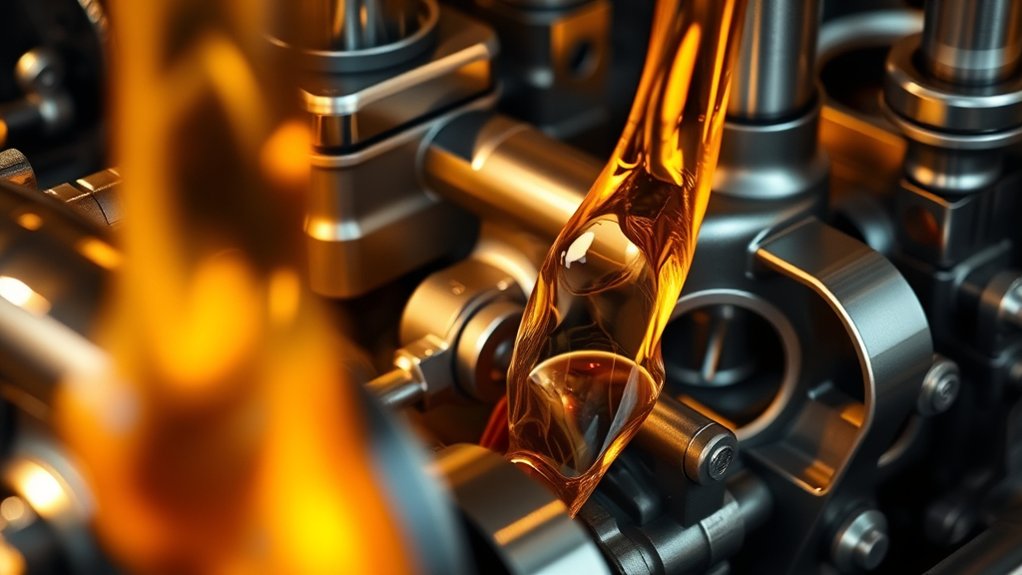
Because engine components operate under extreme conditions, engine oil plays an essential role in protecting and lubricating your engine. You rely on oil to form a thin film between moving parts, minimizing metal-to-metal contact and greatly reducing engine wear.
The oil’s viscosity is vital; if it’s too thin, it won’t maintain an adequate lubricating film, increasing friction. If it’s too thick, it can impede flow, leading to insufficient lubrication. You must choose oil with the right viscosity grade for your engine’s operating temperature to guarantee ideal protection.
Additionally, oil additives enhance this protective barrier, further preventing wear and corrosion. By maintaining proper lubrication, you help sustain engine efficiency and longevity, preventing premature component failure caused by friction and deterioration.
How Engine Oil Cools Your Engine and Prevents Damage
While engine oil primarily lubricates moving parts, it also plays a critical role in cooling your engine by absorbing and dissipating heat generated during combustion and friction. You rely on oil viscosity and thermal stability to maintain a consistent film between components, preventing overheating and minimizing wear.
Higher oil viscosity can reduce heat transfer efficiency, while thermal stability guarantees the oil resists breakdown under high temperatures, preserving its cooling properties.
| Property | Role in Cooling | Impact on Engine Performance |
|---|---|---|
| Oil Viscosity | Controls heat transfer rate | Too high reduces cooling |
| Thermal Stability | Maintains oil integrity | Prevents oil degradation |
| Heat Absorption | Transfers heat away from parts | Prevents localized overheating |
| Friction Reduction | Lowers heat generation | Enhances engine efficiency |
| Lubrication Film | Separates moving parts | Minimizes wear and heat buildup |
How Engine Oil Cleans Your Engine and Stops Corrosion
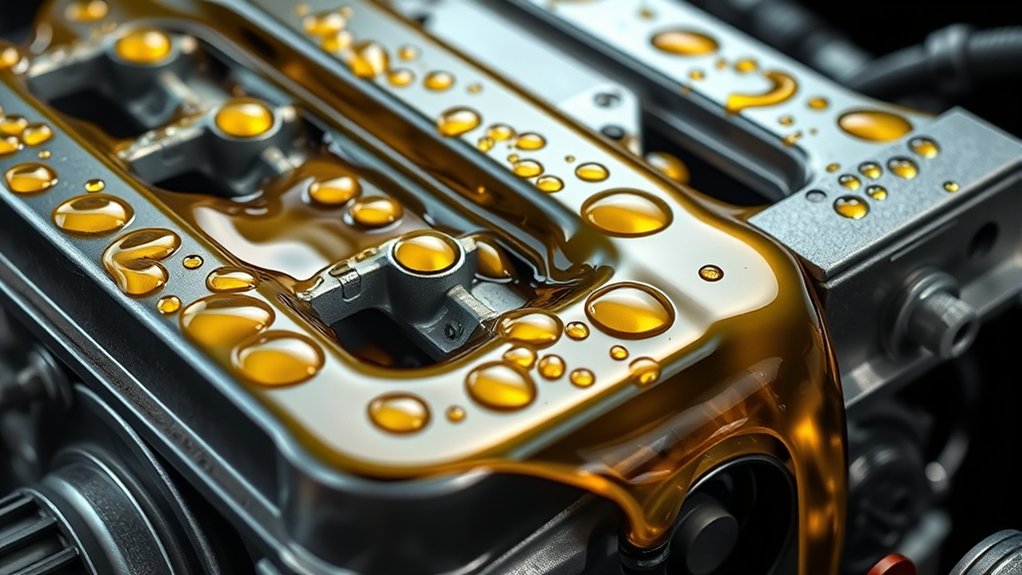
Engine oil contains detergents and dispersants that actively remove contaminants such as soot, sludge, and metal particles from engine surfaces. This cleaning action is critical because these particles accelerate engine wear by abrading moving parts. The oil composition is carefully engineered to maintain these additives’ effectiveness throughout the oil’s service life.
Detergents neutralize acidic byproducts from combustion, preventing corrosion on metal surfaces. Dispersants suspend insoluble contaminants, ensuring they don’t settle and form damaging deposits. By continuously cleaning internal components and inhibiting rust formation, engine oil preserves the engine’s integrity and performance.
Without this protective cleaning function embedded in the oil composition, contaminants would accumulate, increasing friction and wear, ultimately reducing engine efficiency and lifespan.
When and Why to Change Your Engine Oil
Although oil additives are designed to maintain performance over time, you need to change your engine oil regularly to prevent degradation and contamination from compromising lubrication. Oil change frequency depends on factors like driving conditions and oil type.
Synthetic oils, with superior thermal stability and resistance to oxidation, typically allow for longer intervals between changes compared to conventional oils. However, neglecting timely oil changes risks sludge buildup, reduced viscosity, and increased engine wear.
Monitoring oil quality and adhering to manufacturer recommendations guarantees peak protection. You should also consider synthetic vs conventional oil based on your vehicle’s requirements, budget, and driving habits.
Ultimately, maintaining a disciplined oil change schedule preserves engine efficiency, reduces friction, and prevents premature component failure.
Frequently Asked Questions
Can I Use Any Type of Oil in My Engine?
You can’t use any oil type; you must match the oil viscosity and guarantee the oil additives meet your engine’s specifications.
Using incorrect viscosity or additives risks poor lubrication, increased wear, and potential engine damage.
How Does Synthetic Oil Differ From Conventional Oil?
Imagine your engine as a marathon runner: synthetic oil offers superior benefits by flowing smoothly under stress, enhancing oil longevity and protecting parts better than conventional oil’s basic, less refined formula.
You get precision and durability.
What Happens if I Overfill My Engine Oil?
If you overfill your engine oil, the excess oil level can cause increased pressure, leading to engine damage like blown seals or foaming. This reduces lubrication efficiency and risks severe mechanical wear or failure.
Monitor oil level carefully.
Can Engine Oil Affect Fuel Efficiency?
You’ll find that oil viscosity directly influences engine performance and fuel efficiency; thicker oil increases friction, reducing efficiency, while ideal viscosity minimizes drag, ensuring smoother operation and better mileage. So choosing the right oil matters a lot.
Is It Safe to Mix Different Brands of Engine Oil?
You shouldn’t mix different oil brands unless you confirm oil brand compatibility, as varying engine oil additives can react unpredictably, potentially reducing lubrication efficiency and causing engine wear or damage over time. Always prioritize compatibility.
Conclusion
Now that you understand how engine oil lubricates, cools, and cleans your engine, can you afford to overlook its importance? Regular oil changes aren’t just routine—they’re essential to prevent wear, overheating, and corrosion.
By maintaining proper oil levels and quality, you guarantee your engine runs efficiently and lasts longer. Skipping this critical maintenance step could lead to costly damage.
So, how long will you let your engine run without the protection it deserves? Remember, engine oil is key to keeping your engine healthy and performing at its best.