You need to know how much engine oil you need for your vehicle, as this depends on engine size, configuration, and manufacturer specifications.
Always check your owner’s manual or official sources for the exact capacity.
Add oil gradually, checking levels with the dipstick to avoid overfilling or underfilling. Both can harm engine performance.
Using the right oil grade and maintaining proper levels guarantees peak lubrication and longevity.
Understanding these factors helps you keep your engine running smoothly and efficiently.
Key Takeaways
- Check your vehicle’s owner’s manual for the exact engine oil capacity specific to your model and engine type.
- Engine oil capacity varies based on engine size, configuration, and turbocharger presence.
- Avoid guessing oil volume to prevent engine performance issues and damage.
- Manufacturer websites and certified service centers provide accurate oil capacity information.
- Add oil incrementally, checking the dipstick after each addition to reach the correct oil level.
How To Find Your Car’s Engine Oil Capacity
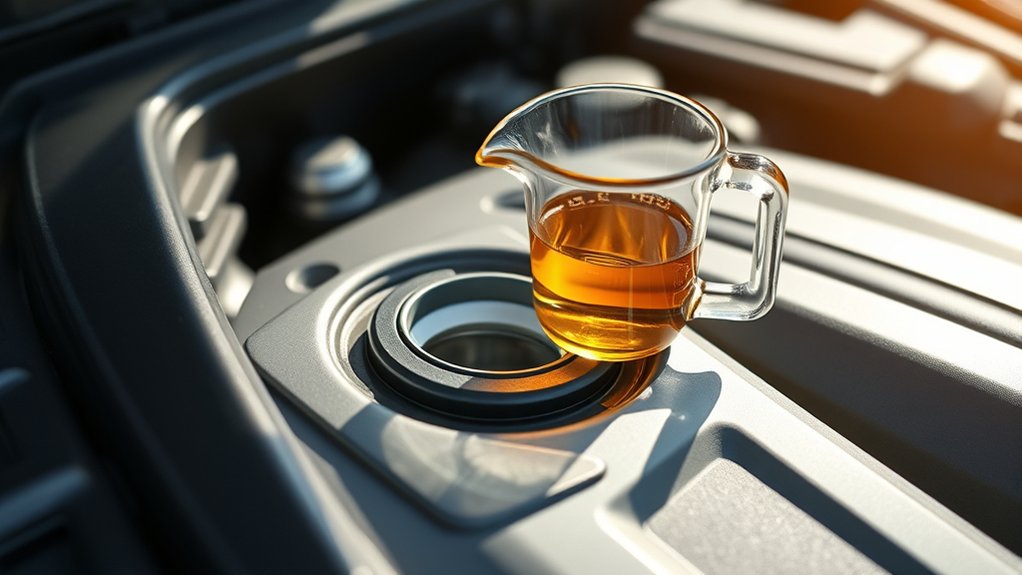
Where can you find your car’s engine oil capacity? Start by consulting the owner’s manual, which specifies the exact volume based on your engine’s design. You’ll notice that oil capacity factors include engine size, configuration, and whether or not your vehicle has a turbocharger.
These factors influence how much oil your engine requires. Additionally, the manual will recommend appropriate engine oil types, guaranteeing compatibility with your engine’s materials and operating conditions.
If you lack the manual, manufacturer websites or certified service centers provide this data accurately. Avoid guessing, as overfilling or underfilling can impair performance and cause damage.
How To Check Your Engine Oil Level
First, locate the engine oil dipstick, usually marked with a bright handle. Pull it out, wipe it clean, then reinsert and remove it again to check the oil level against the marked indicators.
While doing this, also examine the oil’s color and consistency to assess its condition.
Locating The Dipstick
One key step in checking your engine oil level is locating the dipstick, a metal rod designed to measure oil quantity inside the engine. You’ll typically find the dipstick near the engine block, often with a brightly colored handle, yellow or orange, for easy identification.
Knowing the dipstick location is essential for accurate oil checks and proper dipstick maintenance, which includes cleaning it before use to avoid contamination.
| Vehicle Type | Dipstick Location | Handle Color |
|---|---|---|
| Sedan | Near front engine block | Yellow |
| SUV | Side of the engine block | Orange |
| Truck | Rear of engine compartment | Bright Yellow |
| Motorcycle | Adjacent to cylinder head | Red |
Always consult your owner’s manual for exact dipstick location.
Reading Oil Level
After locating and cleaning the dipstick, you’ll need to correctly read the oil level to guarantee your engine runs smoothly. Pull the dipstick out, wipe it clean, reinsert it fully, then remove it again to check the oil level indicators.
These indicators, usually marks or crosshatches, show the minimum and maximum acceptable oil levels. Use proper measuring techniques by holding the dipstick horizontally and comparing the oil film against these marks.
If the oil level is below the minimum indicator, you’ll need to add the appropriate amount of oil. Avoid overfilling past the maximum mark, as it can cause engine damage. Consistently using accurate measuring techniques guarantees your engine maintains ideal lubrication and performance.
Checking Oil Condition
Why is checking your engine oil’s condition just as important as measuring its level? Because oil quality directly impacts engine performance and longevity. After pulling out the dipstick, observe the oil color. Fresh oil is amber, while dark or black oil indicates contamination or oxidation.
Next, perform a viscosity check by rubbing a small amount between your fingers; it should feel smooth, not gritty or excessively thick. If the oil appears milky, it may signal coolant contamination, requiring immediate attention.
Regularly evaluating oil condition helps you detect degradation or contamination early, preventing engine wear or failure. Remember, maintaining proper oil color and viscosity guarantees peak lubrication, cooling, and cleaning properties, safeguarding your engine’s health beyond just the quantity of oil present.
How To Add Engine Oil Without Overfilling
Although adding engine oil may seem straightforward, doing so without overfilling requires careful measurement and gradual adjustment. Begin by consulting your vehicle’s owner manual for the exact oil capacity. Use precise oil filling techniques: add oil incrementally, typically in small amounts (e.g., 100 ml), then wait a few minutes to let it settle.
After each addition, check the dipstick to monitor levels accurately. Avoid topping off too quickly to prevent overfill consequences, such as foaming, increased pressure, and potential engine damage. If you accidentally overfill, drain the excess oil immediately.
Using a funnel helps prevent spills and guarantees controlled flow. Following these steps secures ideal oil volume, maintaining engine performance and longevity without risking complications from excess oil.
When To Change Your Engine Oil And How Much To Use
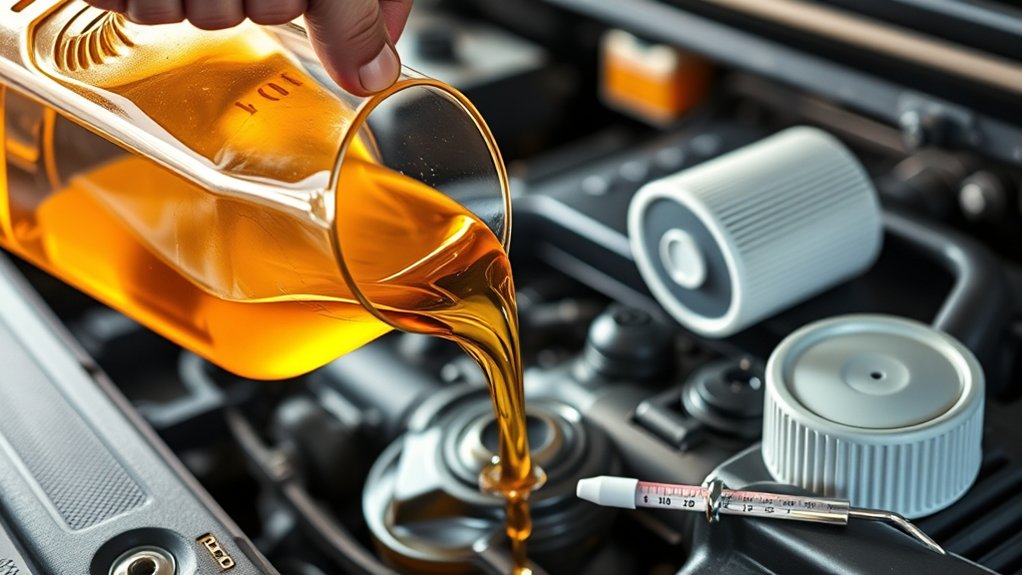
Maintaining the correct engine oil level is only part of proper engine care; knowing when to change your engine oil and how much to use is equally important for peak performance. Follow the manufacturer’s recommended oil change frequency, typically every 5,000 to 7,500 miles for conventional oil, or up to 10,000 miles for synthetic.
Regular oil changes prevent contamination buildup that compromises lubrication. Always replace the oil filter during each oil change to guarantee efficient filtration and protect engine components from abrasive particles.
When refilling, use the exact oil volume specified in your owner’s manual to maintain ideal pressure and flow. Avoid guessing; overfilling or underfilling can lead to engine damage.
Staying precise with oil change frequency and oil filter maintenance guarantees your engine runs smoothly and extends its lifespan.
Why It’s Important To Use The Right Amount Of Engine Oil
You need the right amount of engine oil to maintain ideal engine performance and prevent damage caused by insufficient or excessive lubrication. Using the correct oil level guarantees efficient oil consumption and protects critical engine components from wear.
Let’s examine how proper oil volume supports engine health and efficiency.
Engine Performance Impact
Since engine oil lubricates moving parts and reduces friction, using the correct amount directly affects your engine’s performance and longevity. Maintaining the precise oil level guarantees ideal viscosity, which is critical for minimizing wear and heat generation.
Too little oil increases metal-to-metal contact, reducing performance and accelerating component wear. Conversely, excess oil causes increased crankshaft drag and can lead to aeration, both of which degrade lubrication efficiency and impair engine responsiveness.
By adhering to manufacturer-recommended oil quantities, you enable consistent oil pressure and temperature regulation, essential for performance enhancement. This balance supports smoother operation and enhances engine longevity, allowing your vehicle to function at peak efficiency.
Proper oil management, consequently, is not just routine maintenance; it’s integral to sustaining your engine’s designed performance standards.
Preventing Engine Damage
Making sure the correct amount of engine oil goes beyond maximizing performance. It plays an essential role in preventing engine damage. When you use too little oil, the lubricating film thins, increasing friction and accelerating engine wear.
Conversely, overfilling can cause excessive pressure, leading to oil foaming and reduced lubrication efficiency. Proper oil levels maintain the protective barrier between moving parts, minimizing metal-to-metal contact.
Additionally, modern engine oils contain specialized oil additives that enhance film strength, reduce oxidation, and prevent deposit formation. If the oil volume is incorrect, these additives can’t perform at their best, compromising engine protection.
Oil Consumption Efficiency
Although engine oil primarily protects internal components, its quantity directly influences oil consumption efficiency. Using the right amount enhances lubrication and minimizes waste, ensuring your engine runs smoothly and lasts longer. Incorrect oil levels disrupt oil flow and increase consumption factors like evaporation and leakage.
To maintain peak oil efficiency, consider these key points:
- Accurate Oil Level: Overfilling causes foaming, reducing lubrication; underfilling increases friction and wear.
- Monitor Consumption Factors: High engine temperatures and worn seals accelerate oil loss.
- Regular Maintenance: Timely oil changes and inspections prevent degradation and detect leaks early.
What Happens If You Use Too Little Or Too Much Engine Oil?
When you use too little engine oil, your engine components won’t receive adequate lubrication, leading to increased friction, overheating, and accelerated wear. Low oil level causes oil pressure to drop, which can trigger warning lights and, if ignored, result in severe engine damage.
Conversely, using too much engine oil can cause excessive crankcase pressure, leading to oil foaming and aeration. This reduces the oil’s ability to lubricate effectively and may cause seals to leak or fail. Overfilled oil can also increase resistance within the engine, reducing performance and fuel efficiency.
Maintaining the correct oil level guarantees peak oil pressure and lubrication, preserving engine integrity and preventing costly repairs. Always check your dipstick and follow manufacturer recommendations to avoid these risks.
How Engine Size Affects Engine Oil Capacity
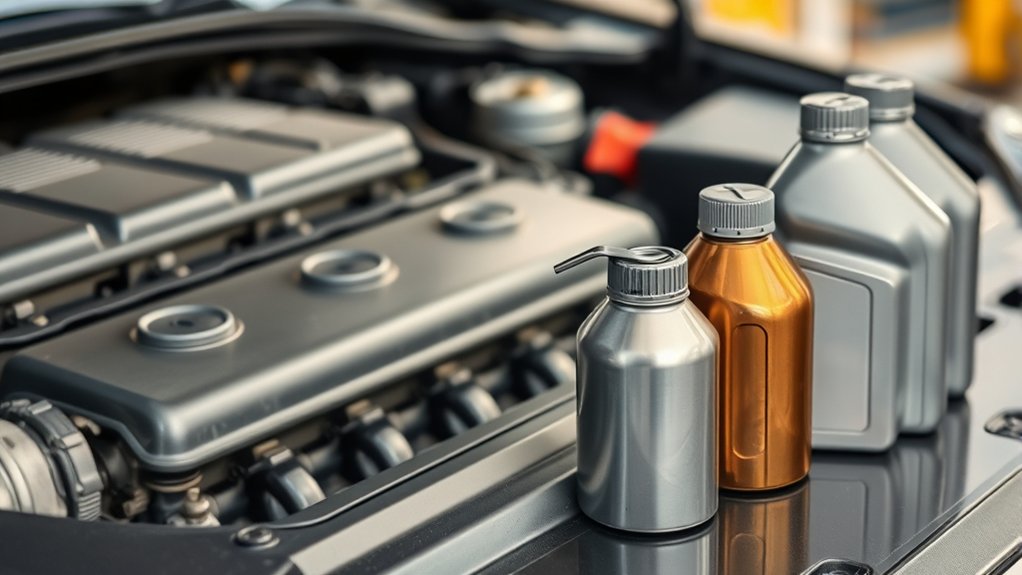
Engine size directly determines the amount of oil your engine requires to maintain ideal lubrication and cooling. Larger engines need more oil to circulate through their increased internal surface area, ensuring consistent protection.
Engine size dictates oil volume, ensuring adequate lubrication and cooling for optimal engine protection.
The engine design also influences oil capacity, as complex configurations or additional components may require more volume.
Consider these factors:
- Displacement Volume: Bigger displacement increases the oil needed to fill sump and galleries.
- Engine Design: Overhead camshafts or turbochargers might demand higher oil capacity.
- Oil Viscosity: Thicker oils flow differently; manufacturers adjust capacity to maintain pressure and cooling.
Understanding how engine size and design affect oil volume helps you maintain peak performance and avoid damage caused by incorrect oil levels. Always refer to your vehicle’s specifications for precise oil capacity.
Tips For Choosing The Correct Engine Oil Grade And Type
Selecting the correct oil grade and type hinges on understanding your vehicle’s operational requirements and environmental conditions. First, consult your owner’s manual to identify the recommended oil viscosity, expressed as a combination like 5W-30. This rating guarantees ideal flow at varying temperatures, protecting engine components effectively.
Next, consider synthetic options; they offer superior thermal stability and longevity compared to conventional oils, especially beneficial in extreme temperatures or high-performance engines. If you drive in harsh climates or demand enhanced engine protection, synthetic oils are preferable.
Additionally, factor in your vehicle’s age and mileage. High-mileage oils contain additives that reduce wear and seal leaks. Always match oil specifications to your manufacturer’s standards, balancing viscosity and additive packages for precise engine performance and durability.
Frequently Asked Questions
Can I Mix Different Brands of Engine Oil?
You can mix different engine oil brands if their oil compatibility meets the required specifications. Brand differences usually don’t affect performance, but always verify both oils share the same viscosity grade and API service classification.
How Does Oil Viscosity Affect Engine Performance?
You’ll find oil viscosity, or oil thickness, essential for ideal engine performance since it directly impacts lubrication efficiency.
Thicker oil may reduce flow at low temperatures, while thinner oil might compromise protection under high stress.
What Tools Do I Need to Change Engine Oil at Home?
You’ll need a wrench, oil filter wrench, drain pan to catch old oil, funnel for pouring, gloves for protection, and rags for cleanup.
These tools guarantee you remove oil and replace the oil filter efficiently and safely.
Is Synthetic Oil Better for Older Engines?
Like a knight trusts his sword, you can trust synthetic benefits for older engines. Synthetic oil offers superior protection and stability, but consider engine age and wear; some vintage engines might prefer conventional oils to avoid leaks or seals damage.
How Do Extreme Weather Conditions Affect Oil Consumption?
Extreme temperatures accelerate oil breakdown, causing it to lose viscosity and protective properties. In cold weather, oil thickens, increasing consumption, while heat thins oil. This leads you to check levels frequently and top off to maintain performance.
Conclusion
You might think adding more engine oil is better, but too much or too little can harm your engine’s performance. Finding the exact oil capacity based on your engine size guarantees peak lubrication and prevents damage. Checking and topping off oil carefully avoids costly repairs.
Using the right grade assures efficiency. Balancing the right amount with proper oil type keeps your engine running smoothly and extends its lifespan. Precision matters more than volume when it comes to how much engine oil you need.