To clean engine oil off concrete, start by removing any loose debris from the affected area.
Next, wet the surface to help prevent the oil from being absorbed quickly. This initial step is important for both fresh and old stains.
For fresh spills, sprinkle an absorbent material like cat litter over the oil to soak up the excess.
Let it sit for 15-20 minutes before sweeping it away. This helps lift the oil from the concrete surface.
After removing the absorbent, apply a degreaser and allow it to penetrate the stain.
Scrub the area with a stiff brush to break down the oil residue, then rinse thoroughly with water.
For older or more stubborn stains, use a stronger degreaser and consider using a pressure washer to remove the ingrained oil.
By following these steps, you can effectively tackle both new and persistent engine oil stains on concrete.
Key Takeaways
- Remove loose debris and wet the concrete surface before applying any cleaning solution to prevent quick absorption.
- Use absorbents like kitty litter or baking soda to soak up fresh engine oil and let sit for 15-20 minutes.
- Apply dish soap or a degreasing agent to break down oil molecules, then scrub with a stiff brush.
- For old stains, use a strong degreaser or concrete stain remover and rinse thoroughly, preferably with a pressure washer.
- Prevent future stains by using drip pans, fixing leaks promptly, and cleaning spills immediately with absorbents and degreasers.
Preparing Concrete Surface for Engine Oil Stains
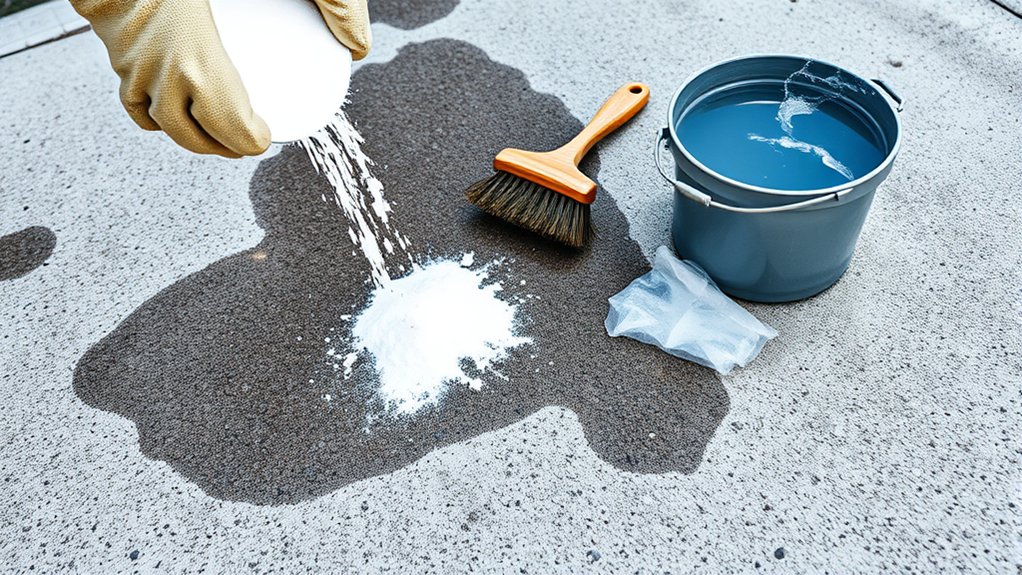
Before you begin cleaning engine oil stains, you need to prepare the concrete surface properly. Start by removing loose debris like dirt, leaves, and dust using a broom or a blower. This step guarantees better contact between your cleaning agents and the stain.
Next, wet the area with water to prevent the cleaning solution from soaking too quickly into the porous concrete. Surface preparation is critical; it enhances the effectiveness of your concrete cleaning process by allowing treatments to penetrate the stain fully.
Avoid using harsh chemicals that might damage the concrete’s integrity. Finally, identify the extent and age of the stain. Older stains may require more intensive preparation. Thorough surface preparation sets the foundation for successful engine oil stain removal.
What Household Items Work Best for Engine Oil Stains
Several common household items can effectively tackle engine oil stains on concrete by breaking down the oil and lifting it from the surface. Baking soda acts as a mild abrasive and absorbent, helping to soak up fresh oil.
Common household items like baking soda can break down and lift engine oil stains from concrete surfaces.
Dish soap, with its degreasing properties, breaks down oil molecules, making them easier to remove. Cat litter, especially the clay type, absorbs excess oil before treatment.
A vinegar mixture, typically combined with water, can help neutralize and loosen oil residues. Cornstarch paste serves as another absorbent agent, drawing oil out when applied and left to dry.
Laundry detergent, formulated to target stubborn grease, enhances cleaning power when mixed with warm water. Using these items strategically guarantees an effective, low-cost approach to oil stain removal on concrete.
Cleaning Fresh Engine Oil Spots Step-by-Step
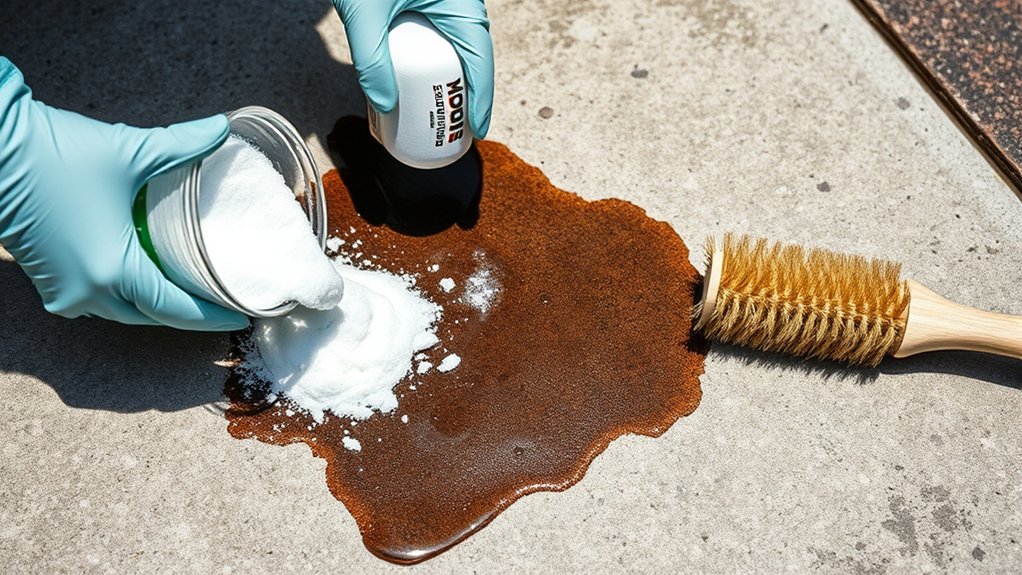
You’ll need three key tools to start cleaning fresh engine oil spots on concrete: an absorbent material, a degreasing agent, and a stiff brush. First, cover the spill immediately with oil absorbents like kitty litter or sawdust to soak up excess oil. Let it sit for 15-20 minutes, then sweep it away.
Next, apply a degreasing agent directly to the stained area, ensuring full coverage for effective stain removal. Allow it to penetrate for 5-10 minutes without letting it dry.
Finally, scrub the spot vigorously with your stiff brush to break down oil residues embedded in the concrete pores. Rinse thoroughly with water to wash away loosened oil and cleaning agents. Repeat if necessary, but fresh spots usually respond well to this straightforward process.
How to Get Rid of Old, Stubborn Engine Oil Stains
Tackle old, stubborn engine oil stains by starting with a thorough cleaning to remove surface dirt and debris. Begin by applying oil absorbents like kitty litter or sawdust to soak up any residual oil. Let it sit for several hours before sweeping it away.
Next, use a strong degreaser or a concrete stain remover specifically designed for oil stains. Apply it directly to the affected area, scrubbing with a stiff brush to break down the oil’s bond with the concrete. For persistent stains, repeat the application and scrubbing process.
Rinse thoroughly with water, preferably using a pressure washer for deeper stain removal. Confirm the concrete dries completely, then inspect and repeat if necessary. This method maximizes stain removal without damaging the concrete.
Tips to Prevent Engine Oil Stains and Keep Concrete Clean
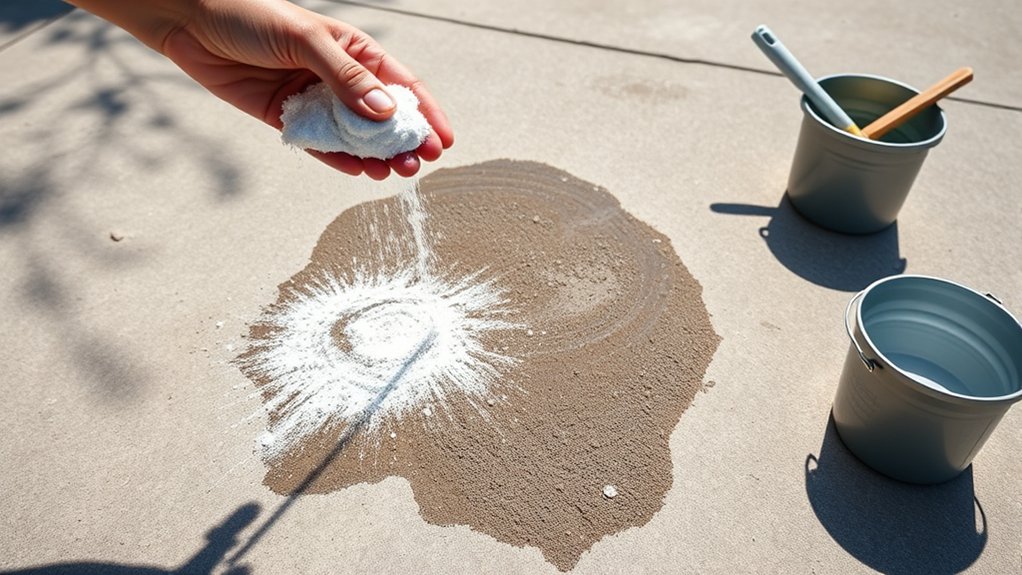
Although preventing engine oil stains may seem challenging, adopting consistent maintenance habits can protect your concrete surfaces effectively. Implementing preventive measures and establishing a solid maintenance routine will minimize damage and keep your concrete clean longer.
Follow these key steps:
- Use drip pans or absorbent mats under your vehicle to catch any leaking oil before it reaches the concrete.
- Inspect your vehicle regularly to identify and fix leaks promptly, preventing oil from accumulating on your driveway.
- Clean spills immediately with appropriate absorbents and degreasers to avoid oil seepage into the concrete pores.
Frequently Asked Questions
Can Engine Oil Stains Harm Nearby Plants or Grass?
Yes, oil spill effects can harm nearby plants or grass by disrupting soil nutrients and water absorption. You’ll need to act quickly to minimize damage and support plant recovery through thorough soil aeration and remediation techniques.
Is It Safe to Use Bleach on Engine Oil Stains?
Bleach’s effectiveness on engine oil stains is limited; it doesn’t break down oil molecules well. Instead, you should use alternative cleaners like degreasers or trisodium phosphate for safer, more effective stain removal without damaging concrete or plants.
How Long Does It Take for Engine Oil to Penetrate Concrete?
Engine oil absorption into concrete usually occurs within minutes to a few hours. This rapid penetration causes stain permanence, making early treatment essential to prevent deep-set stains that become harder to remove over time.
Can Engine Oil Stains Cause Structural Damage to Concrete?
You shouldn’t worry; engine oil stains don’t cause structural damage, but they affect concrete maintenance.
Since 80% of deterioration starts with surface contamination, oil stain prevention is key to preserving concrete’s integrity and lifespan effectively.
Are Professional Cleaning Services Worth Hiring for Oil Stain Removal?
You’ll find professional cleaning services worth it when cost analysis shows DIY methods take too long or require expensive materials. They offer efficient, thorough oil stain removal, saving you time and preventing potential concrete damage.
Conclusion
Cleaning engine oil off concrete is like wiping away a stubborn shadow—quick action and the right tools make all the difference. By prepping the surface, using common household items, and following targeted steps for fresh or old stains, you can restore your concrete’s original look efficiently.
Remember, prevention is your best armor. Stay proactive, and you’ll keep your concrete spotless, turning a tough chore into a manageable task with ease. With the right approach, cleaning engine oil off concrete becomes a straightforward and effective process.