You should never dump old engine oil, as it harms soil and water, posing health risks and legal issues. Proper disposal of old engine oil is essential to prevent environmental damage.
Store it safely in sealed, labeled containers away from heat.
Take used oil to authorized collection centers, auto shops, or hazardous waste events for proper recycling. Recycling prevents pollution and recovers valuable materials.
Avoid mixing oil with other fluids or pouring it down drains.
Understanding proper disposal and recycling benefits will help you protect the environment and comply with regulations.
By handling old engine oil responsibly, you contribute to a cleaner, safer community.
Key Takeaways
- Store old engine oil in sealed, labeled, chemical-resistant containers away from heat and sunlight to prevent leaks and contamination.
- Take used engine oil to authorized collection centers, auto repair shops, or hazardous waste events for proper recycling and disposal.
- Avoid pouring old oil down drains, on soil, or in regular trash to prevent environmental pollution and legal penalties.
- Familiarize yourself with local disposal regulations to ensure compliance and avoid fines or environmental harm.
- Recycling used engine oil conserves resources, reduces pollution, and supports sustainable environmental management.
Why You Should Never Dump Old Engine Oil
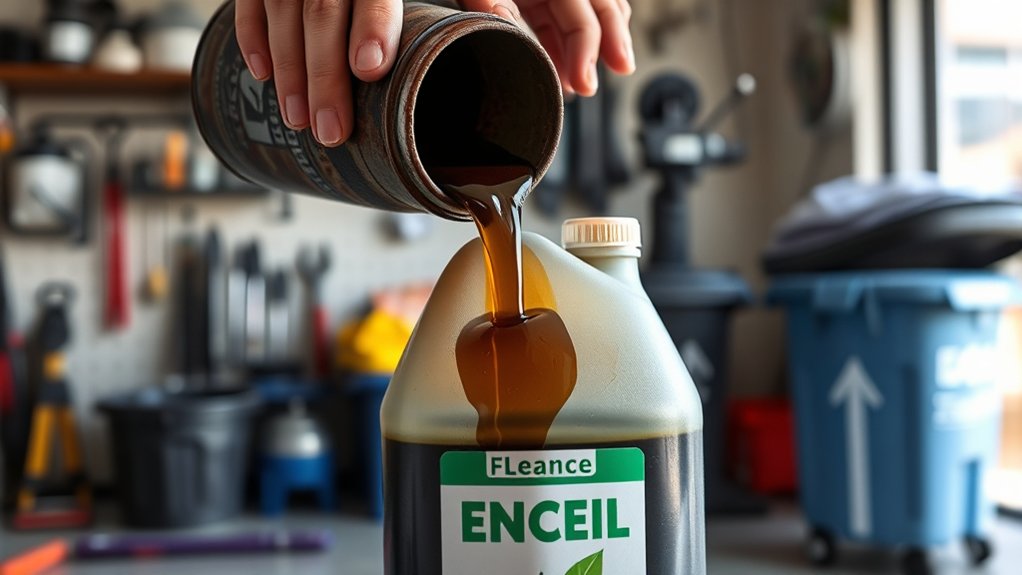
Although it may seem convenient, you should never dump old engine oil because it poses severe environmental and health risks. Used engine oil contains toxic contaminants that can contaminate soil and groundwater, leading to long-term environmental impact.
Never dump old engine oil; it contains toxic contaminants that harm soil, groundwater, and the environment.
When improperly disposed of, it can enter water systems, harming aquatic life and disrupting ecosystems. You risk introducing carcinogens and heavy metals into the environment, which can accumulate in the food chain.
Additionally, exposure to used oil can cause skin irritation, respiratory problems, and other health risks for humans. Handling and disposing of engine oil carelessly increases the likelihood of accidental spills and exposure.
To minimize these risks, always avoid dumping old engine oil and opt for proper containment until you can transfer it to designated facilities equipped to manage hazardous waste safely.
Where to Take Used Engine Oil for Recycling
You can take your used engine oil to authorized collection centers designed for safe handling and recycling. Many auto repair shops also accept used oil, often free of charge, as part of their environmental commitment.
Before dropping off, confirm their acceptance policies to guarantee proper disposal.
Authorized Collection Centers
Several authorized collection centers across the country accept used engine oil for proper recycling. These centers use standardized collection methods to guarantee safe handling and prevent contamination.
By bringing your oil here, you contribute to significant environmental benefits, such as reducing soil and water pollution and conserving natural resources.
| Center Name | Location | Accepted Materials |
|---|---|---|
| GreenCycle Depot | Chicago, IL | Used engine oil, filters |
| EcoOil Hub | Austin, TX | Engine oil, antifreeze |
| ReOil Station | Portland, OR | Used motor oil, lubricants |
| CleanFuel Center | Miami, FL | Engine oil, oil containers |
Use these centers to recycle responsibly and support sustainable waste management practices.
Auto Repair Shops
In addition to authorized collection centers, many auto repair shops accept used engine oil for recycling, offering a convenient option for disposal. When you bring your old engine oil to these shops, they guarantee it is handled following environmental regulations, preventing contamination.
Auto repair shops often have established partnerships with certified recyclers, streamlining the engine oil disposal process. By choosing this option, you contribute to recycling benefits such as conserving natural resources and reducing hazardous waste.
Make sure to store your used oil in a clean, sealed container to avoid spills during transport. Before visiting, confirm the shop’s acceptance policy, as some may only accept oil from their customers. Utilizing auto repair shops for engine oil disposal simplifies your responsibility while supporting sustainable practices.
How to Store Used Engine Oil Safely at Home

When handling used engine oil, guaranteeing its safe storage at home is essential to prevent leaks, contamination, and environmental hazards. Choose appropriate oil container options made from durable, chemical-resistant materials like HDPE or metal. Label containers clearly and keep them sealed tightly.
Store them in a cool, well-ventilated area away from direct sunlight and heat sources.
| Container Type | Material | Storage Tip |
|---|---|---|
| Used Oil Jug | HDPE Plastic | Seal cap tightly |
| Metal Can | Steel or Aluminum | Avoid rust, store dry |
| Recycled Bottle | HDPE or PET | Label with date and content |
| Oil Drain Pan | Plastic or Metal | Clean before reuse |
| Oil Storage Drum | Steel | Use drip trays |
These steps guarantee safe storage and minimize environmental risks.
Key Local Regulations for Used Engine Oil Disposal
Although regulations vary by location, you must comply with local laws governing the disposal of used engine oil to avoid penalties and environmental harm. Familiarize yourself with local policies that dictate how used oil should be handled, stored, and disposed of.
Comply with local laws on used engine oil disposal to prevent penalties and protect the environment.
These disposal guidelines often require you to keep oil in leak-proof containers, avoid mixing it with other substances, and guarantee it reaches authorized facilities. Some jurisdictions mandate documentation or reporting when disposing of larger quantities.
Ignoring these rules can result in fines or legal action, and improper disposal risks contaminating soil and water. By adhering strictly to your area’s disposal guidelines and local policies, you protect both yourself and the environment while maintaining compliance with legal standards.
Always verify current regulations before proceeding with disposal.
Using Oil Collection Centers and Hazardous Waste Events
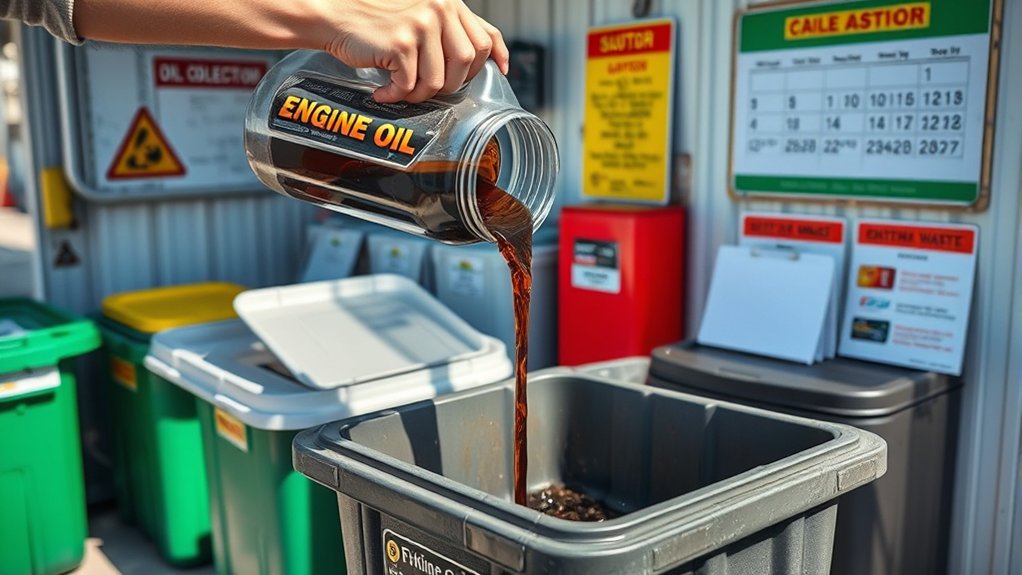
You should locate nearby oil collection centers to guarantee proper disposal of your used engine oil. Many communities also hold hazardous waste events where you can safely drop off oil and other materials.
Taking advantage of these options helps protect the environment and complies with local regulations.
Locating Nearby Collection Centers
Since improper disposal of used engine oil poses environmental risks, locating nearby collection centers is essential for responsible handling. You should start by consulting local resources such as municipal websites or environmental agencies, which often list authorized oil collection points.
Many auto parts stores and service stations serve as collection centers, providing convenient drop-off locations. Employing these collection methods guarantees your used oil is processed correctly, preventing contamination.
You can also use online databases or mobile apps dedicated to hazardous waste disposal to pinpoint centers near you. Before visiting, verify accepted materials and hours of operation to avoid inconvenience.
Participating in Hazardous Waste Events
When hazardous waste events take place, they offer an efficient way to dispose of used engine oil alongside other household hazardous materials. You can safely drop off your old engine oil at these events, which are typically organized by local governments or environmental agencies.
Proper disposal at hazardous waste events prevents contamination of soil and water, protecting public health and the environment. To participate, check your municipality’s schedule and guidelines, as some events require pre-registration or specific containment methods.
Community involvement is essential. By bringing your used oil to these events, you support local efforts to manage hazardous waste responsibly. This collective action reduces illegal dumping and promotes recycling, making hazardous waste events a practical solution for environmentally sound disposal of old engine oil.
Why Recycling Your Used Engine Oil Helps the Planet
Although used engine oil may appear harmless, improper disposal can contaminate soil and water, causing severe environmental damage. You need to understand that oil contamination from discarded engine oil leads to toxic compounds seeping into ecosystems, impairing plant and animal life.
By recycling your used engine oil, you actively reduce this environmental impact. Recycling prevents hazardous substances from entering the environment and conserves natural resources by enabling oil to be refined and reused.
When you responsibly handle your used oil, you minimize the risk of groundwater pollution and reduce the ecological footprint associated with new oil production. Ultimately, your actions in recycling safeguard ecosystems and promote sustainable resource management, making a measurable difference in protecting the planet’s health.
What Happens to Used Engine Oil After Recycling
After you drop off your used engine oil at a recycling center, specialized facilities treat it through a multi-step process. These recycling processes restore essential engine oil properties while removing contaminants. Here’s what typically happens:
Used engine oil is carefully processed to restore its quality and remove contaminants through specialized recycling steps.
Collection and Testing: The oil is tested to determine its contamination level and composition.
Separation: Water, fuel, and other impurities are separated using centrifuges or settling tanks.
Dehydration: Remaining water is removed to prevent corrosion.
Vacuum Distillation: The oil is heated under vacuum to distill and recover base oil.
Additive Reintroduction: Fresh additives are blended back to restore performance characteristics.
Common Mistakes to Avoid When Disposing of Used Engine Oil
Recycling used engine oil involves several careful steps to guarantee safe and effective restoration, but mishandling the disposal process can lead to environmental harm and regulatory issues. When disposing of old engine oil, avoid mixing it with other fluids like antifreeze or solvents, as this complicates recycling and increases environmental impact.
Don’t pour oil down drains or onto soil; it contaminates water and soil, violating best practices. Also, never discard oil in regular trash, as it poses fire hazards and legal consequences.
Use sealed, labeled containers to store used oil temporarily, preventing leaks and spills. Finally, always deliver your used oil to authorized recycling centers or collection points to comply with regulations and minimize environmental impact.
Following these best practices protects ecosystems and supports sustainable oil reuse.
Frequently Asked Questions
Can Old Engine Oil Be Reused in Other Machinery?
You can reuse old engine oil in other machinery only after it undergoes proper oil filtration and recycling processes to remove contaminants and restore lubricating properties. This ensures safety and performance without risking damage or reduced efficiency.
How Often Should I Change My Engine Oil?
Think of your engine oil like the heart of your car. Changing it every 3,000 to 5,000 miles guarantees ideal oil change frequency and engine maintenance tips,
keeping your engine running smoothly and preventing costly damage.
Does Mixing Different Brands of Used Oil Affect Recycling?
Mixing different brands of used oil doesn’t greatly impact recycling processes, as recyclers handle oil compatibility issues during treatment. You can combine them, but avoid contaminants to guarantee efficient oil reclamation and quality control.
Can Used Engine Oil Be Used as Fuel?
You can use used engine oil as fuel, but it lowers fuel efficiency and increases environmental impact due to harmful emissions.
Proper processing and regulations are essential to minimize pollution and guarantee safe, efficient combustion in specialized burners.
What Are the Health Risks of Handling Old Engine Oil?
You face health hazards, you risk skin irritation, you invite respiratory issues when handling old engine oil. Always wear gloves, avoid inhaling fumes, and prioritize safe disposal to protect yourself from toxic exposure and environmental harm.
Conclusion
Don’t dump dirty, detrimental engine oil—dispose of it diligently. Drop off your used oil at designated centers or hazardous waste events to safeguard soil and streams. Storing it securely prevents spills and protects the planet.
Recycling revitalizes raw materials, reducing pollution and preserving resources. Avoid careless contamination by following local laws and best practices.
By responsibly recycling your oil, you’re powering progress and protecting the planet’s precious ecosystems with practical precision. Always remember what to do with old engine oil to ensure a cleaner, safer environment.