Engine oil prices vary based on type, quality, and quantity. How much is engine oil depends largely on whether you choose conventional, synthetic, or synthetic blend varieties.
Conventional oil costs around $4 to $7 per quart, making it budget-friendly but needing frequent changes.
Synthetic oils are pricier due to advanced additives but offer longer engine protection and extended change intervals. Synthetic blends fall in between, balancing cost and performance.
Factors like market trends and regulations also affect prices.
If you want to understand the best brands, buying options, and how to save on oil changes, further insights can help guide your decisions.
Key Takeaways
- Conventional engine oil costs range from $4 to $7 per quart and $18 to $30 for a 5-quart container.
- Synthetic engine oils are pricier due to advanced additives but offer better protection and longer drain intervals.
- Synthetic blend oils provide a middle ground with moderate pricing and enhanced performance compared to conventional oils.
- Prices fluctuate based on oil quality, market trends, seasonal demand, and regulatory changes.
- Buying in bulk, choosing reputable brands, and timing purchases during sales can reduce overall engine oil costs.
Key Factors That Influence Engine Oil Prices

Although engine oil prices may seem straightforward, several key factors actively determine their fluctuations. You need to evaluate oil quality first; higher-grade oils with advanced additives and synthetic bases naturally demand higher prices due to improved performance and longevity.
Market trends also play a critical role. Global crude oil prices, supply chain disruptions, and seasonal demand shifts directly impact costs. When crude oil prices rise, refining expenses increase, pushing engine oil prices up.
Additionally, regulatory changes aimed at reducing emissions can drive manufacturers to produce more specialized formulations, which affects pricing. By understanding these variables, you can better anticipate price changes and make informed purchasing decisions tailored to your vehicle’s needs without compromising on oil quality.
How Much Does Conventional Engine Oil Cost?
When you’re budgeting for vehicle maintenance, knowing the cost of conventional engine oil is essential. Conventional oil is typically the most affordable among engine oil types, making it popular for standard oil change frequency intervals, usually every 3,000 to 5,000 miles.
Prices vary depending on brand and location but generally remain consistent for typical passenger vehicles.
| Quantity (Quarts) | Price Range (USD) |
|---|---|
| 1 | $4 – $7 |
| 5 | $18 – $30 |
| 10 | $35 – $55 |
This pricing enables you to estimate expenses accurately when planning routine oil changes. Conventional oil suits many older engines but requires more frequent changes compared to synthetic alternatives.
Synthetic vs. Synthetic Blend Oil Prices Compared
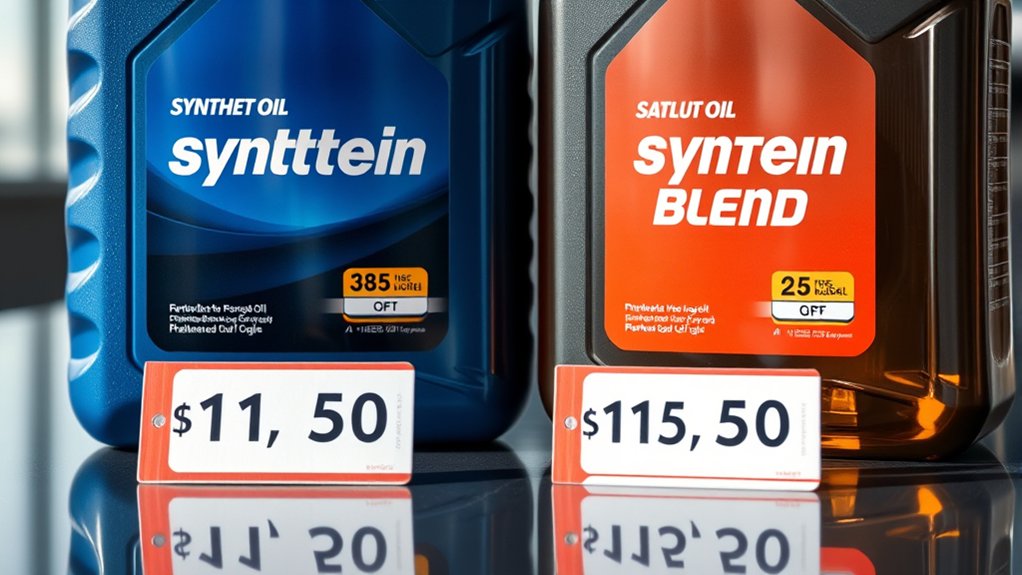
Conventional engine oil offers a cost-effective option, but you might contemplate synthetic or synthetic blend oils for enhanced performance and longer intervals between changes. When comparing synthetic vs. synthetic blend oil prices, synthetic oils typically cost more due to their superior base stocks and additive packages.
Synthetic advantages include better thermal stability, reduced engine wear, and improved fuel efficiency. Synthetic blends, combining conventional and synthetic oils, provide a balance of protection and cost savings.
Key factors to contemplate:
- Synthetic advantages offer extended drain intervals and enhanced engine protection.
- Blend characteristics provide improved performance over conventional oils at a moderate price.
- Synthetic oils resist breakdown under extreme temperatures better than blends.
- Synthetic blends reduce your upfront cost while still delivering better performance than conventional oil.
Choosing between these depends on your budget and performance needs.
Best Engine Oil Brands for Your Money
Choosing the right engine oil brand can greatly impact your vehicle’s performance and longevity. When selecting a brand, prioritize those with proven engine oil performance, validated through industry certifications like API and ACEA.
Brands such as Mobil 1, Castrol, and Shell have established strong brand reputation due to their consistent quality and advanced additive technologies. These brands guarantee ideal lubrication, reduced engine wear, and heat resistance.
You’ll also want to take into account brands offering oils tailored to your engine’s specifications, which enhances fuel efficiency and engine cleanliness. Avoid brands without transparent performance data or industry endorsements, as inferior oils can compromise engine health.
Investing in a reputable brand guarantees you achieve the best balance between cost and engine protection, ultimately extending your engine’s operational life.
How Engine Oil Quantity and Viscosity Affect Price

You’ll notice that the total quantity of engine oil you need directly affects the overall cost, since buying larger volumes typically raises the price.
Additionally, oil viscosity plays an essential role, as thicker or synthetic oils often come at a premium compared to standard grades. Understanding these factors helps you make a cost-effective choice without compromising engine performance.
Oil Quantity Impact
Although engine oil quantity might seem straightforward, it greatly influences the overall cost, as larger volumes naturally demand higher prices. When you consider your vehicle’s oil capacity, you’re directly affecting both the initial expense and the engine performance. Using the correct oil quantity guarantees peak lubrication, reducing wear and maintaining efficiency.
Keep in mind:
- Underfilling can cause increased friction and overheating, risking engine damage.
- Overfilling leads to pressure buildup and leaks, compromising engine seals.
- Higher oil capacity means more frequent oil changes cost more but maintain performance.
- Your engine’s design dictates oil capacity, so always follow manufacturer specifications for cost-effective maintenance.
Viscosity Price Variation
Because viscosity directly impacts an engine oil’s flow characteristics under different temperatures, it plays an essential role in determining price. When you consider viscosity ratings, such as 5W-30 or 10W-40, you’re looking at how the oil behaves in cold starts and at operating temperatures.
Oils with broader viscosity ranges or synthetic formulations typically cost more due to enhanced oil performance, offering better protection and efficiency. You’ll find that higher viscosity ratings often require more complex additives to maintain stability and reduce wear, which increases production costs.
Additionally, oils designed for extreme conditions or high-performance engines command premium pricing. Understanding these factors helps you make informed decisions, balancing cost with the specific needs of your engine for maximum protection and efficiency.
Where to Buy Engine Oil for the Best Price
You can find engine oil at local retailers or online, each offering different pricing structures. Keep an eye on seasonal discounts and promotional deals to maximize savings.
Understanding these options helps you purchase the right oil at the best price.
Local Retailers vs Online
Where can you find the best price on engine oil: local retailers or online stores? Local availability means you can buy immediately without waiting, ideal for urgent needs.
However, online stores often offer competitive base prices but add shipping costs, which may negate savings. You must compare total costs, factoring in convenience and timing.
Consider these points:
- Immediate access vs potential delivery delays
- Hidden shipping fees impacting final price
- Ability to inspect product physically at local stores
- Wider selection and bulk discounts online
Seasonal Discounts and Deals
When do engine oil prices drop substantially? You’ll find the best deals during specific periods, mainly tied to seasonal promotions and holiday sales. Retailers often reduce prices around major holidays like Black Friday, Memorial Day, and Labor Day, leveraging these events to clear inventory.
Seasonal promotions typically align with colder months when customers prepare vehicles for winter, making late fall an ideal time to buy. To maximize savings, monitor both local stores and online platforms, as they frequently offer competitive holiday sales.
You should also subscribe to newsletters or alerts from trusted sellers to catch flash sales. By timing your purchase during these strategic windows, you can secure high-quality engine oil at a substantially reduced cost without compromising performance.
Tips to Save Money on Engine Oil Changes
Several practical strategies help reduce the cost of engine oil changes without compromising vehicle performance. Effective budget planning guarantees you allocate funds for timely maintenance, preventing costly repairs. You can also extend oil life by using high-quality synthetic oils compatible with your engine.
Regularly check oil levels and condition to avoid unnecessary changes. Consider these tips to save money while maintaining peak engine health:
- Use manufacturer-recommended oil grades to maximize efficiency and longevity.
- Buy oil and filters in bulk or during sales to lower per-unit cost.
- Perform DIY oil changes if you have technical skills and proper tools.
- Monitor mileage and oil condition closely to avoid premature changes.
Frequently Asked Questions
How Often Should I Change My Engine Oil?
You should change your engine oil every 3,000 to 7,500 miles, depending on your vehicle. Maintaining proper oil change frequency guarantees engine oil benefits like lubrication, cooling, and preventing wear, keeping your engine running efficiently.
Can I Mix Different Types of Engine Oil?
Mixing different engine oils is like blending two paint colors; you might get a muddy result. You can mix oils if viscosities match, but synthetic benefits might diminish.
It’s best to stick with one type for ideal performance.
What Happens if I Use the Wrong Engine Oil?
If you use the wrong engine oil, its viscosity may not match your engine’s requirements, reducing lubrication efficiency. This compromises engine performance, increases wear, and can cause overheating or damage over time.
How Do I Check My Engine Oil Level?
You’ll use the oil dipstick to check your engine oil level. Pull it out, wipe clean, reinsert, then remove again.
Verify the oil matches recommended engine oil types and stays between minimum and maximum marks for peak performance.
Is DIY Engine Oil Change Safe for Beginners?
Yes, DIY engine oil changes are safe for beginners if you follow oil change tips carefully. Avoid beginner mistakes like improper drain plug tightening or using incorrect oil.
Prepare tools, use a proper workspace, and follow your manual precisely.
Conclusion
Steering engine oil prices can feel like maneuvering through a complex maze, but understanding key factors helps you make sharp, cost-effective choices. Whether you opt for conventional, synthetic, or blends, knowing how viscosity, quantity, and brand influence cost empowers you to protect your engine without overspending.
Shop smart and schedule timely changes—you’ll keep your vehicle humming smoothly while your wallet stays happy. With the right knowledge, you’re in the driver’s seat of savings and performance.
When considering how much is engine oil, remember that investing in quality oil tailored to your vehicle’s needs ensures long-term benefits and cost savings.