You shouldn’t use engine oil for your chainsaw’s chain and bar because it lacks the necessary additives and tackiness to reduce friction and wear.
Engine oil’s viscosity and formulation aren’t designed for high-speed chain operation, risking accelerated wear and potential damage.
While you can use it briefly in an emergency, it’s essential to switch back to proper chainsaw oil immediately.
Understanding the differences in oil types and proper selection will help protect your chainsaw’s performance and longevity.
Key Takeaways
- Engine oil lacks specialized additives and tackiness needed for effective chainsaw chain and bar lubrication.
- Using engine oil increases friction and wear, risking chain, bar, and engine damage.
- Engine oil may be used temporarily only in emergencies when bar oil is unavailable.
- Prolonged use of engine oil can cause overheating and accelerated component failure.
- Always switch back to manufacturer-recommended chainsaw bar oil for optimal performance and protection.
Can You Use Engine Oil to Protect Your Chainsaw’s Chain and Bar?
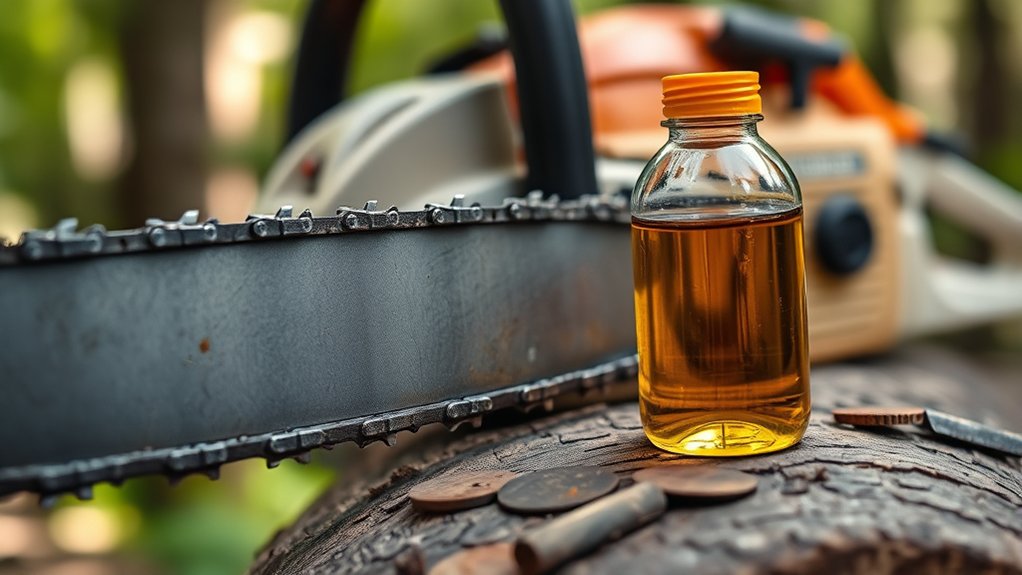
Although engine oil shares lubricating properties with bar and chain oil, you shouldn’t use it to protect your chainsaw’s chain and bar because it lacks the specific additives and viscosity required for maximum performance and wear prevention under high-speed, high-friction conditions.
Chainsaw bar and chain oils contain specialized oil additives that enhance chain protection by reducing friction and preventing metal-to-metal contact. These additives also improve adhesion, ensuring the oil stays on the chain and bar during operation.
Engine oils, formulated primarily for internal combustion engines, don’t provide the same level of tackiness or thermal stability needed for chainsaw components exposed to rapid movement and external elements.
If you want ideal chain protection and longevity, it’s essential to use oils designed explicitly for chainsaws rather than substituting with engine oil.
Risks of Using Engine Oil Instead of Chainsaw Oil
You risk lubrication inefficiency by using engine oil instead of chainsaw oil, which can lead to increased friction and wear on the chain and bar. Engine oil’s viscosity and additives aren’t optimized for the high-speed, high-temperature conditions of chainsaw operation.
Additionally, improper lubrication may cause engine damage due to overheating and contamination.
Lubrication Inefficiency
When you substitute engine oil for chainsaw oil, you compromise the lubrication system’s effectiveness, leading to inadequate protection of the chain and bar. Engine oil’s lubrication properties differ notably, as it lacks the specific additives designed to reduce friction and wear in high-speed chain mechanisms.
Additionally, the oil viscosity of engine oil is not optimized for chainsaw operation, often being too thick or thin at operating temperatures, which impairs consistent oil flow. This inconsistency causes insufficient film strength on the chain and bar surfaces, accelerating wear and increasing heat generation.
Over time, this lubrication inefficiency reduces cutting performance and shortens component lifespan. As a result, using engine oil undermines the chainsaw’s designed lubrication parameters, risking premature mechanical degradation that proper chainsaw oil would prevent.
Engine Damage Potential
Inadequate lubrication from engine oil not only accelerates wear but also increases the risk of serious engine damage in chainsaws. Engine oils typically have higher oil viscosity tailored for combustion engines, which limits their ability to properly lubricate the rapid-moving chainsaw bar and chain.
This mismatch leads to insufficient film strength, causing increased engine wear due to metal-to-metal contact. Over time, the insufficient lubrication compromises critical components such as the crankshaft, bearings, and cylinder walls.
Using engine oil disrupts the designed lubrication balance, raising friction and heat generation, which accelerates component degradation. To preserve your chainsaw’s engine integrity, it’s essential to use oils specifically formulated with appropriate viscosity and additives.
Otherwise, you’ll face premature engine wear and potential catastrophic failure caused by inadequate lubrication.
When Is It Okay to Use Engine Oil Temporarily?

Under what circumstances can engine oil serve as a temporary substitute for chainsaw bar and chain oil? You can consider engine oil as a temporary solution only when you’re in an emergency and no proper bar and chain oil is available.
In such cases, using engine oil briefly may provide lubrication to reduce immediate friction and wear. However, this is strictly a short-term fix, as engine oil lacks the tackiness and additives designed for consistent bar and chain performance.
As an oil alternative, engine oil may protect your chainsaw momentarily during low-intensity tasks or brief operation periods. Still, you should switch back to the correct bar and chain oil as soon as possible to maintain peak chain function and prevent accelerated wear or damage.
Temporary use requires careful monitoring to avoid compromising your chainsaw’s longevity.
How Is Bar and Chain Oil Different From Engine Oil?
How exactly does bar and chain oil differ from engine oil in formulation and function? Understanding the distinctions in bar oil properties versus engine oil composition is essential for chainsaw maintenance. Here’s a precise comparison:
- Viscosity: Bar oil is thicker to adhere to the chain and bar, reducing fling-off, whereas engine oil is thinner to circulate freely in the engine.
- Additives: Bar oil contains tackifiers that enhance adhesion; engine oil includes detergents and anti-wear additives tailored for internal combustion.
- Temperature Tolerance: Engine oil is formulated to withstand high thermal loads inside the engine. Bar oil prioritizes lubrication over heat resistance.
- Contaminant Resistance: Bar oil resists dirt and debris accumulation on the chain, while engine oil manages combustion byproducts.
You’ll see bar and chain oils are uniquely engineered for external lubrication, distinct from the internal protection engine oil provides.
How to Choose the Right Oil for Your Chainsaw

Selecting the right oil for your chainsaw hinges on understanding the specific demands of its components and operating conditions. You need oil viscosity that guarantees ideal lubrication without excessive drag, and oil additives that protect against wear and corrosion.
Choose oil designed for bar and chain use, as it balances flow and adhesion properties critical for cutting efficiency.
| Factor | Importance |
|---|---|
| Oil Viscosity | Guarantees smooth chain motion |
| Oil Additives | Prevents corrosion, wear |
| Temperature | Affects oil flow and film |
| Manufacturer Specs | Ensures compatibility |
Selecting oil that meets these criteria protects your chainsaw’s performance and longevity, avoiding damage caused by improper lubrication.
Tips for Proper Chainsaw Oil Use and Maintenance
Although choosing the right oil is essential, maintaining proper oil use guarantees your chainsaw operates efficiently and lasts longer. You must adhere to specific practices in chain maintenance and oil application to optimize performance.
Proper oil use ensures your chainsaw runs smoothly and extends its lifespan through effective maintenance.
- Always verify oil viscosity matches manufacturer specifications. Incorrect viscosity impairs lubrication and accelerates wear.
- Regularly clean the oil reservoir and filter to prevent blockages that reduce oil flow to the chain.
- Monitor chain tension and adjust as needed. Improper tension increases friction and oil consumption.
- Replenish the oil reservoir before each use to confirm continuous lubrication throughout operation.
Frequently Asked Questions
How Often Should I Replace My Chainsaw Chain?
You should replace your chainsaw chain when you notice significant chain wear or reduced cutting efficiency.
Regular maintenance tips include sharpening, proper lubrication, and inspecting for damage to guarantee peak performance and safety.
Can I Mix Bar Oil With Other Lubricants?
You shouldn’t mix bar oil with other lubricants unless compatibility is confirmed. Bar oil alternatives often differ chemically, risking reduced lubrication or damage.
Always verify lubricant compatibility to guarantee peak chainsaw performance and avoid mechanical issues.
What Type of Oil Is Best for Cold Weather Use?
You’ll want low-viscosity bar oil for cold weather lubrication. It flows smoothly like liquid silk, ensuring consistent chain movement.
Oil viscosity considerations are essential; thinner oils prevent thickening, maintaining ideal performance and reducing engine strain in freezing temperatures.
How Do I Know if My Chainsaw Oil Is Contaminated?
You’ll know your chainsaw oil is contaminated by visual signs like discoloration or debris. Conduct oil testing for viscosity and contaminants.
If results deviate from standards, these signs confirm contamination, requiring immediate oil replacement to protect your chainsaw.
Can Improper Oiling Damage the Chainsaw Engine?
Yes, improper oiling can damage your chainsaw engine by increasing engine wear. Using oil with incorrect viscosity reduces lubrication efficiency, causing friction and overheating.
This accelerates component degradation and shortens engine lifespan.
Conclusion
You might wonder if engine oil can double as chainsaw oil, but don’t be fooled—using the wrong oil is like trying to fit a square peg in a round hole. Engine oil lacks the tackiness and additives needed to protect your chain and bar under high friction and heat.
Stick to bar and chain oil designed for the job to guarantee peak performance and longevity. Precision in maintenance safeguards your tool’s efficiency and your safety.
In conclusion, using engine oil for chainsaw lubrication is not recommended. Always choose proper chainsaw oil to ensure your equipment runs smoothly and lasts longer.