Yes, too much oil can damage your engine by causing excess pressure and oil foaming, which reduces lubrication efficiency.
Overfilling your engine oil increases this pressure, potentially forcing seals to fail and leading to leaks and contamination.
The oil pump struggles to circulate the thickened oil properly, causing metal-to-metal contact and accelerated wear.
You may notice decreased engine performance, smoke, and unusual noises as a result.
Understanding how overfilling impacts your engine and learning proper oil management will help prevent costly damage and maintain peak function.
Key Takeaways
- Overfilling engine oil increases crankcase pressure, causing seals to fail and leading to oil leaks.
- Excess oil causes foaming, reducing lubrication efficiency and increasing metal-to-metal contact.
- Oil pump struggles to circulate too much oil, compromising oil flow and engine protection.
- High oil levels dilute additives and raise viscosity, impairing engine performance and responsiveness.
- Signs of damage include excessive exhaust smoke, unusual noises, oil leaks, and declining engine power.
What Happens When You Overfill Engine Oil
When you overfill engine oil, the excess volume causes increased pressure inside the crankcase, which can lead to oil foaming and aeration. This disrupts the oil’s ability to maintain proper viscosity, compromising engine lubrication.
As the oil becomes aerated, its effective viscosity decreases, reducing its capacity to form a stable lubricating film between moving components. This degradation in lubrication increases metal-to-metal contact, accelerating wear and thermal stress.
Furthermore, the oil pump may struggle to circulate overly abundant oil properly, further impairing lubrication efficiency. You might also notice that the crankshaft can whip excess oil, exacerbating oil breakdown.
Understanding these mechanical impacts highlights why maintaining correct oil levels is critical to preserving ideal engine lubrication and preventing premature component failure.
How Too Much Oil Causes Foaming, Pressure, and Leaks
When you overfill your engine oil, it agitates the oil pump, causing air to mix with the oil and create foam. This foaming reduces lubrication efficiency and raises internal pressure.
As a result, excess pressure can force seals to fail, leading to oil leaks.
Oil Foaming Effects
Although oil is essential for engine lubrication, excessive amounts can trigger foaming, which compromises its effectiveness. When oil foams, air becomes trapped, reducing the oil’s ability to maintain proper viscosity and diminishing the protective film on engine components.
Oil additives designed to control viscosity and reduce aeration struggle under foaming conditions, accelerating wear and tear. You’ll notice increased oil pressure fluctuations and potential leaks as the foamed oil fails to circulate correctly.
| Effect | Cause |
|---|---|
| Reduced viscosity | Air bubbles in oil |
| Additive breakdown | Increased aeration |
| Inefficient lubrication | Foam weakens oil film |
| Pressure fluctuations | Foamed oil volume expands |
| Leakage | Excess pressure stresses seals |
Understanding foaming’s impact helps you maintain peak engine performance by avoiding overfilling.
Increased Engine Pressure
Excess oil leads to increased foaming, which directly contributes to elevated engine pressure. When you overfill your engine oil, the crankshaft agitates the surplus fluid, introducing air bubbles and creating foam.
This alters the engine oil dynamics by reducing its lubricating efficiency and increasing its compressibility. As a result, the oil pump struggles to maintain ideal pressure regulation, causing pressure spikes within the crankcase.
These spikes can stress seals and gaskets, potentially initiating leaks or mechanical damage. You must understand that maintaining correct oil levels is essential, as deviations disrupt the oil’s ability to cushion and protect moving parts.
Elevated internal pressures compromise engine integrity and performance, emphasizing why precise oil management is critical for sustaining reliable engine operation and longevity.
Causes Of Oil Leaks
If you overfill your engine oil, the resulting foaming reduces lubrication efficiency and causes pressure fluctuations that compromise seal integrity. Excess oil churns with air, creating foam that diminishes the oil’s ability to lubricate moving parts.
This leads to irregular pressure spikes inside the crankcase, stressing gaskets and seals beyond their design limits, which are primary oil leak causes.
To prevent these leaks, focus on:
- Maintaining correct oil levels to avoid foaming.
- Using manufacturer-recommended oil types and viscosities.
- Regularly inspecting seals and gaskets for wear.
- Monitoring crankcase pressure and addressing abnormalities promptly.
How Overfilling Damages Engine Parts and Seals
When you overfill your engine with oil, the excess fluid increases pressure on seals, causing them to wear prematurely or fail. This elevated oil level also leads to oil aeration, reducing lubrication efficiency and raising the risk of component damage.
Understanding these mechanical stresses is essential to preventing costly engine repairs.
Increased Pressure On Seals
Although engine seals are designed to withstand high temperatures and pressures, overfilling your oil creates excessive internal pressure that compromises their integrity. This pressure build-up forces seals beyond their operational limits, accelerating seal deterioration and increasing the risk of leaks.
You might not notice immediate symptoms, but the prolonged stress weakens sealing surfaces and gasket materials.
Key impacts of increased pressure on seals include:
- Deformation of seal lips, reducing their ability to maintain tight contact
- Micro-fissures forming in rubber and polymer components
- Premature hardening or cracking due to mechanical stress
- Oil leakage leading to contamination and further engine damage
Oil Aeration Effects
Since overfilling oil increases the crankshaft’s contact with the fluid, it causes air to mix into the oil, a process known as oil aeration. This aeration impact markedly alters the oil’s viscosity, reducing its ability to form a stable lubricating film between moving engine parts.
When air bubbles are present, the oil’s effective viscosity drops, impairing its load-carrying capacity and increasing friction. You’ll notice that aerated oil compromises consistent lubrication, accelerating wear on seals and components exposed to fluctuating pressures.
Additionally, the aeration impact can lead to erratic oil pressure readings, confusing diagnostics. Understanding this, you must avoid overfilling to maintain proper oil viscosity and prevent aeration-related issues that degrade engine reliability and longevity.
Damage To Engine Components
Air mixed into overfilled oil not only alters viscosity but also sets the stage for direct harm to engine components and seals. When you overfill your engine oil, the excess causes increased pressure in the crankcase, forcing oil into seals and gaskets, which can lead to leaks and premature deterioration.
The altered oil viscosity reduces its ability to lubricate effectively, accelerating engine wear on critical parts like pistons and bearings. The foaming effect further compromises oil film strength, increasing metal-to-metal contact.
Key risks include:
- Seal degradation and leaks due to excessive pressure
- Accelerated wear on bearings from poor lubrication
- Contaminated oil film causing increased friction
- Stress on piston rings reducing engine efficiency
Managing oil levels prevents these issues and preserves engine integrity.
How Too Much Oil Hurts Your Engine’s Performance
When you add too much oil to your engine, it can create excessive pressure that disrupts the lubrication system’s balance. This imbalance affects oil viscosity and the function of oil additives, reducing their ability to protect essential components.
Excess oil causes increased resistance and foaming, which compromises the oil’s lubricating properties.
| Effect | Impact on Engine Performance |
|---|---|
| Increased oil viscosity | Reduces efficient flow, causing drag |
| Oil additives dilution | Weakens anti-wear and cleaning action |
| Excess pressure buildup | Forces oil past seals, leading to leaks |
Signs Your Engine Is Suffering From Overfilled Oil
How can you tell if your engine is struggling with too much oil? Monitoring the oil level is critical for effective engine maintenance. Overfilled oil can cause specific symptoms indicating engine stress.
You might notice excessive smoke from the exhaust, signaling oil burning. Engine performance could decline due to increased crankcase pressure, leading to oil leaks or seal damage. Unusual engine noises, such as knocking or sputtering, may result from oil aeration.
Finally, your oil dipstick might show a higher-than-normal level, confirming overfill.
- Excessive exhaust smoke indicating oil combustion
- Decline in engine responsiveness or power
- Oil leaks around seals and gaskets due to pressure
- Elevated oil level reading on the dipstick
Recognizing these signs helps you prevent long-term damage and maintain engine reliability.
How to Check and Correct Engine Oil Levels Safely
Although checking and correcting engine oil levels requires attention to detail, following a systematic approach guarantees accuracy and safety. Start by ensuring the engine is off and cooled down to prevent inaccurate dipstick readings due to oil circulation or heat expansion.
Pull out the dipstick, wipe it clean, then reinsert it fully before removing it again to assess the oil level precisely. If the level exceeds the recommended mark, avoid an immediate oil change; instead, drain excess oil carefully using the drain plug or a siphon pump.
Conversely, if the oil is low, add the specified grade incrementally, rechecking the dipstick reading after each addition. Maintaining the correct oil level optimizes engine performance and prevents potential damage caused by overfilling or underfilling.
Tips to Prevent Overfilling and Protect Your Engine
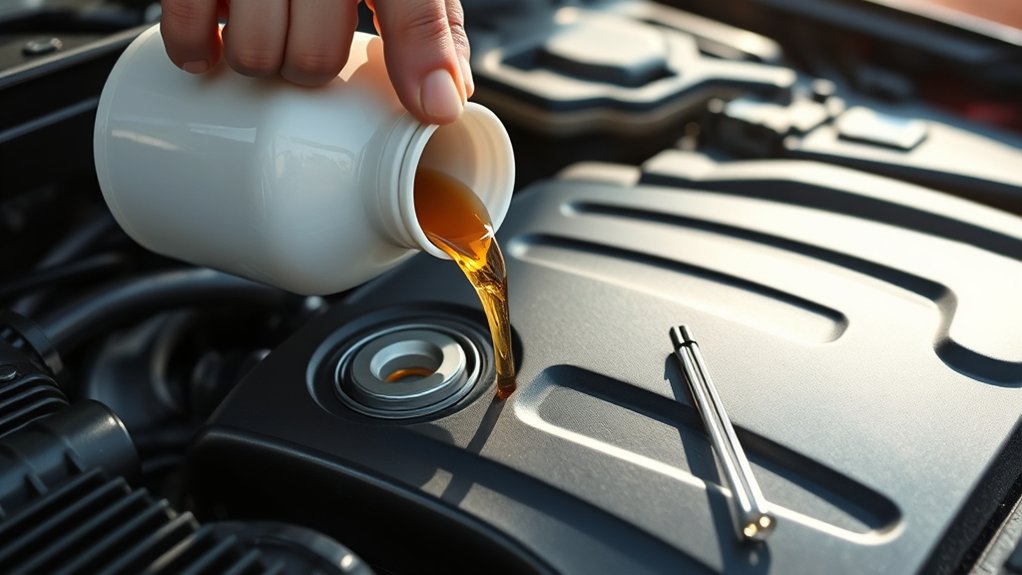
Since overfilling engine oil can lead to mechanical issues such as increased pressure, foaming, and reduced lubrication efficiency, you must take specific precautions to avoid it. Proper oil maintenance is critical for engine longevity, so precise measurement and careful filling are essential.
To prevent overfilling and protect your engine:
- Always use the manufacturer’s recommended oil quantity and type.
- Fill oil gradually, checking levels frequently with the dipstick.
- Avoid topping off immediately after engine warm-up, as oil expands with heat.
- Maintain a clean environment during oil changes to prevent contamination that can affect oil volume readings.
Why Maintaining Proper Engine Oil Levels Matters
When you maintain proper engine oil levels, you guarantee ideal lubrication, cooling, and protection of vital engine components. Correct oil volume guarantees the oil pump operates efficiently, maintaining consistent oil pressure and circulation.
If oil levels drop, oil viscosity can increase, reducing lubrication effectiveness and causing accelerated wear. Conversely, overfilling dilutes oil viscosity, disrupting the oil film and increasing friction.
Excess oil also creates aeration, leading to foaming that compromises lubrication effectiveness. Maintaining the specified oil level preserves peak oil viscosity, guaranteeing the oil forms a stable film that minimizes metal-to-metal contact.
This balance prevents overheating and mechanical damage. As a result, regularly checking and adjusting your engine oil level is essential to sustaining engine performance and longevity while preventing costly repairs due to lubrication failure.
Frequently Asked Questions
Can Synthetic Oil Reduce the Risks of Overfilling Damage?
Yes, synthetic oil’s benefits and stable oil viscosity help reduce overfilling damage risks by maintaining consistent lubrication and minimizing foaming. However, you shouldn’t rely solely on synthetic oil to prevent damage from excess oil levels.
Does Overfilling Oil Affect Fuel Efficiency?
Of course, overfilling oil magically boosts fuel efficiency said no engineer ever. Excess oil increases oil viscosity, stressing your engine’s performance and causing drag, which ironically reduces fuel economy.
How Often Should Engine Oil Be Changed to Avoid Overfilling?
You should follow manufacturer-recommended oil change intervals, typically every 5,000 to 7,500 miles, to guarantee ideal engine oil maintenance.
Regular checks prevent overfilling, maintaining proper oil levels and protecting engine performance effectively.
Can Overfilled Oil Cause Damage to Turbochargers?
Think turbocharger performance matters? Overfilled oil causes oil foaming, which reduces lubrication efficiency and increases bearing wear.
You’ll see decreased turbocharger lifespan and potential costly repairs if you don’t maintain proper oil levels carefully.
Is It Safe to Drive Immediately After Correcting Oil Levels?
Yes, once you correct the oil level, you can safely drive immediately. Proper oil level guarantees peak engine performance, preventing issues like foaming or pressure loss. These problems could otherwise compromise lubrication and damage engine components over time.
Conclusion
Overfilling your engine oil by just 20% can increase crankcase pressure by up to 40%, causing foaming, leaks, and premature seal failure. You shouldn’t underestimate how excess oil stresses engine components and reduces performance.
Regularly checking oil levels with precision tools helps you avoid costly damage and maintain peak engine function. Keep your oil within recommended limits to protect your engine’s longevity and efficiency.
Small errors in oil volume have significant, measurable impacts. Understanding that too much oil can damage engine components is key to proper maintenance and ensuring your engine runs smoothly.