You should always check your engine oil with the engine off and cooled to get an accurate reading.
Do you check oil with engine running? The answer is no, because checking immediately after driving or with the engine running causes hot oil expansion, leading to falsely high levels and unreliable results.
Remove, clean, and fully reinsert the dipstick for precision.
Regular checks help prevent wear and costly damage. Understanding timing, vehicle type, and correct procedure is essential for effective maintenance and peak engine performance.
Key Takeaways
- Engine oil is typically checked with the engine off and cooled for accurate level readings.
- Checking oil with the engine running can cause false high readings due to hot oil expansion.
- Some high-performance vehicles may require oil checks with the engine running; always follow the owner’s manual.
- Diesel and gasoline engines often have different oil check procedures; confirm the correct method for your vehicle type.
- Electronic oil level sensors in modern cars may provide oil status without needing engine off checks.
Should You Check Your Engine Oil With the Engine Running or Off?
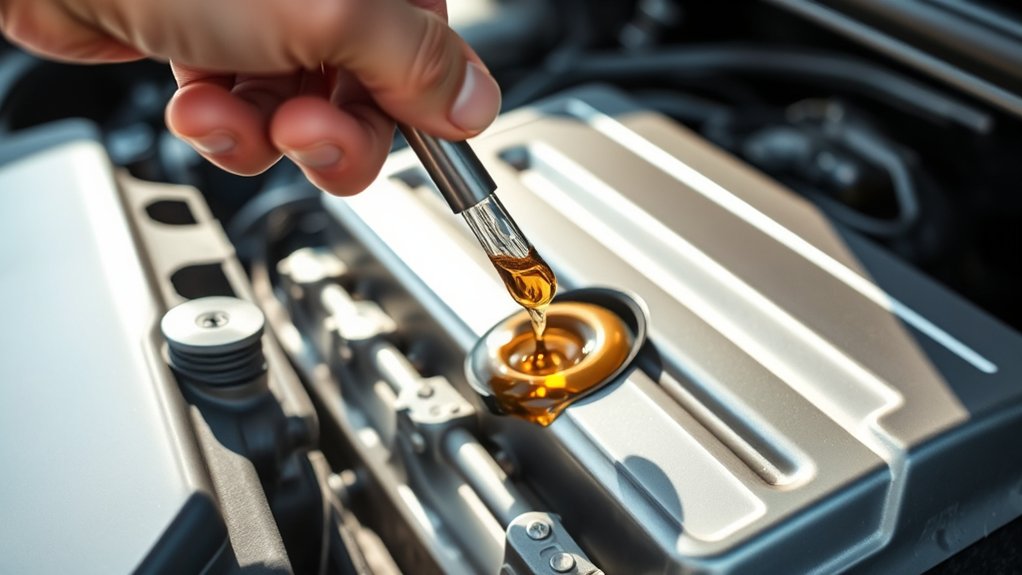
When should you check your engine oil to get the most accurate reading? You should always check it with the engine off and the oil cooled to a safe temperature. Checking oil while the engine runs can give a misleadingly high reading due to oil circulating throughout the system.
Oil temperature directly affects viscosity, so measuring when the engine is hot can cause inaccurate levels. For precise assessment, allow the engine to rest for at least five to ten minutes after shutting off. This pause lets oil settle back into the pan, ensuring a stable reading.
Prioritizing engine safety, avoid opening the dipstick tube immediately after running the engine, as hot oil and components can cause burns or injury. This method guarantees accuracy and protects you during maintenance.
Why Timing Matters When Checking Your Engine Oil
Because engine oil levels fluctuate depending on temperature and circulation, checking your oil at the right time assures you get an accurate measurement. Oil temperature directly affects its viscosity and volume, which in turn impacts the reading on the dipstick.
If you check your oil when it’s too hot or cold, you risk misjudging the level, potentially leading to insufficient lubrication. This can accelerate engine wear and reduce performance.
To optimize accuracy, consider these factors:
- Check oil after the engine has been off for several minutes.
- Allow oil to settle back into the oil pan.
- Avoid measuring immediately after driving or prolonged idling.
- Understand that oil expands with heat.
- Recognize how oil temperature affects viscosity and circulation.
Timing your check protects your engine’s health and guarantees precise monitoring.
What Happens If You Check Oil When Hot?
If you check your oil while the engine is hot, you’ll likely get an inaccurate reading due to the oil’s expanded volume and reduced viscosity. When the engine runs, heat causes the oil to expand, increasing its volume in the sump.
This oil expansion can lead you to believe the oil level is higher than it actually is. Additionally, the hot engine causes the oil to thin out, making it flow more freely on the dipstick and potentially skewing the level measurement.
Because of these factors, the oil level you see isn’t a true reflection of the amount of oil present when the engine is cool. Understanding this helps you avoid misjudging your engine’s lubrication status and guarantees accurate maintenance decisions.
How to Check Your Oil Level Properly
You’ll want to check your oil when the engine is at the right temperature to get an accurate reading. Start by removing and wiping the dipstick, then reinsert it fully before pulling it out again to check the level.
The ideal oil level should fall between the marked minimum and maximum indicators on the dipstick.
Engine Temperature Importance
Although checking your oil level might seem straightforward, ensuring the engine is at the correct temperature is essential for an accurate reading. Oil expands as it warms, affecting volume measurements.
If you check oil when the engine is cold or just after shutting it off, the reading may not reflect true levels, potentially masking issues that contribute to engine wear. Temperature effects impact oil viscosity and distribution, influencing lubrication and wear patterns.
To properly account for engine temperature, remember:
- Check oil after the engine has reached normal operating temperature
- Allow the engine to rest briefly to let oil settle
- Avoid checking immediately after a cold start
- Understand that hot oil reads differently than cold oil
- Recognize that inconsistent temperature checks can lead to incorrect maintenance decisions
Dipstick Usage Steps
Three essential steps guarantee an accurate oil level reading when using the dipstick: fully removing the dipstick, wiping it clean, and reinserting it completely before the final check. First, pull the dipstick out fully to avoid partial readings influenced by residual oil.
Next, use a clean, lint-free cloth to wipe off all oil, making certain no old oil skews your measurement. Then, insert the dipstick back into its tube until it seats fully; partial insertion leads to incorrect oil level readings.
Proper dipstick maintenance, including regular cleaning and inspecting for damage, guarantees reliable results. Remember, oil viscosity affects how oil clings to the dipstick; thicker oil may require extra wiping to get a clear reading.
Following these steps makes sure you accurately assess your engine’s oil level.
Ideal Oil Level
After confirming the dipstick is clean and fully reinserted, the next step is to determine the best oil level. You want the oil film to sit between the minimum and maximum marks on the dipstick. Maintaining this range guarantees proper lubrication without risking overfilling, which can affect oil viscosity and pressure.
Remember, oil additives enhance performance but don’t compensate for incorrect oil levels. Check oil when the engine is off and cooled, as temperature affects oil expansion and viscosity, potentially skewing readings.
- Always use oil with manufacturer-recommended viscosity.
- Verify oil additives match your engine’s specifications.
- Avoid checking immediately after driving to prevent inaccurate readings.
- Maintain oil level within prescribed limits for peak engine health.
- Adjust oil level only if below minimum mark to prevent damage.
Common Mistakes When Checking Your Oil
When checking your oil, timing is essential to get an accurate reading, so avoid measuring immediately after shutting off the engine.
You also need to interpret the dipstick markings correctly to prevent misjudging your oil level. Additionally, overlooking the engine’s operating condition can lead to incorrect assessments and potential damage.
Checking Oil Level Timing
Although it might seem straightforward, checking your engine oil level at the wrong time can lead to inaccurate readings and misdiagnosis of your vehicle’s condition. Oil temperature directly affects oil viscosity, meaning warm oil flows differently than cold oil, impacting the dipstick measurement.
To guarantee precision, check oil when:
- The engine is off and has cooled for at least 5-10 minutes.
- The vehicle is on level ground to avoid slanted readings.
- You’ve allowed oil to settle back into the pan.
- You avoid measuring immediately after driving when oil is hot and dispersed.
- You consult the owner’s manual for manufacturer-specific timing recommendations.
Reading Dipstick Incorrectly
If you don’t handle the dipstick properly, you can easily misread your engine oil level and condition. Incorrect dipstick angles often cause inaccurate readings, as oil clings unevenly due to its viscosity.
Always pull the dipstick out, wipe it clean, reinsert fully, then remove it straight to get a true oil level. Tilting the dipstick or reading it at an angle distorts the oil film, leading to misinterpretation.
| Mistake | Effect on Reading | Solution |
|---|---|---|
| Not wiping dipstick | Old oil residue skews level | Clean before reinsertion |
| Reading at an angle | Inconsistent oil film display | Hold dipstick vertically |
| Partial insertion | Oil level appears lower | Fully insert dipstick |
| Checking immediately after engine off | Oil not settled, fluctuating level | Wait 5-10 minutes |
| Ignoring oil viscosity | Thick oil may appear higher | Consider temperature |
Ignoring Engine Condition
Neglecting your engine’s operating condition can lead to incorrect oil assessments and potentially mask underlying issues. When you check oil without considering whether the engine is hot, cold, or running, you risk misinterpreting the oil level and quality.
Engine wear and oil degradation vary considerably with operating conditions, affecting oil viscosity and contamination levels. To avoid mistakes, remember:
- Check oil when the engine is off and has cooled to get an accurate level.
- Avoid checking immediately after driving, as oil is circulating and may not settle.
- Recognize that engine wear increases oil contamination, influencing your reading.
- Understand that oil degradation accelerates under high temperatures and load.
- Use consistent conditions for oil checks to monitor trends accurately and detect problems early.
How Often Should You Check Your Car’s Oil Level?
Checking your car’s oil level at least once a month helps guarantee ideal engine performance and longevity. Regular monitoring allows you to detect low oil levels early, preventing potential engine damage.
Although your vehicle’s manual specifies oil change frequency, frequent checks complement scheduled changes by identifying leaks or oil degradation. As an essential engine maintenance tip, always check oil when the engine is off and cool for accurate readings.
Neglecting this routine can lead to overheating, increased friction, and costly repairs. Adopting a monthly oil level check not only extends engine life but also improves fuel efficiency and reduces emissions.
Does Your Vehicle Type Change How You Check Oil?
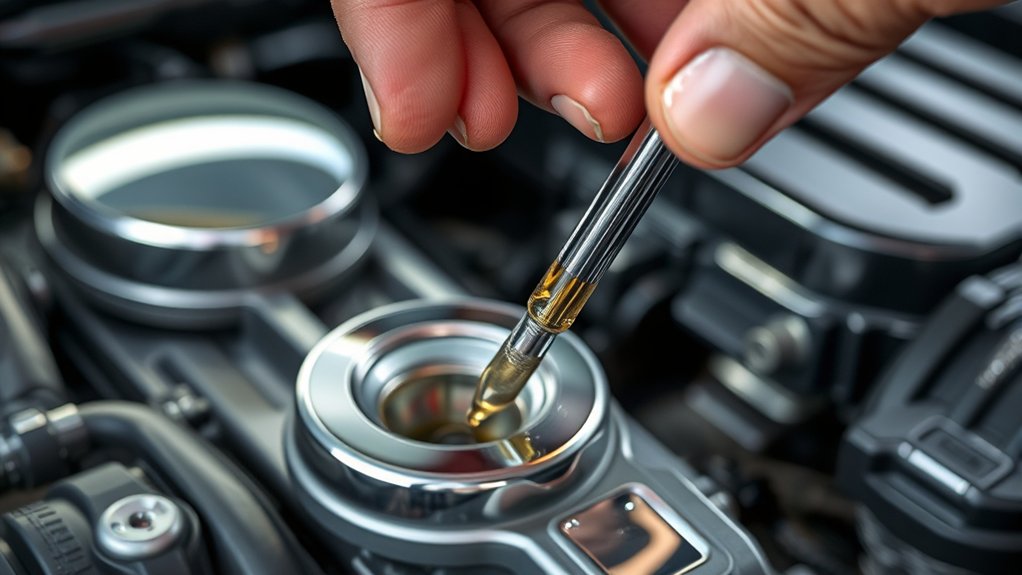
How does your vehicle type influence the method for checking oil? Your vehicle specifications and oil type directly affect how you should check oil levels. For example, some modern cars have electronic oil level sensors eliminating manual checks, while others require traditional dipstick methods.
Diesel engines may need different procedures compared to gasoline engines due to oil viscosity and consumption rates. Additionally, high-performance vehicles might specify checking oil with the engine running or off, depending on design.
Diesel and high-performance engines often require unique oil check methods tailored to their specific design and usage.
Consider these factors when checking oil:
- Consult the owner’s manual for vehicle-specific instructions
- Identify the compatible oil type and viscosity
- Note whether the vehicle uses a dipstick or electronic sensor
- Understand if the oil should be checked warm or cold
- Account for engine configuration (diesel, gasoline, hybrid)
Tailoring your oil check to your vehicle type guarantees accurate readings and peak engine performance.
Frequently Asked Questions
What Type of Oil Is Best for My Engine?
You should choose oil viscosity recommended by your engine’s manufacturer, usually found in the manual.
Look for oil additives enhancing wear protection, detergency, and oxidation stability to guarantee peak engine performance and longevity.
Can Low Oil Levels Cause Engine Damage?
Low oil levels are like a heart skipping beats. Your engine’s oil pressure drops, risking metal-on-metal friction.
You’ll shorten engine longevity if you don’t maintain proper oil, so regularly check and top up to protect essential components.
How Do I Know if My Oil Needs Changing?
You’ll know your oil needs changing when the oil color turns dark and dirty, and the consistency feels gritty or thick.
Fresh oil is amber and smooth, so check regularly to maintain ideal engine performance.
Are Synthetic Oils Better Than Conventional Oils?
Think of synthetic oils as high-tech sports cars, engineered for peak performance. Their synthetic advantages include superior viscosity and oxidation resistance.
Conventional oils break down more quickly, making synthetics better for protecting your engine under stress.
What Tools Do I Need to Check My Oil?
You’ll need the oil dipstick for oil dipstick usage and a clean rag to wipe it. Use oil level indicators on the dipstick to precisely assess your engine’s oil quantity and condition during checks.
Conclusion
Checking your engine oil is like reading the pulse of your car’s health. Always check with the engine off and cooled down, allowing the oil to settle like calm water in a glass. This guarantees an accurate level reading, preventing misjudgments that could lead to engine damage.
Regularly monitoring your oil, tailored to your vehicle type, keeps your engine running smoothly—much like maintaining proper hydration keeps you functioning at your best. Remember, you should not check oil with the engine running to ensure the best results and protect your engine.