Yes, you can run a diesel engine on vegetable oil, but it requires specific modifications to handle its higher viscosity and altered combustion traits.
Using vegetable oil as fuel involves more than just filling the tank; it demands careful adjustments to the engine system.
You’ll need fuel filtration, heating systems to lower viscosity, and possibly adapted fuel pumps and injectors, especially for modern direct injection engines. These changes help ensure smooth flow and proper atomization of the vegetable oil.
While vegetable oil burns cleaner in some respects, it can cause clogging, carbon buildup, and reduced efficiency if not managed properly.
Understanding these factors is key before making the switch. Proper maintenance and monitoring are essential for long-term engine health when using vegetable oil.
Key Takeaways
- Diesel engines can run on vegetable oil but require modifications to handle its higher viscosity and ensure proper combustion.
- Heating systems and rigorous fuel filtration are essential to reduce viscosity and remove impurities in vegetable oil fuel.
- Older indirect injection diesel engines are more compatible with vegetable oil than modern direct injection engines.
- Using vegetable oil may cause increased carbon deposits, fuel line clogging, and require careful maintenance to avoid engine damage.
- Vegetable oil offers environmental benefits with lower emissions but may reduce engine power and increase fuel consumption.
Can Diesel Engines Run on Vegetable Oil? How It Works
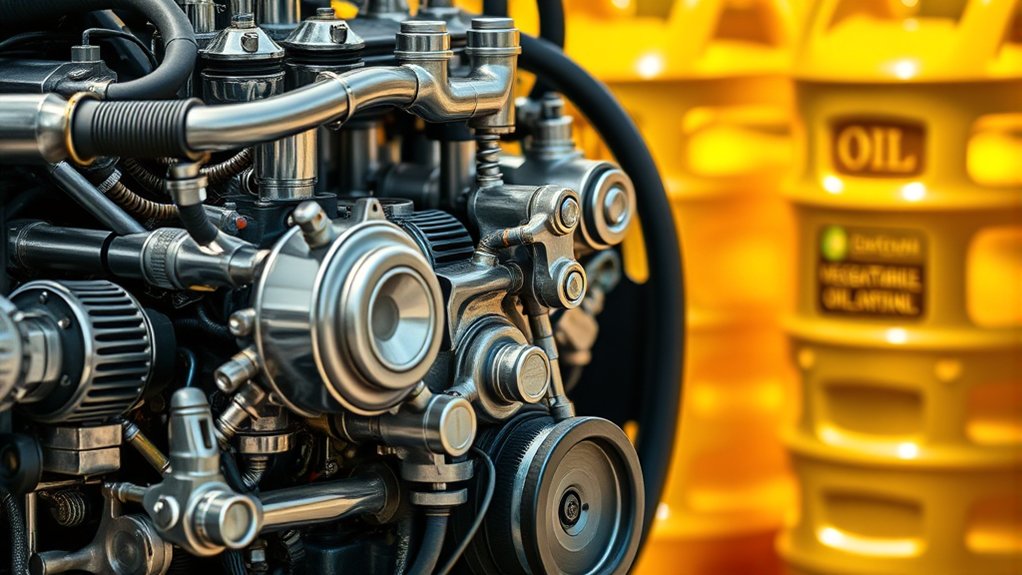
Although diesel engines are designed to run on petroleum-based fuel, they can operate on vegetable oil with certain modifications. Vegetable oil serves as an alternative fuel due to its similar combustion properties to diesel, enabling engines to generate power effectively.
When you use vegetable oil, its higher viscosity compared to diesel affects fuel atomization, impacting combustion efficiency if unadjusted. Despite this, vegetable oil remains a viable eco friendly option because it is renewable and produces fewer emissions, reducing your environmental footprint.
Understanding how vegetable oil functions as an alternative fuel helps you evaluate its suitability for diesel engines. You’ll appreciate that vegetable oil’s chemical structure enables combustion, but adjustments are necessary to address challenges like fuel flow and injector wear, which you’ll explore in the next section.
What Modifications Are Needed to Run Diesel on Vegetable Oil
Since vegetable oil has a higher viscosity and different combustion characteristics than conventional diesel, you’ll need to modify your engine’s fuel system to guarantee proper operation. First, establish rigorous fuel filtration to remove particulates and prevent injector clogging.
Next, integrate a heating system, typically in the fuel lines and tank, to reduce the oil’s viscosity, ensuring it flows and atomizes correctly under combustion conditions. Assess your engine compatibility, as older indirect injection engines generally tolerate vegetable oil better than modern direct injection systems.
Additionally, adapt fuel pumps and injectors to handle increased viscosity and altered lubrication properties. Monitoring viscosity considerations is critical, since untreated vegetable oil can cause incomplete combustion.
These modifications collectively maintain engine performance and longevity while adapting to vegetable oil’s unique fuel properties.
What Problems Can Happen When Using Vegetable Oil?
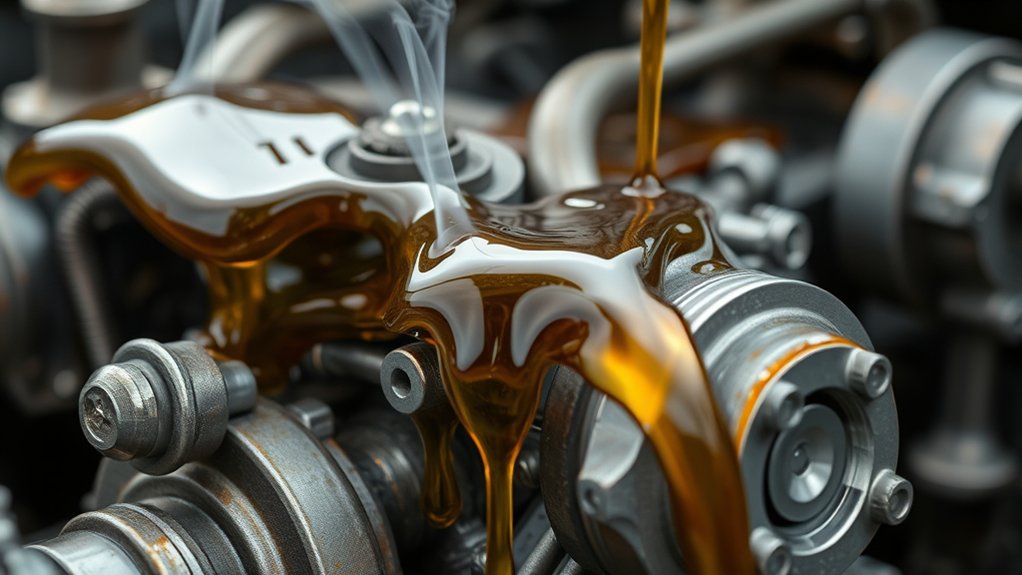
When you run a diesel engine on vegetable oil without proper preparation, several issues can arise that compromise performance and durability. Vegetable oil’s higher viscosity disrupts fuel consistency, causing incomplete atomization in the injectors. This leads to poor combustion and increased carbon deposits.
Over time, these deposits accelerate engine wear, particularly on piston rings and valves. The thicker fuel can also clog fuel filters and lines, restricting flow and causing fuel starvation. Additionally, vegetable oil’s tendency to polymerize at lower temperatures results in fuel gelling, which can damage the fuel pump and injectors if not adequately managed.
Without modifications addressing these factors, you risk reduced engine efficiency, higher maintenance costs, and potential long-term damage, making reliable operation on vegetable oil challenging.
Comparing Performance and Emissions: Vegetable Oil vs Diesel
Understanding the operational challenges of using vegetable oil in diesel engines naturally leads to evaluating how the fuel compares to conventional diesel regarding performance and emissions. When you conduct an efficiency comparison, vegetable oil generally produces slightly lower thermal efficiency due to its higher viscosity and different combustion properties.
This can reduce power output and increase fuel consumption marginally. Emission-wise, vegetable oil combustion often results in lower particulate matter and carbon monoxide but can increase nitrogen oxides (NOx) emissions. You must also factor in fuel availability; vegetable oil is less readily available and inconsistent in quality compared to standard diesel, impacting overall engine performance and emissions control.
Consequently, while vegetable oil offers some environmental benefits, its efficiency and emission profiles differ markedly from diesel, requiring careful consideration for practical application.
Is Vegetable Oil Practical for Diesel Drivers?
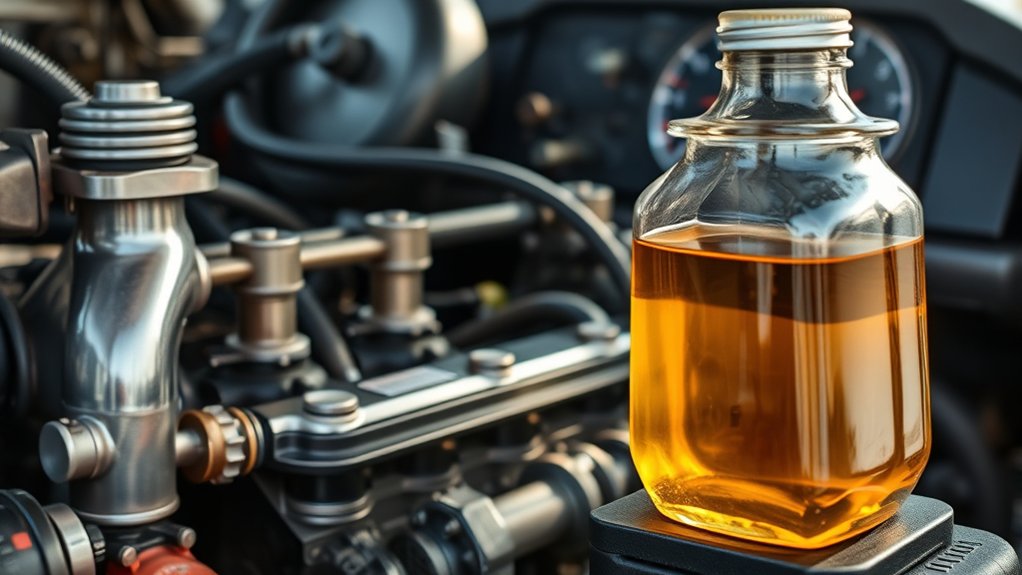
Although vegetable oil offers environmental advantages, its practicality for diesel drivers depends on several critical factors. You must consider engine modifications, fuel quality, and availability before switching.
Vegetable oil’s higher viscosity requires preheating systems or engine adjustments to prevent injector coking and fuel filter clogging. While you can realize cost savings by using waste vegetable oil, upfront expenses for conversion kits and ongoing maintenance may offset these savings.
Higher viscosity vegetable oil needs preheating and engine tweaks to avoid damage and maintenance costs may offset savings.
Additionally, sourcing consistent, high-quality vegetable oil can be challenging, affecting reliability. However, the environmental benefits, including lower particulate emissions and reduced carbon footprint, are significant if you manage these technical hurdles effectively.
Ultimately, if you prioritize sustainability and are willing to invest in proper adaptation and maintenance, vegetable oil can be a practical alternative fuel for your diesel engine.
Frequently Asked Questions
Where Can I Legally Source Vegetable Oil for Fuel?
You can legally source vegetable oil for fuel from certified suppliers or restaurants with proper permits.
Make certain you comply with local legal requirements, including fuel quality standards and tax regulations, when evaluating your sourcing options.
How Do I Store Vegetable Oil to Prevent Spoilage?
Why risk spoilage? You’ll store vegetable oil in airtight, food-grade storage containers, using oil filtration techniques to remove impurities.
Keep it cool, dark, and sealed tightly to prevent oxidation and microbial growth, ensuring fuel stability.
What Is the Cost Comparison of Vegetable Oil and Diesel Fuel?
You’ll find vegetable oil generally offers better cost efficiency than diesel fuel, but market trends fluctuate. Analyze regional prices and demand shifts carefully to determine if switching fuels maximizes your operational budget and sustainability goals effectively.
Can Vegetable Oil Damage Diesel Engine Warranties?
Yes, using vegetable oil without proper engine modifications can void your diesel engine warranty. Manufacturers typically exclude warranty coverage due to warranty implications linked to fuel type changes and potential damage from unapproved fuel usage.
Are There Any Environmental Regulations for Using Vegetable Oil as Fuel?
Wondering if regulations govern vegetable oil fuel use? You’ll find that environmental laws vary, but many emphasize emission reductions and sustainability benefits.
You must comply with local standards to guarantee safe, legal, and eco-friendly operation.
Conclusion
So, you want to swap diesel for vegetable oil and save the planet while cruising? Sure, if you enjoy tinkering endlessly, risking engine clogs, and debating if your ride smells like a salad bar. Modifications aren’t just suggestions—they’re mandatory.
Performance might dip, emissions could shift unpredictably, and practicality? Well, let’s just say your fuel gauge might double as a science experiment.
If you’re ready for a mechanical salad, go ahead—just don’t say we didn’t warn you. Remember, running a diesel engine on vegetable oil requires careful adjustments and maintenance to keep things running smoothly.