You can tell if your engine oil is low by parking on a level surface, turning off the engine, and checking the oil dipstick—make sure the oil is between the minimum and maximum marks.
Checking engine oil levels regularly helps prevent damage and ensures your vehicle runs smoothly.
Also, watch for signs like increased engine noise, dashboard warning lights, or overheating.
If you notice oil smells inside the cabin or see blue smoke from the exhaust, it’s a red flag indicating low oil or other issues.
Learn how to maintain oil levels properly and when to get professional help to keep your engine in good condition.
Regular checks and timely oil changes are key to engine health.
Key Takeaways
- Park on a level surface, turn off the engine, and check the oil level using the dipstick within the safe range.
- Look for dashboard warning lights indicating low oil pressure.
- Notice increased engine noise, such as knocking or ticking, which may signal low oil.
- Watch for blue or gray exhaust smoke or an oil smell inside the cabin.
- Monitor engine temperature for overheating, often caused by insufficient oil.
How to Check Your Engine Oil Level
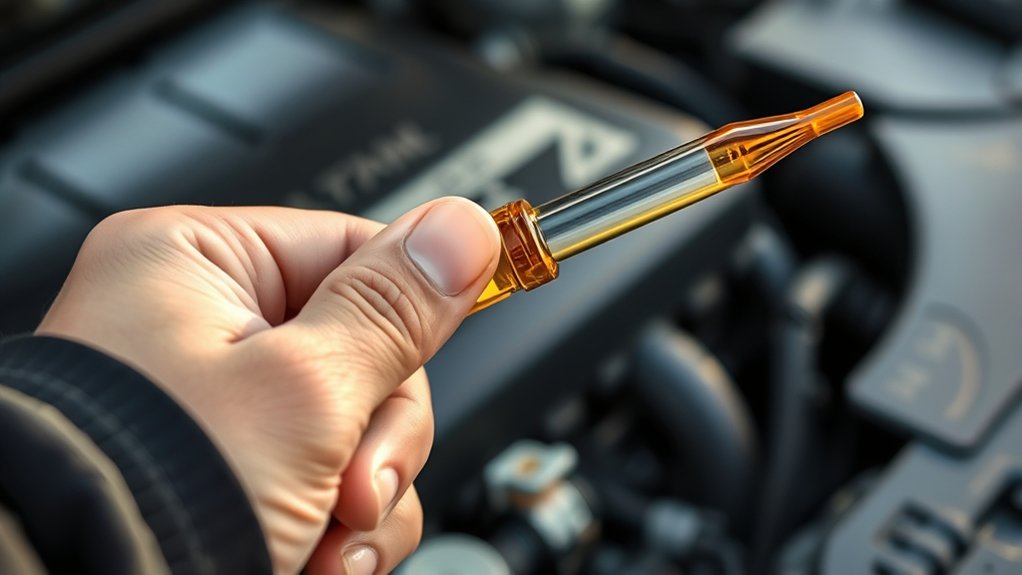
To check your engine oil level accurately, start by parking your vehicle on a level surface and turning off the engine. Wait a few minutes to allow the oil to settle.
Locate the oil dipstick, which typically has a brightly colored handle. Pull it out, wipe it clean with a lint-free cloth, then reinsert it fully. Remove it again and examine the oil level in relation to the marked indicators on the dipstick. These oil dipstick basics help you determine if your oil is within the safe range.
If the oil level is below the minimum mark, it’s time to address it promptly. Regularly monitoring your oil level complements the recommended oil change frequency, ensuring peak engine performance and preventing potential damage caused by low oil.
How to Top Up Engine Oil Safely
To top up your engine oil safely, you need to select the correct oil grade specified for your vehicle. Use a clean funnel to avoid contamination and pour the oil slowly to prevent overfilling.
Always check the dipstick after adding oil to guarantee the level stays within the recommended range.
Selecting The Right Oil
Although selecting the right engine oil might seem straightforward, choosing the correct type and grade is essential for maintaining ideal engine performance and longevity. To guarantee you pick the best oil:
- Consult your vehicle’s manual for the recommended viscosity ratings, such as 5W-30 or 10W-40, which indicate flow characteristics under different temperatures.
- Opt for synthetic oils when possible, as they provide superior protection, better thermal stability, and longer intervals between changes.
- Verify oil specifications, like API or ACEA certifications, to confirm compatibility with your engine’s design and emission systems.
- Consider the driving conditions you regularly encounter, since extreme temperatures or heavy loads may require oils with specific additive packages.
Following these steps helps you maintain ideal lubrication and engine efficiency.
Proper Filling Techniques
Selecting the right engine oil sets the foundation, but proper filling techniques guarantee your engine receives the correct amount without contamination or overfilling. Begin by ensuring the engine is off and cooled to prevent inaccurate readings.
Use the recommended filling method, typically pouring oil slowly through the filler neck with a clean funnel to avoid spills or debris entering the system. Always check the oil viscosity specified by your vehicle’s manufacturer; using incorrect viscosity can impair lubrication.
After adding a small amount, wait a few minutes, then recheck the dipstick to monitor oil level accurately. Avoid topping off beyond the maximum mark, as overfilling can cause increased pressure and engine damage.
Clean the dipstick before and after checking to maintain precision and prevent contamination.
Common Signs Your Engine Oil Is Running Low
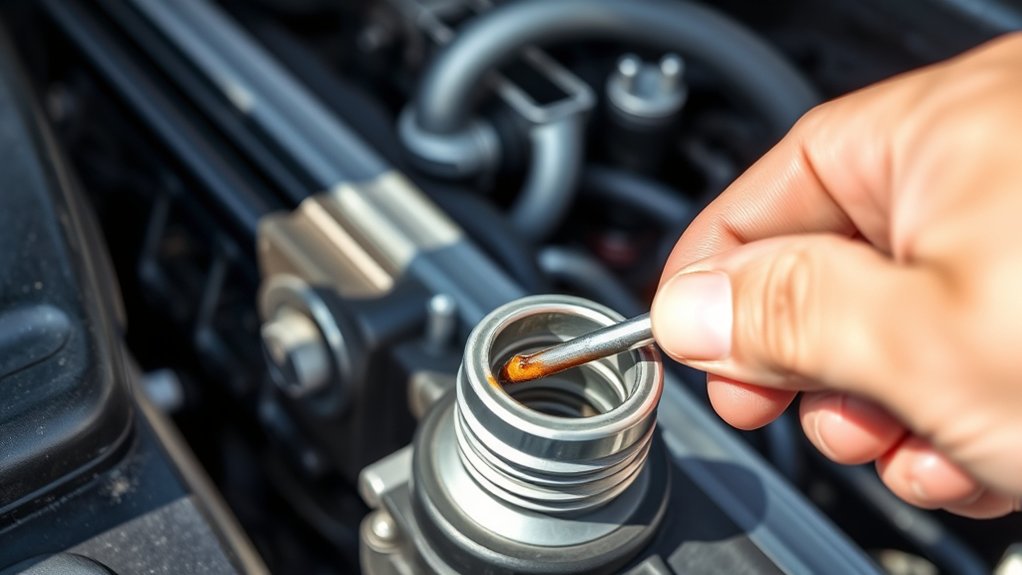
You’ll first notice changes in engine noise, such as increased knocking or ticking, when oil levels drop. Your vehicle’s oil warning light will also illuminate to alert you of low oil pressure.
Regularly checking the oil level with the dipstick confirms whether you need to add more oil.
Engine Noise Changes
When engine oil levels drop, you’ll often notice distinct changes in engine noise that signal insufficient lubrication. These sounds indicate compromised engine performance and deteriorating oil quality, both critical to your engine’s health.
Pay attention to:
- Increased Ticking or Knocking: Low oil causes metal components to rub, producing louder ticking or knocking.
- Grinding Noises: Lack of lubrication leads to metal-on-metal contact, generating harsh grinding sounds.
- Rattling: Worn engine parts vibrate excessively without adequate oil cushioning.
- Hissing or Sizzling: Overheated oil due to low volume may emit hissing, signaling oil breakdown.
Recognizing these noise changes early helps you prevent severe engine damage by addressing oil levels promptly.
Warning Light Indicators
One of the quickest ways to detect low engine oil is through dashboard warning lights specifically designed for this purpose. Typically, these warning light colors range from yellow to red, with red indicating a more critical issue.
The most common dashboard symbol for low oil resembles an oil can or a dripping droplet. When this symbol illuminates, it signals that your engine oil pressure is below the required threshold or the oil level is critically low. Ignoring these dashboard symbols can lead to severe engine damage.
Modern vehicles may also display text warnings alongside these symbols. If you see any of these warning light colors or symbols, you should promptly address the oil level or pressure issue to maintain engine performance and prevent costly repairs.
Oil Level Check
Several key signs indicate that your engine oil level is running low before warning lights appear. Regular oil dipstick usage is essential for early detection. Here’s what to watch for when performing your oil level check:
- Engine Noise: Increased ticking or knocking sounds often mean oil isn’t lubricating properly.
- Overheating: Insufficient oil causes higher engine temperatures due to friction.
- Exhaust Smoke: Blue or gray smoke may signal burning oil.
- Oil Smell Inside Cabin: A noticeable oil odor can indicate leaks or low levels.
To maintain peak engine health, adhere to a consistent checking frequency, ideally every 1,000 miles or monthly. Use the oil dipstick correctly: pull it out, wipe clean, reinsert fully, then pull again to check the level between the marked indicators. This precise method guarantees accurate readings and prevents engine damage.
What Happens If You Ignore Low Engine Oil?
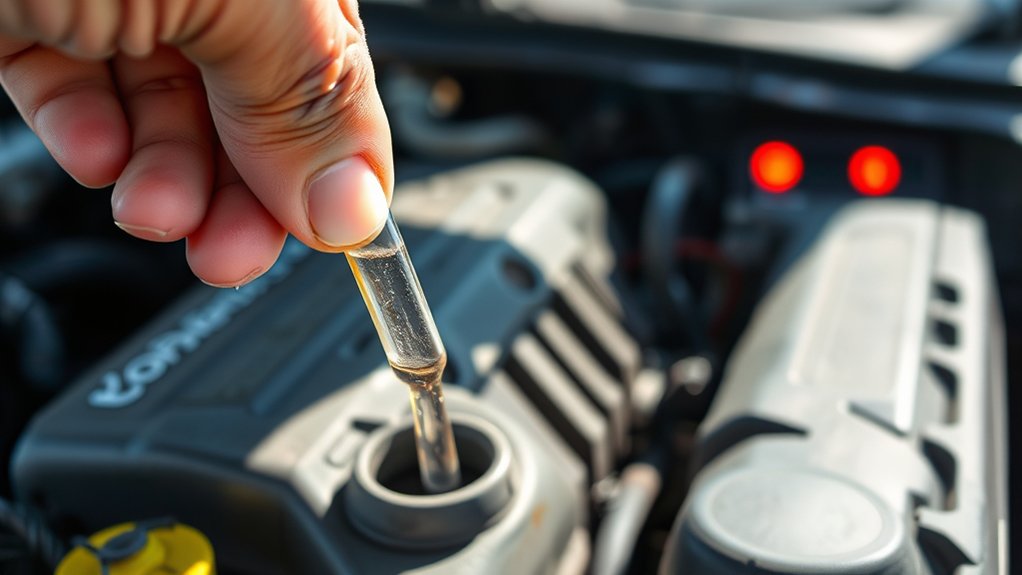
If you ignore low engine oil, your vehicle’s engine will suffer from inadequate lubrication, leading to increased friction and heat buildup. This accelerates engine wear, causing metal components to grind against each other, which can result in severe damage or complete engine failure.
Low oil levels also reduce the oil’s ability to carry away heat and contaminants, increasing the risk of oil contamination. Contaminated oil loses its protective properties, further exacerbating wear and corrosion inside the engine.
Low oil levels hinder heat and contaminant removal, leading to oil contamination and increased engine wear.
Over time, neglecting low oil can cause piston seizure, warped cylinders, and damage to bearings and camshafts. It’s essential to address low oil promptly to maintain ideal engine performance and longevity.
Ignoring these signs compromises your vehicle’s reliability and can lead to costly repairs or total engine replacement.
How Often to Check and Change Engine Oil
Anyone who drives regularly should check their engine oil at least once a month and before long trips to guarantee peak engine function. Adhering to your vehicle’s maintenance schedule is critical for ideal oil change frequency.
Here’s how often to check and change your engine oil:
- Check oil levels monthly and before extended drives.
- Follow the manufacturer’s recommended oil change interval, typically every 5,000 to 7,500 miles.
- Adjust frequency based on driving conditions; severe conditions require more frequent changes.
- Use synthetic oil if specified, as it often extends oil change intervals.
Everyday Tips to Keep Your Engine Oil at Safe Levels
Maintaining consistent engine oil levels requires routine monitoring and proactive measures. First, you should check the oil level at least once a week using the dipstick when the engine is cool and on a level surface. Regular inspections help you identify leaks or oil consumption issues early.
Always top up with the recommended oil grade to guarantee proper viscosity and performance. Avoid overfilling, as it can cause foaming and reduce lubrication efficiency.
Keep an eye on warning lights and unusual engine noises, which can indicate low oil pressure. Effective oil maintenance directly contributes to engine longevity by preventing wear and overheating.
Picking the Right Engine Oil for Your Car
Regularly checking and topping up your engine oil guarantees proper levels, but choosing the right oil type plays an equally important role in engine health. To pick the appropriate engine oil, follow these steps:
- Consult your vehicle’s manual for recommended viscosity ratings, ensuring ideal flow under various temperatures.
- Consider synthetic options, which offer superior resistance to breakdown, better lubrication, and longer intervals between changes.
- Match the oil grade with your driving conditions; heavier grades suit high temperatures, while lighter ones perform better in cold starts.
- Verify the oil meets industry certifications like API or ACEA to confirm quality and compatibility.
When to See a Mechanic for Engine Oil Problems
If you notice persistent oil leaks, unusual engine noises, or warning lights related to oil pressure, you should promptly consult a mechanic. These symptoms indicate potential engine oil problems that require professional diagnosis.
Persistent oil leaks or warning lights signal serious engine issues—seek mechanic advice promptly.
A mechanic consultation is vital if you observe oil change signs like dark, gritty oil or if your oil level drops rapidly despite topping up. Ignoring these signs can lead to engine damage due to insufficient lubrication.
During the consultation, the mechanic will inspect for leaks, check the oil filter, and assess oil pump function. Addressing these issues early prevents costly repairs and maintains engine performance.
Always adhere to recommended oil change intervals and monitor oil quality to minimize the risk of engine oil problems requiring urgent mechanic intervention.
Frequently Asked Questions
Can Using the Wrong Oil Damage My Engine?
Yes, using the wrong oil viscosity or incompatible oil additives can damage your engine by reducing lubrication efficiency. This can cause increased wear, overheating, and sludge buildup.
Always use manufacturer-recommended oil for ideal engine protection and performance.
How Does Engine Oil Affect Fuel Efficiency?
Think of engine oil as the bloodstream that keeps your engine’s parts flowing smoothly. When oil viscosity’s right, it reduces friction, optimizing fuel combustion and boosting your fuel efficiency by ensuring energy isn’t wasted overcoming resistance.
What Are Synthetic Oils, and Are They Better?
Synthetic oils are engineered lubricants offering superior synthetic benefits like enhanced performance and longer oil lifespan. You’ll find they resist breakdown better than conventional oils, improving engine protection and efficiency under extreme conditions.
Can Engine Oil Leak Cause Environmental Harm?
Yes, an engine oil leak can cause environmental harm by contaminating soil and water. You must follow environmental regulations and practice oil spill prevention to minimize damage.
Guarantee proper disposal to protect ecosystems effectively.
Is It Safe to Drive Immediately After Topping up Oil?
You can drive immediately after topping up oil, but guarantee the oil viscosity matches your engine’s specifications. Proper oil levels maintain engine performance and prevent damage, so verify the correct grade before driving to avoid issues.
Conclusion
Regularly checking your engine oil is essential—did you know that over 60% of engine failures result from low or dirty oil? By monitoring your oil level and topping it up promptly, you’ll prevent costly damage and maintain peak engine performance.
Stick to recommended intervals for oil changes, use the right oil type, and don’t ignore warning signs. Taking these steps guarantees your engine runs smoothly and lasts longer, saving you time and money.
Knowing how to know if engine oil is low is a crucial part of vehicle maintenance that helps protect your engine and ensures reliable performance.