Yes, spilling oil on your engine is harmful and can cause several issues. It changes the oil’s viscosity, which reduces heat dissipation and may lead to overheating or increased wear.
Oil also attracts dirt and debris, which can clog cooling systems and damage important parts like piston rings and bearings.
Additionally, spilled oil raises the risk of fire if it ignites on hot engine surfaces.
Immediate cleanup with proper tools is essential to prevent damage and maintain your engine’s performance.
Learn how to handle spills safely and know when to seek professional help to protect your engine effectively.
Key Takeaways
- Spilled oil can alter viscosity, causing engine overheating and reduced cooling efficiency.
- Oil residue attracts dirt and debris, accelerating wear and clogging cooling passages.
- Contaminants from spills increase abrasion on critical engine parts, leading to premature damage.
- Oil spills pose fire hazards by igniting on hot engine surfaces if not cleaned promptly.
- Immediate cleanup prevents buildup, maintains engine performance, and reduces maintenance costs.
What Happens When Oil Spills on Your Engine
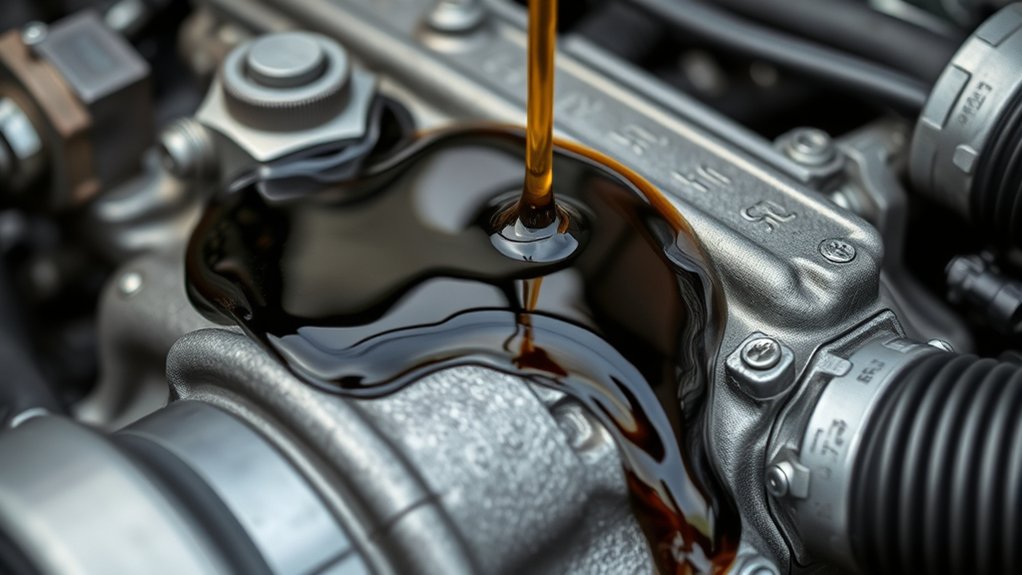
When oil spills on your engine, it can create several immediate and long-term issues that affect performance and safety. Oil viscosity plays a key role here; spilled oil that’s too thick or thin can alter how the engine dissipates heat, potentially causing components to overheat or degrade prematurely.
If you don’t perform a thorough spill cleanup, residual oil can seep into electrical connectors or belts, leading to malfunctions or slippage. You need to act quickly: use an appropriate degreaser and absorbent materials to remove the oil, preventing buildup that compromises engine efficiency.
Proper spill cleanup not only maintains ideal oil viscosity within the engine but also reduces the risk of fire hazards and mechanical wear, ensuring your engine runs smoothly and safely.
How Oil Spills Attract Dirt and Damage Engine Parts
When oil spills on your engine, the residue acts like a magnet for debris and dirt. This buildup accelerates wear on critical components, reducing their lifespan.
Additionally, accumulated grime can impair engine cooling by blocking airflow and heat dissipation.
Oil Residue Attracts Debris
Because oil residue creates a sticky surface on engine components, it easily attracts dirt, dust, and other debris. When oil absorbs contaminants from the environment through oil absorption, these particles adhere firmly to the engine parts.
This debris accumulation can lead to clogged vents, blocked cooling fins, and impaired seals. You want to avoid leaving oil spills unattended because the buildup of foreign material can interfere with the engine’s operation and maintenance.
Regularly cleaning oil residues prevents excessive debris accumulation and maintains peak engine function. In practical terms, addressing oil spills promptly minimizes the risk of dirt-laden deposits forming on sensitive components, ensuring your engine stays cleaner and operates more efficiently over time.
Dirt Causes Engine Wear
The debris attracted by oil spills doesn’t just accumulate; it accelerates engine wear by abrading and contaminating critical components. When dirt adheres to oily surfaces, it can bypass oil filtration systems, causing premature wear on moving parts.
You’ll notice reduced engine efficiency and increased maintenance costs if this contamination isn’t addressed promptly. Effective engine maintenance includes cleaning spills immediately to prevent dirt buildup and ensuring oil filtration systems operate efficiently.
| Contamination Source | Engine Part Affected | Consequence |
|---|---|---|
| Oil Spill Residue | Piston Rings | Abrasion & seal damage |
| Dirt Particles | Bearings | Increased friction |
| Contaminated Oil | Valves | Impaired sealing |
| Residual Debris | Cylinder Walls | Scoring & wear |
| Excess Dirt | Oil Filtration Unit | Reduced filtration efficacy |
Impact On Engine Cooling
Although oil spills may seem minor, they greatly impair engine cooling by attracting dirt and debris that clog cooling passages and coat heat-dissipating surfaces. This buildup reduces the effectiveness of your engine’s cooling systems, directly impacting engine efficiency.
When cooling pathways are obstructed, heat can’t dissipate properly, causing engine components to overheat and wear faster. You need to address oil spills promptly to maintain maximum cooling performance.
Here’s how oil spills affect engine cooling:
- Dirt accumulation on radiators and cooling fins reduces heat transfer.
- Blocked coolant channels decrease fluid flow, raising operating temperatures.
- Oil film insulates engine parts, preventing effective heat dissipation.
- Overheated components lead to reduced engine efficiency and potential failure.
Preventing and cleaning oil spills preserves your engine’s cooling systems and efficiency.
When Spilled Oil on Your Engine Causes Fire Risk
When oil spills onto your engine, it can ignite if it comes into contact with hot surfaces like the exhaust manifold or turbocharger. This creates significant fire hazards because engine components often exceed oil’s flash point, triggering oil ignition.
You need to understand that even small amounts of spilled oil can vaporize rapidly under these conditions, increasing fire risk. The risk escalates if oil accumulates near heat sources or electrical wiring, where sparks might occur.
Since engines operate at high temperatures, spilled oil acts as fuel for potential fires, threatening your vehicle’s safety and functionality. Being aware of these fire hazards helps you recognize the urgency of addressing oil spills promptly to prevent ignition and avoid costly damage or injury.
How to Safely Clean Oil Spills on Your Engine
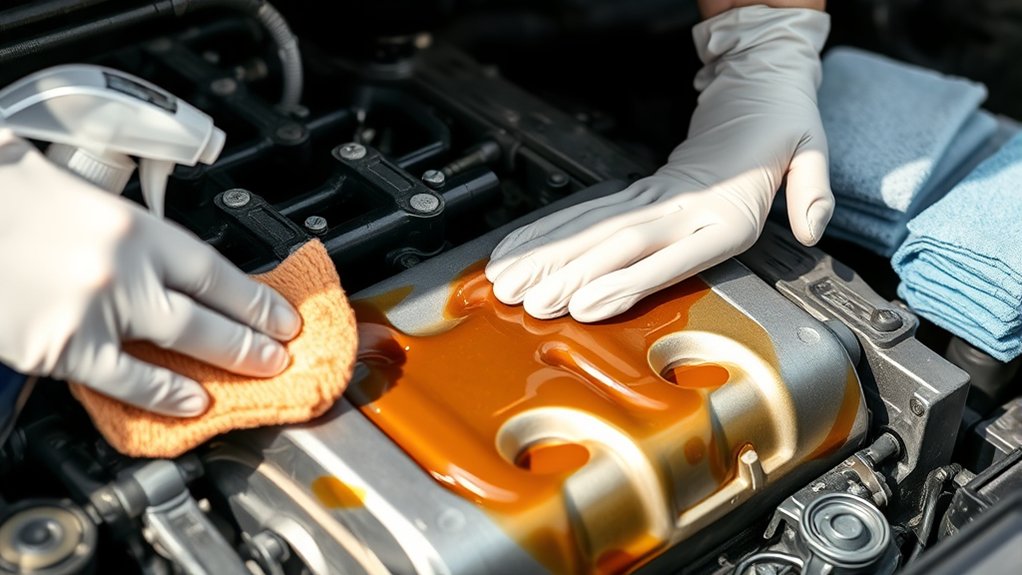
You should start by containing the spill immediately to prevent it from spreading or causing damage.
Next, use engine-safe cleaners designed to break down oil without harming components or seals.
Finally, take steps to prevent future spills by checking seals and tightening fittings regularly.
Immediate Spill Containment
Since spilled oil can damage engine components and create fire hazards, acting swiftly to contain the spill is essential. Your immediate spill response should focus on minimizing spread and exposure to heat sources using effective containment methods. Follow these steps:
- Turn off the engine to prevent ignition and additional oil circulation.
- Use absorbent materials like shop towels or commercial pads to soak up excess oil without rubbing it deeper.
- Isolate the spill area with barriers such as rags or absorbent socks to prevent runoff to sensitive parts.
- Ventilate the engine compartment to reduce vapor accumulation while avoiding open flames.
Implementing these containment methods promptly reduces damage and prepares the engine for safe cleaning and inspection.
Using Engine-Safe Cleaners
Although oil spills on your engine require prompt containment, proper cleaning with engine-safe cleaners is vital to prevent corrosion and maintain performance. Start by selecting engine-safe solutions specifically formulated to break down oil without damaging sensitive components.
Apply the cleaner evenly to the affected areas, allowing it to penetrate and loosen the oil residue. Use soft brushes or microfiber cloths to gently agitate the surface, avoiding abrasive tools that can cause damage.
Rinse thoroughly with low-pressure water or wipe away residues with clean rags to guarantee no cleaner remains. Follow recommended drying techniques to prevent moisture buildup.
Preventing Future Oil Spills
Proper cleaning with engine-safe products lays the groundwork for minimizing oil spills in the future. To enhance spill prevention, adopt consistent maintenance practices and handle oil changes carefully.
Follow these steps to keep your engine clean and reduce spill risks:
- Inspect oil seals and gaskets regularly to catch leaks early.
- Use a funnel or spout during oil refills to prevent drips.
- Wipe any excess oil immediately with a lint-free cloth or absorbent pad.
- Schedule routine engine maintenance to replace worn or damaged components promptly.
Best Tools to Clean Oil Spilled on Your Engine
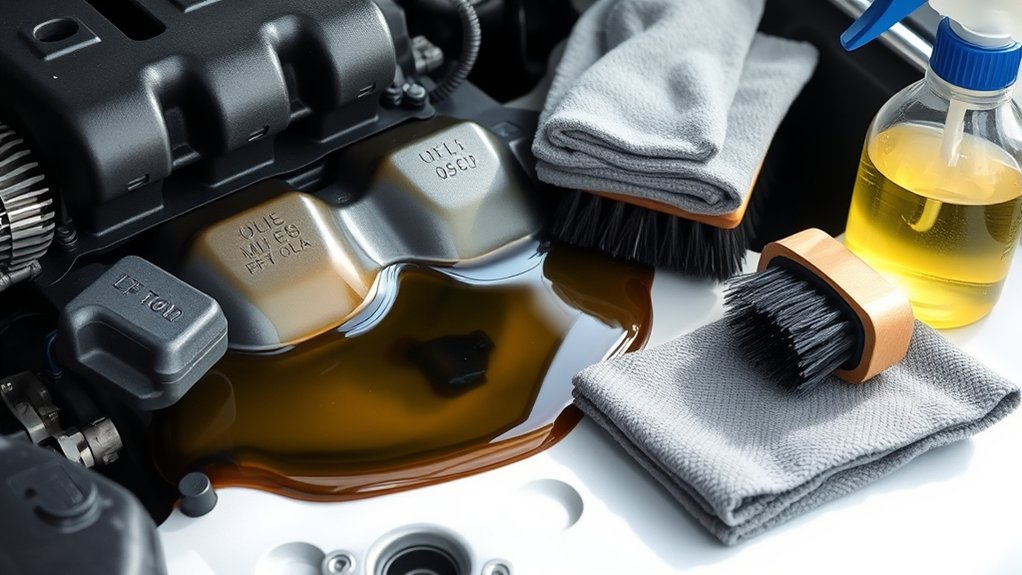
Three essential tools can make cleaning spilled oil on your engine more efficient and thorough. First, oil absorbents like pads or granules quickly soak up excess oil, preventing it from spreading and causing damage.
Second, a stiff-bristle brush helps you apply cleaning techniques effectively by scrubbing away residue after absorbents have done their job. Third, a degreaser formulated specifically for automotive engines breaks down remaining oil deposits without harming components.
Use oil absorbents immediately to minimize contamination. Afterward, apply degreaser, allowing it to penetrate before scrubbing with the brush. Finally, rinse with minimal water or wipe with a damp cloth to avoid electrical issues. These tools, combined with precise cleaning techniques, guarantee you remove oil safely and maintain engine integrity.
Tips to Prevent Oil Spills During Maintenance
When you perform maintenance on your engine, taking deliberate steps to control oil flow can greatly reduce spills. Proper oil maintenance is essential not only for engine health but also for spill prevention.
Follow these practical tips to keep your workspace clean and efficient:
- Use a drain pan with sufficient capacity to catch all draining oil without overflow.
- Loosen oil drain plugs slowly to control the initial surge and prevent splashing.
- Keep absorbent mats or rags handy to quickly wipe any drips or minor spills.
- Wear gloves and use funnel tools to guarantee precise oil pouring and reduce drips.
Implementing these techniques improves safety, minimizes cleanup, and protects engine components during oil maintenance.
When to Call a Mechanic After Spilling Oil
How do you know if an oil spill on your engine requires professional attention? Start by evaluating the spill severity. Small drips or minor spills that don’t spread extensively may not need immediate mechanic evaluation if cleaned promptly.
However, if the oil covers critical components like belts, electrical wiring, or the exhaust manifold, calling a mechanic is essential. The mechanic can assess potential damage, such as degraded rubber parts or fire hazards, which aren’t always visible.
Also, if you notice an unusual engine smell, smoke, or performance issues after a spill, don’t wait to get a professional evaluation. In cases where the spill results from a leak or faulty seal, a mechanic’s intervention is necessary to prevent further damage and guarantee your engine’s safety and reliability.
Keeping Your Engine Safe After an Oil Spill
After determining whether professional help is necessary, your next step is to secure your engine’s condition to prevent further issues. Proper engine maintenance after an oil spill is essential to avoid damage and guarantee spill prevention in the future.
Securing your engine after an oil spill is crucial to prevent damage and future leaks.
Follow these practical steps:
- Clean the spill immediately using absorbent materials to prevent oil from seeping into components.
- Inspect the engine for leaks or damaged seals that could worsen the spill.
- Check fluid levels and top off or replace oil if contamination is suspected.
- Monitor engine performance closely for unusual noises or overheating, indicating internal damage.
Frequently Asked Questions
Can Spilled Oil Affect My Car’s Fuel Efficiency?
Yes, spilled oil can indirectly reduce your fuel economy by causing oil contamination, which may impair engine components. You should clean spills promptly to prevent buildup that affects engine efficiency and fuel consumption.
Does Engine Oil Type Influence Spill Severity?
Yes, oil viscosity influences spill severity; thicker oils spread less but are harder to clean, while thinner oils spread quickly, complicating spill cleanup.
You should match oil viscosity to your engine and perform prompt cleanup to minimize damage.
How Long Can Oil Residue Remain Harmful on an Engine?
Oil residue can remain harmful on engine components for weeks, as oil degradation produces corrosive compounds.
You should clean spills promptly to prevent damage, ensuring engine parts don’t suffer from prolonged exposure to degraded oil residues.
Can Spilled Oil Cause Sensor Malfunctions?
Yes, spilled oil can cause sensor malfunctions by affecting sensor sensitivity. Oil contamination disrupts accurate readings, leading to false signals or failures.
You should clean spills promptly to maintain sensor reliability and engine performance.
Are Synthetic Oils Less Risky When Spilled on Engines?
Synthetic oils offer better synthetic benefits like enhanced thermal stability and cleaner combustion, reducing spill risks. However, you still need spill prevention measures because even synthetic oils can cause damage or sensor issues if spilled on the engine.
Conclusion
Spilling oil on your engine isn’t just messy—it can attract dirt, damage parts, and even pose a fire risk. You need to clean spills promptly using the right tools and techniques to avoid long-term issues. Preventing spills during maintenance is equally essential.
So, why risk costly repairs when a little care goes a long way? If you’re unsure or the spill is severe, don’t hesitate to call a mechanic and keep your engine running safely.
In conclusion, spilling oil on engine can lead to serious problems if not addressed quickly. Taking proper precautions and cleaning up spills promptly helps protect your vehicle and ensures it continues to operate smoothly.