Yes, diesel engines need special oil because they operate under higher pressures and temperatures than gasoline engines.
Diesel oils have unique viscosity requirements and stronger detergent additives to handle soot and acidic byproducts.
Using the right oil guarantees effective lubrication, reduces wear, and maintains engine efficiency.
Regularly selecting and maintaining these oils based on manufacturer specs protects your engine better.
Understanding these differences helps you optimize performance and longevity.
Key Takeaways
- Diesel engines require special oil due to higher pressures and temperatures compared to gasoline engines.
- Diesel oil has specific viscosity and additive formulations to protect against soot and acid buildup.
- Using gasoline engine oil in diesel engines can lead to inadequate lubrication and increased wear.
- Special diesel oils contain enhanced detergents to manage soot and contaminants efficiently.
- Following manufacturer recommendations ensures the correct oil type for optimal diesel engine performance.
Do Diesel Engines Need Special Oil?
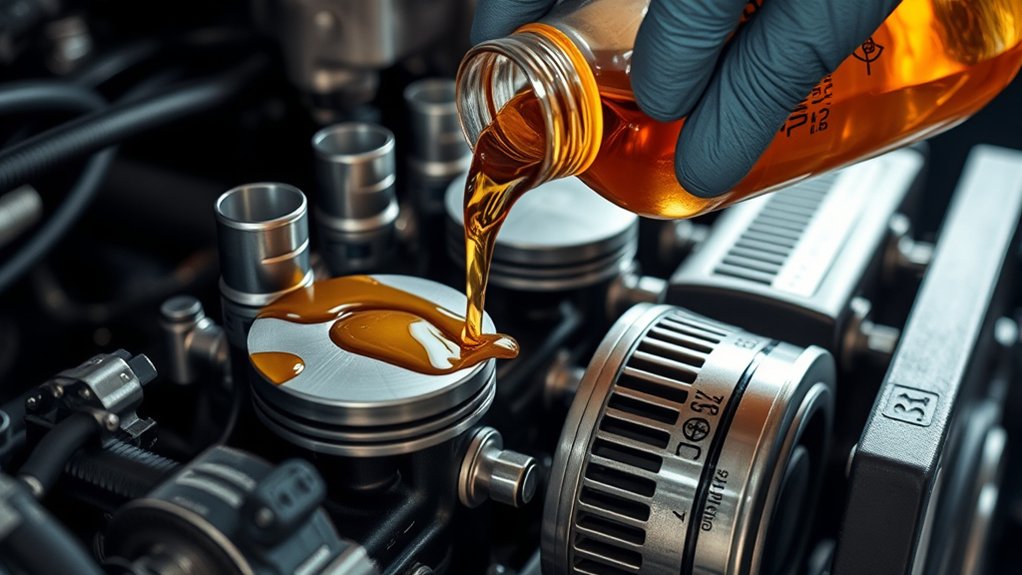
Why does your diesel engine require special oil? Diesel engines operate under higher pressures and temperatures than many other engines, demanding oil with specific viscosity characteristics to maintain an effective lubricating film. If the oil viscosity is too low, it can’t protect moving parts adequately; too high, and it causes drag, reducing efficiency.
Beyond viscosity, the additive importance can’t be overstated. Diesel oil additives combat soot accumulation, neutralize acidic byproducts, and prevent wear under extreme conditions. These additives enhance oil performance, extending engine life by mitigating the unique stresses of diesel combustion.
How Diesel Engine Oil Differs From Gasoline Oil
Although both diesel and gasoline engines rely on oil for lubrication, diesel engine oil differs considerably in composition and formulation to address the harsher operating conditions you encounter. Diesel engines generate higher combustion pressures and temperatures, demanding oils with greater oil viscosity to maintain lubrication under stress.
Additionally, diesel oil contains enhanced detergent additives to manage soot and combustion byproducts that are more prevalent in diesel engines. These additives prevent sludge and deposit formation, preserving engine cleanliness and performance.
In contrast, gasoline engine oils prioritize protection against oxidation and volatility at generally lower operating temperatures. By understanding these distinctions, you can appreciate why diesel engine oils are specifically engineered to handle increased contamination and mechanical load, ensuring durability and efficiency in diesel powertrains.
Choosing the Right Oil for Your Diesel Engine
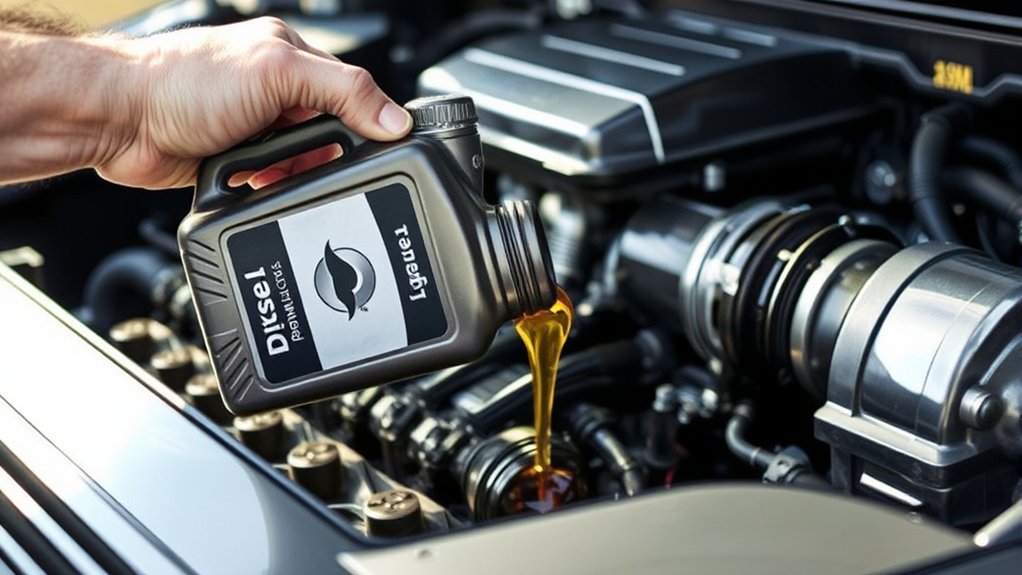
When selecting oil for your diesel engine, you must consider factors like viscosity grade, additive packages, and manufacturer specifications to guarantee peak performance and longevity. Oil viscosity is critical; it influences lubrication efficiency under varying temperatures and load conditions. Choosing the correct viscosity grade assures proper film strength and reduces wear.
Synthetic options often provide superior thermal stability, oxidation resistance, and flow characteristics compared to conventional oils, making them ideal for modern diesel engines subjected to higher pressures and temperatures. Additionally, pay close attention to the additive package, especially detergents and anti-wear agents tailored to diesel combustion byproducts.
Always consult your engine manufacturer’s recommendations, as they specify oils formulated to meet or exceed industry standards like API CJ-4 or CK-4, assuring compatibility with emission control systems and peak engine protection.
Maintenance Tips to Maximize Diesel Engine Oil Performance
Selecting the right oil sets the foundation, but maintaining its effectiveness requires consistent attention to several key practices. You need to adhere strictly to oil change intervals and maintenance schedules to prevent contamination and degradation.
Monitor viscosity ratings closely to verify the oil maintains proper flow under operating conditions. Regular filter replacements are essential; clogged filters reduce oil circulation and accelerate engine wear.
Incorporating quality oil additives enhances protection against oxidation and sludge buildup, directly impacting engine longevity.
| Maintenance Aspect | Recommended Frequency | Impact on Performance |
|---|---|---|
| Oil Change | Every 5,000-7,500 miles | Maintains ideal lubrication |
| Filter Replacement | Every 10,000 miles | Secures clean oil circulation |
| Viscosity Check | At every service | Confirms proper flow rates |
Consistent maintenance maximizes diesel engine oil performance efficiently.
Frequently Asked Questions
Can Synthetic Oil Be Used in Diesel Engines?
Yes, you can use synthetic oil in diesel engines, but confirm the oil viscosity matches your engine’s requirements.
Synthetic oils offer additive benefits like improved wear protection and thermal stability, enhancing performance and longevity under demanding conditions.
How Often Should Diesel Engine Oil Be Changed?
You should follow manufacturer-recommended oil change intervals, typically every 7,500 to 10,000 miles. Choose diesel oil types with proper viscosity and additive packages to guarantee ideal engine protection and maintain performance during these intervals.
What Are Signs of Oil Contamination in Diesel Engines?
Like a red flag waving in a storm, signs of oil contamination include discoloration, sludge buildup, and unusual odors.
You’ll catch contamination sources through oil analysis, revealing water, fuel dilution, or particulate intrusion affecting diesel engine performance.
Does Cold Weather Affect Diesel Engine Oil Performance?
Yes, cold weather increases oil viscosity, making it thicker and harder to circulate. You’ll notice slower lubrication, which stresses the engine.
Using oil with proper viscosity ratings for low temperatures guarantees peak performance and protection during cold starts.
Can Diesel Engine Oil Improve Fuel Efficiency?
Yes, you can improve fuel efficiency by choosing diesel engine oil with ideal viscosity and fuel additives that reduce friction. These properties enhance combustion and engine performance, ultimately lowering fuel consumption and emissions effectively.
Conclusion
When it comes to diesel engines, using the right oil isn’t optional—it’s essential for peak performance and longevity. Diesel engine oil differs considerably from gasoline oil, offering enhanced protection against higher temperatures and soot contamination.
Remember, “a stitch in time saves nine,” so selecting oils meeting specific diesel standards and following maintenance schedules will prevent costly repairs.
You’ll guarantee your engine runs efficiently, minimizing wear and maximizing durability by choosing and maintaining the proper oil.
In conclusion, diesel engines need special oil to ensure optimal function and extended engine life.