You can fix low engine oil pressure by first checking and topping off the oil level if needed.
Next, inspect the oil quality and change it if it appears degraded. Replacing clogged filters is also important to restore proper oil flow.
After that, examine the oil pump for any signs of wear or damage, and repair or replace it as necessary.
Don’t overlook leaks at seals or gaskets, as these can cause pressure drops.
Finally, verify the oil pressure sensor to ensure it is providing accurate readings.
Understanding these steps helps guarantee your engine stays protected and runs smoothly.
Key Takeaways
- Check and top off engine oil or replace degraded oil to ensure proper viscosity and lubrication.
- Replace clogged oil filters to restore adequate oil flow and pressure.
- Inspect and repair or replace a worn oil pump to maintain consistent oil circulation.
- Examine seals and gaskets for leaks causing pressure drops, and fix any found issues.
- Verify the oil pressure sensor’s accuracy to avoid misleading low-pressure readings.
Understanding and Checking Your Engine Oil Pressure
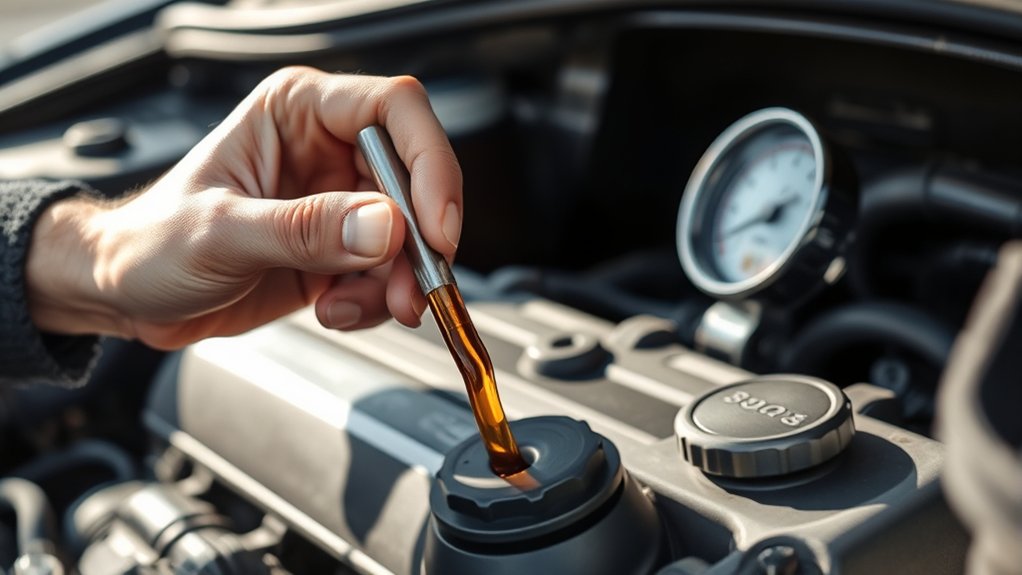
Before you can fix low engine oil pressure, you need to understand what it means and how to measure it accurately. Oil pressure reflects the force at which oil circulates through your engine’s lubrication system, ensuring essential components receive adequate lubrication.
To check oil pressure, you’ll use specific measurement techniques, typically involving a mechanical or electronic oil pressure gauge connected to the engine’s oil gallery. Start by warming the engine to operating temperature, then attach the gauge securely to get an accurate reading.
Measure pressure at idle and higher RPMs to assess system performance thoroughly. Precise measurement techniques help you identify if pressure is within manufacturer specifications, which is vital before diagnosing causes or applying fixes.
Accurate oil pressure readings prevent misdiagnosis and protect your engine from severe damage.
Common Causes of Low Engine Oil Pressure
When your engine shows low oil pressure, several mechanical issues could be responsible. Oil pump issues are common culprits, as a failing pump can’t maintain proper oil flow. Worn bearings increase clearances, reducing oil pressure considerably.
You should also consider oil viscosity; using oil that’s too thin or degraded lowers pressure. A clogged filter restricts oil flow, causing pressure drops. Faulty sensors might give inaccurate readings, so verify sensor functionality first.
Overheating engine conditions thin the oil and accelerate wear, which further diminishes pressure. Oil leaks reduce the overall oil volume, impacting pressure consistency. Finally, general engine wear increases internal tolerances, making it harder for the system to maintain adequate pressure.
Identifying these causes helps you pinpoint the exact issue efficiently.
How to Fix Low Engine Oil Pressure Problems
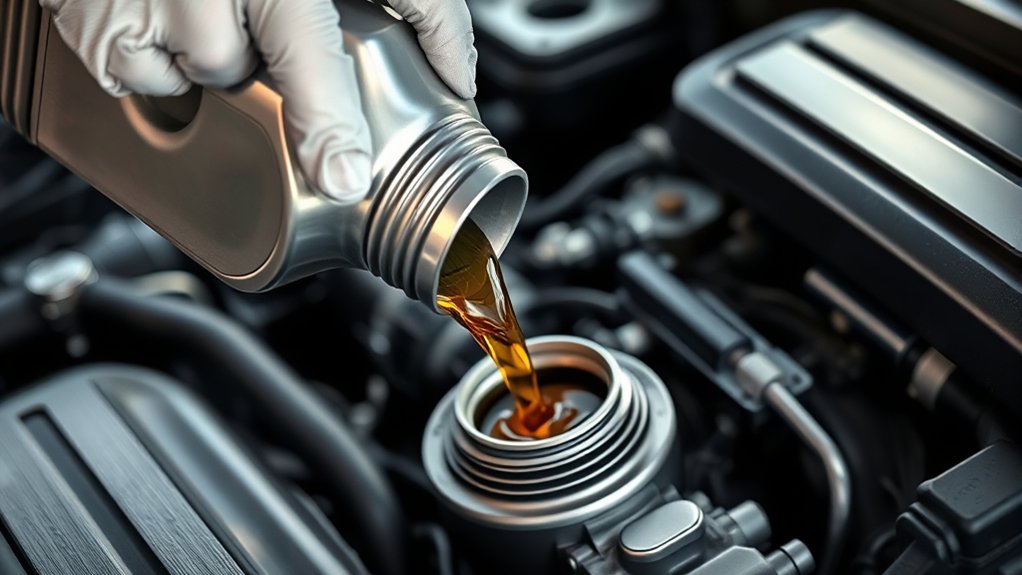
Although low engine oil pressure can stem from various issues, you can address it effectively by systematically checking and repairing key components. Start by inspecting the oil level and quality; topping off or replacing degraded oil restores proper lubrication.
Next, examine the oil filter for clogging. Replace it if necessary, as blockages reduce oil flow and pressure. Then, assess the oil pump’s condition. A worn or faulty pump impairs oil circulation, so repair or replacement may be required.
Don’t overlook potential leaks in seals or gaskets, which can cause pressure drops. Finally, check the oil pressure sensor for accurate readings. A malfunctioning sensor can mislead diagnostics.
Timely fixing these components guarantees stable oil pressure, directly supporting engine health and preventing severe damage.
When to Call a Mechanic for Low Oil Pressure
If your oil pressure warning light comes on or you notice a significant drop in pressure despite addressing basic maintenance, you should contact a mechanic immediately. Low oil pressure can indicate serious engine issues that require professional engine diagnostics. Here are key situations when calling a mechanic is crucial:
- Persistent low readings after checking oil level and quality, suggesting potential pressure sensor failure or internal engine wear.
- Fluctuating or erratic pressure sensor signals, which may mask true oil pressure status, risking engine damage.
- Warning light remains illuminated during operation, indicating possible oil pump malfunction, clogged passages, or bearing wear needing expert inspection.
Prompt mechanical evaluation guarantees accurate diagnosis and prevents costly engine damage by addressing root causes beyond routine maintenance.
Frequently Asked Questions
How Often Should I Change My Engine Oil to Prevent Low Pressure?
You should follow the manufacturer’s recommended oil change frequency, usually every 3,000 to 7,500 miles.
Regular oil changes are key engine maintenance tips to maintain proper oil pressure and prevent engine damage.
Can Synthetic Oil Affect Engine Oil Pressure Readings?
You might notice synthetic benefits coinciding with improved oil viscosity, which can subtly affect engine oil pressure readings. Since synthetic oil flows more consistently, it often stabilizes pressure, though sensor calibration also plays a vital role in accuracy.
Does Low Oil Pressure Impact Fuel Efficiency?
Yes, low oil pressure causes increased engine friction, reducing fuel efficiency. You should monitor oil pressure closely because fuel efficiency factors depend on proper lubrication, preventing wear and ensuring peak engine performance and fuel economy.
Are Oil Pressure Issues Covered by Car Warranties?
Oil pressure causes can be tricky, like hidden currents beneath the surface. Your warranty might cover defects but often excludes damage from neglect or improper maintenance.
Always review warranty exclusions to know what’s truly protected in your car.
Can Driving With Low Oil Pressure Cause Permanent Engine Damage?
Yes, driving with low oil pressure can cause permanent engine damage. You should heed warning signs like oil pressure lights or unusual noises immediately to prevent severe wear, overheating, and costly repairs.
Act promptly to protect your engine.
Conclusion
Think of your engine oil pressure like blood flow in your body—too low, and crucial parts don’t get what they need, risking serious damage. Just like ignoring a drop in blood pressure can lead to a health crisis, neglecting low oil pressure can ruin your engine.
By regularly checking and addressing issues promptly, you keep your engine running smoothly. If problems persist despite your efforts, don’t hesitate to call a mechanic—precision matters when it comes to engine health.
Proper maintenance is key to fixing low engine oil pressure and ensuring your engine’s longevity.