To get engine oil out of carpet, start by blotting the stain immediately with a clean cloth, avoiding rubbing. This helps prevent the oil from spreading deeper into the fibers.
Next, sprinkle baking soda or cornstarch over the area to absorb excess oil. Let it sit for 15-20 minutes before vacuuming it up thoroughly.
Afterward, use a mixture of dish soap and warm water to gently blot the stain. For more stubborn spots, try applying a vinegar solution to help break down the oil residue.
Rinse the area with cool water and dry it thoroughly using towels. Using a fan can speed up the drying process and prevent any lingering odors.
For tougher stains or long-term prevention, additional methods can help restore your carpet’s condition.
Key Takeaways
- Blot fresh engine oil stains immediately with a clean cloth, applying gentle pressure without rubbing to avoid spreading.
- Sprinkle baking soda or cornstarch on the stain to absorb oil, let sit 15–20 minutes, then vacuum thoroughly.
- Clean the area using a dish soap and warm water solution, blotting gently without scrubbing to lift the stain.
- For stubborn stains, apply a commercial oil stain cleaner, testing a hidden spot first and following product instructions carefully.
- Rinse the carpet with cool water, blot moisture with a dry towel, and dry with a fan to prevent damage and mold.
Blot Fresh Engine Oil Stains Immediately
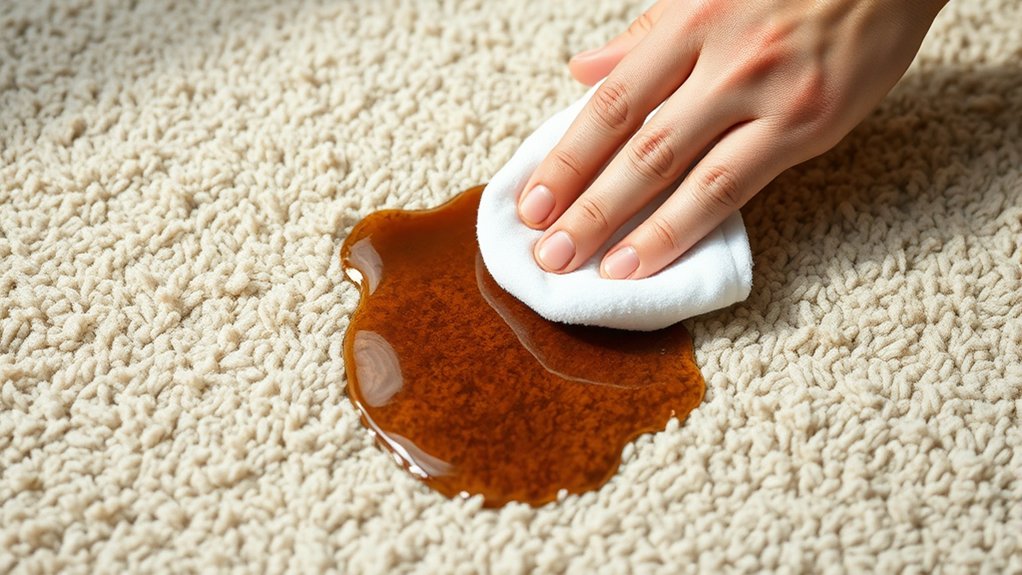
Act quickly to blot fresh engine oil stains on your carpet before they set. Using effective blotting techniques is essential for maximizing oil absorption and preventing deeper penetration into carpet fibers.
Start by placing a clean, absorbent cloth or paper towel directly on the stain, applying gentle pressure without rubbing. This prevents spreading the oil and allows the fabric to draw the liquid upward. Replace the cloth frequently to maintain absorption efficiency.
Avoid scrubbing, which can embed oil further and damage fibers. For ideal results, work from the outer edges inward to contain the stain. Consistent, precise blotting reduces the amount of oil remaining, simplifying subsequent cleaning steps.
Your timely response and proper blotting technique are critical to minimizing permanent damage and ensuring easier stain removal.
Use Household Items to Remove Engine Oil Stains
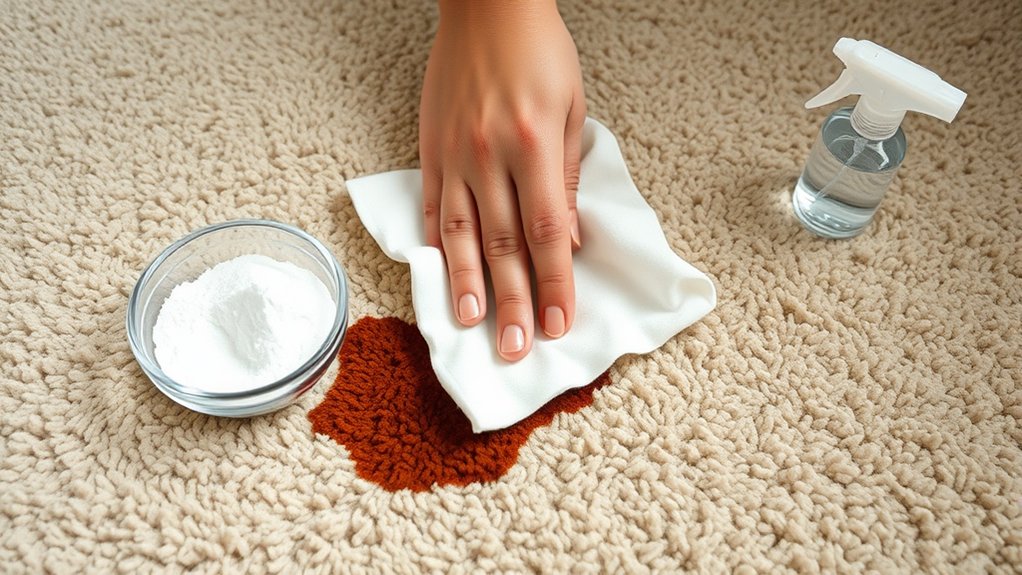
Since professional cleaning products may not always be available, you can effectively tackle engine oil stains on your carpet using common household items. Start by sprinkling baking soda or applying a cornstarch paste onto the stain to absorb excess oil. Let it sit for 15-20 minutes, then vacuum thoroughly.
Next, mix a few drops of dish soap with warm water to create a cleaning solution. Apply it gently to the stained area with a clean cloth, blotting rather than rubbing to avoid spreading. For persistent residues, use a vinegar solution, one part vinegar to two parts water, to break down oil molecules.
Finish by rinsing with water and blotting dry. If needed, a small amount of laundry detergent diluted in water can provide additional grease-cutting power without damaging carpet fibers.
Try Commercial Cleaners for Stubborn Engine Oil Stains
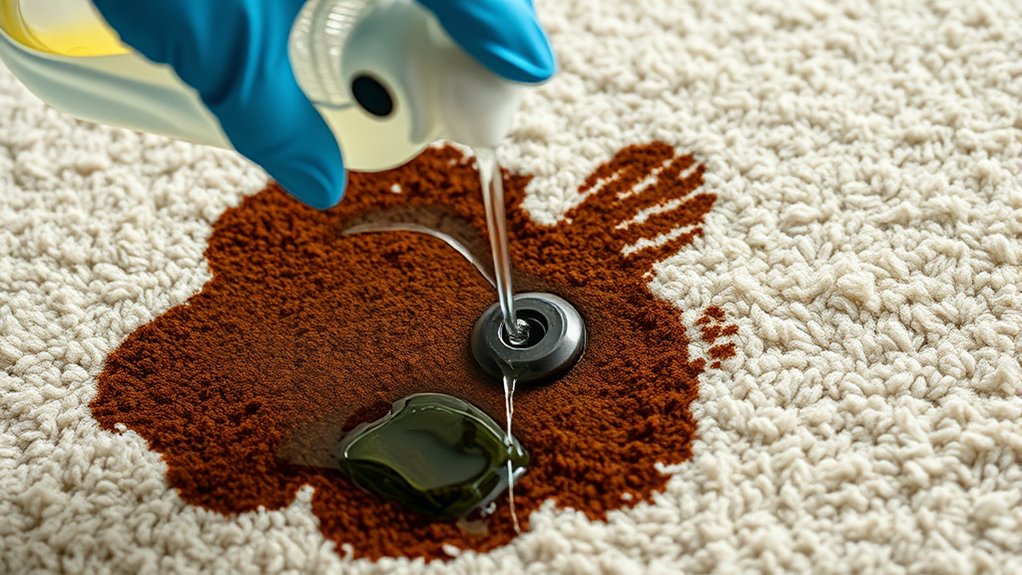
When household items don’t fully remove engine oil stains, commercial cleaners offer targeted solutions designed to break down stubborn grease more effectively. You can select from various commercial cleaning products formulated specifically for oil stain removal on carpets. Always test a small, hidden area before full application to avoid damage.
| Product Type | Active Ingredient | Usage Tip |
|---|---|---|
| Solvent-based | Petroleum distillates | Apply sparingly, ventilate area |
| Enzymatic cleaners | Protease enzymes | Allow dwell time for breakdown |
| Detergent-based | Surfactants | Use warm water for activation |
These products penetrate deep into carpet fibers, ensuring thorough oil stain removal without excessive scrubbing.
Rinse and Dry Carpet After Cleaning Engine Oil
After breaking down the engine oil stain with your chosen cleaning method, you’ll need to rinse the carpet thoroughly to remove any remaining residue and cleaning agents. Use efficient rinse techniques like applying cool water with a spray bottle or damp cloth to flush out contaminants without oversaturating.
Blot the area gently to lift loosened particles, avoiding harsh scrubbing that can embed residue deeper. Next, focus on drying methods to prevent mold and odor. Use a clean, dry towel to absorb excess moisture, then position a fan or dehumidifier near the carpet to accelerate evaporation.
Avoid direct heat, which may damage carpet fibers. Proper rinsing and controlled drying guarantee your carpet is clean, residue-free, and ready for regular use without lingering stains or smells.
Prevent Future Engine Oil Stains With Simple Tips
Making sure your carpet is thoroughly rinsed and dried sets the stage for preventing future engine oil stains. To enhance stain resistance, apply a professional-grade carpet protector designed to repel oil-based substances.
Incorporate preventative measures such as placing absorbent mats in areas prone to oil spills and maintaining oil spill awareness during vehicle maintenance. Regular maintenance is essential. Schedule routine vacuuming and immediate spot cleaning using appropriate cleaning supplies to prevent oil from setting.
Keep a dedicated oil stain removal kit nearby to address spills promptly. Additionally, educate anyone handling engine oil about careful practices to minimize accidental drips.
Frequently Asked Questions
Can Engine Oil Damage Carpet Fibers Permanently?
Yes, engine oil can permanently damage carpet fibers if not treated quickly. For effective oil stain removal, you’ll need prompt carpet care using appropriate solvents and cleaning techniques.
This helps prevent long-term fiber degradation and discoloration.
Is It Safe to Use Bleach on Oil-Stained Carpet?
You wouldn’t want to risk carpet safety by using bleach on oil stains. It can be harsh and cause discoloration. Instead, opt for gentle bleach alternatives designed for fabrics to safely lift stains without damaging fibers.
How Long Does Engine Oil Need to Be Cleaned to Avoid Odor?
You need to clean engine oil stains thoroughly within 24 hours to guarantee effective odor prevention. Using prompt cleaning techniques like blotting, detergent application, and rinsing prevents oil absorption and eliminates lingering smells efficiently.
Can Professional Carpet Cleaning Remove Old Engine Oil Stains?
Like a skilled surgeon, professional services use advanced stain removal techniques to target old engine oil stains. You’ll find they effectively break down and extract deep-set oil, restoring your carpet’s appearance with precision and care.
Are There Eco-Friendly Products for Removing Engine Oil From Carpet?
Yes, you can use natural alternatives like baking soda, white vinegar, and castile soap for effective stain removal. These eco-friendly products break down engine oil without harsh chemicals, protecting both your carpet and the environment.
Conclusion
You can tackle engine oil stains by acting quickly, blotting fresh spills immediately, and using household items or commercial cleaners for stubborn marks. Prompt attention helps prevent the stain from setting deeper into the carpet fibers.
After treating the stain, rinse thoroughly and dry your carpet to restore its condition. This step ensures no residue remains that could attract dirt or cause odor.
To prevent future stains, adopt simple habits like placing protective mats or handling engine oil carefully. By responding fast, cleaning efficiently, and maintaining vigilance, you’ll protect your carpet’s integrity and appearance.
Remember, prompt action, effective cleaning, and consistent care are your best tools against engine oil stains on carpet.