You’ll most commonly use a 5/8 inch (16mm) or 13/16 inch (21mm) socket for spark plugs, depending on your engine’s specifications.
Choosing the right size socket for spark plug removal and installation is crucial to avoid damage.
Some equipment uses 9/16 inch (14mm) or 3/4 inch (19mm) sizes.
Measure the hex nut diameter across the flats with a caliper for accuracy and match it to the right socket size to avoid stripping or damage.
Using the correct socket guarantees proper torque and spark plug fit.
Explore further to master spark plug removal and installation techniques.
Key Takeaways
- Common spark plug socket sizes are 5/8 inch (16mm) and 13/16 inch (21mm), with 9/16 inch (14mm) and 3/4 inch (19mm) for specific uses.
- Measure the spark plug hex diameter across the flats with a caliper or ruler to select the correct socket size.
- Use a socket that fits snugly to avoid damaging spark plugs or rounding off hex corners during removal or installation.
- Spark plug sockets often have rubber inserts to protect the ceramic insulator and ensure a secure grip.
- Verify the spark plug size and use appropriate extensions or specialized sockets for recessed or hard-to-reach plugs.
Why Picking the Right Spark Plug Socket Size Matters
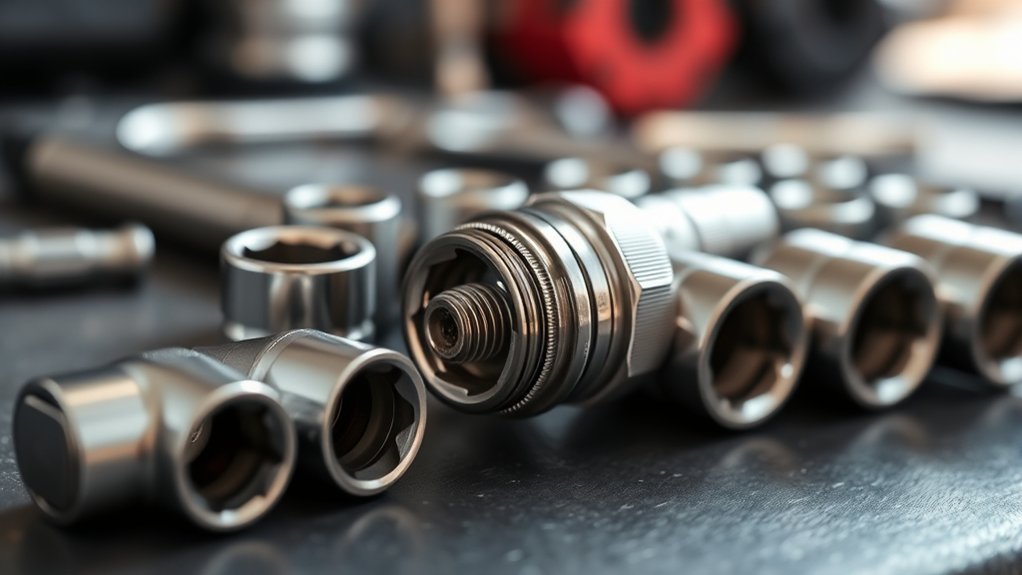
When you choose the right spark plug socket size, you guarantee a secure fit that prevents damage to both the spark plug and the socket itself. The spark plug significance lies in its role in engine performance, so maintaining its integrity is essential.
Using a socket that matches the plug’s dimensions guarantees socket compatibility, allowing you to apply torque evenly without stripping the plug or deforming the socket. An incorrect socket size increases the risk of slipping, rounding off hex corners, or damaging the ceramic insulator.
This can lead to costly repairs or reduced engine efficiency. Precision in selecting the correct socket size supports proper installation and removal, preserving the spark plug’s function and extending tool longevity. Prioritize socket compatibility to protect crucial engine components effectively.
Common Spark Plug Socket Sizes and How to Identify Yours
Spark plug sockets commonly come in 5/8-inch and 13/16-inch sizes, matching most standard spark plug dimensions. To identify your spark plug size, check the diameter of the plug’s hex nut or consult your vehicle’s manual. Using the correct socket guarantees a secure fit and prevents damage during installation or removal.
Standard Socket Size Types
Although various socket sizes exist, most spark plug sockets fall within a few standard dimensions, making it easier for you to find the right fit. Spark plug types influence socket size, while socket materials affect durability and grip. Common socket sizes include:
- 5/8 inch (16mm): Most common for passenger vehicles
- 13/16 inch (21mm): Used for larger spark plugs in trucks
- 9/16 inch (14mm): Found in some lawn equipment
- 3/4 inch (19mm): Less common, for specific applications
- Deep sockets with rubber inserts: Secure spark plugs without damage
Choosing the correct size guarantees proper torque and prevents plug damage. High-quality socket materials, like chrome vanadium steel, provide strength and corrosion resistance. Understanding these types helps you select the right tool quickly.
Identifying Spark Plug Dimensions
Determining the correct spark plug socket size starts with measuring the hex nut on your spark plug, typically found on the plug’s metal shell. Most spark plug types use standard hex sizes, commonly 5/8 inch (16mm) or 13/16 inch (21mm).
Use a caliper or ruler to measure across the flats of the hex. This measurement directly corresponds to the socket size you’ll need. When selecting a socket, consider socket materials. Chrome vanadium steel offers durability and corrosion resistance, essential for repeated use.
Some spark plugs may require deep sockets to accommodate their length or insulator shape. By accurately identifying the hex size and choosing the appropriate socket materials, you guarantee a secure fit and prevent damage during installation or removal. This precision safeguards both your tools and spark plugs.
How to Measure Your Spark Plug for the Correct Socket
To find the correct socket size, start by measuring the spark plug’s diameter across the hexagonal section. Use a caliper for precise measurement to identify the exact hex size. This guarantees you select a socket that fits snugly without damaging the plug.
Measure Spark Plug Diameter
Before selecting a socket, you need to measure the diameter of your spark plug’s hex nut accurately. This guarantees compatibility with your tool and prevents damage. Spark plug types and spark plug materials influence the hex size, so precise measurement is vital. Use these steps:
Clean the spark plug to remove debris. Use a caliper for exact external hex diameter. Measure across the flat sides, not corners. Record the measurement in millimeters or inches. Compare to standard socket sizes for fit.
Accurate measurement accounts for variations caused by different spark plug types and materials, such as copper, iridium, or platinum. This attention to detail streamlines socket selection, reduces wear on spark plug threads, and guarantees safe removal or installation.
Identify Hex Size
Once you have the exact diameter of your spark plug’s hex nut, identifying the correct socket size becomes straightforward. Different spark plug types often feature standardized hex sizes, commonly 5/8” or 13/16”, but variations exist.
To confirm socket compatibility, match your measured hex size precisely with the socket’s internal width. Using a socket that’s too large risks slipping and damaging the hex, while one that’s too small won’t fit.
Verify whether your spark plug’s hex is metric or imperial to select the appropriate socket system. Remember, some spark plug types may require specialized sockets with rubber inserts to protect the ceramic insulator.
Use Caliper Tools
Although identifying the hex size is essential, accurately measuring your spark plug with caliper tools verifies you select the perfect socket. Using precise measurement techniques guarantees a snug fit, preventing damage or slippage.
Start by choosing the appropriate caliper type: digital, dial, or vernier. Each offers varying accuracy and ease of use. Follow these steps:
- Clean the spark plug to remove debris.
- Use calipers to measure the hex width across flats.
- Record measurements in millimeters or inches.
- Compare results to socket size charts.
- Confirm the socket fits securely without excess play.
Essential Tools for Using Spark Plug Sockets Safely
When working with spark plug sockets, you’ll need specific tools to guarantee both safety and effectiveness. Prioritize safety precautions like wearing gloves and eye protection. Maintain your tools regularly to avoid damage and ensure smooth operation. Using the right wrench and socket extensions prevents slippage and injury.
| Tool | Purpose | Maintenance Tip |
|---|---|---|
| Spark Plug Socket | Removes/install spark plugs | Clean after each use |
| Ratchet Wrench | Applies torque | Lubricate moving parts |
| Extension Bar | Reaches deep plugs | Inspect for bends/cracks |
Adhering to these precautions and upkeep routines minimizes risks and prolongs tool life.
Standard vs. Deep Spark Plug Sockets: What’s the Difference?
Choosing the right spark plug socket affects both the ease and safety of your work. You’ll encounter two main types: standard and deep sockets. Understanding their differences helps you select the best fit for various spark plug types and engine designs.
- Standard sockets suit most spark plugs with shorter threads.
- Deep sockets accommodate longer spark plugs or those recessed deeply.
- Both come in various socket materials, typically chrome vanadium or chrome molybdenum, balancing durability and corrosion resistance.
- Deep sockets allow better access in tight engine bays.
- Standard sockets offer a slimmer profile for compact spaces.
Selecting between them depends on your engine’s spark plug length and installation depth. Use deep sockets for extended reach without risking damage, while standard sockets work well for accessible spark plugs with shorter threads.
How to Remove Old Spark Plugs Without Damage
Start by ensuring the engine is cool to prevent damage to the spark plug threads or surrounding components. Wear protective gear, including safety glasses and gloves, to shield against debris and hot surfaces.
Use proper spark plug removal techniques: apply penetrating oil if plugs are seized, wait 10–15 minutes, then use a correctly sized spark plug socket with a ratchet and extension. Turn counterclockwise slowly at first to avoid cross-threading or breaking the plug.
Apply penetrating oil, wait, then carefully loosen spark plugs with the right tools to avoid damage.
If resistance is high, do not force it. Reapply penetrating oil and allow more time. Once loose, remove the plug carefully, keeping it vertical to prevent internal damage.
Always inspect the plug threads and cylinder head for damage before proceeding. Following these steps minimizes risk and preserves engine integrity during spark plug removal.
How to Install Spark Plugs Using the Right Socket
A properly sized spark plug socket guarantees you install plugs securely without damaging the threads or ceramic insulator. To install spark plugs effectively, select a socket that matches your spark plug types and consider socket materials for durability and grip.
Follow these steps:
- Confirm spark plug type and size for correct socket fit.
- Choose a socket with a rubber insert or magnet to protect the ceramic insulator.
- Use high-quality socket materials like chrome vanadium for strength.
- Hand-thread the spark plug initially to avoid cross-threading.
- Tighten the spark plug to manufacturer torque specs using a torque wrench.
Using the right socket guarantees precise installation, prevents damage, and maintains engine performance across various spark plug types.
What to Do If Your Spark Plug Socket Doesn’t Fit?
Making sure you use the correct spark plug socket size helps prevent installation issues, but sometimes the socket just doesn’t fit as expected. First, double-check spark plug compatibility with your engine to confirm you have the right socket size.
If the socket is too tight or loose, verify the plug’s hex size, commonly 5/8” or 13/16”. If access is limited, use a socket extension to reach recessed spark plugs without forcing the socket. Avoid applying excessive force, which can damage the plug or socket.
If the socket still won’t fit, consider trying a different brand or a specialized spark plug socket designed for your vehicle’s plug type. Always match the socket size precisely to make certain of a secure grip and prevent stripping or cross-threading during installation or removal.
How to Keep Your Spark Plug Sockets in Great Shape
Proper maintenance of your spark plug sockets can extend their lifespan and secure reliable performance during every use. To promote ideal socket care, follow these essential spark plug maintenance tips:
Maintaining your spark plug sockets ensures durability and consistent performance every time you use them.
Clean sockets thoroughly after each use to remove debris and oil.
Inspect sockets regularly for wear, cracks, or deformation.
Lubricate moving parts of ratchets to prevent rust and stiffness.
Store sockets in a dry, organized toolbox to avoid damage and corrosion.
Avoid using sockets with worn or damaged spark plug inserts to prevent rounding off plugs.
Frequently Asked Questions
Can a Universal Socket Work for All Spark Plug Sizes?
You can use a universal socket for various spark plug sizes, but its advantages don’t assure perfect spark plug compatibility. It may fit multiple sizes, yet specialized sockets guarantee precise torque and prevent damage during installation or removal.
How Often Should Spark Plugs Be Replaced?
You might think spark plugs last forever, but their lifespan typically ranges from 30,000 to 100,000 miles.
Stick to manufacturer-recommended replacement intervals to maintain ideal engine performance and fuel efficiency.
What Are Signs of a Faulty Spark Plug?
You’ll notice spark plug misfires, rough idling, and reduced engine performance when a spark plug’s faulty. Your engine might hesitate during acceleration or emit poor fuel economy, indicating it’s time to inspect or replace the spark plugs.
Can Spark Plug Socket Size Affect Engine Performance?
Yes, using the wrong spark plug socket size can damage threads, affecting spark plug compatibility and engine performance. Choose sockets with proper material differences, like chrome vanadium, ensuring durability and precise torque application for ideal engine function.
Are Spark Plug Sockets Compatible With Electric Vehicles?
You won’t need spark plug sockets for electric vehicle compatibility, since EVs lack spark plugs.
Focus on spark plug specifications only if you’re working with hybrid models combining internal combustion engines and electric systems.
Conclusion
Choosing the right spark plug socket size is like picking the perfect key for a lock—use the wrong one, and you risk damage or frustration. Just like a locksmith knows the exact key to avoid stripping pins, you need the correct socket to protect your engine’s performance.
Remember, precision tools save time and prevent costly mistakes. Keep your sockets well-maintained, and spark plug changes will be smooth and efficient every time.
In conclusion, using the proper spark plug socket size is essential for safe and effective maintenance. It ensures your spark plugs are installed and removed without damage, keeping your engine running at its best.