You can tell if a spark plug is bad by watching for ignition issues like delayed starts, rough idling, or engine misfires caused by improper fuel ignition.
These problems often indicate that the spark plug is not functioning correctly.
You’ll also notice decreased fuel efficiency, hesitation during acceleration, or increased exhaust emissions.
These symptoms further suggest that the spark plug may need attention.
To confirm, remove the plug carefully and check its resistance with a multimeter—values outside the specified range signal failure.
Inspect for electrode wear, deposits, or insulator damage before deciding on replacement.
Keep exploring to learn the precise testing and replacement steps.
Key Takeaways
- Delayed engine starts, rough idling, or misfires indicate potential spark plug failure.
- Check spark plug resistance with a multimeter; readings outside specifications suggest a bad plug.
- Inspect electrode wear, cracks, or deposits that signal damage or combustion problems.
- Use a spark tester to verify spark strength; weak or no spark confirms a faulty plug.
- Reduced fuel efficiency and increased exhaust emissions often result from malfunctioning spark plugs.
How to Spot Signs Your Spark Plug Is Failing
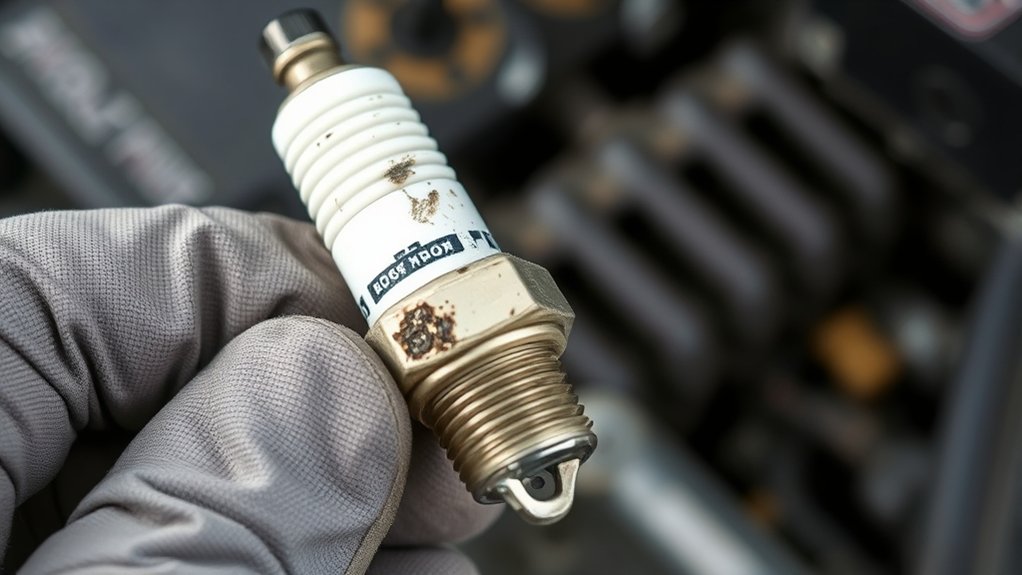
To spot signs your spark plug is failing, start by examining your engine’s performance for specific indicators. Key spark plug symptoms include ignition issues such as delayed starts or rough idling.
Engine misfires often occur when the spark plug fails to ignite the fuel-air mixture properly, causing uneven combustion. You may notice a drop in fuel efficiency, as the engine compensates for incomplete combustion by consuming more fuel.
Pay close attention to acceleration hesitation or a decrease in power output, both common signs of spark plug degradation. Additionally, increased exhaust emissions can indicate malfunctioning spark plugs.
Monitoring these symptoms early helps prevent further engine damage and maintains peak vehicle performance.
How to Test Spark Plugs Using Easy Tools
Three simple tools, a spark plug socket, a multimeter, and a spark tester, can help you accurately assess the condition of your spark plugs. First, use the spark plug socket to remove the plug carefully, avoiding damage to the ignition system.
Then, check the spark plug’s resistance with the multimeter by setting it to the ohms scale and placing the probes on the terminal and center electrode. A reading outside the manufacturer’s range signals a faulty plug.
Use a multimeter on the ohms scale to check spark plug resistance for signs of faults.
Next, connect the spark tester between the spark plug wire and plug, crank the engine, and observe the spark quality. A weak or absent spark indicates a problem requiring spark plug cleaning or replacement.
These tests guarantee your ignition system functions at its best, preventing misfires and poor engine performance.
How to Check Spark Plugs for Wear and Damage
After testing your spark plugs with basic tools, a thorough visual and physical inspection reveals signs of wear and damage that electrical tests might miss. During spark plug inspection, focus on the electrode condition. This is critical for performance. Examine the electrodes closely for erosion, rounding, or excessive gap, which impair spark efficiency. Also, check the insulator for cracks or chips that can cause misfires. Finally, look for deposits or discoloration indicating combustion issues.
- Inspect the electrode edges for wear or melting.
- Measure the electrode gap with a feeler gauge to verify it meets specifications.
- Assess the insulator for damage or contamination.
This precise spark plug inspection helps identify issues invisible in simple electrical tests.
When and How to Replace Your Spark Plugs
Knowing exactly when to replace your spark plugs can prevent engine performance issues and costly repairs. The typical spark plug lifespan ranges from 20,000 to 100,000 miles, depending on the type and vehicle.
Follow the manufacturer’s recommended replacement frequency to maintain peak engine efficiency. When replacing, use a spark plug socket, ratchet, and torque wrench for precise installation. Check the gap and adjust if necessary before installation.
| Spark Plug Type | Typical Lifespan (miles) | Replacement Frequency (miles) |
|---|---|---|
| Copper | 20,000 – 30,000 | Every 20,000 |
| Platinum | 60,000 – 100,000 | Every 60,000 |
| Iridium | 90,000 – 100,000 | Every 90,000 |
| Double Platinum | 60,000 – 100,000 | Every 60,000 |
Frequently Asked Questions
What Types of Spark Plugs Are Best for Different Engines?
You’ll choose spark plugs with ceramic insulators and appropriate electrode materials based on heat ranges and ignition timing. For turbocharged engines and performance tuning, opt for plugs designed for higher heat dissipation and precise spark control.
Can Bad Spark Plugs Affect Fuel Efficiency?
Yes, bad spark plugs increase fuel consumption by causing incomplete combustion, which reduces engine performance. You’ll notice rough idling, misfires, and decreased power, all signaling you should inspect and replace the plugs promptly for maximum efficiency.
How Do Spark Plug Gaps Impact Engine Performance?
You’ll find that incorrect spark plug gaps disrupt combustion efficiency, causing misfires and reduced power.
Regular spark plug maintenance, including precise gap measurement, guarantees peak engine performance and fuel economy by promoting consistent ignition timing.
Are There Specific Brands Known for Durable Spark Plugs?
You’ll want to trust brands like NGK, Bosch, and Denso. They’re renowned for exceptional spark plug longevity.
Their advanced materials and precise engineering guarantee consistent performance, minimizing misfires and maximizing engine efficiency. This makes them top choices among spark plug brands.
Can Spark Plugs Cause Engine Misfires in Cold Weather?
Yes, spark plugs can cause engine misfires in cold weather due to increased resistance and poor ignition.
Regular spark plug maintenance guarantees ideal gap and clean electrodes, counteracting cold weather effects and maintaining consistent engine performance.
Conclusion
If your engine stumbles just as you notice a worn or fouled spark plug, it’s no coincidence—it’s a clear sign to act. By testing spark plugs with a multimeter or checking for visible wear, you pinpoint exactly when failure strikes.
Don’t wait for rough idling or poor fuel economy to worsen; replacing your spark plugs promptly guarantees peak performance and prevents further engine damage.
Your timely attention keeps your vehicle running smoothly and efficiently. Knowing how to tell if a spark plug is bad is essential for maintaining your engine’s health.