To gap a spark plug, use a feeler gauge to measure the distance between the center and ground electrodes, ensuring it matches your vehicle’s specified gap.
Properly gapping a spark plug is essential for optimal engine performance and fuel efficiency.
Gently bend the ground electrode with a spark plug gapper tool to adjust the size, avoiding pressure on the center electrode.
Confirm the gap allows the gauge to pass with slight resistance.
Proper gapping improves engine efficiency and prevents misfires.
For a detailed guide on tools, mistakes, and benefits, keep exploring further.
Key Takeaways
- Use a feeler gauge to measure the gap between the center and ground electrodes accurately.
- Refer to the vehicle manual for the correct spark plug gap specifications by plug type.
- Gently bend the ground electrode with a spark plug gapper tool to adjust the gap size.
- Ensure the feeler gauge slides with slight resistance to confirm the correct gap after adjustment.
- Avoid over-bending electrodes and always re-check the gap to prevent engine misfires and damage.
What Spark Plug Gapping Is and Why It’s Crucial
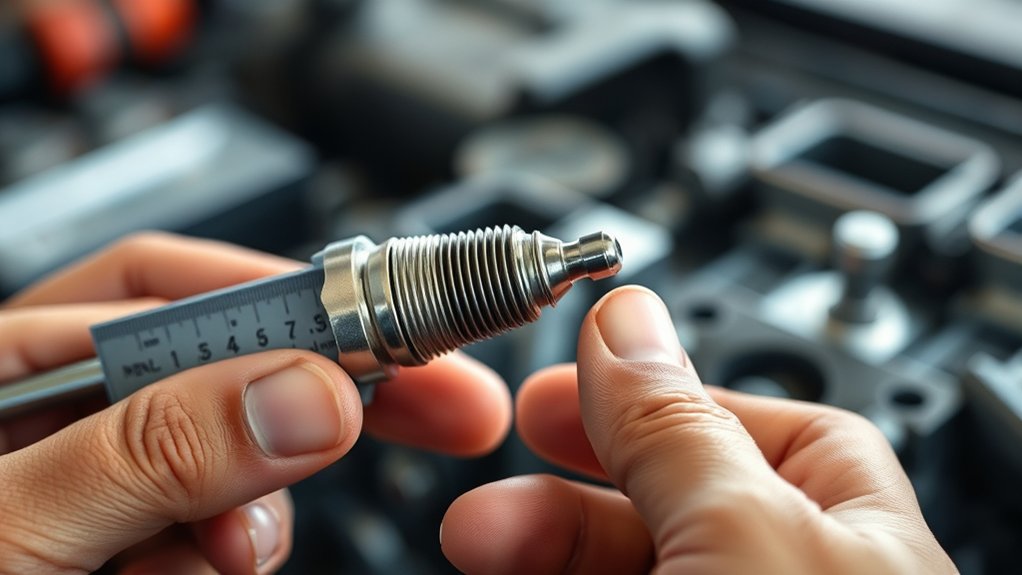
Spark plug gapping refers to the distance between the center and ground electrodes of a spark plug. You need to verify this gap matches your vehicle manufacturer’s specifications because it directly influences engine efficiency.
If the gap is too wide, the spark may weaken, causing misfires and reduced combustion quality. If it’s too narrow, the spark might be insufficient to ignite the air-fuel mixture properly.
Both scenarios can lead to decreased engine performance and increased fuel consumption. Additionally, an incorrect gap shortens the spark plug lifespan by causing excessive electrode wear or deposits.
Incorrect spark plug gaps reduce engine performance, increase fuel use, and cause faster electrode wear or deposits.
Gapping your spark plugs correctly helps maintain ideal combustion, guaranteeing your engine runs smoothly, efficiently, and reliably over time. Neglecting this adjustment compromises engine health and fuel economy, so precise gapping is vital.
Tools Needed to Gap a Spark Plug
You’ll need specific tools to measure and adjust your spark plug gap accurately. A feeler gauge or a spark plug gap tool guarantees precise measurement, while a gapper tool helps you set the correct distance.
Keep these tools clean and calibrated to maintain accuracy over time.
Essential Tools Overview
To accurately gap a spark plug, you’ll need a few specialized tools designed for precision measurement and adjustment. Different spark plug types require exact gapping techniques to guarantee peak engine performance and efficiency. Without the right equipment, you risk improper gaps that lead to misfires or engine damage.
Equip yourself with these essential tools:
- Feeler Gauge: Measures the gap width precisely, critical for consistent results across various spark plug types.
- Spark Plug Gapper Tool: Allows safe bending of the ground electrode to adjust the gap without damage.
- Gap Measuring Gauge: Offers quick verification of gap size, ideal for double-checking your adjustments.
Using these tools correctly guarantees you maintain the precise gap specifications recommended for your engine’s spark plug types.
Measuring Gap Precision
Accurately measuring the gap is the foundation of effective spark plug gapping. To guarantee reliable engine performance, you must employ precise gap measurement techniques using specialized precision tools.
Common tools include feeler gauges, gap gauges, and digital micrometers, each offering varying degrees of accuracy. Feeler gauges provide a quick tactile check, but digital micrometers deliver the highest precision by measuring to thousandths of an inch or hundredths of a millimeter.
When measuring, insert the tool carefully between the center and ground electrode without forcing it, preventing any distortion. Consistently applying these gap measurement techniques prevents improper gaps that can cause misfires or inefficient combustion.
Tool Maintenance Tips
Although selecting the right tools is vital for gapping spark plugs, maintaining them in peak condition assures consistent accuracy and longevity. Proper tool care makes certain your feeler gauges and gap tools deliver precise measurements every time. Follow a strict maintenance checklist to avoid calibration errors or damage.
Include these essential steps in your routine:
- Clean tools after each use to prevent debris buildup that skews gap readings.
- Store tools in a protective case to avoid physical damage and corrosion.
- Regularly inspect and recalibrate feeler gauges to maintain measurement integrity.
How to Check Your Spark Plug Gap
Before adjusting your spark plug gap, you’ll need to measure it precisely using a feeler gauge or a specialized gap tool. Different spark plug types require specific gap specifications for peak performance. Check your vehicle manual for these values.
To measure, insert the gauge between the center and ground electrodes. The correct gap allows the gauge to slide with slight resistance; too tight or loose indicates adjustment is needed.
| Spark Plug Type | Typical Gap Specification (inches) |
|---|---|
| Copper | 0.030 – 0.035 |
| Platinum | 0.028 – 0.032 |
| Iridium | 0.025 – 0.030 |
| Double Platinum | 0.028 – 0.032 |
Accurate measurement guarantees efficient combustion and prevents misfires.
How to Adjust Your Spark Plug Gap Step-by-Step
To adjust your spark plug gap accurately, you’ll need a feeler gauge and a gap tool. First, measure the existing gap to confirm it matches the manufacturer’s specifications.
Then, carefully bend the ground electrode to increase or decrease the gap as needed.
Tools Needed
Three essential tools will help you accurately adjust your spark plug gap: a feeler gauge, a spark plug gap tool, and a gap gauge. Each tool plays a vital role in mastering gapping techniques tailored to various spark plug types.
Feeler Gauge: Measures the gap width precisely, guaranteeing it matches manufacturer specifications.
Spark Plug Gap Tool: Allows you to bend the ground electrode gently without damaging the plug.
Gap Gauge: Offers a quick reference for common gap sizes, helping you confirm accuracy.
Using these tools correctly guarantees peak spark plug performance and engine efficiency. Different spark plug types may require specific gapping techniques, so having the right tools helps you adapt without guesswork. Equipping yourself properly sets the foundation for a precise spark plug gap adjustment.
Measuring Spark Plug Gap
Accurately measuring your spark plug gap starts with cleaning the electrodes and selecting the appropriate tool for your plug type. Typically, you’ll use a feeler gauge or a gap gauge to determine the distance between the center and ground electrodes.
Refer to the spark plug specifications for the exact gap measurement required for your engine. Insert the gauge between the electrodes gently; it should slide through with slight resistance. Avoid forcing the gauge, which can distort the gap.
If the gauge fits too loosely or not at all, you’ll need to adjust the gap accordingly. Employing precise gap measurement techniques guarantees peak ignition performance and prevents misfires.
Always double-check your reading against the manufacturer’s specifications before proceeding.
Adjusting The Gap
Once you’ve measured the spark plug gap and found it outside the specified range, you’ll need to adjust it carefully. Different spark plug types require specific gapping techniques to avoid damage. Use a spark plug gap tool or feeler gauge to make precise adjustments.
To adjust the gap:
Gently bend the ground electrode to widen or narrow the gap.
Avoid applying pressure to the center electrode, especially on fragile spark plug types.
Recheck the gap frequently to verify accuracy.
Precision is key; an incorrect gap can cause poor engine performance or misfires. By following these steps, you’ll maintain ideal combustion and engine efficiency while protecting your spark plugs from damage.
How to Find the Correct Spark Plug Gap for Your Vehicle
Before you adjust the gap, you’ll need to determine the exact specification for your vehicle’s spark plug. The correct spark plug gap guarantees peak ignition performance and fuel efficiency.
Start by consulting your vehicle manuals; they provide the manufacturer’s recommended spark plug specifications, including the precise gap measurement. If you don’t have the manual, check the manufacturer’s website or trusted automotive databases.
Note that different engines require different gaps based on combustion chamber design and ignition system type. Once you have the correct gap value, use a feeler gauge to measure and adjust the plug accordingly.
Always verify the specification for your particular make, model, and engine year to avoid performance issues or damage caused by incorrect gapping.
Common Spark Plug Gapping Mistakes to Avoid
Knowing the correct spark plug gap is just the start; improper gapping can lead to ignition problems, reduced fuel efficiency, and engine damage. Avoid these common mistakes that cause costly gapping errors:
- Using the wrong tool: Don’t rely on inappropriate or worn tools, as tool misuse can easily distort the electrode, altering the gap.
- Over-bending the electrode: Applying too much force can weaken or break the electrode, compromising spark quality.
- Failing to re-check the gap: Never assume the gap is correct after adjustment; always verify with a precise gauge to guarantee accuracy.
How Proper Spark Plug Gapping Improves Engine Performance
When you properly gap your spark plugs, you guarantee the spark ignites the air-fuel mixture efficiently, leading to ideal combustion. Correct spark plug gaps optimize the spark’s reach, ensuring consistent ignition timing and energy transfer.
This precision enhances combustion stability, reducing misfires and incomplete burns that degrade performance. By maintaining the specified gap, you improve engine efficiency, as fuel is burnt more completely and power output increases.
Incorrect gaps cause weak or erratic sparks, lowering combustion quality and increasing emissions. Proper gapping also prevents excessive electrode wear and voltage strain on ignition components.
In short, adjusting your spark plug gap to manufacturer specifications directly supports stable combustion cycles and maximizes your engine’s power, fuel economy, and overall reliability.
When to Replace Spark Plugs Instead of Gapping Them
While maintaining the correct spark plug gap enhances engine performance, there are instances where adjusting the gap alone won’t restore proper function. If your spark plug has exceeded its recommended spark plug lifespan, replacement is necessary. Additionally, if the electrode shows significant wear or damage, no amount of gap measurement adjustments will help.
Also, consider replacing plugs if you notice persistent misfires, decreased fuel efficiency, or rough idling despite proper gapping.
Look out for these signs indicating replacement over gapping:
- Excessive electrode erosion or melting
- Cracked or damaged insulator
- Corrosion or heavy deposits impairing spark
You should measure the gap carefully, but recognize when the plug’s condition demands replacement to guarantee peak engine performance.
Frequently Asked Questions
Can Gapping Spark Plugs Affect Fuel Efficiency?
Yes, gapping spark plugs correctly improves spark plug performance, ensuring ideal fuel combustion. This precise gap promotes efficient ignition timing, which directly enhances fuel efficiency by reducing wasted fuel and improving overall engine performance.
How Often Should Spark Plug Gaps Be Checked?
Like a clock’s steady tick, you should check spark plug gaps every 30,000 miles. Regular spark plug maintenance and precise gapping techniques guarantee ideal performance and fuel efficiency.
This prevents misfires and engine issues before they arise.
Are All Spark Plugs Adjustable or Only Certain Types?
Only certain spark plug types are adjustable, typically standard copper or platinum plugs. Iridium plugs usually come pre-gapped and shouldn’t be adjusted.
Use precise gapping tools to measure and set the gap correctly for your spark plug types.
Can Incorrect Gapping Cause Engine Misfires?
Yes, incorrect gapping can cause engine misfires by disrupting spark plug performance and weakening engine ignition. You’ll notice reduced combustion efficiency, leading to power loss, increased emissions, and potential damage to ignition components.
Is Professional Help Needed to Gap Spark Plugs?
You don’t always need professional help; 75% of DIYers successfully gap spark plugs using basic spark plug tools. With precise gap measurement and careful handling, you can confidently adjust gaps yourself, ensuring peak engine performance.
Conclusion
So, don’t let your engine sputter like it’s auditioning for a horror flick—get that spark plug gap just right. You’re not setting up a campfire; precision matters. Skip the guesswork, or you’ll waste fuel, power, and patience.
Remember, a perfectly gapped spark plug is your engine’s unsung hero, firing off reliable sparks like clockwork. Gap it properly, or enjoy the thrilling sound of your car’s slow, smoky demise.
When it comes to how to gap a spark plug, accuracy is key to keeping your engine running smoothly and efficiently.