To take a spark plug out, first disconnect the negative battery terminal and ensure the engine is cool. This is important for safety and to prevent damage to the engine components.
Next, gather the necessary tools: a properly sized spark plug socket, a ratchet with an extension, and a swivel socket if needed. Remove any obstructing components to gain clear access to the spark plug.
Firmly turn the socket counterclockwise to loosen the plug, maintaining alignment to avoid cross-threading. Once removed, inspect the spark plug for wear or damage.
Clean the hole with compressed air and apply anti-seize on the threads if you plan to reinstall the spark plug.
Following these steps ensures safe and effective spark plug removal before you proceed to common troubleshooting techniques.
Key Takeaways
- Disconnect the battery’s negative terminal and ensure the engine is cool before starting spark plug removal.
- Remove any obstructing parts like ignition coils or air filters for clear access to the spark plug.
- Use the correct spark plug socket size with a ratchet wrench, turning counterclockwise steadily to avoid thread damage.
- Apply penetrating lubricant if the spark plug is stuck and maintain alignment to prevent cross-threading during removal.
- Inspect the spark plug for wear, clean the spark plug hole, and use anti-seize lubricant on threads before reinstalling.
Gather the Tools You Need to Remove a Spark Plug
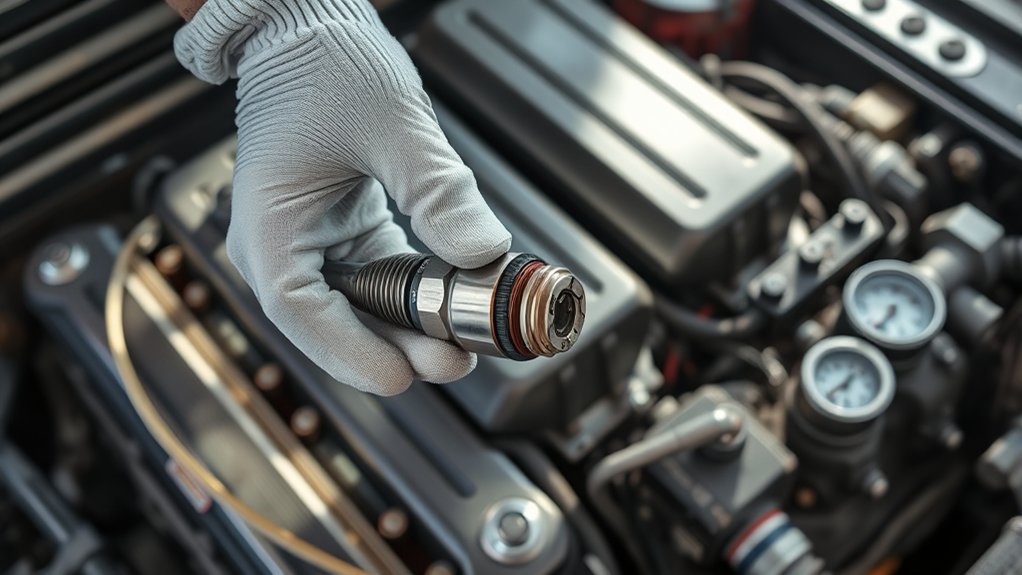
Before you start removing a spark plug, gather the essential tools to guarantee a smooth process. You’ll need a spark plug socket that fits the specific spark plug types in your engine, typically 5/8 or 13/16 inches.
Gather the right spark plug socket size before starting to ensure a smooth and efficient removal process.
A ratchet wrench with an extension will provide the leverage and reach necessary for removal. Include a spark plug gap gauge for inspection after removal.
For removal techniques, using a swivel socket can help access plugs at awkward angles. Additionally, having a torque wrench ready assures you can reinstall the spark plug with the correct tightness.
Avoid makeshift tools to prevent damaging the spark plug or cylinder head. By preparing these precise tools, you’ll handle various spark plug types efficiently and apply proper removal techniques without complications.
Prepare Your Engine for Safe Spark Plug Removal
Before removing the spark plugs, disconnect the battery to prevent electrical shocks or shorts. Make certain the engine is completely cool to avoid burns and damage to the spark plug threads.
Taking these steps guarantees a safe and effective removal process.
Disconnect Battery Power
Two critical steps guarantee your safety when disconnecting battery power: locating the battery terminals and using the correct tools. Prioritize battery safety by first identifying the negative (black) and positive (red) terminals. Always disconnect the negative terminal first to minimize electrical hazards.
Follow these steps for proper electrical precautions:
- Use an insulated wrench or socket to loosen the negative terminal clamp.
- Remove the negative cable and secure it away from the battery to prevent accidental contact.
- Repeat the process for the positive terminal, ensuring both cables are safely isolated.
Allow Engine To Cool
After disconnecting the battery, let the engine cool completely to prevent burns and guarantee safe spark plug removal. Monitor the engine temperature closely; it should reach ambient levels before proceeding.
You can speed up cooling by employing active cooling methods such as using a fan to circulate air around the engine or opening the hood to increase airflow. Avoid touching any components until the engine temperature drops sufficiently, as residual heat can cause injury.
Using these cooling methods ensures the metal parts contract, reducing the risk of thread damage during spark plug removal. Patience during this phase is vital. Removing spark plugs from a hot engine can warp threads or break plugs.
Confirm the engine has cooled thoroughly before starting the removal process to maintain safety and prevent mechanical issues.
Find and Access the Spark Plug
First, identify the exact location of the spark plug on your engine, typically near the cylinder head.
Next, remove or reposition any components that obstruct direct access, such as engine covers or wiring harnesses. This guarantees you have a clear path to safely extract the spark plug without damaging surrounding parts.
Locate Spark Plug Position
Although spark plug locations vary by engine design, you can typically find them by tracing the ignition wires or coil packs leading from the distributor or ignition system. Knowing the spark plug position is vital because different spark plug types serve distinct functions, such as optimizing combustion or enhancing fuel efficiency.
Follow these steps to locate each spark plug:
- Identify the number of cylinders in your engine; each cylinder has its own spark plug.
- Trace the ignition wires or coil packs from the distributor or ignition system to the spark plug boot.
- Locate the spark plug well, where the spark plug sits screwed into the cylinder head or engine block.
This approach guarantees you accurately find spark plugs, fundamental before proceeding with removal or replacement.
Clear Surrounding Components
Before you can remove a spark plug, you need to clear any components blocking your access to it. This step is essential for effective engine maintenance and varies depending on the spark plug types and engine design.
Start by identifying parts like ignition coils, air filters, or wiring harnesses. Carefully detach or move these components without damaging connectors or hoses.
| Component | Tool Needed | Notes |
|---|---|---|
| Ignition Coil | Ratchet & Socket | Remove bolts gently |
| Air Filter Housing | Screwdriver | Unclip or unscrew carefully |
| Wiring Harness | Pliers | Disconnect clips without force |
Clearing these parts guarantees direct access to the spark plug, preventing damage and facilitating a smooth removal process.
Loosen and Remove the Spark Plug Without Damage
Grip the spark plug socket firmly and turn it counterclockwise to loosen the spark plug. Different spark plug types may require slight adjustments in removal techniques, so always verify compatibility before proceeding. To avoid damage:
Firmly grip the socket and turn counterclockwise, adjusting techniques as needed for different spark plug types.
- Apply steady, controlled force. Jerky movements can strip threads or break the plug.
- Use the correct socket size and ratchet to guarantee a secure fit without slipping.
- If the plug resists, apply a penetrating lubricant and let it sit before trying again.
Once loosened, continue turning until you can carefully lift the spark plug out of the cylinder head. Maintain alignment during removal to prevent cross-threading or damage to the spark plug or cylinder threads. Following these precise steps guarantees a safe extraction without harming the components.
Inspect the Spark Plug for Wear and Damage
After carefully removing the spark plug, examine it closely for signs of wear or damage that can affect engine performance. Start by identifying the spark plug type, as different types, copper, platinum, or iridium, have varying wear tolerances.
Check the electrode for erosion or rounding, which are primary wear indicators. Look for deposits, cracks, or discoloration on the insulator and metal shell. Excessive carbon buildup or oil fouling signals combustion issues.
Measure the electrode gap with a feeler gauge to confirm it matches manufacturer specifications. Any visible damage or significant wear indicators mean you should replace the plug. Proper inspection helps maintain engine efficiency and prevents misfires, guaranteeing reliable operation.
Always refer to the spark plug type’s specific wear criteria during your assessment.
Clean the Spark Plug Hole After Removal
Use a compressed air blower or a clean brush to remove any dirt, debris, or loose particles from the spark plug hole. Maintaining engine cleanliness is critical during spark plug maintenance to prevent contaminants from entering the combustion chamber, which could cause engine damage or misfires.
Follow these steps for effective cleaning:
- Direct compressed air into the spark plug hole to expel loosened debris.
- Use a nylon brush to gently remove any remaining deposits around the hole edges.
- Wipe the area with a lint-free cloth to make sure no particles remain.
Thoroughly cleaning the spark plug hole after removal enhances the longevity of your spark plugs and supports peak engine performance.
How to Fix Common Spark Plug Removal Issues?
When spark plugs resist removal, you’ll need specific techniques to prevent damage to the plug or the engine. Common problems include seized threads and corrosion. Use proper removal techniques like applying penetrating oil and allowing it to soak.
Select tools based on spark plug types and engine types, such as a torque wrench or a spark plug socket with a rubber insert. Always follow safety precautions, including wearing gloves and eye protection.
Maintenance tips like regular inspection can prevent issues. Refer to this table for troubleshooting methods and tool recommendations:
| Common Problems | Removal Techniques | Tool Recommendations |
|---|---|---|
| Seized threads | Apply penetrating oil | Spark plug socket, torque wrench |
| Corrosion | Gentle back-and-forth motion | Anti-seize lubricant |
| Cross-threading | Use correct socket size | Rubber insert socket |
| Over-tightening | Controlled loosening torque | Torque wrench |
| Damaged plug | Replace spark plug | Spark plug gap tool |
Frequently Asked Questions
How Often Should Spark Plugs Be Replaced?
You should replace spark plugs every 30,000 to 100,000 miles, depending on their type and your vehicle.
Monitor the spark plug lifespan and follow manufacturer-recommended replacement intervals for peak engine performance and fuel efficiency.
What Are the Signs of a Failing Spark Plug?
Think of your engine as a heartbeat. If it stutters, use a symptoms checklist: rough idling, poor acceleration, increased fuel consumption. These signs indicate your spark plug lifespan is ending, so replace them promptly for peak performance.
Can Bad Spark Plugs Affect Fuel Efficiency?
Yes, bad spark plugs reduce fuel combustion efficiency, lowering fuel economy. You should monitor spark plug lifespan and replace plugs promptly to maintain ideal combustion, ensuring your engine runs smoothly and fuel efficiency stays at peak levels.
What Type of Spark Plug Is Best for My Car?
Choosing the best spark plug is like finding a needle in a haystack! Compare spark plug brands for performance differences, focusing on your engine type.
Consult your manual, prioritize heat range, electrode design, and material for peak efficiency.
How Do I Gap a Spark Plug Correctly?
You’ll use spark plug tools like a gap gauge or feeler gauge to measure the electrode gap. Employ precise gapping techniques by gently bending the ground electrode until the gap matches your vehicle’s specifications exactly.
Conclusion
Now that you’ve learned how to safely remove a spark plug, are you ready to tackle the task with confidence? Remember to gather the right tools, prepare your engine properly, and handle the plug carefully to avoid damage.
Don’t forget to inspect and clean the area afterward for peak performance. Following these steps guarantees a smooth removal process and keeps your engine running efficiently. By mastering how to take a spark plug out, you ensure your vehicle stays in top shape.