You should change your spark plugs based on your vehicle’s manufacturer guidelines, usually between 30,000 and 100,000 miles.
How often you change spark plugs depends on several factors like driving habits, fuel quality, and spark plug material, which all affect their lifespan.
Regular inspections help detect wear signs such as electrode erosion or carbon buildup.
These issues can cause misfires and lower fuel efficiency. Staying on top of replacement keeps your engine running smoothly.
Understanding spark plug types, wear symptoms, and maintenance will help you make the best choice for your vehicle’s performance and longevity.
Key Takeaways
- Spark plug replacement intervals vary by vehicle but generally range from 30,000 to 100,000 miles.
- Always consult the owner’s manual or manufacturer guidelines for specific replacement recommendations.
- Regular inspections can detect wear signs like electrode erosion and carbon buildup before failure occurs.
- Replace spark plugs if you experience engine misfires, rough idling, or decreased fuel efficiency.
- Driving habits and fuel quality significantly affect spark plug lifespan, influencing how often replacement is needed.
How Often Should You Change Spark Plugs?
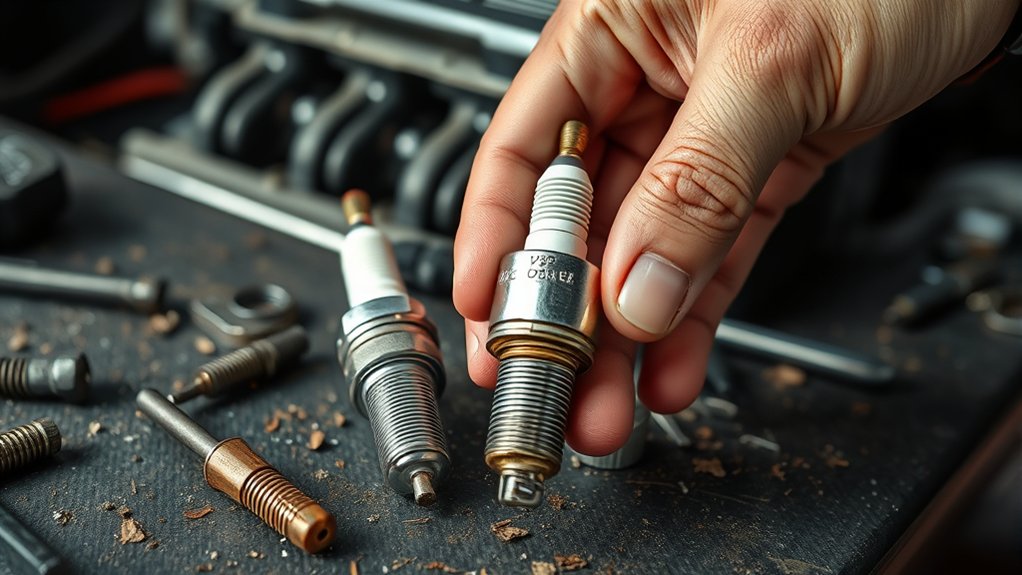
How often should you change spark plugs depends primarily on your vehicle’s make, model, and driving conditions. Typically, the average spark plug lifespan ranges from 30,000 to 100,000 miles, but it varies based on the type of spark plug and engine design.
To determine the ideal replacement interval, consult your owner’s manual or manufacturer guidelines. Regular inspections can help identify wear indicators like electrode erosion or carbon buildup, which reduce performance and fuel efficiency.
Incorporating consistent maintenance tips, such as checking spark plug gaps and replacing damaged plugs promptly, ensures reliable ignition and engine operation. Ignoring spark plug lifespan can lead to misfires, increased emissions, and engine damage, so staying proactive with replacement schedules is essential for maintaining optimal vehicle performance.
What Types of Spark Plugs Are Available?
Spark plugs come in several types, each designed with specific materials and features to enhance engine performance and durability. Copper plugs offer excellent conductivity but wear faster, while platinum plugs feature a longer lifespan due to their durable electrode design.
Iridium plugs provide superior performance and longevity, often favored in high-performance plugs. Ceramic insulators guarantee heat resistance and electrical insulation.
Iridium plugs deliver top performance and durability, complemented by ceramic insulators for heat resistance and electrical safety.
You’ll also encounter cold vs. hot plugs, where cold plugs dissipate heat quickly, suitable for high-performance engines, and hot plugs retain heat longer for efficient combustion in standard engines. When selecting spark plugs, consider reputable spark plug brands known for precise gap specifications, which are critical for peak firing.
Follow installation tips carefully to avoid damage and guarantee proper engine function.
What Affects Spark Plug Lifespan?
Although spark plugs are designed to endure thousands of miles, several factors influence their lifespan, including engine type, driving habits, fuel quality, and maintenance routines. Understanding these can help you optimize performance and avoid premature wear.
Key factors include:
- Spark plug materials: Iridium and platinum last longer than copper due to higher melting points and corrosion resistance.
- Ignition timing: Incorrect timing increases spark plug stress and accelerates electrode erosion.
- Driving habits: Frequent short trips or aggressive acceleration cause carbon buildup and overheating.
- Fuel quality and additives: Low-quality fuel deposits contaminants on electrodes, reducing efficiency.
How Can You Check Your Spark Plugs for Wear?
You can check your spark plugs for wear by performing a thorough visual inspection. Look for signs like worn electrodes, heavy carbon buildup, or oil fouling, which indicate reduced performance.
Noticing these issues early helps you determine if replacement is necessary to maintain engine efficiency.
Visual Inspection Tips
When inspecting your spark plugs for wear, start by carefully removing them from the engine using the appropriate tools to avoid damage. A thorough visual inspection is essential for effective maintenance.
Follow these maintenance tips to assess their condition accurately:
- Examine the electrode for erosion or rounding, which reduces spark efficiency.
- Check the insulator for cracks or chips, indicating potential misfires.
- Look for carbon deposits or excessive soot buildup, signs of incomplete combustion.
- Inspect for oil or fuel fouling, which suggests engine issues affecting spark plug performance.
Signs of Spark Plug Wear
How can you determine if your spark plugs are worn and need replacement? Start by removing and inspecting them carefully. Check the electrode for erosion or rounding, which indicates wear.
Different spark plug materials, like copper, platinum, or iridium, wear at varying rates; iridium plugs typically last longer but still show signs of degradation over time.
Examine the insulator for cracks or deposits; heavy carbon buildup or oil fouling suggests combustion issues. Also, consider your spark plug type, such as standard, platinum, or multi-electrode, since wear patterns differ.
If you notice a gap larger than the manufacturer’s specification or electrode damage, it’s time to replace them. Regularly monitoring these signs guarantees peak engine performance and fuel efficiency.
What Are the Signs You Need New Spark Plugs?
You’ll notice your engine struggling with performance, such as misfires or rough idling, when spark plugs wear out. If your vehicle takes longer to start or stalls frequently, it’s a clear sign the plugs need replacement.
Additionally, a sudden increase in fuel consumption often indicates your spark plugs aren’t firing efficiently.
Engine Performance Issues
Engine performance issues often signal that your spark plugs need replacement. When your spark plugs degrade, they disrupt proper ignition timing and cause engine misfires, which compromise efficiency and power. Watch for these key signs:
- Noticeable decrease in fuel efficiency, indicating incomplete combustion.
- Engine misfires during acceleration or idling, reflecting inconsistent spark delivery.
- Rough idling or vibration due to irregular ignition sequences.
- Reduced engine power and sluggish throttle response, caused by poor combustion timing.
Addressing these symptoms promptly guarantees peak engine performance and prevents further damage. By replacing worn spark plugs, you restore correct ignition timing, eliminate misfires, and maintain smooth engine operation. Regular inspection and timely replacement keep your vehicle running efficiently, safeguarding performance and fuel economy.
Difficulty Starting Vehicle
Several key signs indicate your spark plugs may be causing difficulty starting your vehicle. If you notice prolonged engine cranking before ignition, it’s a strong indicator that your spark plugs are worn or fouled.
Faulty spark plugs fail to generate the necessary spark to ignite the air-fuel mixture efficiently, leading to ignition issues. You might also experience multiple attempts to start the engine or hear sputtering sounds during startup.
These symptoms suggest that the spark plugs aren’t delivering consistent electrical discharge, which impedes combustion. Addressing spark plug problems promptly guarantees smoother engine starts and prevents strain on your starter motor.
If you frequently face ignition issues despite a healthy battery and fuel system, inspect or replace your spark plugs to restore reliable engine cranking and ideal startup performance.
Increased Fuel Consumption
When spark plugs begin to wear out or foul, your vehicle’s fuel efficiency often suffers noticeably. Poor combustion caused by faulty spark plugs forces your engine to work harder, consuming more fuel than necessary.
To maintain ideal fuel efficiency, regular spark plug maintenance is essential. Here are four signs indicating you need new spark plugs:
- Noticeable drop in miles per gallon (MPG).
- Rough idling or engine misfires.
- Increased exhaust emissions.
- Difficulty accelerating or a sluggish response.
Ignoring these symptoms can lead to higher fuel costs and engine damage. Replacing spark plugs as recommended guarantees efficient combustion, preserves fuel economy, and supports overall engine health.
Keep an eye on these indicators to avoid costly repairs and maintain peak performance.
How to Choose the Right Replacement Spark Plugs
Choosing the right replacement spark plugs involves understanding your vehicle’s specific requirements, including the correct size, heat range, and electrode material. First, consult your owner’s manual or manufacturer specifications to identify the recommended spark plug type.
Pay close attention to spark plug materials. Copper, platinum, and iridium each offer different durability and performance characteristics. Copper plugs provide strong conductivity but wear faster, while iridium plugs last longer and deliver consistent sparks under high stress.
Next, evaluate reputable spark plug brands known for quality and reliability, ensuring compatibility with your engine. Avoid generic or mismatched plugs that can cause misfires or reduced efficiency.
Finally, consider the heat range. Selecting a plug with an appropriate heat dissipation rate prevents fouling or pre-ignition, optimizing engine performance and lifespan.
Frequently Asked Questions
Can Bad Spark Plugs Cause Engine Misfires?
Yes, bad spark plugs cause engine misfires by disrupting combustion. You’ll notice spark plug symptoms like rough idling and reduced engine performance.
Replacing faulty plugs restores smooth operation and peak engine efficiency.
How Does Spark Plug Gap Affect Engine Performance?
You’ll want to give spark plug gap careful attention because improper gaps can subtly hinder combustion efficiency. Proper spark plug maintenance guarantees maximum ignition, extending spark plug lifespan and maintaining your engine’s peak performance and fuel economy.
Are Iridium Spark Plugs Worth the Extra Cost?
You’ll find iridium benefits include superior longevity compared to standard plugs, reducing replacements. Their precise electrode design improves ignition efficiency, making the extra cost worthwhile if you prioritize durability and consistent engine performance over time.
Can Spark Plugs Affect Fuel Efficiency?
Yes, poor spark plug maintenance can reduce fuel combustion efficiency, causing your engine to use more fuel.
Keeping spark plugs clean and properly gapped guarantees ideal combustion, improving your vehicle’s fuel efficiency and overall performance.
Is It Safe to Drive With Worn Spark Plugs?
Don’t wait for the shoe to drop. Driving with worn spark plugs risks misfires, reduced spark plug lifespan, and symptoms of wear like rough idling. Replace them promptly to maintain engine efficiency and safety on the road.
Conclusion
You should change your spark plugs regularly, inspect them carefully, and select replacements wisely. Regular maintenance guarantees peak engine performance, careful inspection prevents unexpected failures, and choosing the right type maximizes efficiency.
By understanding how often to change spark plugs, recognizing wear signs, and knowing your options, you’ll keep your engine running smoothly and efficiently. Don’t wait for problems—act proactively, maintain consistently, and drive confidently. Remember, knowing how often to change spark plugs is key to ensuring your vehicle’s optimal performance and longevity.