You shouldn’t replace just one spark plug at a time because uneven wear causes inconsistent combustion and misfires.
New plugs work differently from old ones, disrupting ignition timing and stressing your ignition system. This mismatch can lead to rough idling and reduced fuel efficiency.
Replacing all plugs at once guarantees balanced engine performance and long-term reliability.
Understanding when to replace spark plugs and choosing the right set will further optimize your vehicle’s operation.
This approach helps maintain smooth engine function and prevents potential damage caused by uneven wear.
Key Takeaways
- Replacing only one spark plug is not recommended due to uneven wear and performance differences.
- A new plug mixed with old ones can cause misfires and rough engine idling.
- Unequal spark plug wear disrupts ignition timing and combustion efficiency.
- Replacing all spark plugs together ensures balanced engine performance and longevity.
- For best results, follow the vehicle manufacturer’s recommendations on spark plug replacement.
Can You Replace Just One Spark Plug at a Time?
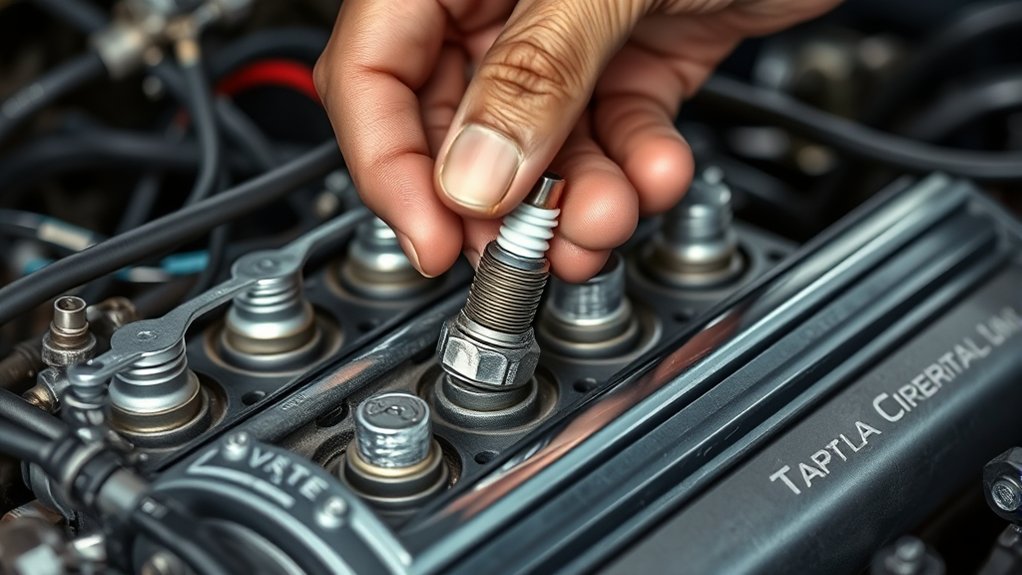
Is it practical to replace just one spark plug at a time? Generally, it’s not recommended because spark plug types and wear rates vary, leading to inconsistent engine performance. When you replace only one, the new plug operates differently compared to older ones, potentially causing misfires or rough idling.
Maintenance tips emphasize replacing all spark plugs simultaneously to guarantee uniform combustion and peak efficiency. Different spark plug types, such as iridium, platinum, or copper, have distinct lifespans and heat ranges, so mixing old and new plugs can disrupt engine timing.
Unless you’re addressing a single faulty plug as a temporary fix, it’s best to replace the entire set to maintain engine balance and prolong overall spark plug life.
How Do You Know When a Spark Plug Needs Replacing?
While replacing all spark plugs at once guarantees consistent engine performance, recognizing when those plugs need replacement is equally important. You’ll notice specific spark plug signs indicating wear or failure, such as rough idling, difficulty starting, or reduced fuel efficiency.
Performance issues like engine misfires, hesitation during acceleration, or a noticeable drop in power often point to spark plugs that have deteriorated. Visually inspecting the spark plugs can also reveal fouling, corrosion, or excessive electrode wear.
These physical signs correlate directly with combustion inefficiency. By monitoring these spark plug signs and performance issues, you can determine the ideal time for replacement, preventing further engine damage and maintaining smooth operation.
Staying proactive guarantees your vehicle runs reliably without unexpected breakdowns.
What Happens If You Mix Old and New Spark Plugs?
Mixing old and new spark plugs can cause uneven engine performance and reduce overall efficiency. When you combine spark plugs at different stages of their lifespan, the electrical characteristics vary, leading to inconsistent ignition timing and combustion quality.
Combining spark plugs of varying ages disrupts ignition timing and combustion, causing uneven engine performance and reduced efficiency.
This mismatch affects your engine’s smoothness and may cause misfires, reducing fuel economy and power output. The older plugs typically have worn electrodes and altered gap sizes, which demand more voltage to generate a spark.
Meanwhile, new plugs function effectively with a clean gap and stable resistance, creating a performance impact that’s out of sync with the worn ones. Over time, this inconsistency stresses the ignition system, potentially accelerating wear on coils and wires.
For precise engine operation, maintaining uniform spark plug condition is essential.
Why It’s Best to Replace All Spark Plugs at Once
Because spark plugs work together to guarantee consistent engine performance, replacing all of them at once helps maintain balanced ignition timing and combustion efficiency. When you install new plugs simultaneously, you confirm uniform spark plug longevity, minimizing disparities in wear that can cause misfires or rough idling.
Mixing old and new plugs disrupts this balance, potentially degrading engine performance due to inconsistent combustion conditions. Additionally, replacing all plugs at once simplifies maintenance schedules and prevents premature replacement of still-functional plugs, optimizing your investment.
How to Choose the Right Spark Plugs for Your Car
How do you determine the best spark plugs for your vehicle? Start by consulting your owner’s manual to identify the recommended spark plug types, such as copper, platinum, or iridium. Each type varies in durability and performance; iridium plugs typically offer longer life and better ignition.
Next, consider spark plug brands known for quality and compatibility with your engine. Brands like NGK, Bosch, and Denso consistently deliver reliable performance.
Check the heat range, thread size, and gap specifications to guarantee the plugs fit your engine’s requirements precisely. Avoid generic plugs that don’t meet OEM standards, as improper plugs can cause misfires or damage.
Frequently Asked Questions
How Often Should Spark Plugs Be Cleaned?
You should perform spark plug maintenance and cleaning every 30,000 to 50,000 miles, depending on your vehicle and driving conditions.
Regular cleaning frequency guarantees peak performance, prevents misfires, and extends spark plug lifespan efficiently.
Can Faulty Spark Plugs Affect Fuel Efficiency?
Faulty spark plugs can wreak havoc, slashing your fuel combustion efficiency drastically. If you ignore their spark plug lifespan, you’ll waste fuel, reduce engine power, and increase emissions.
Keep them in top shape for peak performance.
What Tools Are Needed to Replace Spark Plugs?
You’ll need a spark plug socket, ratchet wrench, extension bar, and a gap gauge. Knowing your spark plug types guarantees proper fit.
Regular spark plug maintenance includes cleaning and checking gaps for ideal engine performance.
Are Iridium Spark Plugs Better Than Platinum Ones?
Iridium spark plugs shine brighter, lasting longer than platinum ones due to superior spark plug materials. Their extended spark plug lifespan means you’ll enjoy better performance and fewer replacements, making them a smarter, cost-effective choice for your engine.
Can Spark Plugs Cause Engine Misfires?
Yes, spark plugs can cause engine misfires by disrupting the ignition system’s spark delivery. Faulty plugs impair engine performance, leading to rough idling, reduced power, and increased emissions.
Timely replacement is essential for ideal function.
Conclusion
Replacing just one spark plug at a time is like fixing a single broken link in a chain—it may work temporarily, but the overall strength is compromised. Mixing old and new plugs can cause uneven performance, leading to engine misfires and inefficiency.
For maximum function and longevity, replace all spark plugs simultaneously. This guarantees balanced combustion and consistent power, just as a well-maintained chain moves smoothly without weak points.
To keep your engine running at peak precision, it is best to replace all spark plugs at the same time rather than replacing one spark plug at a time.