To install a spark plug, first verify your engine is cool and disconnect the battery. This ensures safety during the installation process.
Use a spark plug gap gauge to adjust the electrode gap on your new plug for optimal performance.
Next, apply a thin layer of anti-seize lubricant to the threads. Hand-thread the plug carefully to avoid cross-threading.
Then, tighten it with a torque wrench to your vehicle’s specifications.
Proper preparation and installation prevent damage and guarantee engine efficiency.
Keep going to uncover detailed steps and tips.
Key Takeaways
- Ensure the engine is cool and disconnect the negative battery terminal before starting the spark plug installation.
- Remove old spark plugs using a spark plug socket and ratchet, handling them gently to avoid damage.
- Check and adjust the gap on new spark plugs with a gap gauge for optimal performance.
- Apply a thin layer of anti-seize lubricant on the new spark plug threads and hand-thread them carefully.
- Tighten spark plugs to manufacturer torque specifications using a torque wrench to avoid over-tightening or damage.
Essential Tools for Installing Spark Plugs
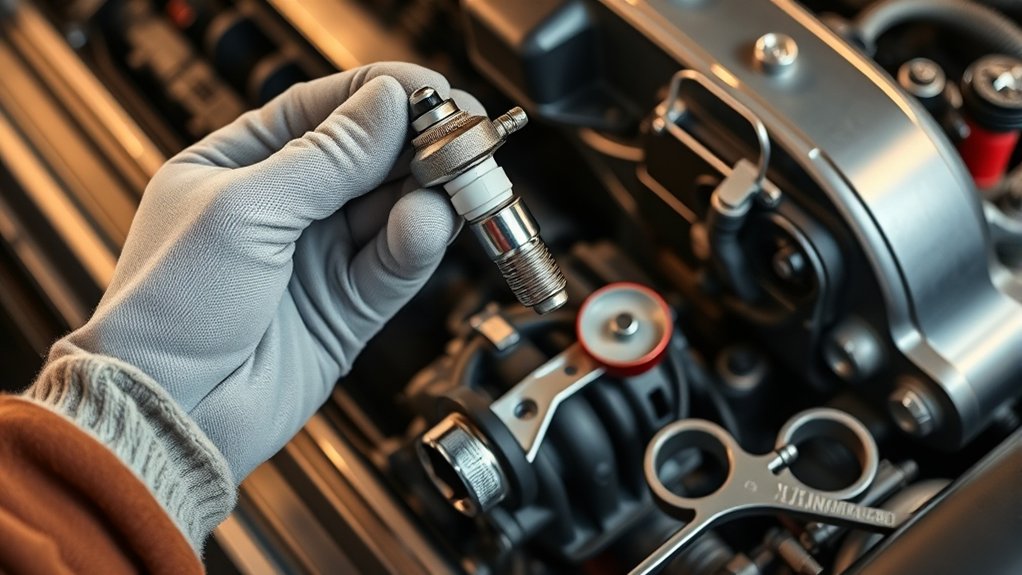
To install spark plugs correctly, you’ll need a specific set of tools designed for precision and safety. First, acquire a high-quality spark plug wrench that fits the plug’s size; this tool assures you can remove and tighten plugs without damage.
Next, use a torque wrench to adhere strictly to your vehicle’s torque specifications. Over-tightening can crack the plug or damage the cylinder head, while under-tightening risks poor engine performance.
Use a torque wrench to avoid damage from over-tightening or poor performance from under-tightening spark plugs.
Additionally, a spark plug gap gauge is essential to verify the electrode gap matches manufacturer requirements. Having a ratchet handle with an extension can help reach recessed plugs.
Finally, consider using anti-seize lubricant on the threads to prevent corrosion but apply sparingly to avoid inaccurate torque readings. These tools guarantee a secure, efficient installation.
Picking the Right Spark Plug for Your Car
You need to select a spark plug that matches your vehicle’s specifications and engine type. Different spark plug types, such as copper, platinum, or iridium, offer varying performance and durability.
Always consult your owner’s manual or manufacturer guidelines to verify compatibility and peak function.
Spark Plug Types
Selecting the correct spark plug is essential for your engine’s performance and longevity. You’ll encounter several spark plug types, primarily differentiated by their spark plug materials: copper, platinum, and iridium.
Copper plugs offer excellent conductivity but wear out faster, making them suitable for older engines. Platinum plugs provide better durability and consistent performance, ideal for modern vehicles. Iridium plugs, the most advanced, combine longevity with superior ignition efficiency, often recommended for high-performance engines.
When choosing, consider trusted spark plug brands known for quality and reliability, such as NGK, Bosch, or Denso. Each brand offers plugs designed to match specific engine requirements and driving conditions.
Vehicle Compatibility
Many factors determine which spark plug fits your vehicle’s engine specifications, guaranteeing peak performance and avoiding damage. First, consult your owner’s manual or manufacturer database to identify the exact spark plug type recommended for your engine. Pay attention to thread size, heat range, and reach.
Next, evaluate spark plug brands for quality and compatibility; reputable brands often provide detailed guides aligned with vehicle specifications. Avoid generic plugs that don’t match your engine’s requirements, as incorrect plugs can cause misfires or engine wear.
When selecting, also consider electrode material and gap size specified by your vehicle. Using the right spark plug guarantees efficient combustion, ideal fuel economy, and longevity. Always double-check vehicle specifications before purchasing to ensure a precise fit and maintain engine integrity.
Preparing Your Engine for Spark Plug Replacement
Before replacing the spark plugs, verify the engine is completely cool to prevent burns and damage to components. Begin by disconnecting the negative battery terminal to eliminate electrical hazards.
Remove any engine covers or components obstructing access to the spark plugs, noting their placement for reassembly. Inspect ignition wires or coil packs for wear or damage, as these can cause spark plug symptoms like misfires or rough idling.
Clean the area around each spark plug to prevent debris from entering the combustion chamber during removal. Ascertain you have the correct replacement spark plugs based on your vehicle’s specifications to maintain engine performance.
Proper preparation is critical in engine maintenance, setting the foundation for a smooth, safe spark plug replacement process.
Step-by-Step Removal of Old Spark Plugs
With the engine prepared and access cleared, you can begin removing the old spark plugs. Proper spark plug maintenance guarantees peak engine performance and extends the spark plug lifespan. Follow these steps carefully:
Use a spark plug socket and ratchet to loosen each plug, turning counterclockwise. Remove plugs gently to avoid damaging the threads or ceramic insulator.
Inspect each removed plug for wear or deposits indicating engine issues. Keep plugs organized to track their original positions for reference.
Installing New Spark Plugs the Right Way
Begin by verifying the correct gap on each new spark plug using a feeler gauge, adjusting it precisely to the manufacturer’s specifications. Next, apply a thin layer of anti-seize compound to the threads to facilitate future spark plug maintenance.
Carefully thread the spark plug into the cylinder head by hand to avoid cross-threading. Use a torque wrench to tighten it to the exact torque recommended for your engine, guaranteeing peak engine performance.
| Step | Action |
|---|---|
| 1 | Check and adjust gap |
| 2 | Apply anti-seize compound |
| 3 | Hand-thread spark plug |
| 4 | Torque spark plug to spec |
Following these steps guarantees secure installation and maintains efficient combustion, vital for consistent engine performance.
How to Adjust Spark Plug Gap for Best Performance
Although adjusting the spark plug gap may seem minor, it plays an essential role in optimizing engine performance and fuel efficiency. Correct gap measurement guarantees the spark ignites the air-fuel mixture effectively, preventing misfires and promoting spark plug longevity.
Adjusting the spark plug gap is vital for efficient ignition and extending spark plug life.
To adjust the gap accurately:
- Use a feeler gauge to measure the existing gap.
- Compare the measurement to your vehicle’s specifications.
- Carefully bend the ground electrode to widen or narrow the gap.
- Recheck the gap measurement to confirm precision.
Maintaining the recommended gap prevents excessive wear and maximizes combustion efficiency. By following these steps, you’ll enhance spark plug longevity and engine response while avoiding performance issues caused by improper gaps.
Proper adjustment is critical for reliable starting and smooth operation.
Common Spark Plug Installation Mistakes to Avoid
Even if you’ve prepared your spark plug correctly, installing it improperly can lead to engine misfires, damaged threads, or poor performance. One common mistake is over-tightening or under-tightening, so always use a torque wrench to apply the specified spark plug torque. This guarantees a secure fit without stripping the cylinder head threads.
Another critical error is neglecting the installation orientation; the spark plug’s electrode must face the correct direction to ensure ideal combustion and avoid interference with the piston. Avoid cross-threading by starting the plug by hand and confirming it threads smoothly before using tools. Also, don’t forget to clean the spark plug hole to remove debris.
Following these steps prevents damage and maintains engine efficiency.
Testing Your Engine After Spark Plug Replacement
Once you’ve installed the spark plug correctly, you’ll need to test your engine to verify proper function and performance. This step guarantees peak engine performance and maximizes spark plug longevity.
Start by inspecting the engine’s idle and acceleration response. Next, run the engine through various RPM ranges to detect misfires or hesitation.
Focus on these key checks:
- Listen for unusual engine noises or knocking sounds
- Monitor exhaust emissions for abnormal smoke or odor
- Check for consistent engine idle speed without fluctuations
- Use an OBD-II scanner to confirm no error codes related to ignition
Address any irregularities immediately to prevent damage and maintain spark plug longevity. Proper testing assures your replacement improves overall engine efficiency and reliability.
Frequently Asked Questions
How Often Should Spark Plugs Be Replaced in a Typical Car?
You should replace spark plugs every 30,000 to 100,000 miles, depending on spark plug lifespan and vehicle specifications.
Check your owner’s manual for precise replacement intervals to maintain engine performance and fuel efficiency effectively.
Can Bad Spark Plugs Cause Engine Misfires?
Yes, bad spark plugs can cause engine misfires by disrupting combustion timing. They reduce engine performance and efficiency.
Regularly inspecting spark plugs helps identify misfire causes, maintaining peak engine function and preventing damage.
What Are the Signs of a Worn-Out Spark Plug?
You’ll notice rough idling, poor acceleration, and increased fuel consumption when a spark plug’s lifespan ends.
Follow installation tips carefully to avoid damage and guarantee proper function, helping maintain engine performance and efficiency.
Are Iridium Spark Plugs Better Than Copper Ones?
You’ll find iridium spark plugs last up to 25,000 miles longer due to iridium durability, while copper plugs cost less but wear out faster.
For precision and longevity, iridium is the better technical choice despite copper’s lower cost.
Can Spark Plugs Affect Fuel Efficiency?
Yes, spark plug materials impact fuel efficiency by influencing ignition timing precision. Using high-quality materials like iridium guarantees consistent sparks, optimizing combustion and reducing fuel waste.
This helps you maintain better engine performance and fuel economy.
Conclusion
Now that you’ve mastered spark plug installation, your engine will purr like a contented cat—if that cat were a finely tuned machine demanding precision torque and perfect gaps. Skip steps, and your car might cough, sputter, or throw a tantrum worthy of a toddler.
So tighten those plugs just right, avoid cross-threading like the plague, and enjoy the smooth power of a job done with surgical precision.
Your engine—and your sanity—will thank you for proper spark plug installation.