To remove a broken spark plug without an extractor, start by applying penetrating oil and letting it soak to loosen any corrosion. This step is crucial to make the removal process easier and reduce the risk of further damage.
Next, securely grip the exposed part of the spark plug with locking pliers or needle-nose pliers if there is enough space. Turn it slowly counterclockwise using steady, controlled force to avoid damaging the cylinder head threads.
If the spark plug is fragile or stuck, gently tap or pry it with a flathead screwdriver.
Keep your tools ready and stay patient; you’ll find more effective techniques and prevention tips ahead.
Key Takeaways
- Clamp the broken spark plug firmly with locking pliers and turn counterclockwise to loosen it without an extractor.
- Use a thin flathead screwdriver or small chisel to gently rotate and pry the broken piece loose.
- Apply penetrating oil to loosen corrosion and let it soak before attempting removal.
- Drill a small hole in the plug’s center and try turning it counterclockwise carefully without damaging threads.
- Work patiently and avoid excessive force to prevent damaging the cylinder head or spark plug threads.
Removing a Broken Spark Plug Without an Extractor
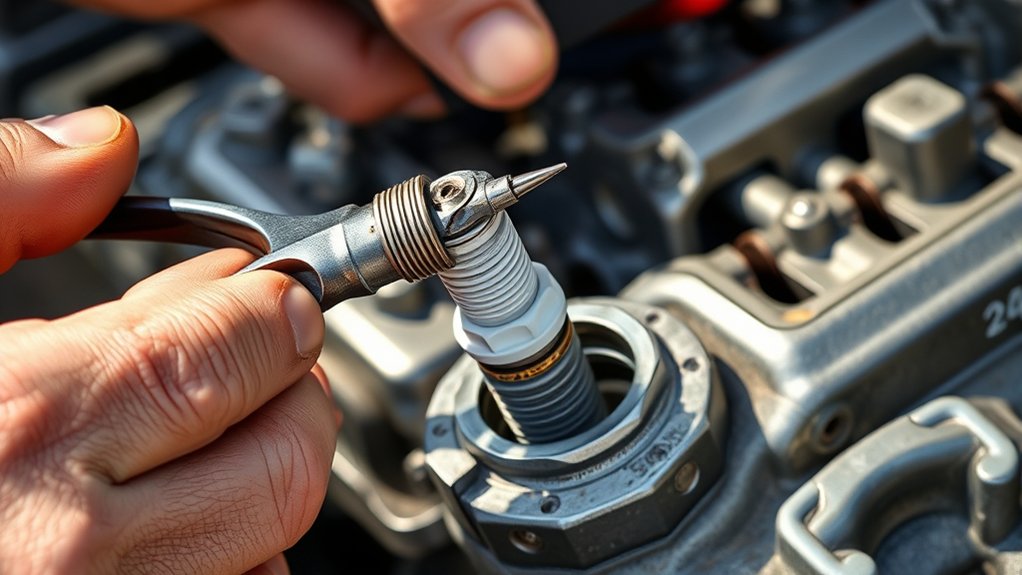
If you don’t have a spark plug extractor on hand, you can still remove a broken spark plug by carefully using alternative tools and techniques. First, identify the spark plug type, as some have hexagonal shapes suitable for gripping with locking pliers.
Securely clamp the broken piece with the pliers, applying steady, controlled force to avoid further damage. For fragile or recessed spark plug types, use a thin flathead screwdriver or a small chisel to gently turn the fragment counterclockwise.
Another repair technique involves drilling a small hole into the center of the broken plug and using a left-handed drill bit to back it out. Throughout, maintain firm control and patience to prevent damaging the cylinder head threads during removal.
Tools and Materials You’ll Need
A well-prepared toolkit is essential for safely and effectively removing a broken spark plug. Depending on the spark plug types and removal techniques, having the right tools prevents damage and speeds up the process.
You’ll need basic hand tools and some specialty items tailored to your situation.
| Tool/Material | Purpose |
|---|---|
| Ratchet and Socket | To loosen and remove plugs |
| Needle-nose Pliers | To grip and extract fragments |
| Hammer | To gently tap broken pieces |
| Flathead Screwdriver | To pry loose stuck parts |
| Penetrating Oil | To loosen corrosion |
Prepare these items before starting to guarantee you can adapt to different spark plug types and removal techniques effectively.
Troubleshooting Common Problems When Removing Broken Spark Plugs
When you encounter a broken spark plug, you’ll often face challenges like seized threads, stripped sockets, or fragmented pieces lodged deep in the cylinder head. Different spark plug types may require specific removal techniques, so identify whether you’re dealing with copper, platinum, or iridium plugs.
Engine misfires often signal threading issues, which can complicate extraction. To address seized threads, apply penetrating oil and allow sufficient soak time. If the socket strips, switch to a smaller, more precise tool or carefully use locking pliers for better grip.
For fragments stuck inside, gently use a magnet or compressed air to clear debris. Always work slowly to prevent further damage. Troubleshooting these problems systematically improves your chances of successful removal without an extractor.
Tips to Prevent Spark Plug Breakage in the Future
Although spark plug breakage can be challenging to reverse, you can greatly reduce its likelihood by following proper installation and maintenance practices. First, always use a torque wrench to tighten spark plugs to the manufacturer’s specifications. Over-tightening can cause threads to strip or plugs to break, while under-tightening risks poor engine performance.
During spark plug maintenance, inspect the threads and verify they are clean and free of debris before installation. Apply a small amount of anti-seize compound if recommended by your engine manual. Regular engine care, including timely spark plug replacement and checking for engine overheating, also prevents damage.
Frequently Asked Questions
How Often Should Spark Plugs Be Replaced?
You should replace spark plugs every 30,000 to 100,000 miles, depending on the spark plug lifespan specified by your vehicle.
Regular replacement frequency guarantees peak engine performance and prevents misfires or decreased fuel efficiency.
What Are the Signs of a Failing Spark Plug?
You’ll notice engine misfires, rough idling, and decreased fuel efficiency as signs of failing spark plugs.
Regular spark plug maintenance prevents these issues, ensuring ideal combustion and smooth engine performance. Don’t ignore these warning indicators.
Can Using the Wrong Spark Plug Damage My Engine?
If you use the wrong spark plug, you risk engine damage because it can cause improper combustion, overheating, or misfires.
Always match the spark plug specifications to your engine to maintain peak performance and avoid costly repairs.
How Do Spark Plug Gaps Affect Engine Performance?
You’ll notice spark plug performance drops if the gap measurement’s off. Too wide weakens the spark, and too narrow causes misfires. Precise gap measurement guarantees ideal combustion, improving power, fuel efficiency, and reducing emissions consistently.
Are Iridium Spark Plugs Better Than Copper Ones?
Yes, iridium spark plugs offer iridium advantages like superior durability and better ignition, while copper plugs provide excellent conductivity and copper longevity.
You’ll choose iridium for performance and copper for cost-effective, reliable use in older engines.
Conclusion
Removing a broken spark plug without an extractor might feel like facing a modern-day Gordian knot, but with the right tools and techniques, you can cut through the challenge efficiently. Stay patient, apply steady force, and avoid rushing to prevent further damage.
Remember, like any skilled mechanic, mastering this task not only saves time and money but also prepares you for future spark plug maintenance with confidence and precision. Successfully removing a broken spark plug without an extractor is a valuable skill that enhances your mechanical abilities.