To rotate your Jeep Wrangler tires, start by using a hydraulic jack and jack stands on a flat surface.
Make sure to place wheel chocks to prevent any movement. This setup ensures safety while you work on your tires.
Next, loosen the lug nuts in a star pattern before lifting one corner of the vehicle.
Remove the tire and follow the recommended rotation pattern—typically Rearward Cross or Forward Cross—for even tread wear.
After placing the tire back, tighten the lug nuts to the specified torque using a torque wrench.
Finally, check and adjust the tire pressure as needed.
Regular rotation every 5,000 to 7,000 miles enhances safety and performance.
For detailed steps and patterns, keep exploring further.
Key Takeaways
- Use the Rearward Cross pattern: rear tires move forward, front tires cross to the opposite rear for Jeep Wrangler tire rotation.
- Park on a flat surface, engage parking brake, and secure with wheel chocks before lifting the Jeep.
- Loosen lug nuts in a star pattern, lift with a hydraulic jack, support with jack stands, and remove tires safely.
- Tighten lug nuts to manufacturer torque specs using a torque wrench after placing tires in the correct rotated positions.
- Check and adjust tire pressure to recommended PSI after rotation, and inspect tires for wear or damage before finishing.
Why and When to Rotate Your Jeep Wrangler Tires
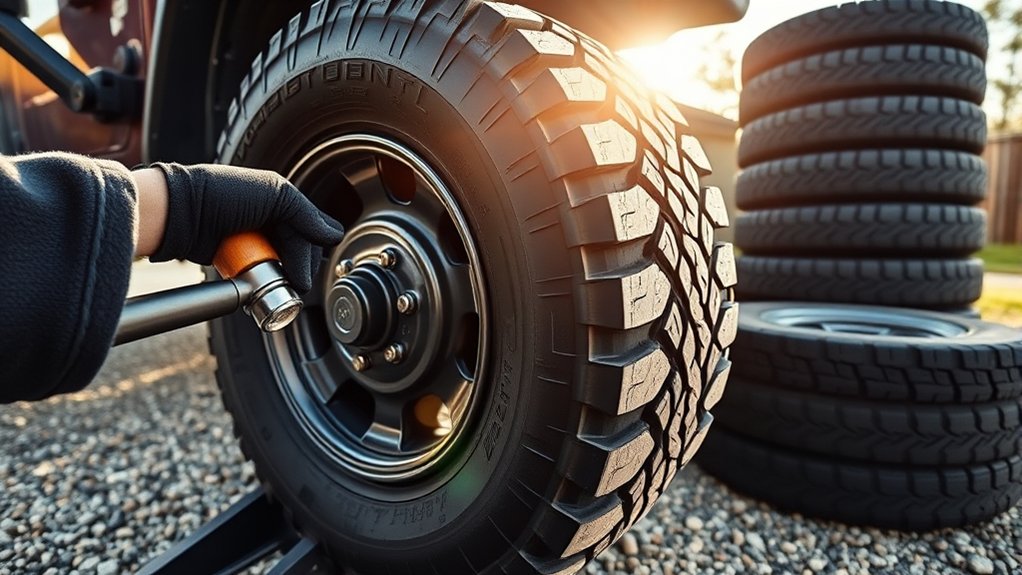
Although you might not notice immediate issues, rotating your Jeep Wrangler tires regularly is essential to guarantee even tread wear and extend tire life. Tire wear patterns differ depending on your driving habits and the Wrangler’s drivetrain layout.
Front tires often wear faster due to steering and braking forces, while rear tires may wear unevenly with certain off-road conditions. You should rotate your tires every 5,000 to 7,000 miles, or as recommended in your owner’s manual, to balance these wear patterns.
Regular rotation helps maintain ideal traction and handling, prevents premature tire failure, and promotes safety. By adhering to a consistent rotation schedule, you accommodate the specific stresses your Jeep endures, ensuring your tires degrade evenly regardless of your driving habits or terrain.
How to Check Jeep Wrangler Tire Condition and Pressure
Rotating your Jeep Wrangler tires helps balance wear, but regularly checking their condition and pressure guarantees maximum performance and safety between rotations. Begin by inspecting each tire for uneven tire wear, cracks, bulges, or embedded objects. Uneven wear patterns can indicate alignment or suspension issues that need addressing.
Next, perform a pressure check using a reliable tire pressure gauge when tires are cold. Compare the readings to the manufacturer’s recommended PSI, typically found on the driver’s door jamb or owner’s manual. Underinflated tires cause excessive wear and reduce fuel efficiency, while overinflated tires compromise traction and comfort.
Adjust the pressure accordingly to maintain ideal contact with the road surface. Consistently monitoring tire wear and pressure ensures your Jeep Wrangler’s handling remains safe and efficient.
Tools You’ll Need to Rotate Your Jeep Wrangler Tires
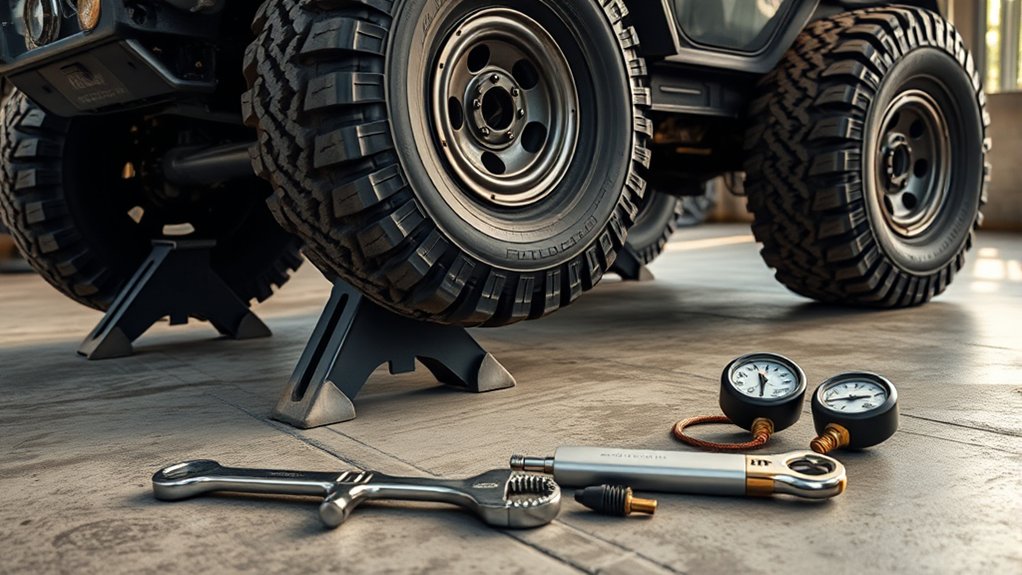
To rotate your Jeep Wrangler tires safely and effectively, you’ll need a reliable jack, a lug wrench, and wheel chocks.
Make sure you also have safety gloves and eye protection to prevent injuries during the process. Gathering these tools and equipment before starting will streamline your tire rotation.
Essential Tire Rotation Tools
Before you begin rotating your Jeep Wrangler tires, you’ll need to gather specific tools to guarantee the process is safe and effective. Start with a quality hydraulic floor jack rated for your vehicle’s weight to lift the Jeep securely.
Next, use sturdy jack stands to support the vehicle after lifting. A torque wrench is essential for tightening lug nuts to manufacturer specifications, preventing uneven tire wear.
You’ll also need a lug wrench or breaker bar to loosen and tighten the lug nuts. Additionally, a tire pressure gauge helps you check and adjust tire pressure, which affects tire wear and performance.
Finally, keep a chalk or tire marker handy to note tire positions, assisting with maintaining correct rotation frequency and monitoring wear patterns accurately.
Safety Equipment Needed
Although gathering the proper tools is essential, guaranteeing your personal safety with the right equipment is equally important when rotating your Jeep Wrangler tires. Begin your tire safety equipment checklist with sturdy gloves to protect your hands from sharp edges and grime.
Wear safety goggles to shield your eyes from debris, especially when loosening lug nuts. Use wheel chocks to secure the vehicle and prevent unintended movement. A reliable jack and jack stands rated for your Jeep’s weight are vital for stable lifting and support.
Finally, wear closed-toe shoes with non-slip soles to maintain footing. Confirm all items on your equipment checklist before starting to guarantee a safe, efficient tire rotation process. Prioritizing safety equipment minimizes injury risks and assures a secure working environment.
Step-by-Step Guide to Rotating Jeep Wrangler Tires
You’ll start by gathering the necessary tools and properly preparing your Jeep Wrangler for tire rotation. Follow the correct rotation pattern to guarantee even tire wear and maintain vehicle performance.
Always observe safety precautions throughout each step to prevent injury and damage.
Tools Needed Preparation
Proper preparation starts with gathering the right tools to efficiently rotate your Jeep Wrangler tires. You’ll need a reliable jack, a lug wrench, and a torque wrench to loosen and tighten lug nuts accurately.
Don’t forget a tire pressure gauge to check inflation, ensuring proper tire alignment and maintaining wheel balance post-rotation. Having gloves and wheel chocks enhances safety and control during the process.
| Tool | Purpose | Emotion Evoked |
|---|---|---|
| Jack | Lift vehicle | Confidence |
| Lug Wrench | Remove lug nuts | Control |
| Torque Wrench | Secure lug nuts to spec | Precision |
With these tools ready, you’ll rotate your tires smoothly, preserving tire health and vehicle performance.
Tire Rotation Patterns
When rotating your Jeep Wrangler tires, following the correct pattern guarantees even wear and extends tire life. For Wranglers with non-directional tires and no staggered sizes, use the rearward cross pattern: move rear tires straight forward, then cross front tires to the opposite rear positions.
This pattern balances wear patterns caused by weight distribution and drivetrain forces. If your Wrangler has directional tires, rotate front tires straight back and rear tires straight forward, maintaining directional orientation. This secures rotation benefits without compromising tread design.
Always consult your owner’s manual for specific recommendations, as tire size or drivetrain type can affect the pattern. Using the right rotation pattern prevents uneven tread wear, maximizes traction, and improves overall tire performance, saving you money and enhancing safety on all terrains.
Safety Precautions Steps
Before lifting your Jeep Wrangler, make certain the vehicle is parked on a flat, stable surface and the parking brake is fully engaged. This guarantees ideal vehicle stability during tire maintenance.
Next, use wheel chocks on the opposite tires to prevent any movement. Always wear safety gloves and eye protection to guard against debris or accidental injury.
Use a properly rated jack and always position jack stands under the vehicle’s frame to support the weight securely before removing tires. Avoid relying solely on the jack to hold the vehicle.
Double-check that the jack stands are stable and the vehicle does not rock. Follow manufacturer torque specifications when tightening lug nuts after rotating tires. These safety precautions minimize risks and guarantee effective, safe tire maintenance on your Jeep Wrangler.
Tire Rotation Patterns for Jeep Wranglers
Although Jeep Wranglers have unique suspension and drivetrain setups, rotating their tires follows specific patterns designed to guarantee even tread wear and maintain ideal traction. Understanding rotation benefits and pattern variations is essential for proper tire care.
The most common patterns are the Forward Cross, Rearward Cross, and X-Pattern, each suited for different drivetrain types and tread designs.
| Pattern Name | Description |
|---|---|
| Forward Cross | Front tires move to rear on same side; rear tires cross to front |
| Rearward Cross | Rear tires move to front on same side; front tires cross to rear |
| X-Pattern | All tires cross diagonally |
| Side-to-Side | Tires swap sides, no front/rear change |
Choose the correct pattern based on your Wrangler’s drivetrain to maximize rotation benefits and tire longevity.
Safe and Efficient Tire Rotation Tips for Jeep Wranglers
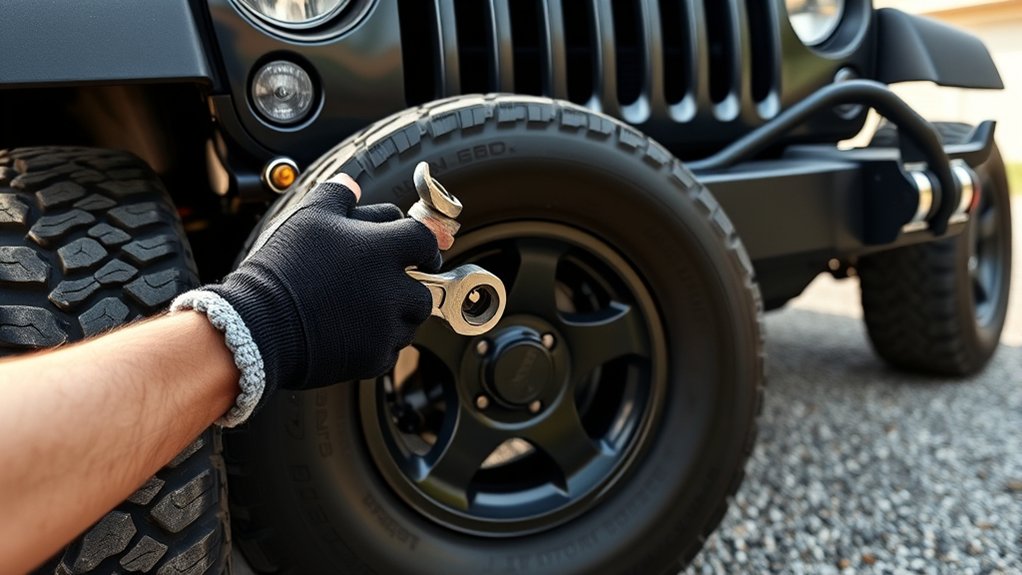
Maintain ideal performance and safety by following precise steps during tire rotation on your Jeep Wrangler. First, inspect each tire for uneven tire wear before starting. Uneven wear indicates alignment or suspension issues that should be addressed prior to rotation.
Use a reliable torque wrench to loosen lug nuts gradually in a star pattern to prevent wheel damage. Follow the correct rotation pattern specific to your Wrangler model, guaranteeing you account for directional tires if equipped.
Loosen lug nuts gradually in a star pattern and follow your Wrangler’s specific tire rotation to avoid damage.
Adhere to the recommended rotation frequency, typically every 5,000 to 7,000 miles, to optimize tread life and vehicle handling. After repositioning tires, tighten lug nuts to the manufacturer’s specified torque.
Finally, check tire pressure and adjust accordingly. Consistently following these steps guarantees safe, efficient tire rotation and prolongs the lifespan of your Jeep Wrangler’s tires.
Frequently Asked Questions
Can I Rotate Tires on a Jeep Wrangler With Aftermarket Wheels?
You can rotate tires on a Jeep Wrangler with aftermarket wheels, ensuring aftermarket compatibility. Just confirm wheel size and bolt pattern match, then perform proper tire alignment to maintain handling and prevent uneven wear.
How Does Tire Rotation Affect Jeep Wrangler Fuel Efficiency?
Think of your Jeep’s tires as dancers. Balanced steps prevent stumbles. By rotating tires evenly, you minimize uneven tire wear, which reduces rolling resistance and ultimately lowers fuel consumption. This helps your Wrangler perform efficiently on every journey.
Are There Specific Tire Brands Recommended for Jeep Wranglers?
You’ll want brands like BFGoodrich, Goodyear, or Falken for Jeep Wranglers. They optimize tire performance and off-road capability, ensuring durability and traction.
Choose tires rated for rugged terrains to maintain control and efficiency.
Can I Rotate Tires Myself or Should I Hire a Professional?
You can definitely tackle DIY tire rotation if you have the right tools and knowledge. But if you’re unsure or want perfect precision, professional services guarantee safety and ideal tire wear with expert equipment and experience.
How Often Should I Replace Jeep Wrangler Tires Instead of Rotating?
You should replace your Jeep Wrangler tires when tread depth reaches 2/32 inches or uneven tire wear appears.
Regularly inspect for wear patterns, cuts, or sidewall damage to maintain safety and peak performance.
Conclusion
Rotating your Jeep Wrangler’s tires might seem simple, yet it’s essential for even wear and peak performance. While skipping rotations can lead to uneven tread and costly replacements, following the right pattern and tools guarantees longevity and safety.
By regularly checking tire condition and pressure before rotating, you maintain control on and off-road. Don’t underestimate this routine task—it’s the difference between premature tire failure and smooth, reliable driving every mile.
Proper tire rotation is key to maximizing the life of your tires and ensuring your Jeep Wrangler performs at its best. Always remember, rotating Jeep Wrangler tires regularly keeps you safe and extends tire durability.