Your Jeep Wrangler typically uses a 5×5-inch (5x127mm) bolt pattern, meaning it has five lug nuts arranged on a 5-inch circle to guarantee secure and stable wheel fitment.
This bolt pattern is common across most modern Wrangler models, ensuring compatibility with a wide range of wheels.
Older models, like the YJ (1987-1995), use a 5×4.5-inch pattern, so it’s essential to check your specific year before purchasing wheels or accessories.
Using the correct bolt pattern prevents wheel misalignment and lug stress, keeping your Jeep safe and functional.
Keep exploring to understand model variations and upgrade options for your Jeep Wrangler’s bolt pattern.
This knowledge will help you maintain optimal performance and safety on and off the road.
Key Takeaways
- Jeep Wranglers commonly have a 5×5-inch bolt pattern with 5 lug nuts spaced evenly on a 5-inch circle.
- Early Jeep Wrangler YJ models (1987-1995) use a 5×4.5-inch bolt pattern, differing from modern versions.
- The 5×5-inch bolt pattern became standard for Wranglers from 2007 onward.
- Correct bolt pattern ensures proper wheel fit, vehicle safety, and prevents lug nut stress.
- When upgrading wheels, always verify the bolt pattern matches the Wrangler’s specifications for compatibility.
What Bolt Pattern Does a Jeep Wrangler Use?
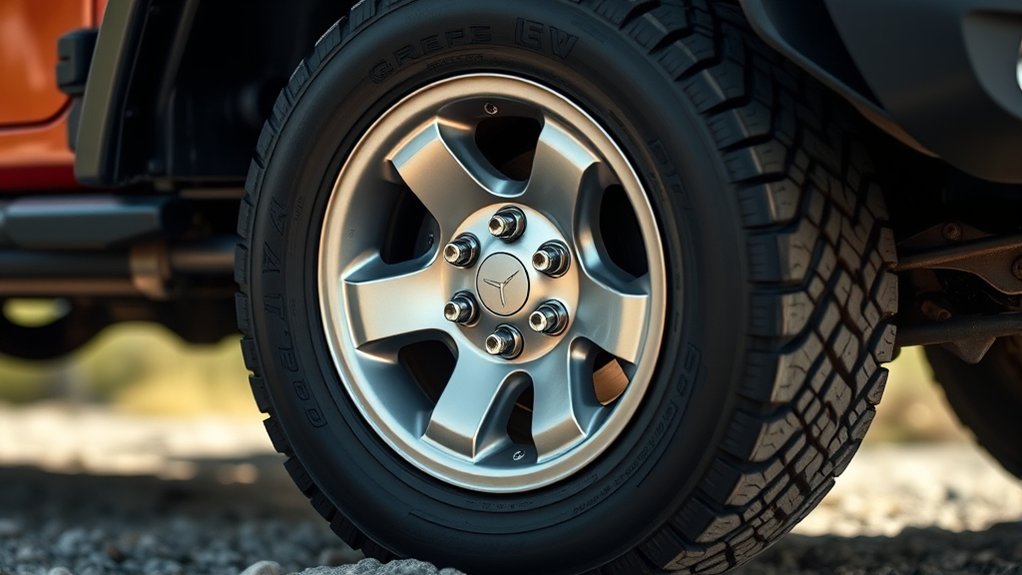
The Jeep Wrangler uses a specific bolt pattern that guarantees proper fitment and safety for its wheels. Typically, Wranglers feature a 5×5 bolt pattern, meaning five lug nuts spaced evenly on a 5-inch circle.
This configuration suits various wheel types, ensuring compatibility across different models and aftermarket options. When selecting wheels, you must confirm the bolt pattern matches your Wrangler’s to avoid improper seating or stress on the lug nuts.
Using the correct lug nuts is essential. They must fit the wheel type and bolt pattern precisely to maintain secure mounting and prevent loosening during operation. Understanding the Wrangler’s bolt pattern helps you choose compatible wheels and lug nuts, preserving vehicle safety and performance.
How to Measure Your Jeep Wrangler’s Bolt Pattern
Knowing your Jeep Wrangler’s bolt pattern is key to selecting the right wheels and lug nuts, but you’ll need to measure it accurately to avoid errors. Start by gathering essential measuring tools, including a bolt gauge or a precise ruler.
Position the wheel or hub so you have clear access to the lug holes. For a 4-lug pattern, measure the distance between the centers of two adjacent holes. For 5-lug patterns, measure from the center of one lug hole directly across to the center of the hole farthest from it.
Use a bolt gauge if available. It simplifies identifying the bolt circle diameter (BCD) precisely. Record your measurements in millimeters or inches to guarantee compatibility with wheel specifications. Accurate measurement prevents costly mismatches.
Why Bolt Pattern Matters for Jeep Wrangler Wheels
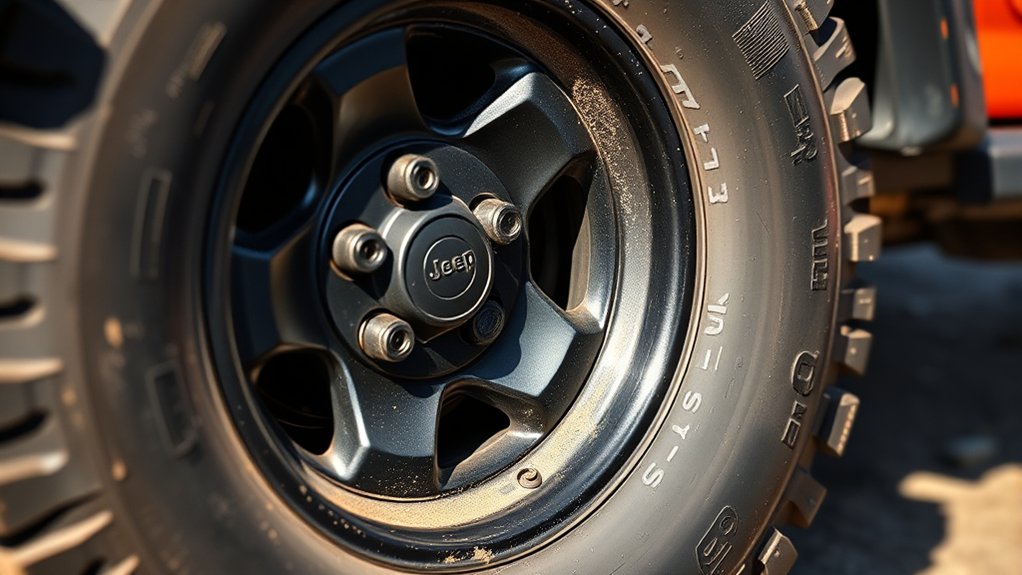
You need the correct bolt pattern to guarantee precise wheel fitment on your Jeep Wrangler, which directly affects safety and stability. Using the wrong pattern can compromise how well the wheel mounts, leading to potential hazards.
Additionally, it ensures compatibility with accessories like hubs and spacers designed for your specific bolt configuration.
Wheel Fitment Precision
Four key factors determine whether your Jeep Wrangler’s wheels fit securely, and the bolt pattern tops that list. The bolt pattern guarantees the wheel mounts precisely on the hub, providing a solid base for proper wheel alignment.
If the bolt pattern doesn’t match, the wheel won’t sit flush, causing misalignment that affects handling and accelerates tire wear. Correct bolt pattern also influences tire selection; mismatched wheels can limit your choices or force compromises in tire size and type, impacting performance.
When you select wheels with the exact bolt pattern, you maintain accurate wheel positioning, enabling your Jeep to perform at its best. Precision in fitment is essential for maintaining the integrity of your Wrangler’s suspension geometry and guaranteeing your tires wear evenly and last longer.
Safety and Stability
A correct bolt pattern directly impacts your Jeep Wrangler’s safety and stability on the road. When the bolt pattern matches perfectly, your wheels mount securely, preventing wobble and uneven load distribution.
This stability becomes vital if you’ve made suspension upgrades, which alter your vehicle’s dynamics and place additional stress on wheel attachments. Incorrect bolt patterns can cause vibrations, compromising control and accelerating wear on suspension components.
Maintaining proper tire pressure complements this setup by ensuring even contact with the road surface, enhancing grip and reducing strain on your wheels and suspension. By sticking to the correct bolt pattern, you preserve your Wrangler’s structural integrity and driving precision, especially during off-road maneuvers or high-speed travel.
Proper fitment is essential for your vehicle’s overall performance and your safety.
Compatibility With Accessories
Since the bolt pattern determines how wheels attach to your Jeep Wrangler, it directly affects the compatibility of various accessories like aftermarket rims, hub adapters, and wheel spacers. You need to confirm that any aftermarket enhancements you select match the bolt pattern precisely to maintain secure fitment and ideal performance.
Using incompatible accessories can lead to improper mounting, causing vibrations, uneven tire wear, or compromised safety. When upgrading your Jeep Wrangler’s wheels, always verify accessory compatibility by cross-referencing the bolt pattern specifications.
This attention to detail guarantees that your aftermarket rims and related components integrate seamlessly, preserving vehicle stability and handling. Understanding the bolt pattern’s role helps you make informed decisions and avoid costly mistakes when customizing your Jeep Wrangler’s wheel setup.
Jeep Wrangler Bolt Patterns by Model Year
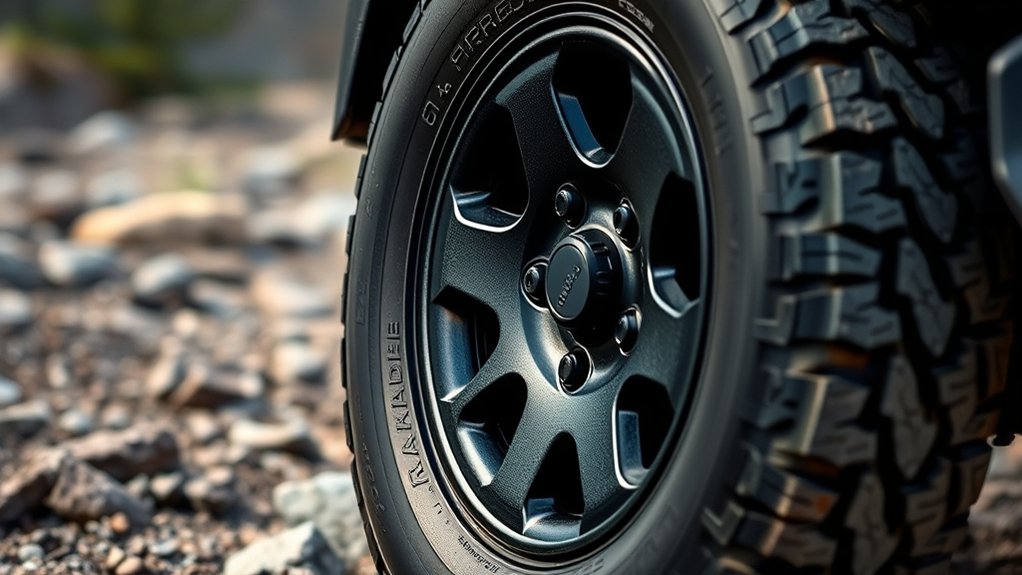
You’ll notice that Jeep Wrangler bolt patterns have evolved over the years, with early models featuring different configurations than modern versions.
Understanding these changes helps you select compatible wheels and avoid fitment issues. Let’s examine the specific bolt patterns for various model years to guide your choices.
Early Models Bolt Patterns
Understanding the bolt patterns of early Jeep Wrangler models is vital for accurate wheel replacement and upgrades. Early Wranglers, specifically the YJ series produced from 1987 to 1995, feature a 5×4.5-inch (5×114.3mm) bolt pattern. This specification is important when selecting wheels to guarantee proper fitment and safety.
If you’re restoring or customizing these early models, you must verify vintage wheel compatibility, as some aftermarket wheels may not match the 5×4.5-inch pattern. Additionally, the hub bore size and lug nut dimensions should be considered to avoid installation issues.
Modern Wrangler Specifications
While early Jeep Wrangler models used a 5×4.5-inch bolt pattern, modern Wranglers have evolved with different specifications to accommodate advancements in design and performance. Starting from the 2007 JK generation, Jeep standardized a 5×5-inch bolt pattern, enhancing wheel compatibility and strength.
This change supports modern features like larger brakes and wheels, which improve off-road capabilities greatly. The current JL generation maintains this 5×5-inch pattern, optimizing durability for rigorous terrain and heavy loads.
If you’re upgrading or replacing wheels, matching the bolt pattern precisely is essential to maintain stability and safety. Understanding these model-year distinctions helps you select components that align with your Jeep’s engineering, ensuring you maximize both on-road comfort and off-road performance.
Compatible Wheels for Jeep Wrangler Bolt Patterns
Selecting compatible wheels for your Jeep Wrangler involves matching the correct bolt pattern to confirm proper fit and safety. Most Jeep Wranglers use a 5x127mm (5×5 inches) bolt pattern, but it’s crucial to verify your specific model year.
When choosing wheel types, consider options like steel, alloy, or beadlock wheels, each offering different benefits in durability and weight. Aftermarket options allow you to enhance performance or aesthetics but must adhere strictly to the bolt pattern to avoid issues like wheel wobble or uneven stress.
Additionally, pay attention to offset and center bore measurements to guarantee full compatibility. By focusing on these technical specifications, you’ll ensure your new wheels fit securely and maintain your Wrangler’s handling and safety.
Tips to Upgrade Your Jeep Wrangler Wheels Correctly
Upgrading your Jeep Wrangler wheels requires careful attention to bolt patterns, load ratings, and offset specifications to maintain peak performance and safety. First, confirm that the wheel types you choose match your Wrangler’s bolt pattern, typically 5×5 inches or 5×127 mm for most models, to guarantee proper fitment.
Next, select tire sizes compatible with your new wheels to avoid speedometer errors and suspension interference. Consider the wheel’s load rating to support your vehicle’s weight, especially if you plan off-road use or heavy loads.
Additionally, maintain the correct offset to preserve handling dynamics and prevent undue stress on suspension components. By focusing on these technical factors, you facilitate a seamless upgrade that enhances both the aesthetics and functionality of your Jeep Wrangler.
How to Fix Jeep Wrangler Wheel Bolt Pattern Fit Issues
If your Jeep Wrangler’s wheels don’t fit due to bolt pattern mismatches, you’ll need to address the issue promptly to guarantee safety and performance. Start by evaluating wheel adapter options designed to bridge incompatible bolt patterns. Choose high-quality adapters rated for your Wrangler’s weight and torque specifications to maintain structural integrity.
Next, consider tire clearance modifications if the new wheels or adapters cause rubbing against suspension components or fenders. You may need to adjust or replace fender flares, or slightly modify suspension geometry to ascertain proper clearance.
Always verify lug nut compatibility with adapters and re-torque bolts after installation. By combining appropriate wheel adapter options with necessary tire clearance modifications, you’ll restore correct fitment, safeguard drivability, and preserve your Jeep Wrangler’s off-road capabilities.
Frequently Asked Questions
What Tire Size Is Best for a Jeep Wrangler?
You’ll want 33-inch tires for ideal tire upgrades on your Jeep Wrangler, balancing off-road capability and daily driving.
All terrain options like 33×12.5R17 provide traction and durability without sacrificing fuel efficiency or handling.
How Often Should Jeep Wrangler Wheel Lug Nuts Be Torqued?
Picture your Jeep’s wheels gripping rugged trails. You should torque the lug nuts to spec after every tire change and recheck wheel maintenance after 50-100 miles. This confirms safety and peak performance on every adventure.
Can I Use Spacers on My Jeep Wrangler Wheels?
You can use spacers on your Jeep Wrangler wheels, but choose spacer types compatible with your bolt pattern.
Follow installation tips carefully: clean surfaces, torque lug nuts properly, and recheck tightness to guarantee safety and prevent vibrations.
What Is the Recommended Tire Pressure for Jeep Wranglers?
Ever wonder what keeps your Jeep Wrangler gripping the road? Maintain tire pressure around 32 PSI for peak performance, fuel efficiency, and safety.
Regularly check it when tires are cold to guarantee precise, reliable operation every ride.
How Do I Know if My Jeep Wrangler Wheels Are Balanced?
You’ll know your Jeep Wrangler wheels need balancing if you feel vibration issues at certain speeds.
Check for uneven tire wear and verify your wheel alignment is correct, as misalignment can mimic balance problems.
Conclusion
Getting the bolt pattern right on your Jeep Wrangler isn’t just important—it’s like the difference between a smooth off-road adventure and a wild, wheel-wobbling disaster. You don’t want to gamble with compatibility because the wrong pattern can throw off your entire ride. Measure carefully, match precisely, and choose wheels designed for your model year.
Nail this, and your Wrangler will handle like a dream, no matter where the trail takes you! Understanding the bolt pattern is key to ensuring your Jeep Wrangler’s wheels fit perfectly and perform optimally.